
-
The Ascent of Man - Episode 3 - The Grain in the Stone
-
Adrian Malone
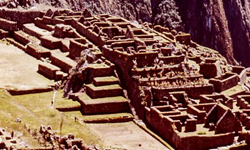
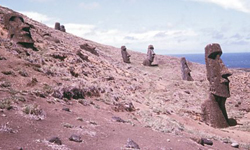
Jacob Bronowski discovers the origins of science in the interaction of hand and brain, by which man uncovers the laws of nature through building, architecture and sculpture
- TV-Recordings
- English subtitles
- 49
Jacob Bronowski discovers the origins of science in the interaction of hand and brain, by which man uncovers the laws of nature through building, architecture and sculpture
-
The Ascent of Man - Episode 4 - The Hidden Structure
-
Adrian Malone
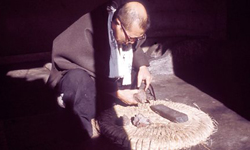
Jacob Bronowski explores the roots of chemistry, from the techniques of ancient metallurgy in China and Japan to the mystical searchings of the alchemists.
- TV-Recordings
- English subtitles
- 49
Jacob Bronowski explores the roots of chemistry, from the techniques of ancient metallurgy in China and Japan to the mystical searchings of the alchemists.
-
The Ascent of Man - Episode 5 - Music of the Spheres
-
Adrian Malone
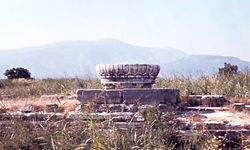
Dr Bronowski gives his own novel proof of Pythagoras' famous theorem and traces the spread of Greek ideas through the Islamic empire to Moorish Spain and Renaissance Europe.
- TV-Recordings
- English subtitles
- 49
Dr Bronowski gives his own novel proof of Pythagoras' famous theorem and traces the spread of Greek ideas through the Islamic empire to Moorish Spain and Renaissance Europe.

-
The Ascent of Man - Episode 6 - The Starry Messenger
-
Adrian Malone
Man has always wondered about the movement of the stars, sun and planets. Dr Jacob Bronowski looks at the work of Copernicus and the life, work and trial of Galileo.
- TV-Recordings
- English subtitles
- 49
Man has always wondered about the movement of the stars, sun and planets. Dr Jacob Bronowski looks at the work of Copernicus and the life, work and trial of Galileo.

-
The Ascent of Man - Episode 7 - The Majestic Clockwork
-
Adrian Malone
If the world could be understood by just two men, they may be Isaac Newton and Albert Einstein. Dr Jacob Bronowski explores how their theories are connected by light.
- TV-Recordings
- English subtitles
- 49
If the world could be understood by just two men, they may be Isaac Newton and Albert Einstein. Dr Jacob Bronowski explores how their theories are connected by light.
As political revolutions shook France and America, another quieter, yet more profound restructuring was taking place in Britain - the Industrial Revolution.
- TV-Recordings
- English subtitles
- 49
As political revolutions shook France and America, another quieter, yet more profound restructuring was taking place in Britain - the Industrial Revolution.
-
The Ascent of Man - Episode 9 - The Ladder of Creation
-
Adrian Malone
How did life begin on earth? Dr Jacob Bronowski recounts the adventures of Alfred Russell Wallace, and how they triggered off the ideas of Charles Darwin.
- TV-Recordings
- English subtitles
- 49
How did life begin on earth? Dr Jacob Bronowski recounts the adventures of Alfred Russell Wallace, and how they triggered off the ideas of Charles Darwin.

Stephanie Flanders, former BBC economics editor, has a very personal interest in the battle to beat polio. Her father, Michael Flanders, one half of the world-famous singing duo of the 50s and 60s, Flanders and Swann, was paralysed by the infection when he was 21. He used a wheelchair for the rest of his life, and died early at 53 through complications caused by the disease. Stephanie was just six.
- TV-Recordings
- Medical Sciences
- English subtitles
- 60
Stephanie Flanders, former BBC economics editor, has a very personal interest in the battle to beat polio. Her father, Michael Flanders, one half of the world-famous singing duo of the 50s and 60s, Flanders and Swann, was paralysed by the infection when he was 21. He used a wheelchair for the rest of his life, and died early at 53 through complications caused by the disease. Stephanie was just six.

-
The Beauty of Diagrams
-
BBC
Series in which mathematician Marcus du Sautoy explores the stories behind some of the most familiar scientific diagrams
- TV-Recordings
- English subtitles
- 90
Series in which mathematician Marcus du Sautoy explores the stories behind some of the most familiar scientific diagrams

When Polish priest and astronomer Nicolaus Copernicus developed his extraordinary theory of a sun-centred universe 500 years ago, he was flying in the face of both science and religion. Mankind had believed for thousands of years that the earth was at the centre of the cosmos, and to disagree was to risk derision and accusations of heresy.
- TV-Recordings
- Astronomy
- Physics
- TV-Recordings
- English subtitles
- 30
When Polish priest and astronomer Nicolaus Copernicus developed his extraordinary theory of a sun-centred universe 500 years ago, he was flying in the face of both science and religion. Mankind had believed for thousands of years that the earth was at the centre of the cosmos, and to disagree was to risk derision and accusations of heresy.
In the mid-1660s, Isaac Newton bought a pair of prisms at a fair near Cambridge, which were to be the basis of a series of experiments that would unlock a secret that had occupied scientists for centuries - the nature of light itself.
- TV-Recordings
- Physics
- TV-Recordings
- English subtitles
- 30
In the mid-1660s, Isaac Newton bought a pair of prisms at a fair near Cambridge, which were to be the basis of a series of experiments that would unlock a secret that had occupied scientists for centuries - the nature of light itself.
-
The Beauty of Diagrams - Episode 05: DNA
-
Marcus du Sautoy
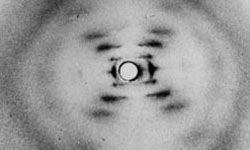
Series in which mathematician Marcus du Sautoy explores the stories behind some of the world's most familiar and influential scientific diagrams.
- TV-Recordings
- Biology
- Medical Sciences
- TV-Recordings
- English subtitles
- 30
Series in which mathematician Marcus du Sautoy explores the stories behind some of the world's most familiar and influential scientific diagrams.
-
The Beginning and End of the Universe - Episode 1 : The Beginning
-
Prof Jim Al-Khalili
Prof Jim Al-Khalili tackles the biggest subject of all, the universe, through a series of critical observations and experiments that revolutionised our understanding of our world.
- TV-Recordings
- Astronomy
- English subtitles
- 60
Prof Jim Al-Khalili tackles the biggest subject of all, the universe, through a series of critical observations and experiments that revolutionised our understanding of our world.

-
The Beginning and End of the Universe - Episode 2 : The End
-
Prof Jim Al-Khalili
In this second part, Professor Jim Al-Khalili carries us into the distant future to try to discover how the universe will end - with a bang or a whimper?
- TV-Recordings
- Astronomy
- English subtitles
- 60
In this second part, Professor Jim Al-Khalili carries us into the distant future to try to discover how the universe will end - with a bang or a whimper?
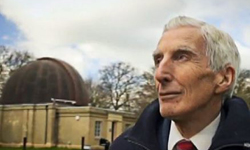
The hunt for aliens is on! After a distinguished career in cosmology Professor Martin Rees, the astronomer royal, has taken up the search for extra-terrestrials. Looking for aliens is no longer science fiction - it is a question that's engaging some of the greatest minds in science.
- TV-Recordings
- English subtitles
- 60
The hunt for aliens is on! After a distinguished career in cosmology Professor Martin Rees, the astronomer royal, has taken up the search for extra-terrestrials. Looking for aliens is no longer science fiction - it is a question that's engaging some of the greatest minds in science.
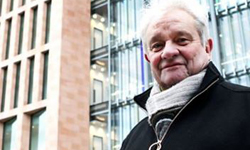
Our lifespan is increasing by 2.5 years every decade - and a third of all babies born today can expect to live to 100. But living longer can come at a cost. Old age itself brings with it a range of debilitating illnesses, many of which are the result of accumulating damage during our lifetime.
- TV-Recordings
- English subtitles
- 60
Our lifespan is increasing by 2.5 years every decade - and a third of all babies born today can expect to live to 100. But living longer can come at a cost. Old age itself brings with it a range of debilitating illnesses, many of which are the result of accumulating damage during our lifetime.
-
The Brain with David Eagleman
-
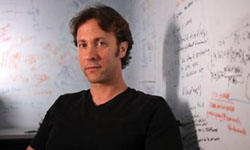
Neuroscientist David Eagleman explores the wonders of the human brain in a series that reveals the ultimate story of us, why we feel and think the things we do.
- TV-Recordings
- English subtitles
- No
Neuroscientist David Eagleman explores the wonders of the human brain in a series that reveals the ultimate story of us, why we feel and think the things we do.
-
The Brain with David Eagleman - 1. What is Reality
-
Dr David Eagleman
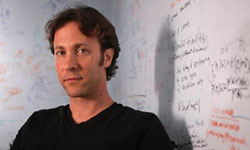
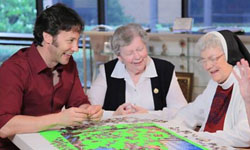
Series in which Dr David Eagleman takes viewers on an extraordinary journey that explores how the brain, locked in silence and darkness without direct access to the world, conjures up the rich and beautiful world we all take for granted.
- TV-Recordings
- English subtitles
- 60
Series in which Dr David Eagleman takes viewers on an extraordinary journey that explores how the brain, locked in silence and darkness without direct access to the world, conjures up the rich and beautiful world we all take for granted.
-
The Brain with David Eagleman - 2. What Makes Me?
-
Dr David Eagleman
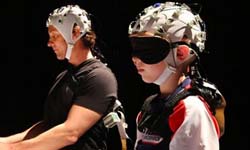
This episode explores the question of how the brain gives rise to our thoughts, emotions, memories and personality. We see how the process of becoming 'you' starts at birth. The brain of a newborn baby is not yet fully developed, instead it grows and shapes itself around life experience.
- TV-Recordings
- English subtitles
- 60
This episode explores the question of how the brain gives rise to our thoughts, emotions, memories and personality. We see how the process of becoming 'you' starts at birth. The brain of a newborn baby is not yet fully developed, instead it grows and shapes itself around life experience.
-
The Brain with David Eagleman - 3. Who Is in Control?
-
Dr David Eagleman
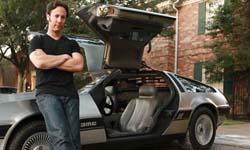
This episode explores the great deception that greets us each morning when we wake up - it feels as though we are in conscious control of our lives, but in fact almost every action we take, every decision we make, every belief that we hold is driven by parts of the brain that we have no access to.
- TV-Recordings
- English subtitles
- 60
This episode explores the great deception that greets us each morning when we wake up - it feels as though we are in conscious control of our lives, but in fact almost every action we take, every decision we make, every belief that we hold is driven by parts of the brain that we have no access to.
-
The Brain with David Eagleman - 4. How do I decide ?
-
Dr David Eagleman
The human brain is the most complex object we've discovered in the universe, and every day much of its neural circuitry is taken up with the tens of thousands of decisions we need to make. This episode takes a journey through the unseen world of decisions, and how they get made. We start with a simple one - choosing a flavour of frozen yoghurt - and learn that every decision we make is born of a 'winner takes all' competition between rival neural networks.
- TV-Recordings
- English subtitles
- 60
The human brain is the most complex object we've discovered in the universe, and every day much of its neural circuitry is taken up with the tens of thousands of decisions we need to make. This episode takes a journey through the unseen world of decisions, and how they get made. We start with a simple one - choosing a flavour of frozen yoghurt - and learn that every decision we make is born of a 'winner takes all' competition between rival neural networks.

-
The Brain with David Eagleman - 5. Why do I need You ?
-
Dr David Eagleman
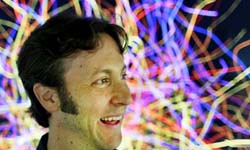
This episode explores how the human brain relies on other brains to thrive and survive. Dr Eagleman demonstrates how, from as young as ten months old, babies can discern who is trustworthy and who isn't.
- TV-Recordings
- English subtitles
- 60
This episode explores how the human brain relies on other brains to thrive and survive. Dr Eagleman demonstrates how, from as young as ten months old, babies can discern who is trustworthy and who isn't.
-
The Brain with David Eagleman - 6. Who Will We Be?
-
Dr David Eagleman
In this episode Dr Eagleman journeys into the future, and asks what's next for the human brain and for our species. Mother nature has evolved a brain that is able to rewire itself according to its environment. We meet Cameron Mott, who had half her brain removed at the age of four, but was able to develop normally as her brain rewired itself to take over the functions of the missing half.
- TV-Recordings
- English subtitles
- 60
In this episode Dr Eagleman journeys into the future, and asks what's next for the human brain and for our species. Mother nature has evolved a brain that is able to rewire itself according to its environment. We meet Cameron Mott, who had half her brain removed at the age of four, but was able to develop normally as her brain rewired itself to take over the functions of the missing half.

In a compelling and at times disturbing series, Dr Michael Mosley explores the brutal history of experimental psychology.To begin, Michael traces the sinister ways this science has been used to try to control our minds.
- TV-Recordings
- Psychology
- English subtitles
- 60
In a compelling and at times disturbing series, Dr Michael Mosley explores the brutal history of experimental psychology.To begin, Michael traces the sinister ways this science has been used to try to control our minds.
In this film, Michael investigates how scientists have struggled to understand that most irrational and deeply complex part of our minds - our emotions.
- TV-Recordings
- Psychology
- English subtitles
- 60
In this film, Michael investigates how scientists have struggled to understand that most irrational and deeply complex part of our minds - our emotions.
Dr Michael Mosley concludes his series exploring the brutal history of experimental psychology by looking at how experiments on abnormal brains have revealed the workings of the normal brain.
- TV-Recordings
- Psychology
- English subtitles
- 60
Dr Michael Mosley concludes his series exploring the brutal history of experimental psychology by looking at how experiments on abnormal brains have revealed the workings of the normal brain.
-
The Brain: A Secret History : Series 1
-
Michael Mosley embarks on three journeys to understand science's last great frontier - the human mind - as he traces the history of the attempts to understand and manipulate the brain
- TV-Recordings
- English subtitles
- No
Michael Mosley embarks on three journeys to understand science's last great frontier - the human mind - as he traces the history of the attempts to understand and manipulate the brain
In a three-part series, Dr Adam Rutherford tells the extraordinary story of the scientific quest to discover the secrets of the cell and of life itself. Every living thing is made of cells, microscopic building blocks of almost unimaginable power and complexity. This episode explores how scientists delved ever deeper into the world of the cell, seeking to reveal the magic ingredient that can spark a bundle of chemicals into life.
- TV-Recordings
- Biology
- TV-Recordings
- No subtitles
- 60
In a three-part series, Dr Adam Rutherford tells the extraordinary story of the scientific quest to discover the secrets of the cell and of life itself. Every living thing is made of cells, microscopic building blocks of almost unimaginable power and complexity. This episode explores how scientists delved ever deeper into the world of the cell, seeking to reveal the magic ingredient that can spark a bundle of chemicals into life.
In a three-part series, Dr Adam Rutherford tells the extraordinary story of the scientific quest to discover the secrets of the cell and of life itself. Every living thing is made of cells, microscopic building blocks of almost unimaginable power and complexity. The final part reveals how our knowledge of cells has brought us to the brink of one of the most important moments in history.
- TV-Recordings
- Biology
- TV-Recordings
- No subtitles
- 60
In a three-part series, Dr Adam Rutherford tells the extraordinary story of the scientific quest to discover the secrets of the cell and of life itself. Every living thing is made of cells, microscopic building blocks of almost unimaginable power and complexity. The final part reveals how our knowledge of cells has brought us to the brink of one of the most important moments in history.
-
The Code
-
BBC 2
A mysterious code underpins the world. But what does it mean and what can we learn from it? Marcus du Sautoy takes us on an odyssey to uncover the code and reveal its meaning
- TV-Recordings
- No subtitles
- No
A mysterious code underpins the world. But what does it mean and what can we learn from it? Marcus du Sautoy takes us on an odyssey to uncover the code and reveal its meaning