

-
Astrobiology
-
Prof. Lewis Dartnell , 2024
Science and Society Lecture 08/10/2024
- Lectures
- No subtitles
- 43
Science and Society Lecture 08/10/2024

-
Astrobiology 2022
-
Professor Lewis Dartnell , 2022
Science and Society Lecture
- Lectures
- No subtitles
- 46
Science and Society Lecture
-
Astrobiology 2023
-
Professor Lewis Dartnell , 2023
Science and Society Lecture
- Lectures
- No subtitles
- 52
Science and Society Lecture


-
Light: Glowing Fish and How to Make Lasers
-
Dr Elinor Bailey , 2014
Diploma Lecture 2014
- Lectures
- No subtitles
- 66
Diploma Lecture 2014

-
A la poursuite de pluton
-
Terri Randall , 2015
Le 19 janvier 2006, la Nasa mettait la touche finale à un projet colossal en faisant décoller une sonde chargée de fournir la première reconnaissance de Pluton et de ses satellites. Le voyage, prévu pour durer neuf ans, ne s'achèvera réellement qu'en 2030 : après Pluton, la sonde New Horizons doit encore explorer la ceinture de Kuiper, anneau de débris et d'astéroïdes qui délimite notre Système solaire...
- TV-Recordings
- No subtitles
- 55
Le 19 janvier 2006, la Nasa mettait la touche finale à un projet colossal en faisant décoller une sonde chargée de fournir la première reconnaissance de Pluton et de ses satellites. Le voyage, prévu pour durer neuf ans, ne s'achèvera réellement qu'en 2030 : après Pluton, la sonde New Horizons doit encore explorer la ceinture de Kuiper, anneau de débris et d'astéroïdes qui délimite notre Système solaire...
A unique journey around the weird and wonderful planet that we call home.
- TV-Recordings
- Geography
- TV-Recordings
- No subtitles
- 60
A unique journey around the weird and wonderful planet that we call home.
-
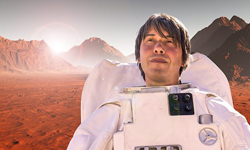
Brian Cox: Seven Days on Mars
-
Michael Lachmann
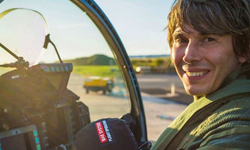
With unique access to Nasa, Brian Cox follows Perseverance rover’s search for life on Mars during a critical seven-day period as it undertakes an epic journey across the red planet.
- TV-Recordings
- English subtitles
- 99
With unique access to Nasa, Brian Cox follows Perseverance rover’s search for life on Mars during a critical seven-day period as it undertakes an epic journey across the red planet.
-
Brian Cox's Adventures in Space and Time - Series 1
-
Simon Winchcombe
Discovering our place in the universe. Brian Cox looks back on a decade of discovery and towards the next space frontier, asking the biggest question of all - what's next?
- TV-Recordings
- English subtitles
- 240
Discovering our place in the universe. Brian Cox looks back on a decade of discovery and towards the next space frontier, asking the biggest question of all - what's next?

-
Britain's Star Men: Heroes of Astronomy
-
Alison Rose
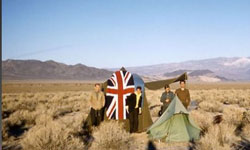
Four British astronomers celebrate 50 years of work and friendship by going on a road trip to revisit some of the world's greatest observatories.
- TV-Recordings
- Astronomy
- English subtitles
- 60
Four British astronomers celebrate 50 years of work and friendship by going on a road trip to revisit some of the world's greatest observatories.
-
Britain's Star Men: Heroes of Astronomy
-
Alison Rose
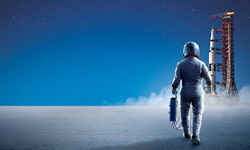
Star Men celebrates the history of stargazing - the inventions and discoveries that have enabled us to learn so much about the universe, but more importantly to understand how much more we have yet to discover.
- TV-Recordings
- English subtitles
- 60
Star Men celebrates the history of stargazing - the inventions and discoveries that have enabled us to learn so much about the universe, but more importantly to understand how much more we have yet to discover.
-
Chasing the Moon
-
Robert Stone
The story of the race to the Moon, from the launch of Sputnik 1 in 1957 to Apollo 11, and the first man to set foot on the Moon, in 1969.
- TV-Recordings
- English subtitles
- 288
The story of the race to the Moon, from the launch of Sputnik 1 in 1957 to Apollo 11, and the first man to set foot on the Moon, in 1969.

Documentary stories detailing America's determination to put a man on the moon ahead of Soviet Russia, beginning with how the launch of Sputnik 1 in 1957 compelled the USA to join the Space Race.
- TV-Recordings
- English subtitles
- 48
Documentary stories detailing America's determination to put a man on the moon ahead of Soviet Russia, beginning with how the launch of Sputnik 1 in 1957 compelled the USA to join the Space Race.
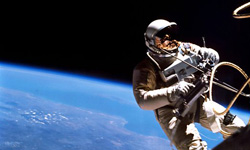
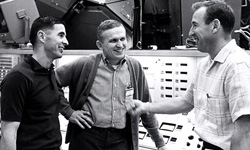
In little more than six months, America's John Glenn had matched Yuri Gagarin's feat of orbiting the Earth. But it was an event back on Earth that spurred America's ambition to win the Space Race.
- TV-Recordings
- English subtitles
- 48
In little more than six months, America's John Glenn had matched Yuri Gagarin's feat of orbiting the Earth. But it was an event back on Earth that spurred America's ambition to win the Space Race.
-
Chasing the Moon - Episode 3 - Earthrise - Part 1
-
Robert Stone
On 27 January 1967, the disastrous failure of Apollo 1 risked the cancellation of America's space programme altogether.
- TV-Recordings
- English subtitles
- 48
On 27 January 1967, the disastrous failure of Apollo 1 risked the cancellation of America's space programme altogether.

-
Chasing the Moon - Episode 4 - Earthrise - Part 2
-
Robert Stone
Within two years of the Apollo 1 fire, Apollo 8 became the first manned mission to escape the Earth's gravity and orbit the moon
- TV-Recordings
- English subtitles
- 48
Within two years of the Apollo 1 fire, Apollo 8 became the first manned mission to escape the Earth's gravity and orbit the moon
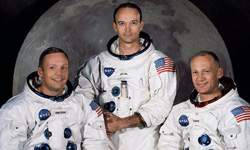
As Nasa chooses which astronauts will crew Apollo 11, the Soviet Union announces that it intends to schedule a mission to the moon of its own to coincide with America's lunar landing.
- TV-Recordings
- English subtitles
- 48
As Nasa chooses which astronauts will crew Apollo 11, the Soviet Union announces that it intends to schedule a mission to the moon of its own to coincide with America's lunar landing.
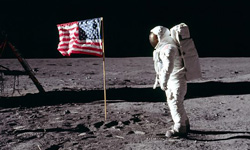
The success of Apollo 11 suggested the beginning of a new age of exploration. Instead, the lunar landing proved to be the highpoint of manned missions into space.
- TV-Recordings
- English subtitles
- 48
The success of Apollo 11 suggested the beginning of a new age of exploration. Instead, the lunar landing proved to be the highpoint of manned missions into space.
Astronomer Carl Sagan leads us on an engaging guided tour of the universe, bringing such topics as Einstein\\\'s theory of relativity and Darwin\\\'s theory of evolution down to a layman\\\'s level of understanding. The first episode opens with a description of the cosmos and introduces the iconic \\\'Spaceship of the Imagination\\\'
- TV-Recordings
- Astronomy
- English subtitles
- 50
Astronomer Carl Sagan leads us on an engaging guided tour of the universe, bringing such topics as Einstein\\\'s theory of relativity and Darwin\\\'s theory of evolution down to a layman\\\'s level of understanding. The first episode opens with a description of the cosmos and introduces the iconic \\\'Spaceship of the Imagination\\\'
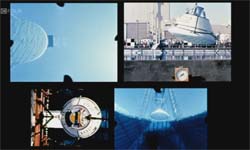
It's a voyage of exploration like no other - to Titan, Saturn's largest moon and thought to resemble our own early Earth. For a small team of British scientists this would be the culmination of a lifetime's endeavour - the flight alone, some 2 billion miles, would take a full seven years. This is the story of the space probe they built, the sacrifices they made and their hopes for the landing.
- TV-Recordings
- Engineering
- English subtitles
- 60
It's a voyage of exploration like no other - to Titan, Saturn's largest moon and thought to resemble our own early Earth. For a small team of British scientists this would be the culmination of a lifetime's endeavour - the flight alone, some 2 billion miles, would take a full seven years. This is the story of the space probe they built, the sacrifices they made and their hopes for the landing.

The moon is such a familiar presence in the sky that most of us take it for granted. But what if it wasn't where it is now? How would that affect life on earth?
- TV-Recordings
- Astronomy
- English subtitles
- 60
The moon is such a familiar presence in the sky that most of us take it for granted. But what if it wasn't where it is now? How would that affect life on earth?
Professor Jim Al-Khalili sets out to discover what the universe might actually look like.
- TV-Recordings
- Astronomy
- Other
- TV-Recordings
- No subtitles
- 60
Professor Jim Al-Khalili sets out to discover what the universe might actually look like.
The second part, Nothing, explores science at the very limits of human perception, where we now understand the deepest mysteries of the universe lie. Jim sets out to answer one very simple question - what is nothing?
- TV-Recordings
- Astronomy
- Other
- TV-Recordings
- No subtitles
- 60
The second part, Nothing, explores science at the very limits of human perception, where we now understand the deepest mysteries of the universe lie. Jim sets out to answer one very simple question - what is nothing?

-
Gravité Zéro - Mission dans l'espace
-
Jürgen Hansen , 2015
In 2014, three young astronauts perform their first space mission aboard the International Space Station: the German Alexander Gerst, Russian Maksim Surayev and American Greg Wiseman. The crew shot fascinating 3D images that reveal both the space, Earth and the research that the trio carries on board. The effect is such that the viewer has the impression of floating in the cosmos.
- TV-Recordings
- No subtitles
- 44
In 2014, three young astronauts perform their first space mission aboard the International Space Station: the German Alexander Gerst, Russian Maksim Surayev and American Greg Wiseman. The crew shot fascinating 3D images that reveal both the space, Earth and the research that the trio carries on board. The effect is such that the viewer has the impression of floating in the cosmos.
-
Gravity And Me: The Force That Shapes Our Lives
-
Professor Jim Al-Khalili
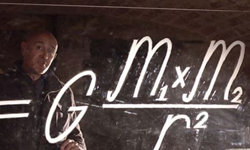
A fundamental force of nature, gravity shapes our entire universe. It sculpts galaxies and warps space and time. But gravity’s strange powers also affect our daily lives in the most unexpected ways. This is a story with surprises in store for Jim himself. In telling the story of gravity, his own understanding of the nature of reality comes to be challenged.
- TV-Recordings
- English subtitles
- 90
A fundamental force of nature, gravity shapes our entire universe. It sculpts galaxies and warps space and time. But gravity’s strange powers also affect our daily lives in the most unexpected ways. This is a story with surprises in store for Jim himself. In telling the story of gravity, his own understanding of the nature of reality comes to be challenged.
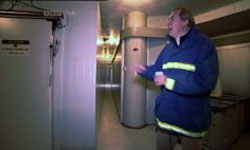
The search for extra-terrestrial life has been going for 50 years - but there's been a recent breakthrough. Astronomers have discovered a new planet called Gliese 581 c. It is the most Earth-like planet ever found. It orbits a star and may have habitats capable of supporting life. NASA hopes to find 50 more Earth-like planets by the end of the decade, all of which increases the chance that alien life has begun elsewhere.
- TV-Recordings
- Astronomy
- Biology
- TV-Recordings
- English subtitles
- 50
The search for extra-terrestrial life has been going for 50 years - but there's been a recent breakthrough. Astronomers have discovered a new planet called Gliese 581 c. It is the most Earth-like planet ever found. It orbits a star and may have habitats capable of supporting life. NASA hopes to find 50 more Earth-like planets by the end of the decade, all of which increases the chance that alien life has begun elsewhere.
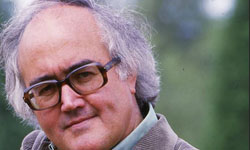
A chance to look back at a classic Horizon special in which James Burke looks at space exploration and exploitation. Originally transmitted in 1984, James begins by looking at the Apollo XI moon landing, before moving on to future space plans for humankind.
- TV-Recordings
- Astronomy
- English subtitles
- 60
A chance to look back at a classic Horizon special in which James Burke looks at space exploration and exploitation. Originally transmitted in 1984, James begins by looking at the Apollo XI moon landing, before moving on to future space plans for humankind.
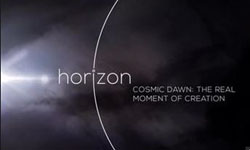
Forget the Big Bang. The real moment of creation was the moment of first light, the moment the first stars were born. Horizon tells the scientific version of the story of Genesis.
- TV-Recordings
- Astronomy
- English subtitles
- 59
Forget the Big Bang. The real moment of creation was the moment of first light, the moment the first stars were born. Horizon tells the scientific version of the story of Genesis.

-
Horizon - Cosmic Dawn: The Real Moment of Creation
-
Toby Macdonald
Horizon investigates the cosmic dawn, the moment one hundred million years after the big bang when the first stars were born.
- TV-Recordings
- English subtitles
- 59
Horizon investigates the cosmic dawn, the moment one hundred million years after the big bang when the first stars were born.