
-
3D Healthcare and Wellbeing
-
Prof Philip Treleaven
Pre-sessional Lecture 2010
- Lectures
- Lectures
- Medical Sciences
- No subtitles
- 60
Pre-sessional Lecture 2010
-
Clinical and Applied Bioinformatics
-
Dr Matthew W. Darlison , 2006
Diploma Lecture 17 2005-2006
- Lectures
- Biology
- General Science
- Lectures
- No subtitles
- 60
Diploma Lecture 17 2005-2006
-
Hacking The Brain
-
Dr Lewis Dartnell , 2010
Diploma 2010
- Lectures
- Lectures
- Medical Sciences
- No subtitles
- 55
Diploma 2010

-
It's All In Your Head
-
Dr Suzanne O'sullivan , 2016
Science and Society Lecture 29th November 2016
- Lectures
- No subtitles
- 51
Science and Society Lecture 29th November 2016

-
Nanoparticles and their Application to Medicine
-
Dr Josie Goodhall , 2014
Diploma Lecture 28.04.2014
- Lectures
- No subtitles
- 60
Diploma Lecture 28.04.2014

-
Obesity and Type 2 Diabetes
-
Dr Michael Munday , 2016
Pre-sessional lecture 15/06/2016
- Lectures
- No subtitles
- 58
Pre-sessional lecture 15/06/2016
-
Sharpening the Stone
-
Vivienne Lo , 2011
Diploma 2011
- Lectures
- Lectures
- Medical Sciences
- No subtitles
- 55
Diploma 2011


-
Therapeutic Effects of Medicines in Different Patients: Personalised Medicines & Personalised Dosing
-
Professor Michael Munday , 2020
Pre-sessional Lecture 2020
- Lectures
- No subtitles
- 45
Pre-sessional Lecture 2020
-
What does the Health Survey for England Tell us About Use of Prescribed Medicines?
-
Dr Jennifer Mindel , 2015
Diploma Lecture 16th March 2015
- Lectures
- Medical Sciences
- No subtitles
- 50
Diploma Lecture 16th March 2015
-
2020: The Story Of Us
-
Kevin Macdonald
Oscar-winner Kevin Macdonald followed healthcare staff and Covid patients during the first wave of the virus - but found an unexpected story
- TV-Recordings
- English subtitles
- 64
Oscar-winner Kevin Macdonald followed healthcare staff and Covid patients during the first wave of the virus - but found an unexpected story

-
AstraZeneca: A Vaccine for the World?
-
Jennifer Shaw
BBC medical editor Fergus Walsh examines the extraordinary ambition behind the Oxford-AstraZeneca Covid jab. Intended as a vaccine for the world, did politics get in its way?
- TV-Recordings
- English subtitles
- 59
BBC medical editor Fergus Walsh examines the extraordinary ambition behind the Oxford-AstraZeneca Covid jab. Intended as a vaccine for the world, did politics get in its way?
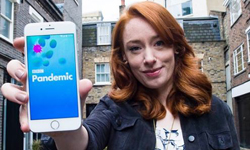
Hannah Fry leads a nationwide experiment to help plan for the next deadly flu pandemic, which could happen at any time. How many will it kill? What can we do about it?
- TV-Recordings
- English subtitles
- 74
Hannah Fry leads a nationwide experiment to help plan for the next deadly flu pandemic, which could happen at any time. How many will it kill? What can we do about it?
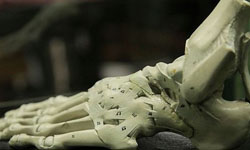
In a purpose-built dissection lab, Dr George McGavin is joined by leading anatomy experts to dissect a real foot, taking it apart layer by layer to reveal what makes it unique in the animal kingdom.
- TV-Recordings
- Medical Sciences
- English subtitles
- 60
In a purpose-built dissection lab, Dr George McGavin is joined by leading anatomy experts to dissect a real foot, taking it apart layer by layer to reveal what makes it unique in the animal kingdom.
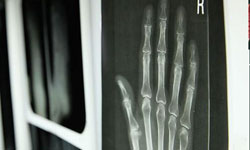
In a purpose-built dissection lab, Dr George McGavin is joined by leading anatomy experts to dissect a real hand, taking it apart layer by layer to reveal what makes it unique in the animal kingdom.
- TV-Recordings
- Medical Sciences
- English subtitles
- 60
In a purpose-built dissection lab, Dr George McGavin is joined by leading anatomy experts to dissect a real hand, taking it apart layer by layer to reveal what makes it unique in the animal kingdom.
-
Great Ormond Street Series 3
-
BBC
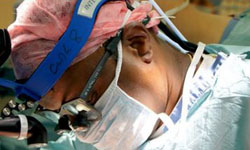
Following Great Ormond Street Hospital's doctors.
- TV-Recordings
- English subtitles
- 180
Following Great Ormond Street Hospital's doctors.

In the Bone Marrow Transplant Unit at Great Ormond Street Hospital, doctors strive to save the lives of children with life-threatening congenital diseases. They must attempt treatments which have very uncertain chances of success and can even threaten the lives of the children they are trying to save.
- TV-Recordings
- Medical Sciences
- English subtitles
- 60
In the Bone Marrow Transplant Unit at Great Ormond Street Hospital, doctors strive to save the lives of children with life-threatening congenital diseases. They must attempt treatments which have very uncertain chances of success and can even threaten the lives of the children they are trying to save.
Great Ormond Street Hospital is the last chance for children in the UK whose lungs are failing because of cystic fibrosis and other conditions. In a few very severe cases each year, their only hope of survival is to undergo a radical and risky step - a double lung transplant.
- TV-Recordings
- Medical Sciences
- English subtitles
- 60
Great Ormond Street Hospital is the last chance for children in the UK whose lungs are failing because of cystic fibrosis and other conditions. In a few very severe cases each year, their only hope of survival is to undergo a radical and risky step - a double lung transplant.
Great Ormond Street is Britain's leading hospital for treating children with serious diseases of the brain - from tumours to epilepsy to rare neurovascular conditions. To save lives, doctors have no option but to undertake treatments which carry grave risks - children may be left with a mental impairment or may not even survive.
- TV-Recordings
- Medical Sciences
- English subtitles
- 60
Great Ormond Street is Britain's leading hospital for treating children with serious diseases of the brain - from tumours to epilepsy to rare neurovascular conditions. To save lives, doctors have no option but to undertake treatments which carry grave risks - children may be left with a mental impairment or may not even survive.
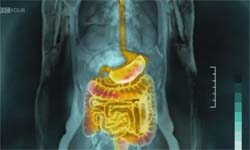
What's really going on inside your stomach? In this documentary, Michael Mosley offers up his own guts to find out. Spending the day as an exhibit at the Science Museum in London, he swallows a tiny camera and uses the latest in imaging technology to get a unique view of his innards digesting his food. He discovers pools of concentrated acid and metres of writhing tubing which is home to its own ecosystem.
- TV-Recordings
- Biology
- Medical Sciences
- TV-Recordings
- No subtitles
- 60
What's really going on inside your stomach? In this documentary, Michael Mosley offers up his own guts to find out. Spending the day as an exhibit at the Science Museum in London, he swallows a tiny camera and uses the latest in imaging technology to get a unique view of his innards digesting his food. He discovers pools of concentrated acid and metres of writhing tubing which is home to its own ecosystem.
-
Heart vs Mind: What makes us Human ?
-
David Malone
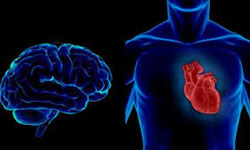
The heart is the most symbolic organ of the human body. Throughout history it has been seen as the site of our emotions, the very centre of our being. But modern medicine has come to see the heart as just a pump; a brilliant pump, but nothing more. And we see ourselves as ruled by our heads and not our hearts.
- TV-Recordings
- Humanities
- Medical Sciences
- TV-Recordings
- No subtitles
- 60
The heart is the most symbolic organ of the human body. Throughout history it has been seen as the site of our emotions, the very centre of our being. But modern medicine has come to see the heart as just a pump; a brilliant pump, but nothing more. And we see ourselves as ruled by our heads and not our hearts.
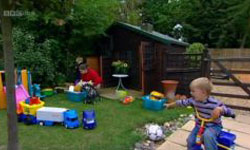
Child psychologist Laverne Antrobus delves into the Horizon archive to find out how science has shaped our approach to parenting and education over the last fifty years.
- TV-Recordings
- Medical Sciences
- TV-Recordings
- No subtitles
- 60
Child psychologist Laverne Antrobus delves into the Horizon archive to find out how science has shaped our approach to parenting and education over the last fifty years.
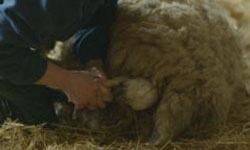
Changes to the bacteria that live inside all of us are responsible for increasing the number of people with allergies, suggests new research.
- TV-Recordings
- Medical Sciences
- English subtitles
- 60
Changes to the bacteria that live inside all of us are responsible for increasing the number of people with allergies, suggests new research.
We are in the grip of an allergy epidemic. 50 years ago one in 30 were affected, but in Britain today it is closer to one in three. Why this should be is one of modern medicine's greatest puzzles.
- TV-Recordings
- Biology
- Medical Sciences
- TV-Recordings
- No subtitles
- 58
We are in the grip of an allergy epidemic. 50 years ago one in 30 were affected, but in Britain today it is closer to one in three. Why this should be is one of modern medicine's greatest puzzles.
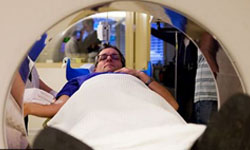
Michael Mosley puts himself through a battery of health tests available to people who feel perfectly well. From an expensive heart scan to a new national screening procedure to detect the earliest signs of bowel cancer, Mosley sets out to discover which if any of the tests are worth doing.
- TV-Recordings
- Medical Sciences
- English subtitles
- 59
Michael Mosley puts himself through a battery of health tests available to people who feel perfectly well. From an expensive heart scan to a new national screening procedure to detect the earliest signs of bowel cancer, Mosley sets out to discover which if any of the tests are worth doing.
What makes us good or evil? It's a simple but deeply unsettling question. One that scientists are now starting to answer.
- TV-Recordings
- Biology
- Humanities
- TV-Recordings
- English subtitles
- 60
What makes us good or evil? It's a simple but deeply unsettling question. One that scientists are now starting to answer.
Touch, sight, smell, hearing and taste - our senses link us to the outside world. Dr Kevin Fong looks back through 40 years of Horizon archives to find out what science has taught us about our tools of perception - why babies use touch more than any other sense, why our eyes are so easily tricked.
- TV-Recordings
- Medical Sciences
- TV-Recordings
- No subtitles
- 60
Touch, sight, smell, hearing and taste - our senses link us to the outside world. Dr Kevin Fong looks back through 40 years of Horizon archives to find out what science has taught us about our tools of perception - why babies use touch more than any other sense, why our eyes are so easily tricked.

Horizon investigates a new era of Alzheimer's research, which is bringing hope to millions of sufferers across the world.
- TV-Recordings
- English subtitles
- 60
Horizon investigates a new era of Alzheimer's research, which is bringing hope to millions of sufferers across the world.