
Horizon goes behind the scenes at Nasa to discover how it is preparing for its most ambitious and daring mission: to land men - and possibly women - on the surface of Mars.
- TV-Recordings
- Astronomy
- English subtitles
- 60
Horizon goes behind the scenes at Nasa to discover how it is preparing for its most ambitious and daring mission: to land men - and possibly women - on the surface of Mars.
The intriguing possibility of life on Mars has fuelled man's quest to visit the Red Planet. Drawing on 45 years of Horizon archive, space expert Dr Kevin Fong presents a documentary on Earth's near neighbour.
- TV-Recordings
- Astronomy
- English subtitles
- 60
The intriguing possibility of life on Mars has fuelled man's quest to visit the Red Planet. Drawing on 45 years of Horizon archive, space expert Dr Kevin Fong presents a documentary on Earth's near neighbour.
This is the story of how our solar system will be transformed by the aging sun before coming to a spectacular end in about eight billion years. Astronomers can peer into the far future to predict how it will happen by analysing distant galaxies, stars and even planets in their final moments.
- TV-Recordings
- English subtitles
- 60
This is the story of how our solar system will be transformed by the aging sun before coming to a spectacular end in about eight billion years. Astronomers can peer into the far future to predict how it will happen by analysing distant galaxies, stars and even planets in their final moments.

-
Orbit: Earth's Extraordinary Journey
-
BBC
Right now you're hurtling around the Sun at a hundred thousand kilometres an hour. Join Kate Humble and Dr Helen Czerski as they explore the relationship between the Earth's orbit and the weather
- TV-Recordings
- No subtitles
- 180
Right now you're hurtling around the Sun at a hundred thousand kilometres an hour. Join Kate Humble and Dr Helen Czerski as they explore the relationship between the Earth's orbit and the weather

Right now you're hurtling around the sun at 64,000 miles an hour (100,000 kms an hour). In the next year you'll travel 584 million miles, to end up back where you started. Presenters Kate Humble and Dr Helen Czerski follow the Earth's voyage around the sun for one complete orbit, to witness the astonishing consequences this journey has for us all. In this first episode they travel from July to the December solstice, experiencing spectacular weather and the largest tides on Earth. To show how the Earth's orbit affects our lives, Helen jumps out of an aeroplane and Kate briefly becomes the fastest driver on Earth.
- TV-Recordings
- Physics
- TV-Recordings
- No subtitles
- 60
Right now you're hurtling around the sun at 64,000 miles an hour (100,000 kms an hour). In the next year you'll travel 584 million miles, to end up back where you started. Presenters Kate Humble and Dr Helen Czerski follow the Earth's voyage around the sun for one complete orbit, to witness the astonishing consequences this journey has for us all. In this first episode they travel from July to the December solstice, experiencing spectacular weather and the largest tides on Earth. To show how the Earth's orbit affects our lives, Helen jumps out of an aeroplane and Kate briefly becomes the fastest driver on Earth.
In this final episode we complete our journey, travelling back from the March equinox to the end of June. Kate Humble is in the Arctic at a place where spring arrives with a bang, whilst Helen Czerski chases a tornado to show how the earth's angle of tilt creates the most extreme weather on earth.
- TV-Recordings
- Astronomy
- TV-Recordings
- No subtitles
- 60
In this final episode we complete our journey, travelling back from the March equinox to the end of June. Kate Humble is in the Arctic at a place where spring arrives with a bang, whilst Helen Czerski chases a tornado to show how the earth's angle of tilt creates the most extreme weather on earth.
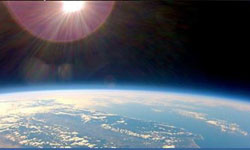
In this second episode we travel from January to the March equinox. Kate Humble gets closer to the Sun than she has ever been before, whilst Helen Czerski visits a place that gets some of the biggest and fastest snowstorms on Earth.
- TV-Recordings
- TV-Recordings
- No subtitles
- 60
In this second episode we travel from January to the March equinox. Kate Humble gets closer to the Sun than she has ever been before, whilst Helen Czerski visits a place that gets some of the biggest and fastest snowstorms on Earth.

-
The Beauty of Diagrams
-
BBC
Series in which mathematician Marcus du Sautoy explores the stories behind some of the most familiar scientific diagrams
- TV-Recordings
- English subtitles
- 90
Series in which mathematician Marcus du Sautoy explores the stories behind some of the most familiar scientific diagrams

When Polish priest and astronomer Nicolaus Copernicus developed his extraordinary theory of a sun-centred universe 500 years ago, he was flying in the face of both science and religion. Mankind had believed for thousands of years that the earth was at the centre of the cosmos, and to disagree was to risk derision and accusations of heresy.
- TV-Recordings
- Astronomy
- Physics
- TV-Recordings
- English subtitles
- 30
When Polish priest and astronomer Nicolaus Copernicus developed his extraordinary theory of a sun-centred universe 500 years ago, he was flying in the face of both science and religion. Mankind had believed for thousands of years that the earth was at the centre of the cosmos, and to disagree was to risk derision and accusations of heresy.

-
The Planets
-
Professor Brian Cox
Professor Brian Cox explores the dramatic lives of the eight majestic planets/worlds that make up our solar system.
- TV-Recordings
- English subtitles
- 300
Professor Brian Cox explores the dramatic lives of the eight majestic planets/worlds that make up our solar system.
-
The Planets
-
Updated documentary series using computer animations, archive footage and interviews to examine our current knowledge and contact with the bodies of our solar system.
- TV-Recordings
- No subtitles
- No
Updated documentary series using computer animations, archive footage and interviews to examine our current knowledge and contact with the bodies of our solar system.

-
The Planets - A Moment in the Sun - The Terrestrial Planets
-
Professor Brian Cox
The rocky planets Mercury, Venus, Earth, and Mars were born at the same time from the same material - yet have lived radically different lives. What immense forces are at play?
- TV-Recordings
- English subtitles
- 60
The rocky planets Mercury, Venus, Earth, and Mars were born at the same time from the same material - yet have lived radically different lives. What immense forces are at play?
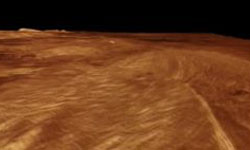
Documentary series tracing our exploration of the solar system. This programme investigates geological activity, looking at the discovery of frozen lava plains on Venus, and a volcano on Mars that would dwarf Mount Everest. Scientists postulated that despite these intriguing surface features, the planets were effectively dead. However, pictures from the moons of Jupiter and Neptune would soon contradict this theory.
- TV-Recordings
- Astronomy
- Geology
- TV-Recordings
- English subtitles
- 50
Documentary series tracing our exploration of the solar system. This programme investigates geological activity, looking at the discovery of frozen lava plains on Venus, and a volcano on Mars that would dwarf Mount Everest. Scientists postulated that despite these intriguing surface features, the planets were effectively dead. However, pictures from the moons of Jupiter and Neptune would soon contradict this theory.

Documentary series tracing our exploration of the solar system. This programme looks at Voyager's expedition to the vast gas planets of Jupiter, Saturn, Uranus and Neptune.
- TV-Recordings
- Astronomy
- Geology
- TV-Recordings
- English subtitles
- 50
Documentary series tracing our exploration of the solar system. This programme looks at Voyager's expedition to the vast gas planets of Jupiter, Saturn, Uranus and Neptune.

Documentary series tracing the exploration of our solar system. This programme investigates our growing understanding of the origins of the moon.
- TV-Recordings
- Astronomy
- Geology
- TV-Recordings
- English subtitles
- 50
Documentary series tracing the exploration of our solar system. This programme investigates our growing understanding of the origins of the moon.
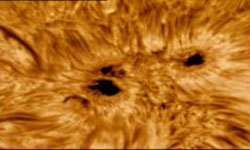
Documentary series tracing the exploration of our solar system. A look at the quest to understand the sun, from the simple etchings of the astronomer Galileo to the discoveries of the latest solar probes. The latest scientific images reveal that the sun is a gigantic nuclear generator, a swirling mass of superheated gases that travel along powerful magnetic field lines.
- TV-Recordings
- Astronomy
- Geology
- TV-Recordings
- English subtitles
- 50
Documentary series tracing the exploration of our solar system. A look at the quest to understand the sun, from the simple etchings of the astronomer Galileo to the discoveries of the latest solar probes. The latest scientific images reveal that the sun is a gigantic nuclear generator, a swirling mass of superheated gases that travel along powerful magnetic field lines.
This programme describes the investigation of weather systems found throughout the solar system. Scientists have discovered sulphuric acid rain and metallic snow on Venus, while space probes have revealed the arid surface and frozen seas of Mars and the mysteries of the gas giant, Saturn.
- TV-Recordings
- Astronomy
- TV-Recordings
- English subtitles
- 50
This programme describes the investigation of weather systems found throughout the solar system. Scientists have discovered sulphuric acid rain and metallic snow on Venus, while space probes have revealed the arid surface and frozen seas of Mars and the mysteries of the gas giant, Saturn.
The documentary series about the solar system examines how our understanding of the evolution of life on earth has changed, and explores the evidence for life on other planets. In 1976, two robotic probes suggested that the surface of Mars was dead. But the latest research reveals that this may not be the case and that it is possible that life on earth may have evolved from Mars.
- TV-Recordings
- Astronomy
- Biology
- TV-Recordings
- English subtitles
- 50
The documentary series about the solar system examines how our understanding of the evolution of life on earth has changed, and explores the evidence for life on other planets. In 1976, two robotic probes suggested that the surface of Mars was dead. But the latest research reveals that this may not be the case and that it is possible that life on earth may have evolved from Mars.

Documentary series tracing the exploration of our solar system. This programme looks at the fate of the solar system and explores the new planetary systems that are being found around nearby stars.
- TV-Recordings
- Astronomy
- TV-Recordings
- English subtitles
- 50
Documentary series tracing the exploration of our solar system. This programme looks at the fate of the solar system and explores the new planetary systems that are being found around nearby stars.

-
The Planets - Into the Darkness: Ice Worlds
-
Professor Brian Cox
In the final episode, Professor Brian Cox journeys to the remotest part of the solar system, a place that the most mysterious planets call home.
- TV-Recordings
- English subtitles
- 60
In the final episode, Professor Brian Cox journeys to the remotest part of the solar system, a place that the most mysterious planets call home.

-
The Planets - Life Beyond the Sun: Saturn
-
Professor Brian Cox
Professor Brian Cox reveals the history of Saturn. Saturn began life as a strange planet of rock and ice and in time transformed into a gas giant, ring-less and similar looking to its rival, Jupiter.
- TV-Recordings
- English subtitles
- 60
Professor Brian Cox reveals the history of Saturn. Saturn began life as a strange planet of rock and ice and in time transformed into a gas giant, ring-less and similar looking to its rival, Jupiter.

-
The Planets - The Godfather: Jupiter
-
Professor Brian Cox
Brian Cox continues his exploration of the solar system with a visit to a planet that dwarfs all the others: Jupiter. Its size gives it a great power that it has used to manipulate the other planets.
- TV-Recordings
- English subtitles
- 60
Brian Cox continues his exploration of the solar system with a visit to a planet that dwarfs all the others: Jupiter. Its size gives it a great power that it has used to manipulate the other planets.
-
The Planets - The Two Sisters - Earth & Mars
-
Professor Brian Cox
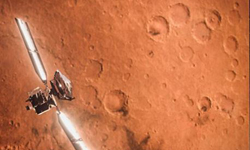
Professor Brian Cox continues his tour of the solar system revealing that it was once home to not one, but two blue planets.
- TV-Recordings
- English subtitles
- 60
Professor Brian Cox continues his tour of the solar system revealing that it was once home to not one, but two blue planets.

90 million miles away from us is the power that shapes our world - the sun. We see it shine in the sky above us, but beyond our sight something dramatic is happening - the sun is going into overdrive.
- TV-Recordings
- Astronomy
- English subtitles
- 60
90 million miles away from us is the power that shapes our world - the sun. We see it shine in the sky above us, but beyond our sight something dramatic is happening - the sun is going into overdrive.

This is the story of the most extraordinary journey in human exploration, the Voyager space mission. In 1977 two unmanned spacecraft were launched by NASA, heading for distant worlds. It would be the first time any man-made object would ever visit the farthest planets of the solar system - Jupiter, Saturn, Neptune and Uranus.
- TV-Recordings
- Astronomy
- Other
- TV-Recordings
- No subtitles
- 60
This is the story of the most extraordinary journey in human exploration, the Voyager space mission. In 1977 two unmanned spacecraft were launched by NASA, heading for distant worlds. It would be the first time any man-made object would ever visit the farthest planets of the solar system - Jupiter, Saturn, Neptune and Uranus.

-
Wonders of the Solar System
-
BBC
In this spellbinding series Professor Brian Cox visits the most extreme locations on Earth to explain how the laws of physics carved natural wonders across the solar system.
- TV-Recordings
- English subtitles
- 350
In this spellbinding series Professor Brian Cox visits the most extreme locations on Earth to explain how the laws of physics carved natural wonders across the solar system.
Professor Brian Cox explores the sun - the powerhouse of our solar system.
- TV-Recordings
- Astronomy
- Physics
- TV-Recordings
- English subtitles
- 60
Professor Brian Cox explores the sun - the powerhouse of our solar system.

Professor Brian Cox looks at the rings of Saturn, formed from a chaotic cloud of gas.
- TV-Recordings
- Astronomy
- Physics
- TV-Recordings
- English subtitles
- 60
Professor Brian Cox looks at the rings of Saturn, formed from a chaotic cloud of gas.
How an envelope of gas can create some of the most wondrous sights in the solar system.
- TV-Recordings
- Astronomy
- Physics
- TV-Recordings
- English subtitles
- 60
How an envelope of gas can create some of the most wondrous sights in the solar system.
Brian Cox shows how a planet's size can make the difference between life and death.
- TV-Recordings
- Astronomy
- Physics
- TV-Recordings
- English subtitles
- 60
Brian Cox shows how a planet's size can make the difference between life and death.