

Some 350 million years ago, evolution reached one of its most crucial stages when fish crawled from water onto the land and became amphibians. Today, newts, salamanders, toads and frogs still survive in great quantities, and there is even one species of frog where the male gives birth from its mouth! Presented by David Attenborough
- TV-Recordings
- Natural World
- TV-Recordings
- No subtitles
- 55
Some 350 million years ago, evolution reached one of its most crucial stages when fish crawled from water onto the land and became amphibians. Today, newts, salamanders, toads and frogs still survive in great quantities, and there is even one species of frog where the male gives birth from its mouth! Presented by David Attenborough

David Attenborough looks at the history of reptiles, the first back-boned creatures to solve the problems of living high and dry on the land. Their waterproofed skin and sealed eggs enabled the mighty reptiles to rule the world.
- TV-Recordings
- Natural World
- TV-Recordings
- No subtitles
- 55
David Attenborough looks at the history of reptiles, the first back-boned creatures to solve the problems of living high and dry on the land. Their waterproofed skin and sealed eggs enabled the mighty reptiles to rule the world.
The story of life, from the first primitive cells to the plants and animals that now live around us. David Attenborough examines the uses and advantages of birds' unique possession - the feather. Man has yet to invent anything that, weight for weight, is as strong as the feather. Feathers are insulators, they provide the surface of the most perfect aerofoils known - bird's wings
- TV-Recordings
- Natural World
- TV-Recordings
- No subtitles
- 55
The story of life, from the first primitive cells to the plants and animals that now live around us. David Attenborough examines the uses and advantages of birds' unique possession - the feather. Man has yet to invent anything that, weight for weight, is as strong as the feather. Feathers are insulators, they provide the surface of the most perfect aerofoils known - bird's wings
Mammals have proved to be one of the most adaptable products of evolution. David Attenborough looks at their evolution from reptiles 200 million years ago. This remarkable transition involved the development of mechanisms for regulating body temperature, for allowing the young to develop in the womb and for suckling newborns.
- TV-Recordings
- Natural World
- TV-Recordings
- No subtitles
- 55
Mammals have proved to be one of the most adaptable products of evolution. David Attenborough looks at their evolution from reptiles 200 million years ago. This remarkable transition involved the development of mechanisms for regulating body temperature, for allowing the young to develop in the womb and for suckling newborns.
David Attenborough brings us the universal story that unites each of us with every animal on the planet, the story of the greatest of all adventures - the journey through life. In the first episode, animals overcome their first great hurdle - surviving infancy.
- TV-Recordings
- Natural World
- English subtitles
- 60
David Attenborough brings us the universal story that unites each of us with every animal on the planet, the story of the greatest of all adventures - the journey through life. In the first episode, animals overcome their first great hurdle - surviving infancy.
In the journey towards adulthood, a moment comes for all animals when they must strike out on their own. With their parents absent they must learn to survive in a dangerous world. At this stage of life every small success may mean the difference between life and death.
- TV-Recordings
- Natural World
- English subtitles
- 60
In the journey towards adulthood, a moment comes for all animals when they must strike out on their own. With their parents absent they must learn to survive in a dangerous world. At this stage of life every small success may mean the difference between life and death.
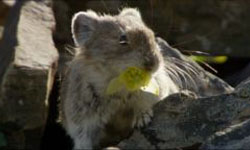
Animals must find somewhere to live - a place that provides the necessities of life, shelter from the elements and a refuge from enemies.
- TV-Recordings
- Natural World
- English subtitles
- 60
Animals must find somewhere to live - a place that provides the necessities of life, shelter from the elements and a refuge from enemies.

Animals must try to gain a position of power in their worlds. The most powerful have best access to food and water, and they are also the most attractive to the opposite sex.
- TV-Recordings
- Natural World
- English subtitles
- 60
Animals must try to gain a position of power in their worlds. The most powerful have best access to food and water, and they are also the most attractive to the opposite sex.
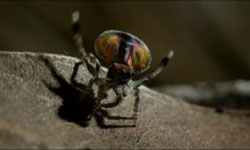
David Attenborough explores the courtship displays of flame bowerbirds and pufferfish.
- TV-Recordings
- Natural World
- English subtitles
- 60
David Attenborough explores the courtship displays of flame bowerbirds and pufferfish.
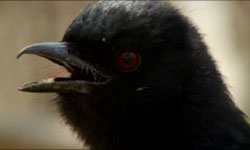
In this final episode, animals attempt to rear their offspring.
- TV-Recordings
- Natural World
- English subtitles
- 60
In this final episode, animals attempt to rear their offspring.
-
Life Story Series 1
-
BBC
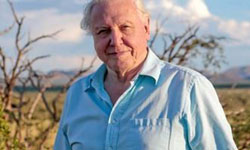
Life Story takes us on the greatest of all adventures - the journey through life.
- TV-Recordings
- English subtitles
- 360
Life Story takes us on the greatest of all adventures - the journey through life.
Two-part series in which Professor Jim Al-Khalili shows how, by uncovering its secrets, scientists have used light to reveal almost everything we know about the universe.
- TV-Recordings
- Physics
- Science
- English subtitles
- 60
Two-part series in which Professor Jim Al-Khalili shows how, by uncovering its secrets, scientists have used light to reveal almost everything we know about the universe.
Professor Jim Al-Khalili tells the story of how we went from thinking we were close to a complete understanding of the universe to realising we had seen almost none of it. Today, our best estimate is that more than 99 per cent of the cosmos is hidden in the dark, invisible to our telescopes and beyond our comprehension.
- TV-Recordings
- Physics
- Science
- English subtitles
- 60
Professor Jim Al-Khalili tells the story of how we went from thinking we were close to a complete understanding of the universe to realising we had seen almost none of it. Today, our best estimate is that more than 99 per cent of the cosmos is hidden in the dark, invisible to our telescopes and beyond our comprehension.
-
Lockdown 1.0 - Following the Science?
-
Richard Cookson
The scientists behind the scenes tell the extraordinary story of what really happened in the run up to the first lockdown, when ministers claimed to be 'following the science'.
- TV-Recordings
- English subtitles
- 59
The scientists behind the scenes tell the extraordinary story of what really happened in the run up to the first lockdown, when ministers claimed to be 'following the science'.
-
Madagascar
-
BBC
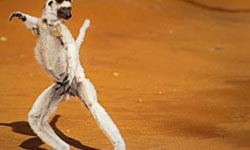
Over 80 per cent of Madagascar's animals and plants are found nowhere else on Earth. Discover what made Madagascar so different from the rest of the world, and how evolution ran wild here.
- TV-Recordings
- No subtitles
- 180
Over 80 per cent of Madagascar's animals and plants are found nowhere else on Earth. Discover what made Madagascar so different from the rest of the world, and how evolution ran wild here.

Revealing the wildlife at home in Madagascar\'s most bizarre and dramatic places.
- TV-Recordings
- Biology
- TV-Recordings
- No subtitles
- 60
Revealing the wildlife at home in Madagascar\'s most bizarre and dramatic places.
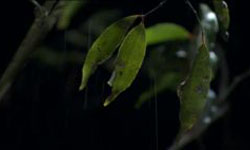
Follows the animals\' fortunes through the wet and dry seasons in this island of extremes.
- TV-Recordings
- Biology
- TV-Recordings
- No subtitles
- 60
Follows the animals\' fortunes through the wet and dry seasons in this island of extremes.
-
Madagascar - Lost Worlds
-
BBC 1
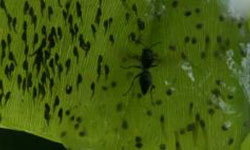
A look at the eastern coast of the island and its unique wildlife.
- TV-Recordings
- Biology
- TV-Recordings
- No subtitles
- 60
A look at the eastern coast of the island and its unique wildlife.

Dr Hannah Fry and a virtual host present a new way of making television, as the BBC uses artificial intelligence to delve into the treasures of the BBC Archive.
- TV-Recordings
- English subtitles
- 59
Dr Hannah Fry and a virtual host present a new way of making television, as the BBC uses artificial intelligence to delve into the treasures of the BBC Archive.
-
Magic Numbers: Hannah Fry's Mysterious World of Maths
-
BBC
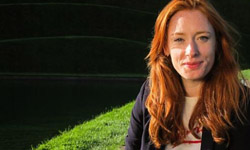
Documentary series in which Dr Hannah Fry explores the mystery of maths. Is it invented like a language or is it discovered and part of the fabric of the universe?
- TV-Recordings
- English subtitles
- 180
Documentary series in which Dr Hannah Fry explores the mystery of maths. Is it invented like a language or is it discovered and part of the fabric of the universe?
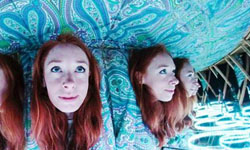
Documentary series in which Dr Hannah Fry explores the mystery of maths. Is it invented like a language, or is it discovered and part of the fabric of the universe?
- TV-Recordings
- English subtitles
- 60
Documentary series in which Dr Hannah Fry explores the mystery of maths. Is it invented like a language, or is it discovered and part of the fabric of the universe?
Documentary series. Dr Hannah Fry travels down the fastest zip wire in the world to learn more about Newton's ideas on gravity.
- TV-Recordings
- English subtitles
- 60
Documentary series. Dr Hannah Fry travels down the fastest zip wire in the world to learn more about Newton's ideas on gravity.
Documentary series. Dr Hannah Fry explores a paradox at the heart of modern maths, and what maths reveals about the fundamental building blocks of the universe.
- TV-Recordings
- English subtitles
- 60
Documentary series. Dr Hannah Fry explores a paradox at the heart of modern maths, and what maths reveals about the fundamental building blocks of the universe.
-
Marie Curie, au-delà du mythe
-
Arte , 2011
Intimate portrait of the scientist and Nobel Prize winner.
- TV-Recordings
- English subtitles
- 60
Intimate portrait of the scientist and Nobel Prize winner.
In just seven years, Mark Zuckerberg has gone from his Harvard college dorm to running a business with 800 million users, and a possible value of $100 billion. His idea to 'make the world more open and connected' has sparked a revolution in communication, and now looks set to have a huge impact on business too.
- TV-Recordings
- Business & Management
- Computer Science
- TV-Recordings
- No subtitles
- 60
In just seven years, Mark Zuckerberg has gone from his Harvard college dorm to running a business with 800 million users, and a possible value of $100 billion. His idea to 'make the world more open and connected' has sparked a revolution in communication, and now looks set to have a huge impact on business too.
-
Measuring Mass: The Last Artefact
-
Jaime Jacobsen
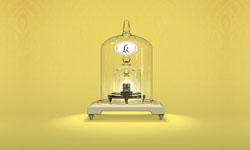
A piece of metal that defines the mass of a kilogramme has, over time, lost the equivalent of the weight of an eyelash. What are the consequences for how we measure our world?
- TV-Recordings
- English subtitles
- 56
A piece of metal that defines the mass of a kilogramme has, over time, lost the equivalent of the weight of an eyelash. What are the consequences for how we measure our world?
-
Men of Rock
-
BBC
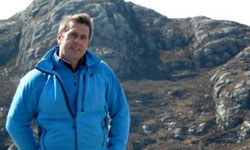
Geologist Iain Stewart retraces the steps of a band of maverick pioneers who made ground-breaking discoveries in the landscape of Scotland about how our planet works.
- TV-Recordings
- No subtitles
- 180
Geologist Iain Stewart retraces the steps of a band of maverick pioneers who made ground-breaking discoveries in the landscape of Scotland about how our planet works.
Iain Stewart follows in the footsteps of the founding father of geology, James Hutton. This Scottish rogue was a profound and original thinker who, 250 years ago, overturned ancient beliefs about how and when the world was formed. His ideas clashed with those of the most eminent scientist of his day. Lord Kelvin was determined to prove Hutton wrong.
- TV-Recordings
- Geology
- History
- TV-Recordings
- No subtitles
- 60
Iain Stewart follows in the footsteps of the founding father of geology, James Hutton. This Scottish rogue was a profound and original thinker who, 250 years ago, overturned ancient beliefs about how and when the world was formed. His ideas clashed with those of the most eminent scientist of his day. Lord Kelvin was determined to prove Hutton wrong.
Iain finds out how gung-ho geologist Edward Bailey discovered Scotland was once home to super volcanoes. And how unsung hero Arthur Holmes solved the mystery of what makes continents move across the surface of the globe.
- TV-Recordings
- Geography
- Geology
- TV-Recordings
- No subtitles
- 60
Iain finds out how gung-ho geologist Edward Bailey discovered Scotland was once home to super volcanoes. And how unsung hero Arthur Holmes solved the mystery of what makes continents move across the surface of the globe.
In the final episode, Iain finds out about daredevil scientist Louis Agassiz, who first imagined the world had been gripped by an ice age. Plus, the story of humble janitor James Croll, who used the planets to work out the natural rhythms of the earth\'s climate.
- TV-Recordings
- Geography
- Geology
- TV-Recordings
- No subtitles
- 60
In the final episode, Iain finds out about daredevil scientist Louis Agassiz, who first imagined the world had been gripped by an ice age. Plus, the story of humble janitor James Croll, who used the planets to work out the natural rhythms of the earth\'s climate.