

-
Losing the Past 2
-
Richard Hollingham
A timely investigation into the loss of cultural, public and historical records, both analogue and digital, as a result of deterioration or advances in technology. Richard Hollingham investigates specific examples of what is now unplayable or unreadable. For example, he can reveal for the first time, that the UK population census data from 1951 are lost, as are significant parts of the 1961 and 1971 census data. And he hears from the long-term percussionist of The Grateful Dead, Mickey Hart, why the Grateful Dead, unlike other leading touring bands, still have all their master tapes intact. He also finds out about successful efforts on both sides of the Atlantic for preserving and recuperating sound and music.
A timely investigation into the loss of cultural, public and historical records, both analogue and digital, as a result of deterioration or advances in technology. Richard Hollingham investigates specific examples of what is now unplayable or unreadable. For example, he can reveal for the first time, that the UK population census data from 1951 are lost, as are significant parts of the 1961 and 1971 census data. And he hears from the long-term percussionist of The Grateful Dead, Mickey Hart, why the Grateful Dead, unlike other leading touring bands, still have all their master tapes intact. He also finds out about successful efforts on both sides of the Atlantic for preserving and recuperating sound and music.

-
Redesigning the Human Body - The Skin We're in
-
Len Fisher
Len Fisher wonders how the body would work if we had a go at remaking ourselves. Len confronts his reflection, and dreams about what he could do to make his skin more appealing.
Len Fisher wonders how the body would work if we had a go at remaking ourselves. Len confronts his reflection, and dreams about what he could do to make his skin more appealing.

A hundred years on from Albert Einstein's 'miracle year' of 1905, Radio 4 talks to writers and artists who have wrestled with the scientific legacy of modern physics in their work. Michael Frayn's acclaimed stage play, Copenhagen, opened at the National Theatre in 1998. The story of a meeting between two theoretical physicists during the early years of Second World War, it's been hailed as the most successful use of science on the stage.
A hundred years on from Albert Einstein's 'miracle year' of 1905, Radio 4 talks to writers and artists who have wrestled with the scientific legacy of modern physics in their work. Michael Frayn's acclaimed stage play, Copenhagen, opened at the National Theatre in 1998. The story of a meeting between two theoretical physicists during the early years of Second World War, it's been hailed as the most successful use of science on the stage.

With the help of fellow author and mathematician Ian Stewart, Pratchett explains his love of science, his fascination with Einstein and the science behind the fantasy world he's created and sold to more than 20 countries worldwide. "Any sufficiently advanced technology is indistinguishable from magic" said Arthur C Clarke decades ago and it holds true today. Just try and explain how your mobile phone or dvd player works. With the help of fellow author and mathematician Ian Stewart, Pratchett explains his love of science, his fascination with Einstein and the science behind the fantasy world he's created and sold to more than 20 countries worldwide.
With the help of fellow author and mathematician Ian Stewart, Pratchett explains his love of science, his fascination with Einstein and the science behind the fantasy world he's created and sold to more than 20 countries worldwide. "Any sufficiently advanced technology is indistinguishable from magic" said Arthur C Clarke decades ago and it holds true today. Just try and explain how your mobile phone or dvd player works. With the help of fellow author and mathematician Ian Stewart, Pratchett explains his love of science, his fascination with Einstein and the science behind the fantasy world he's created and sold to more than 20 countries worldwide.

Comedian Mark Steel has delved into the great man's life and found a great deal to laugh about, if only in theory. "Two things are infinite: the universe and human stupidity; and I'm not sure about the universe." (AE). One doesn't normally associate humour with physics but Einstein has proved the exception, at least for two artists. The first is New Yorker Sid Harris who's been churning out science cartoons for reputable journals since the late sixties.Comedian Mark Steel has delved into the great man's life and found a great deal to laugh about, if only in theory.
Comedian Mark Steel has delved into the great man's life and found a great deal to laugh about, if only in theory. "Two things are infinite: the universe and human stupidity; and I'm not sure about the universe." (AE). One doesn't normally associate humour with physics but Einstein has proved the exception, at least for two artists. The first is New Yorker Sid Harris who's been churning out science cartoons for reputable journals since the late sixties.Comedian Mark Steel has delved into the great man's life and found a great deal to laugh about, if only in theory.

Two physicists turned novelists - Gregory Benford and Andrew Crumey share their thoughts on the nature of time and Einstein's theories of Special and General relativity through their books Timescape and Mobius Dick. Whilst both writers can be placed in the genre of science fiction, their stories are firmly rooted in the latest research and theoretical musings of Einstein's latter-day followers.
Two physicists turned novelists - Gregory Benford and Andrew Crumey share their thoughts on the nature of time and Einstein's theories of Special and General relativity through their books Timescape and Mobius Dick. Whilst both writers can be placed in the genre of science fiction, their stories are firmly rooted in the latest research and theoretical musings of Einstein's latter-day followers.

-
Science Blacklist
-
Justin Webb
BBC Washington correspondent Justin Webb investigates claims that the US government is manipulating scientific research.
BBC Washington correspondent Justin Webb investigates claims that the US government is manipulating scientific research.

To most of us, viruses are the cause of illnesses like flu and measles. But to Angela Belcher of MIT, they’re the ideal building blocks for creating new materials at close to the atomic scale, in the new science of nanotechnology.
To most of us, viruses are the cause of illnesses like flu and measles. But to Angela Belcher of MIT, they’re the ideal building blocks for creating new materials at close to the atomic scale, in the new science of nanotechnology.

-
The Reith Lectures 2003 - 1 - Phantoms in the Brain
-
Vilayanur S. Ramachandran
Scientists need no longer be afraid to ask the big questions about what it means to be human with empirical evidence now answering ancient philosophical questions about meaning and existence
Scientists need no longer be afraid to ask the big questions about what it means to be human with empirical evidence now answering ancient philosophical questions about meaning and existence

-
The Reith Lectures 2003 - 2 - Synapses and the Self
-
Vilayanur S. Ramachandran
How does the activity of the 100 billion little wisps of protoplasm - the neurons in your brain - give rise to all the richness of our conscious experience, including the "redness" of red, the painfulness of pain or the exquisite flavour of Marmite or Vindaloo?
How does the activity of the 100 billion little wisps of protoplasm - the neurons in your brain - give rise to all the richness of our conscious experience, including the "redness" of red, the painfulness of pain or the exquisite flavour of Marmite or Vindaloo?

-
The Reith Lectures 2003 - 3 - The Artful Brain
-
Vilayanur S. Ramachandran
Professor Ramachandran draws on neurological case studies and work from ethology (animal behavior) to present a new framework for understanding how the brain creates and responds to art. He will use examples mainly from Indian art and Cubism to illustrate these ideas.
Professor Ramachandran draws on neurological case studies and work from ethology (animal behavior) to present a new framework for understanding how the brain creates and responds to art. He will use examples mainly from Indian art and Cubism to illustrate these ideas.

-
The Reith Lectures 2003 - 4 - Purple Numbers and Sharp Cheese
-
Vilayanur S. Ramachandran
Professor Ramachandran demonstrates experimentally that the phenomenon of synesthaesia is a genuine sensory effect. For example, some subjects literally "see" red every time they see the number 5 or green when they see 2.
Professor Ramachandran demonstrates experimentally that the phenomenon of synesthaesia is a genuine sensory effect. For example, some subjects literally "see" red every time they see the number 5 or green when they see 2.

-
The Reith Lectures 2003 - 5 - Neuroscience: The New Philosophy
-
Vilayanur S. Ramachandran
Professor Ramachandran argues that neuroscience, perhaps more than any other discipline, is capable of transforming man's understanding of himself and his place in the cosmos.
Professor Ramachandran argues that neuroscience, perhaps more than any other discipline, is capable of transforming man's understanding of himself and his place in the cosmos.

Since time immemorial people have been entranced by structures of great size. From the Colossus of Rhodes and the Great Pyramid, themselves no mean technical achievements, to the mighty Cunard 'Queens' built here in Glasgow, and whichever is transiently the tallest building in the world, beholders have gaped at the gigantic. One simple attraction has been that of comparative scale, so many times the size of a man or a horse or of Nelson's column, as popular illustrations used to show. It was easy for the bystander immediately to apprehend the vast size of these objects...
Since time immemorial people have been entranced by structures of great size. From the Colossus of Rhodes and the Great Pyramid, themselves no mean technical achievements, to the mighty Cunard 'Queens' built here in Glasgow, and whichever is transiently the tallest building in the world, beholders have gaped at the gigantic. One simple attraction has been that of comparative scale, so many times the size of a man or a horse or of Nelson's column, as popular illustrations used to show. It was easy for the bystander immediately to apprehend the vast size of these objects...

Scientific Horizons: Martin Rees, President of the Royal Society, Master of Trinity College and Astronomer Royal, delivers four lectures exploring the challenges facing science in the 21st century.In the first lecture he asks who we should trust to explain the risks we face.
Scientific Horizons: Martin Rees, President of the Royal Society, Master of Trinity College and Astronomer Royal, delivers four lectures exploring the challenges facing science in the 21st century.In the first lecture he asks who we should trust to explain the risks we face.

Does science have the answers to help us save our planet?
Does science have the answers to help us save our planet?
-
Arcan-Virus
-
Andreas D. Hesse , , 2004
Fantasy/science fiction novel. Everyone on earth must get a weekly dose of the antiviral drug Carviron to keep from dying.
- 3-794-17025-3 5315
- Reading
- 1 copies
- B1 B2
Fantasy/science fiction novel. Everyone on earth must get a weekly dose of the antiviral drug Carviron to keep from dying.
-
English for Science
-
Fran Zimmerman , Prentice Hall , 1989
This book is intended to prepare students to participate in basic science courses, especially by aiming to develop concepts of critical thinking and inquiry. It integrates the four basic language skills - reading, writing, listening and speaking - to facilitate the leap from basic English to academic English and prepare students to comprehend and use college-level science material
- 0-132-82179-6 2412
- Special Interest
- General Science
- Special Interest
- 1 copies
- B1 B2 C1
This book is intended to prepare students to participate in basic science courses, especially by aiming to develop concepts of critical thinking and inquiry. It integrates the four basic language skills - reading, writing, listening and speaking - to facilitate the leap from basic English to academic English and prepare students to comprehend and use college-level science material
-
Epistemic Cultures - How the Sciences Make Knowledge
-
Karin Knorr Cetina , Harvard University Press , 1999
Comtemporary western societies are becoming "knowledge societies," that run on expert processes and expert systems epitomised by science and structured into all areas of social life. By looking at epistemic cultures in two sample cases, this book addresses pressing questions about how such expert systems and processes work, what principles inform their cognitive and procedural orientations and whether their organisation, structures and operations can be extended to other forms of social order
- 0-674-25894-0 3640
- Special Interest
- General Science
- Special Interest
- 1 copies
- C1 C2
Comtemporary western societies are becoming "knowledge societies," that run on expert processes and expert systems epitomised by science and structured into all areas of social life. By looking at epistemic cultures in two sample cases, this book addresses pressing questions about how such expert systems and processes work, what principles inform their cognitive and procedural orientations and whether their organisation, structures and operations can be extended to other forms of social order
-
Infotech - English for computer users
-
Santiago Remacha Esteras , Cambridge University Press , 1999
This book is a comprehensive course for intermediate level learners who need to understand and use the English of computing for study and work
- 0-521-65720-2 2547
- Special Interest
- Computer Science
- 1 copies
- B1 B2 C1
This book is a comprehensive course for intermediate level learners who need to understand and use the English of computing for study and work

-
Insights of Genius - Imagery and Creativity In Science And Art
-
Arthur I. Miller , Copernicus , 1996
In this book Arthur Miller brings together some of the profoundest mysteries of both art and science. Displaying a subtle grasp of subjects as divergent as quantum physics, Cubist painting, and philosophy of mind, the author shows how some of the great geniuses of the past few centuries had to change the way they saw in order to achieve their greatest works
- 0-387-94671-3 962
- Special Interest
- Art & Design
- Special Interest
- 1 copies
- B2 C1 C2
In this book Arthur Miller brings together some of the profoundest mysteries of both art and science. Displaying a subtle grasp of subjects as divergent as quantum physics, Cubist painting, and philosophy of mind, the author shows how some of the great geniuses of the past few centuries had to change the way they saw in order to achieve their greatest works
-
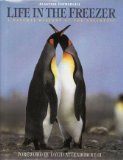
Life In The Freezer
-
Alistair Fothergill , BBC Books , 1993
"Life in the Freezer" is an exciting new natural history of the Antarctic. Less celebrated than its northern equivalent, it boasts an equal blend of extraordinary wildlife and stunning scenery. In this book, Alastair Fothergill traces the region's seasonal cycle and explains how marine, mammal, bird and plant life survive in one of the harshest climates on earth
- 0-563-36431-9 2557
- Special Interest
- General Science
- 1 copies
- C1 C2
"Life in the Freezer" is an exciting new natural history of the Antarctic. Less celebrated than its northern equivalent, it boasts an equal blend of extraordinary wildlife and stunning scenery. In this book, Alastair Fothergill traces the region's seasonal cycle and explains how marine, mammal, bird and plant life survive in one of the harshest climates on earth
-
Measurements and their Uncertainties - A Practical Guide to Modern Error Analysis
-
Ifan G. Hughes & Thomas P.A. Hase , Oxford University Press , 2010
This hands-on guide is primarily intended to be used in undergraduate laboratories in the physical sciences and engineering. It assumes no prior knowledge of statistics. It introduces the necessary concepts where needed, with key points illustrated with worked examples and graphic illustrations. In contrast to traditional mathematical treatments it uses a combination of spreadsheet and calculus-0based approaches, suitable as a quick and easy on-the-spot reference. The emphasis throughout is on practical strategies to be adopted in the laboratory.
- 9780199566334 109131
- Special Interest
- Physics
- Special Interest
- 1 copies
This hands-on guide is primarily intended to be used in undergraduate laboratories in the physical sciences and engineering. It assumes no prior knowledge of statistics. It introduces the necessary concepts where needed, with key points illustrated with worked examples and graphic illustrations. In contrast to traditional mathematical treatments it uses a combination of spreadsheet and calculus-0based approaches, suitable as a quick and easy on-the-spot reference. The emphasis throughout is on practical strategies to be adopted in the laboratory.
-
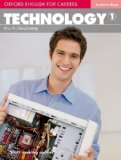
Oxford English for Careers: Technology 1, Student's Book
-
Eric H. Glendinning , Oxford University Press , 2007
Oxford English for Careers is a new, up-to-date course where you learn what you need to know for a career in technology. Learn the English you need to do the job; practise language in real work situations; Learn specialist vocabulary on every page.
- 9780194569507 101436
- Special Interest
- General Science
- 1 copies
- A2 B1
Oxford English for Careers is a new, up-to-date course where you learn what you need to know for a career in technology. Learn the English you need to do the job; practise language in real work situations; Learn specialist vocabulary on every page.
-
Oxford English for Information Technology
-
Eric H. Glendinning & John McEwan , Oxford University Press , 2002
This course is designed for people studying Information Technology and Computing, or working in the IT sector. It is suitable for use in universities, technical schools and adult education programmes with intermediate to advanced level students who want to improve and extend their language skills in the context of IT.
- 0194573753 106508
- Special Interest
- Computer Science
- 1 copies
- B1 B2 C1 C2
This course is designed for people studying Information Technology and Computing, or working in the IT sector. It is suitable for use in universities, technical schools and adult education programmes with intermediate to advanced level students who want to improve and extend their language skills in the context of IT.

-
The Language Web
-
Jean Aitchison , Cambridge University Press , 1997
In this book, Jean Aitchison discusses, among other things, the evolution of language in the human species and how it is acquired by children
- 0-521-57475-7 1082
- Special Interest
- Computer Science
- 1 copies
- C1 C2
In this book, Jean Aitchison discusses, among other things, the evolution of language in the human species and how it is acquired by children
-
Klimawandel: Die Zahlen
-
BBC , 2015
. Presented by three mathematicians - Dr Hannah Fry, Prof Norman Fenton and Prof David Spiegelhalter - it hones in on just three key numbers that clarify all the important questions around climate change. The stories behind these numbers involve an extraordinary cast of characters, almost all of whom had nothing to do with climate change, but whose work is critical to our understanding of the climate.
- TV-Recordings
- No subtitles
- 90
. Presented by three mathematicians - Dr Hannah Fry, Prof Norman Fenton and Prof David Spiegelhalter - it hones in on just three key numbers that clarify all the important questions around climate change. The stories behind these numbers involve an extraordinary cast of characters, almost all of whom had nothing to do with climate change, but whose work is critical to our understanding of the climate.

In the second episode, Fortey travels to the rainforests of Madagascar - an ancient island that has spawned some of the most extraordinary groups of plants and animals anywhere in the world.
- TV-Recordings
- English subtitles
- 60
In the second episode, Fortey travels to the rainforests of Madagascar - an ancient island that has spawned some of the most extraordinary groups of plants and animals anywhere in the world.
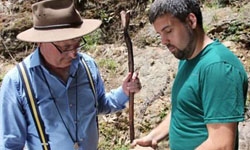
In the final episode, Richard travels to Madeira to examine what happens to a volcanic island as it nears the end of its life-cycle and starts sinking back into the sea.
- TV-Recordings
- English subtitles
- 60
In the final episode, Richard travels to Madeira to examine what happens to a volcanic island as it nears the end of its life-cycle and starts sinking back into the sea.

-
2020: The Story Of Us
-
Kevin Macdonald
Oscar-winner Kevin Macdonald followed healthcare staff and Covid patients during the first wave of the virus - but found an unexpected story
- TV-Recordings
- English subtitles
- 64
Oscar-winner Kevin Macdonald followed healthcare staff and Covid patients during the first wave of the virus - but found an unexpected story