

Diploma 2014
Diploma 2014

-
Water for a Thirsty World – Evaluating Reliability and Risks of Groundwater Resources
-
Dr. W.G. Burgess , 2015
Diploma Lecture 27th April 2015
Diploma Lecture 27th April 2015
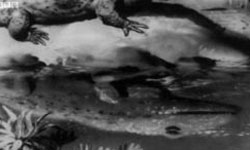
For paleontologist Professor Jenny Clack, who solved one of the greatest mysteries in the history of life on Earth, success was far from inevitable. She recounts how she had to overcome a series of setbacks before she found and described the fossil Acanthostega, a 365 million-year-old creature that offered dramatic new evidence of how fish made the transition onto land.
- TV-Recordings
- Biology
- TV-Recordings
- No subtitles
- 60
For paleontologist Professor Jenny Clack, who solved one of the greatest mysteries in the history of life on Earth, success was far from inevitable. She recounts how she had to overcome a series of setbacks before she found and described the fossil Acanthostega, a 365 million-year-old creature that offered dramatic new evidence of how fish made the transition onto land.
-
British Isles: A Natural History
-
BBC
Alan Titchmarsh travels Britain to discover why our islands are so diverse, beautiful and extreme.
- TV-Recordings
- No subtitles
- 178
Alan Titchmarsh travels Britain to discover why our islands are so diverse, beautiful and extreme.
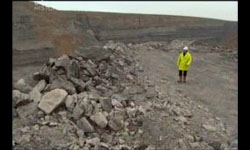
From Jurassic Oxford to Scotland's Himalayas, Alan explores the secret history hidden in the rocks beneath our feet. He discovers how Scotland and England drifted together from their original locations, near the Equator and the South Pole, and finds fossils which reveal that the Yorkshire Dales was once a sea with coral reefs.
- TV-Recordings
- Geography
- TV-Recordings
- No subtitles
- 46
From Jurassic Oxford to Scotland's Himalayas, Alan explores the secret history hidden in the rocks beneath our feet. He discovers how Scotland and England drifted together from their original locations, near the Equator and the South Pole, and finds fossils which reveal that the Yorkshire Dales was once a sea with coral reefs.
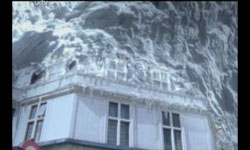
Alan gets under the skin of the much misunderstood Neanderthal man, examines relics from the past and discovers that an ice sheet covering most of Britain stopped at London's Finchley Road tube station..
- TV-Recordings
- Geography
- TV-Recordings
- No subtitles
- 46
Alan gets under the skin of the much misunderstood Neanderthal man, examines relics from the past and discovers that an ice sheet covering most of Britain stopped at London's Finchley Road tube station..
-
Earth Story
-
Danielle Peck
Aubrey Manning explores our understanding of the planet.
- TV-Recordings
- No subtitles
- 480
Aubrey Manning explores our understanding of the planet.

-
Earth Story - 01 The Time Travellers
-
Danielle Peck
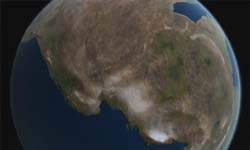
Aubrey Manning explores a revolution in our understanding of the planet. He starts out by trying to date the Earth, aided by surviving fragments of early Earth found in Greenland and South Africa's Barbertan Mountains. First in the series
- TV-Recordings
- Geography
- TV-Recordings
- No subtitles
- 59
Aubrey Manning explores a revolution in our understanding of the planet. He starts out by trying to date the Earth, aided by surviving fragments of early Earth found in Greenland and South Africa's Barbertan Mountains. First in the series
-
Earth Story - 02 The Deep
-
Danielle Peck
Aubrey Manning follows the research submarine "Alvin" on a dive to the world's longest mountain range. Second in the series
- TV-Recordings
- Geography
- TV-Recordings
- No subtitles
- 58
Aubrey Manning follows the research submarine "Alvin" on a dive to the world's longest mountain range. Second in the series
-
Earth Story - 03 Ring of Fire
-
Danielle Peck
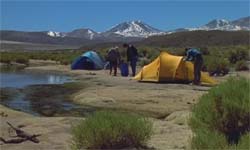
Aubrey Manning discovers Pacific seawater in a Bolivian volcano 6,000m above sea level. Third in the series
- TV-Recordings
- Geography
- TV-Recordings
- No subtitles
- 58
Aubrey Manning discovers Pacific seawater in a Bolivian volcano 6,000m above sea level. Third in the series
-
Earth Story - 04 Journey to the Centre of the Earth
-
Danielle Peck
Aubrey Manning investigates volcanic activity worldwide. Fourth in the series
- TV-Recordings
- Geography
- TV-Recordings
- No subtitles
- 60
Aubrey Manning investigates volcanic activity worldwide. Fourth in the series
-
Earth Story - 05 The Roof of the World
-
Danielle Peck
Aubrey Manning explains how scientists have developed new theories concerning mountain formation, by studying the Himalayas at the top of the Indian subcontinent. Fifth in the series
- TV-Recordings
- Geography
- TV-Recordings
- No subtitles
- 60
Aubrey Manning explains how scientists have developed new theories concerning mountain formation, by studying the Himalayas at the top of the Indian subcontinent. Fifth in the series
-
Earth Story - 06 The Big Freeze
-
Danielle Peck
Aubrey Manning traces the turbulent history of the Ice Age in a journey spanning the globe. Sixth in the series
- TV-Recordings
- Geography
- TV-Recordings
- No subtitles
- 60
Aubrey Manning traces the turbulent history of the Ice Age in a journey spanning the globe. Sixth in the series
-
Earth Story - 07 The Living Earth
-
Danielle Peck
Aubrey Manning continues his global trek from the jungles of Indonesia to the plains of Africa, and discovers how chance events in history have shaped the evolution of life on Earth. Seventh in the series
- TV-Recordings
- Geography
- TV-Recordings
- No subtitles
- 60
Aubrey Manning continues his global trek from the jungles of Indonesia to the plains of Africa, and discovers how chance events in history have shaped the evolution of life on Earth. Seventh in the series
-
Earth Story - 08 A World Apart
-
Danielle Peck
Aubrey Manning sets out to discover why the Earth is a living planet and our planetary neighbours like Mars and Venus are not. Eighth in the series
- TV-Recordings
- Geography
- TV-Recordings
- No subtitles
- 60
Aubrey Manning sets out to discover why the Earth is a living planet and our planetary neighbours like Mars and Venus are not. Eighth in the series
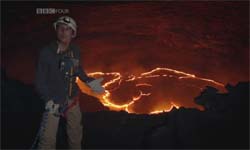
Documentary series. Dr Iain Stewart reveals the role natural forces have played in the creation of the planet Earth, beginning with volcanoes
- TV-Recordings
- Geography
- TV-Recordings
- No subtitles
- 59
Documentary series. Dr Iain Stewart reveals the role natural forces have played in the creation of the planet Earth, beginning with volcanoes
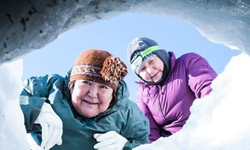
Earth's Natural Wonders are parts of the natural world that nature has carved on such a scale, that they beggar belief - vast mountain ranges, impenetrable rainforests and dazzling tropical islands.
- TV-Recordings
- No subtitles
- 60
Earth's Natural Wonders are parts of the natural world that nature has carved on such a scale, that they beggar belief - vast mountain ranges, impenetrable rainforests and dazzling tropical islands.
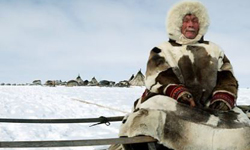
In many of the earth's natural wonders there is an abundance of animals. These can be a devastating threat to the people who live there, or they can provide a means of survival, but often at a high price.
- TV-Recordings
- No subtitles
- 60
In many of the earth's natural wonders there is an abundance of animals. These can be a devastating threat to the people who live there, or they can provide a means of survival, but often at a high price.
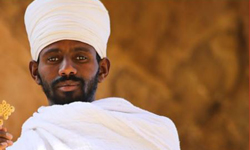
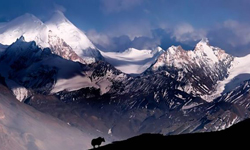
In some of the world's most spectacular natural wonders, people push themselves to the limit in order to survive. For the people who call these extraordinary places home, survival requires skill, ingenuity and bravery.
- TV-Recordings
- No subtitles
- 60
In some of the world's most spectacular natural wonders, people push themselves to the limit in order to survive. For the people who call these extraordinary places home, survival requires skill, ingenuity and bravery.
-
Earth's Natural Wonders Series 2 (HD)
-
BBC
Documentary series examining what it takes to survive in some of the most extreme places on the planet.
- TV-Recordings
- Natural World
- No subtitles
- 180
Documentary series examining what it takes to survive in some of the most extreme places on the planet.

The hunt for life within the long-dead bones of dinosaurs may sound like the stuff of Hollywood fantasy - but one woman has found traces of life within the fossilised bones of a T Rex.
- TV-Recordings
- Genetics
- English subtitles
- 60
The hunt for life within the long-dead bones of dinosaurs may sound like the stuff of Hollywood fantasy - but one woman has found traces of life within the fossilised bones of a T Rex.

Earthquakes are among the most devastating natural disasters on the planet. In the last hundred years they have claimed the lives of over one million people. Earthquakes are destructive mainly because of their unpredictable nature. It is impossible to say accurately when a quake will strike but a new theory developed by Professor Geoffrey King could help save lives by preparing cities long in advance for an earthquake
- TV-Recordings
- Geography
- Physics
- TV-Recordings
- No subtitles
- 46
Earthquakes are among the most devastating natural disasters on the planet. In the last hundred years they have claimed the lives of over one million people. Earthquakes are destructive mainly because of their unpredictable nature. It is impossible to say accurately when a quake will strike but a new theory developed by Professor Geoffrey King could help save lives by preparing cities long in advance for an earthquake
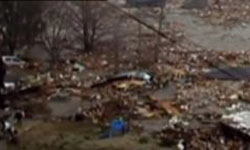
Professor Iain Stewart examines the powerful geological forces that unleashed the devastating Japanese earthquake, and explores how the release of this power of the planet brought Japan to the brink of a nuclear meltdown.
- TV-Recordings
- Environmental Studies
- Geology
- TV-Recordings
- No subtitles
- 60
Professor Iain Stewart examines the powerful geological forces that unleashed the devastating Japanese earthquake, and explores how the release of this power of the planet brought Japan to the brink of a nuclear meltdown.

It is said that once, the mighty King Solomon ruled an empire that stretched across the ancient world. According to Biblical lore, at the height of his powers he built the ‘First Temple’, the most magnificent building of its day, bedecked in gold, to house the Ark of the Covenant
- TV-Recordings
- Archaeology
- Religion
- TV-Recordings
- No subtitles
- 50
It is said that once, the mighty King Solomon ruled an empire that stretched across the ancient world. According to Biblical lore, at the height of his powers he built the ‘First Temple’, the most magnificent building of its day, bedecked in gold, to house the Ark of the Covenant

In the early 1950's, oil geologists discovered the signs of a giant tsunami, half a kilometer high, that hit a remote bay in Alaska. After research, scientists concluded that the tsunami was created by a landslide in the ocean off the coast. Since then, scientists who study tsunamis have discovered several sites around the world where major under water landslides could create giant or mega tsunami
- TV-Recordings
- Geography
- TV-Recordings
- No subtitles
- 10
In the early 1950's, oil geologists discovered the signs of a giant tsunami, half a kilometer high, that hit a remote bay in Alaska. After research, scientists concluded that the tsunami was created by a landslide in the ocean off the coast. Since then, scientists who study tsunamis have discovered several sites around the world where major under water landslides could create giant or mega tsunami
Professor Iain Stewart travels to Florida to try and understand what killed Jeff, and why the geology of this state makes it the sinkhole capital of the world.
- TV-Recordings
- Geology
- English subtitles
- 59
Professor Iain Stewart travels to Florida to try and understand what killed Jeff, and why the geology of this state makes it the sinkhole capital of the world.
-
Horizon - The Core
-
BBC 2
For centuries we have dreamt of reaching the centre of the Earth. Now scientists are uncovering a bizarre and alien world that lies 4,000 miles beneath our feet, unlike anything we know on the surface
- TV-Recordings
- Geology
- Physics
- TV-Recordings
- No subtitles
- 60
For centuries we have dreamt of reaching the centre of the Earth. Now scientists are uncovering a bizarre and alien world that lies 4,000 miles beneath our feet, unlike anything we know on the surface

Famed for their ability to inflict Armageddon from outer space, asteroids are now revealing the secrets of how they are responsible for both life and death on our planet.
- TV-Recordings
- Astronomy
- Physics
- TV-Recordings
- English subtitles
- 58
Famed for their ability to inflict Armageddon from outer space, asteroids are now revealing the secrets of how they are responsible for both life and death on our planet.
-
How Earth Made Us
-
BBC
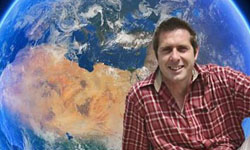
Professor Iain Stewart uses spectacular images to tells the epic story of how geology, geography and climate have influenced mankind.
- TV-Recordings
- English subtitles
- 300
Professor Iain Stewart uses spectacular images to tells the epic story of how geology, geography and climate have influenced mankind.
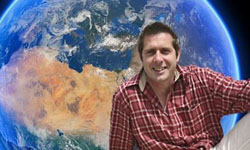
Professor Iain Stewart tells the epic story of how geology, geography and climate have influenced mankind.In this first episode, Iain explores the relationship between the deep Earth and the development of human civilisation. He visits an extraordinary crystal cave in Mexico, drops down a hole in the Iranian desert and crawls through seven-thousand-year-old tunnels in Israel.
- TV-Recordings
- Environmental Studies
- Geography
- Geology
- TV-Recordings
- English subtitles
- 60
Professor Iain Stewart tells the epic story of how geology, geography and climate have influenced mankind.In this first episode, Iain explores the relationship between the deep Earth and the development of human civilisation. He visits an extraordinary crystal cave in Mexico, drops down a hole in the Iranian desert and crawls through seven-thousand-year-old tunnels in Israel.