

The team showcase breakthroughs in technology and engineering that are creating a new generation of machines.
- TV-Recordings
- Engineering
- TV-Recordings
- No subtitles
- 60
The team showcase breakthroughs in technology and engineering that are creating a new generation of machines.

The experts examine how scientists are fighting for our survival by battling the world's big killer diseases.
- TV-Recordings
- Medical Sciences
- TV-Recordings
- No subtitles
- 60
The experts examine how scientists are fighting for our survival by battling the world's big killer diseases.
Science turns superhero as it battles to save the planet and preserve the human race.
- TV-Recordings
- Physics
- TV-Recordings
- No subtitles
- 60
Science turns superhero as it battles to save the planet and preserve the human race.
The experts unearth the amazing breakthroughs that are transforming the resilience and strength of the human body.
- TV-Recordings
- Biology
- TV-Recordings
- No subtitles
- 60
The experts unearth the amazing breakthroughs that are transforming the resilience and strength of the human body.
-
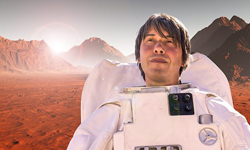
Brian Cox: Seven Days on Mars
-
Michael Lachmann
With unique access to Nasa, Brian Cox follows Perseverance rover’s search for life on Mars during a critical seven-day period as it undertakes an epic journey across the red planet.
- TV-Recordings
- English subtitles
- 99
With unique access to Nasa, Brian Cox follows Perseverance rover’s search for life on Mars during a critical seven-day period as it undertakes an epic journey across the red planet.
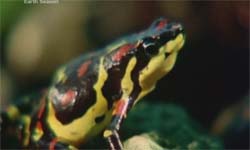
In the second of a two-part documentary, David Attenborough explores how much climate change is altering our planet, suggesting ways we can help.
- TV-Recordings
- Geography
- TV-Recordings
- No subtitles
- 59
In the second of a two-part documentary, David Attenborough explores how much climate change is altering our planet, suggesting ways we can help.

-
Charles Darwin and the Tree of Life
-
David Attenborough
David Attenborough asks three key questions: how and why did Darwin come up with his theory of evolution? Why do we think he was right? And why is it more important now than ever before?
- TV-Recordings
- Biology
- Humanities
- TV-Recordings
- No subtitles
- 50
David Attenborough asks three key questions: how and why did Darwin come up with his theory of evolution? Why do we think he was right? And why is it more important now than ever before?
-
Chasing the Moon
-
Robert Stone
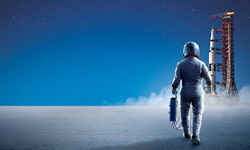
The story of the race to the Moon, from the launch of Sputnik 1 in 1957 to Apollo 11, and the first man to set foot on the Moon, in 1969.
- TV-Recordings
- English subtitles
- 288
The story of the race to the Moon, from the launch of Sputnik 1 in 1957 to Apollo 11, and the first man to set foot on the Moon, in 1969.
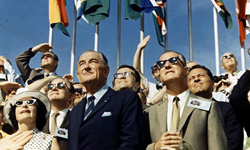
Documentary stories detailing America's determination to put a man on the moon ahead of Soviet Russia, beginning with how the launch of Sputnik 1 in 1957 compelled the USA to join the Space Race.
- TV-Recordings
- English subtitles
- 48
Documentary stories detailing America's determination to put a man on the moon ahead of Soviet Russia, beginning with how the launch of Sputnik 1 in 1957 compelled the USA to join the Space Race.
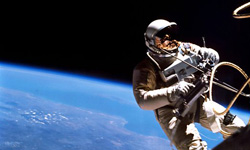
In little more than six months, America's John Glenn had matched Yuri Gagarin's feat of orbiting the Earth. But it was an event back on Earth that spurred America's ambition to win the Space Race.
- TV-Recordings
- English subtitles
- 48
In little more than six months, America's John Glenn had matched Yuri Gagarin's feat of orbiting the Earth. But it was an event back on Earth that spurred America's ambition to win the Space Race.
-
Chasing the Moon - Episode 3 - Earthrise - Part 1
-
Robert Stone
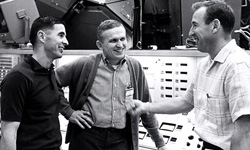
On 27 January 1967, the disastrous failure of Apollo 1 risked the cancellation of America's space programme altogether.
- TV-Recordings
- English subtitles
- 48
On 27 January 1967, the disastrous failure of Apollo 1 risked the cancellation of America's space programme altogether.

-
Chasing the Moon - Episode 4 - Earthrise - Part 2
-
Robert Stone
Within two years of the Apollo 1 fire, Apollo 8 became the first manned mission to escape the Earth's gravity and orbit the moon
- TV-Recordings
- English subtitles
- 48
Within two years of the Apollo 1 fire, Apollo 8 became the first manned mission to escape the Earth's gravity and orbit the moon
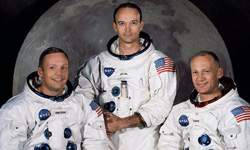
As Nasa chooses which astronauts will crew Apollo 11, the Soviet Union announces that it intends to schedule a mission to the moon of its own to coincide with America's lunar landing.
- TV-Recordings
- English subtitles
- 48
As Nasa chooses which astronauts will crew Apollo 11, the Soviet Union announces that it intends to schedule a mission to the moon of its own to coincide with America's lunar landing.
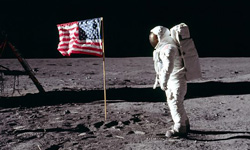
The success of Apollo 11 suggested the beginning of a new age of exploration. Instead, the lunar landing proved to be the highpoint of manned missions into space.
- TV-Recordings
- English subtitles
- 48
The success of Apollo 11 suggested the beginning of a new age of exploration. Instead, the lunar landing proved to be the highpoint of manned missions into space.
-
Chemistry: A Volatile History
-
BBC
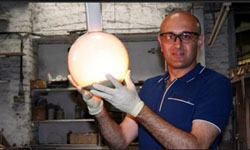
Series in which Jim Al-Khalili traces the story of how the elements, the building blocks that make up our entire world, were discovered and mapped
- TV-Recordings
- No subtitles
- No
Series in which Jim Al-Khalili traces the story of how the elements, the building blocks that make up our entire world, were discovered and mapped
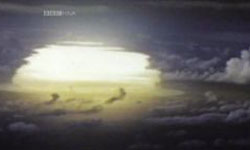
Series in which Jim Al-Khalili traces the story of how the elements, the building blocks that make up our entire world, were discovered and mapped.He follows in the footsteps of the pioneers who cracked their secrets and created a new science, propelling us into the modern age.
- TV-Recordings
- Chemistry
- TV-Recordings
- No subtitles
- 60
Series in which Jim Al-Khalili traces the story of how the elements, the building blocks that make up our entire world, were discovered and mapped.He follows in the footsteps of the pioneers who cracked their secrets and created a new science, propelling us into the modern age.

In part two, Professor Al-Khalili looks at the 19th century chemists who struggled to impose an order on the apparently random world of the elements. From working out how many there were to discovering their unique relationships with each other, the early scientists\' bid to decode the hidden order of the elements was driven by false starts and bitter disputes. But ultimately the quest would lead to one of chemistry\'s most beautiful intellectual creations - the periodic table.
- TV-Recordings
- Chemistry
- TV-Recordings
- No subtitles
- 60
In part two, Professor Al-Khalili looks at the 19th century chemists who struggled to impose an order on the apparently random world of the elements. From working out how many there were to discovering their unique relationships with each other, the early scientists\' bid to decode the hidden order of the elements was driven by false starts and bitter disputes. But ultimately the quest would lead to one of chemistry\'s most beautiful intellectual creations - the periodic table.
In the final part, Professor Al-Khalili uncovers tales of success and heartache in the story of chemists' battle to control and combine the elements, and build our modern world. He reveals the dramatic breakthroughs which harnessed their might to release almost unimaginable power, and he journeys to the centre of modern day alchemy, where scientists are attempting to command the extreme forces of nature and create brand new elements.
- TV-Recordings
- Chemistry
- TV-Recordings
- English subtitles
- 60
In the final part, Professor Al-Khalili uncovers tales of success and heartache in the story of chemists' battle to control and combine the elements, and build our modern world. He reveals the dramatic breakthroughs which harnessed their might to release almost unimaginable power, and he journeys to the centre of modern day alchemy, where scientists are attempting to command the extreme forces of nature and create brand new elements.

Today, the topic of climate change is a major part of daily life, yet 40 years ago it was virtually unheard of. Since then, Horizon and the BBC have followed scientists as they have tried to unpick how the climate works and whether it is changing.
- TV-Recordings
- Policy Challenges
- English subtitles
- 60
Today, the topic of climate change is a major part of daily life, yet 40 years ago it was virtually unheard of. Since then, Horizon and the BBC have followed scientists as they have tried to unpick how the climate works and whether it is changing.

Helen Czerski goes in search of colour. She reveals what it is, what it does, and why colour doesn't exist outside of our perception.In the first episode, Helen seeks out the colours that turned planet Earth multicoloured. This is an HQ version.
- TV-Recordings
- No subtitles
- 60
Helen Czerski goes in search of colour. She reveals what it is, what it does, and why colour doesn't exist outside of our perception.In the first episode, Helen seeks out the colours that turned planet Earth multicoloured. This is an HQ version.

The raw, early Earth had plenty of colour, but that was nothing compared with what was going to come next. That canvas was about to be painted with a vast new palette - and the source of those colours was life. Green is the colour of the natural world and yet it's the one colour that plants have evolved not to use.This is an HQ version.
- TV-Recordings
- No subtitles
- 60
The raw, early Earth had plenty of colour, but that was nothing compared with what was going to come next. That canvas was about to be painted with a vast new palette - and the source of those colours was life. Green is the colour of the natural world and yet it's the one colour that plants have evolved not to use.This is an HQ version.

We can't see in ultra violet, but many animals can. Helen explores what the world looks like to the birds and the bees. With the discovery of x-rays we could look inside ourselves in ways that previously had only been possible after death.This is an HQ version.
- TV-Recordings
- No subtitles
- 60
We can't see in ultra violet, but many animals can. Helen explores what the world looks like to the birds and the bees. With the discovery of x-rays we could look inside ourselves in ways that previously had only been possible after death.This is an HQ version.

-
Colour: The Spectrum of Science Series 1
-
BBC
Helen Czerski goes in search of colour. She reveals what it is, what it does, and why colour doesn't exist outside of our perception. This is an HQ version.
- TV-Recordings
- No subtitles
- 180
Helen Czerski goes in search of colour. She reveals what it is, what it does, and why colour doesn't exist outside of our perception. This is an HQ version.
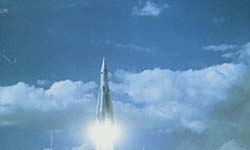
When Neil Armstrong stepped onto the moon in 1969, America went down in popular history as the winner of the space race. But that history is bunk. The real pioneers of space exploration were the Soviet cosmonauts.
- TV-Recordings
- Science and Technology
- English subtitles
- 90
When Neil Armstrong stepped onto the moon in 1969, America went down in popular history as the winner of the space race. But that history is bunk. The real pioneers of space exploration were the Soviet cosmonauts.
Astronomer Carl Sagan leads us on an engaging guided tour of the universe, bringing such topics as Einstein\\\'s theory of relativity and Darwin\\\'s theory of evolution down to a layman\\\'s level of understanding. The first episode opens with a description of the cosmos and introduces the iconic \\\'Spaceship of the Imagination\\\'
- TV-Recordings
- Astronomy
- English subtitles
- 50
Astronomer Carl Sagan leads us on an engaging guided tour of the universe, bringing such topics as Einstein\\\'s theory of relativity and Darwin\\\'s theory of evolution down to a layman\\\'s level of understanding. The first episode opens with a description of the cosmos and introduces the iconic \\\'Spaceship of the Imagination\\\'
-
Dangerous Earth
-
Dr Helen Czerski
Series showing how new camera technology is revealing the inner workings of the Earth's most spectacular natural wonders
- TV-Recordings
- Natural World
- English subtitles
- 180
Series showing how new camera technology is revealing the inner workings of the Earth's most spectacular natural wonders
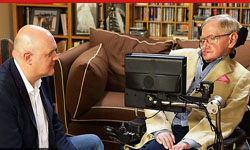
Since he was a teenager, Dara O Briain has been fascinated with professor Stephen Hawking, the world's most celebrated scientist. In this special film, Dara spends time with his boyhood hero as he attends the world premiere of The Theory of Everything, the movie made about his life, and then at Professor Hawking's home and place of work in Cambridge.
- TV-Recordings
- Physics
- English subtitles
- 45
Since he was a teenager, Dara O Briain has been fascinated with professor Stephen Hawking, the world's most celebrated scientist. In this special film, Dara spends time with his boyhood hero as he attends the world premiere of The Theory of Everything, the movie made about his life, and then at Professor Hawking's home and place of work in Cambridge.
-
Darwin's Dangerous Idea
-
BBC
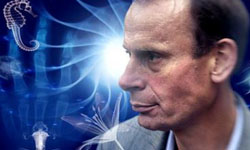
Andrew Marr explores how Darwin's theory of evolution by natural selection has taken on a life of its own far beyond the world of science
- TV-Recordings
- No subtitles
- 180
Andrew Marr explores how Darwin's theory of evolution by natural selection has taken on a life of its own far beyond the world of science
In the first episode of the three-part series, Andrew Marr explores how Darwin\'s theory of evolution by natural selection has taken on a life of its own far beyond the world of science.
- TV-Recordings
- Biology
- General Science
- TV-Recordings
- No subtitles
- 60
In the first episode of the three-part series, Andrew Marr explores how Darwin\'s theory of evolution by natural selection has taken on a life of its own far beyond the world of science.
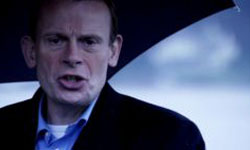
Andrew Marr discovers something surprising about his own evolutionary history as this epic series continues with an exploration of Darwin\'s impact on politics and society.
- TV-Recordings
- Biology
- General Science
- TV-Recordings
- No subtitles
- 60
Andrew Marr discovers something surprising about his own evolutionary history as this epic series continues with an exploration of Darwin\'s impact on politics and society.