
-
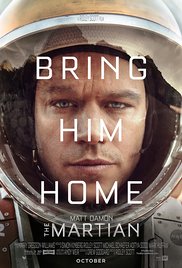
The Martian
-
Ridley Scott , 2015
An astronaut becomes stranded on Mars after his team assume him dead, and must rely on his ingenuity to find a way to signal to Earth that he is alive.
- Films
- English subtitles
- 144
An astronaut becomes stranded on Mars after his team assume him dead, and must rely on his ingenuity to find a way to signal to Earth that he is alive.
-
8 Days: To the Moon and Back
-
Anthony Philipson
Using dramatic reconstruction, declassified cockpit audio recorded by the astronauts themselves and film archive, this is the untold story of the first moon landing.
- TV-Recordings
- English subtitles
- 89
Using dramatic reconstruction, declassified cockpit audio recorded by the astronauts themselves and film archive, this is the untold story of the first moon landing.
-
Artemis: To the Moon and Back
-
Tim Lambert, Tom Ranson
The inside story of the Artemis II mission - filmed over three and a half years at NASA. How did four astronauts travel to the moon, going deeper into space than ever before?
- TV-Recordings
- English subtitles
- 59
The inside story of the Artemis II mission - filmed over three and a half years at NASA. How did four astronauts travel to the moon, going deeper into space than ever before?
-
Brian Cox: Seven Days on Mars
-
Michael Lachmann
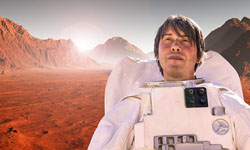
With unique access to Nasa, Brian Cox follows Perseverance rover’s search for life on Mars during a critical seven-day period as it undertakes an epic journey across the red planet.
- TV-Recordings
- English subtitles
- 99
With unique access to Nasa, Brian Cox follows Perseverance rover’s search for life on Mars during a critical seven-day period as it undertakes an epic journey across the red planet.
-
Brian Cox: Seven Days on Mars
-
Michael Lachmann
With unique access to Nasa, Brian Cox follows Perseverance rover’s search for life on Mars during a critical seven-day period as it undertakes an epic journey across the red planet.
- TV-Recordings
- English subtitles
- 89
With unique access to Nasa, Brian Cox follows Perseverance rover’s search for life on Mars during a critical seven-day period as it undertakes an epic journey across the red planet.

-
Brian Cox's Adventures in Space and Time - Series 1
-
Simon Winchcombe
Discovering our place in the universe. Brian Cox looks back on a decade of discovery and towards the next space frontier, asking the biggest question of all - what's next?
- TV-Recordings
- English subtitles
- 240
Discovering our place in the universe. Brian Cox looks back on a decade of discovery and towards the next space frontier, asking the biggest question of all - what's next?
-
Brian Cox's Adventures in Space and Time - Series 1 - Episode 1
-
Simon Winchcombe
Brian Cox explores the latest science and takes a new look at his old films and asks: how far can we go in our exploration of the cosmos?
- TV-Recordings
- English subtitles
- 59
Brian Cox explores the latest science and takes a new look at his old films and asks: how far can we go in our exploration of the cosmos?

-
Brian Cox's Adventures in Space and Time - Series 1 - Episode 2
-
Simon Winchcombe
Brian Cox looks at our attempts to answer one of the most profound questions we can ask – are we alone in the universe? In this film, he explains why this search should be taken seriously.
- TV-Recordings
- English subtitles
- 59
Brian Cox looks at our attempts to answer one of the most profound questions we can ask – are we alone in the universe? In this film, he explains why this search should be taken seriously.

-
Brian Cox's Adventures in Space and Time - Series 1 - Episode 3
-
Simon Winchcombe
Brian takes a fresh look at the concept of gravity, revealing it to be far more than just the force that makes things fall to the ground.
- TV-Recordings
- English subtitles
- 58
Brian takes a fresh look at the concept of gravity, revealing it to be far more than just the force that makes things fall to the ground.

-
Brian Cox's Adventures in Space and Time - Series 1 - Episode 4
-
Simon Winchcombe
Brian explores the enigma of time – a phenomenon that we take for granted but which, as far as physicists are concerned, is one of the biggest mysteries in the universe.
- TV-Recordings
- English subtitles
- 59
Brian explores the enigma of time – a phenomenon that we take for granted but which, as far as physicists are concerned, is one of the biggest mysteries in the universe.
-
Britain's Star Men: Heroes of Astronomy
-
Alison Rose
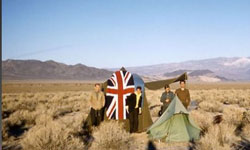
Star Men celebrates the history of stargazing - the inventions and discoveries that have enabled us to learn so much about the universe, but more importantly to understand how much more we have yet to discover.
- TV-Recordings
- English subtitles
- 60
Star Men celebrates the history of stargazing - the inventions and discoveries that have enabled us to learn so much about the universe, but more importantly to understand how much more we have yet to discover.
-
Chasing the Moon
-
Robert Stone
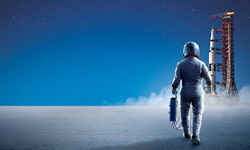
The story of the race to the Moon, from the launch of Sputnik 1 in 1957 to Apollo 11, and the first man to set foot on the Moon, in 1969.
- TV-Recordings
- English subtitles
- 288
The story of the race to the Moon, from the launch of Sputnik 1 in 1957 to Apollo 11, and the first man to set foot on the Moon, in 1969.

Documentary stories detailing America's determination to put a man on the moon ahead of Soviet Russia, beginning with how the launch of Sputnik 1 in 1957 compelled the USA to join the Space Race.
- TV-Recordings
- English subtitles
- 48
Documentary stories detailing America's determination to put a man on the moon ahead of Soviet Russia, beginning with how the launch of Sputnik 1 in 1957 compelled the USA to join the Space Race.
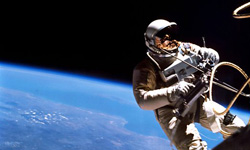
In little more than six months, America's John Glenn had matched Yuri Gagarin's feat of orbiting the Earth. But it was an event back on Earth that spurred America's ambition to win the Space Race.
- TV-Recordings
- English subtitles
- 48
In little more than six months, America's John Glenn had matched Yuri Gagarin's feat of orbiting the Earth. But it was an event back on Earth that spurred America's ambition to win the Space Race.
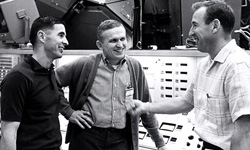
-
Chasing the Moon - Episode 3 - Earthrise - Part 1
-
Robert Stone
On 27 January 1967, the disastrous failure of Apollo 1 risked the cancellation of America's space programme altogether.
- TV-Recordings
- English subtitles
- 48
On 27 January 1967, the disastrous failure of Apollo 1 risked the cancellation of America's space programme altogether.

-
Chasing the Moon - Episode 4 - Earthrise - Part 2
-
Robert Stone
Within two years of the Apollo 1 fire, Apollo 8 became the first manned mission to escape the Earth's gravity and orbit the moon
- TV-Recordings
- English subtitles
- 48
Within two years of the Apollo 1 fire, Apollo 8 became the first manned mission to escape the Earth's gravity and orbit the moon
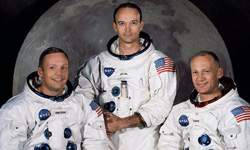
As Nasa chooses which astronauts will crew Apollo 11, the Soviet Union announces that it intends to schedule a mission to the moon of its own to coincide with America's lunar landing.
- TV-Recordings
- English subtitles
- 48
As Nasa chooses which astronauts will crew Apollo 11, the Soviet Union announces that it intends to schedule a mission to the moon of its own to coincide with America's lunar landing.
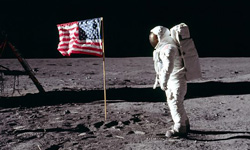
The success of Apollo 11 suggested the beginning of a new age of exploration. Instead, the lunar landing proved to be the highpoint of manned missions into space.
- TV-Recordings
- English subtitles
- 48
The success of Apollo 11 suggested the beginning of a new age of exploration. Instead, the lunar landing proved to be the highpoint of manned missions into space.

This remarkable feature-length documentary combines rare and unseen archive footage with interviews with the surviving cosmonauts to tell the fascinating and at times terrifying story of how the Russians led us into the space age.
- TV-Recordings
- English subtitles
- 60
This remarkable feature-length documentary combines rare and unseen archive footage with interviews with the surviving cosmonauts to tell the fascinating and at times terrifying story of how the Russians led us into the space age.
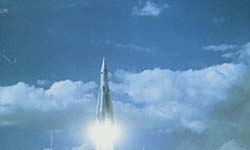
When Neil Armstrong stepped onto the moon in 1969, America went down in popular history as the winner of the space race. But that history is bunk. The real pioneers of space exploration were the Soviet cosmonauts.
- TV-Recordings
- Science and Technology
- English subtitles
- 90
When Neil Armstrong stepped onto the moon in 1969, America went down in popular history as the winner of the space race. But that history is bunk. The real pioneers of space exploration were the Soviet cosmonauts.
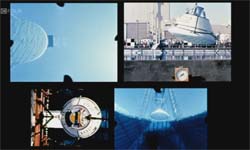
It's a voyage of exploration like no other - to Titan, Saturn's largest moon and thought to resemble our own early Earth. For a small team of British scientists this would be the culmination of a lifetime's endeavour - the flight alone, some 2 billion miles, would take a full seven years. This is the story of the space probe they built, the sacrifices they made and their hopes for the landing.
- TV-Recordings
- Engineering
- English subtitles
- 60
It's a voyage of exploration like no other - to Titan, Saturn's largest moon and thought to resemble our own early Earth. For a small team of British scientists this would be the culmination of a lifetime's endeavour - the flight alone, some 2 billion miles, would take a full seven years. This is the story of the space probe they built, the sacrifices they made and their hopes for the landing.

The moon is such a familiar presence in the sky that most of us take it for granted. But what if it wasn't where it is now? How would that affect life on earth?
- TV-Recordings
- Astronomy
- English subtitles
- 60
The moon is such a familiar presence in the sky that most of us take it for granted. But what if it wasn't where it is now? How would that affect life on earth?

Professor Jim Al-Khalili sets out to discover what the universe might actually look like.
- TV-Recordings
- Astronomy
- Other
- TV-Recordings
- No subtitles
- 60
Professor Jim Al-Khalili sets out to discover what the universe might actually look like.

The second part, Nothing, explores science at the very limits of human perception, where we now understand the deepest mysteries of the universe lie. Jim sets out to answer one very simple question - what is nothing?
- TV-Recordings
- Astronomy
- Other
- TV-Recordings
- No subtitles
- 60
The second part, Nothing, explores science at the very limits of human perception, where we now understand the deepest mysteries of the universe lie. Jim sets out to answer one very simple question - what is nothing?
The search for extra-terrestrial life has been going for 50 years - but there's been a recent breakthrough. Astronomers have discovered a new planet called Gliese 581 c. It is the most Earth-like planet ever found. It orbits a star and may have habitats capable of supporting life. NASA hopes to find 50 more Earth-like planets by the end of the decade, all of which increases the chance that alien life has begun elsewhere.
- TV-Recordings
- Astronomy
- Biology
- TV-Recordings
- English subtitles
- 50
The search for extra-terrestrial life has been going for 50 years - but there's been a recent breakthrough. Astronomers have discovered a new planet called Gliese 581 c. It is the most Earth-like planet ever found. It orbits a star and may have habitats capable of supporting life. NASA hopes to find 50 more Earth-like planets by the end of the decade, all of which increases the chance that alien life has begun elsewhere.

A chance to look back at a classic Horizon special in which James Burke looks at space exploration and exploitation. Originally transmitted in 1984, James begins by looking at the Apollo XI moon landing, before moving on to future space plans for humankind.
- TV-Recordings
- Astronomy
- English subtitles
- 60
A chance to look back at a classic Horizon special in which James Burke looks at space exploration and exploitation. Originally transmitted in 1984, James begins by looking at the Apollo XI moon landing, before moving on to future space plans for humankind.
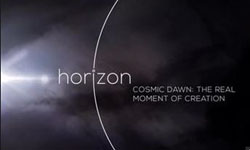
Forget the Big Bang. The real moment of creation was the moment of first light, the moment the first stars were born. Horizon tells the scientific version of the story of Genesis.
- TV-Recordings
- Astronomy
- English subtitles
- 59
Forget the Big Bang. The real moment of creation was the moment of first light, the moment the first stars were born. Horizon tells the scientific version of the story of Genesis.

-
Horizon - Cosmic Dawn: The Real Moment of Creation
-
Toby Macdonald
Horizon investigates the cosmic dawn, the moment one hundred million years after the big bang when the first stars were born.
- TV-Recordings
- English subtitles
- 59
Horizon investigates the cosmic dawn, the moment one hundred million years after the big bang when the first stars were born.

It is one of the most baffling questions that scientists can ask: how big is the universe that we live in?
- TV-Recordings
- English subtitles
- 60
It is one of the most baffling questions that scientists can ask: how big is the universe that we live in?
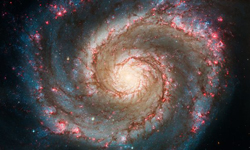
To celebrate the 30th anniversary of its launch, this film tells the remarkable story of how Hubble revealed the awe and wonder of our universe and how a team of daring astronauts risked their lives to keep it working.
- TV-Recordings
- English subtitles
- 59
To celebrate the 30th anniversary of its launch, this film tells the remarkable story of how Hubble revealed the awe and wonder of our universe and how a team of daring astronauts risked their lives to keep it working.