
-
Science and Islam Episode 1 - The Language of Science
-
Prof. Jim Al-Khalili
Physicist Jim Al-Khalili travels through Syria, Iran, Tunisia and Spain to tell the story of the great leap in scientific knowledge that took place in the Islamic world between the 8th and 14th centuries.
- TV-Recordings
- English subtitles
- 60
Physicist Jim Al-Khalili travels through Syria, Iran, Tunisia and Spain to tell the story of the great leap in scientific knowledge that took place in the Islamic world between the 8th and 14th centuries.
-
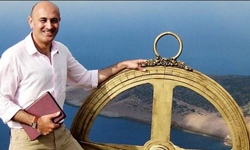
Science and Islam Episode 2 - The Empire of Reason
-
Prof. Jim Al-Khalili
Physicist Jim Al-Khalili travels through Syria, Iran, Tunisia and Spain to tell the story of the great leap in scientific knowledge that took place in the Islamic world between the 8th and 14th centuries.
- TV-Recordings
- English subtitles
- 60
Physicist Jim Al-Khalili travels through Syria, Iran, Tunisia and Spain to tell the story of the great leap in scientific knowledge that took place in the Islamic world between the 8th and 14th centuries.
-
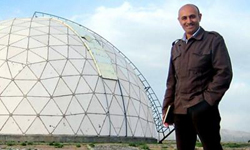
Science and Islam Episode 3 - The Power of Doubt
-
Prof. Jim Al-Khalili
Physicist Jim Al-Khalili tells the story of the great leap in scientific knowledge that took place in the Islamic world between the 8th and 14th centuries.
- TV-Recordings
- English subtitles
- 60
Physicist Jim Al-Khalili tells the story of the great leap in scientific knowledge that took place in the Islamic world between the 8th and 14th centuries.
-
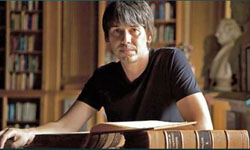
Science Britannica
-
BBC
Professor Brian Cox introduces Britain's science heroes.
- TV-Recordings
- English subtitles
- 180
Professor Brian Cox introduces Britain's science heroes.

-
Science Britannica - Episode 1 : Frankenstein's Monsters
-
Professor Brian Cox
Professor Brian Cox guides viewers through 350 years of British science to reveal what science really is, who the people are who practise it, and how it is inextricably linked to the past, present and future of each and every one of us.
- TV-Recordings
- General Science
- English subtitles
- 60
Professor Brian Cox guides viewers through 350 years of British science to reveal what science really is, who the people are who practise it, and how it is inextricably linked to the past, present and future of each and every one of us.

-
Science Britannica - Episode 2 : Method and Madness
-
Professor Brian Cox
This time, Professor Cox celebrates Britain's pivotal role in creating modern science. From performing Isaac Newton's iconic light experiment to meeting a wartime code breaker and making hydrogen explosions, Professor Cox leads the way through 300 years of British history.
- TV-Recordings
- General Science
- English subtitles
- 60
This time, Professor Cox celebrates Britain's pivotal role in creating modern science. From performing Isaac Newton's iconic light experiment to meeting a wartime code breaker and making hydrogen explosions, Professor Cox leads the way through 300 years of British history.

Professor Brian Cox ends his homage to British Science by looking at how discoveries are made, asking whether it is better to let the scientists do their own thing, and hope for happy accidents, or to only back scientific winners at the risk of missing the occasional gems
- TV-Recordings
- General Science
- English subtitles
- 60
Professor Brian Cox ends his homage to British Science by looking at how discoveries are made, asking whether it is better to let the scientists do their own thing, and hope for happy accidents, or to only back scientific winners at the risk of missing the occasional gems
-
Secrets of Bones
-
BBC 4
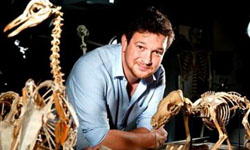
Evolutionary biologist and master skeleton builder Ben Garrod presents a six-part series looking at how bones have enabled vertebrates to colonise and dominate practically every habitat on Earth.
- TV-Recordings
- English subtitles
- 180
Evolutionary biologist and master skeleton builder Ben Garrod presents a six-part series looking at how bones have enabled vertebrates to colonise and dominate practically every habitat on Earth.

Evolutionary biologist and master skeleton builder Ben Garrod begins a six-part journey to discover how bones have enabled vertebrates to colonise and dominate practically every habitat on Earth
- TV-Recordings
- Medical Sciences
- English subtitles
- 30
Evolutionary biologist and master skeleton builder Ben Garrod begins a six-part journey to discover how bones have enabled vertebrates to colonise and dominate practically every habitat on Earth
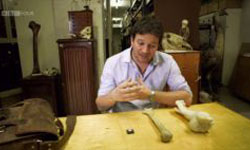
Evolutionary biologist and master skeleton builder Ben Garrod discovers how the skeleton has adapted for vertebrates to move on land in a remarkable number of ways.
- TV-Recordings
- Biology
- English subtitles
- 30
Evolutionary biologist and master skeleton builder Ben Garrod discovers how the skeleton has adapted for vertebrates to move on land in a remarkable number of ways.
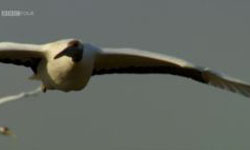
Ben Garrod finds out how the skeleton has allowed vertebrates to do the most remarkable thing of all - take to the air.
- TV-Recordings
- Biology
- English subtitles
- 30
Ben Garrod finds out how the skeleton has allowed vertebrates to do the most remarkable thing of all - take to the air.
Ben Garrod delves into the surprising ways in which bone has evolved to help vertebrates sense the world around them. He reveals why predators like the wolf have eyes at the front of their skull whereas prey animals such as sheep usually have eye sockets on the side of their heads.
- TV-Recordings
- Biology
- English subtitles
- 30
Ben Garrod delves into the surprising ways in which bone has evolved to help vertebrates sense the world around them. He reveals why predators like the wolf have eyes at the front of their skull whereas prey animals such as sheep usually have eye sockets on the side of their heads.
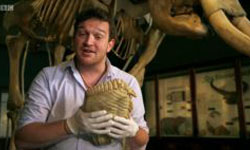
Ben Garrod uncovers the secrets of how vertebrates capture and devour their food using extreme jaws, bizarre teeth and specialized bony tools. He takes a cherry picker up a giant sperm whale's jaw, finds out which animal has teeth weighing five kilos each and which uses its skull as a suction pump.
- TV-Recordings
- Biology
- No subtitles
- 30
Ben Garrod uncovers the secrets of how vertebrates capture and devour their food using extreme jaws, bizarre teeth and specialized bony tools. He takes a cherry picker up a giant sperm whale's jaw, finds out which animal has teeth weighing five kilos each and which uses its skull as a suction pump.
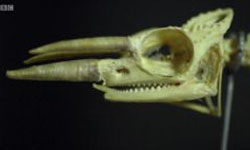
Ben Garrod seeks out the big part that bones can play in reproduction. Through sexual selection, the skeleton has adapted to aid courtship, competition and even copulation.
- TV-Recordings
- Biology
- No subtitles
- 30
Ben Garrod seeks out the big part that bones can play in reproduction. Through sexual selection, the skeleton has adapted to aid courtship, competition and even copulation.
-
Shock and Awe: The Story of Electricity
-
BBC 4
Professor Jim Al-Khalili tells the story of our quest to master the power of electricity.
- TV-Recordings
- No subtitles
- 180
Professor Jim Al-Khalili tells the story of our quest to master the power of electricity.
How pioneers unlocked electricity's mysteries and built strange instruments to create it.
- TV-Recordings
- Physics
- TV-Recordings
- No subtitles
- 60
How pioneers unlocked electricity's mysteries and built strange instruments to create it.
How harnessing the link between magnetism and electricity transformed the world.
- TV-Recordings
- Physics
- TV-Recordings
- No subtitles
- 60
How harnessing the link between magnetism and electricity transformed the world.

How we finally came to understand the science of electricity.
- TV-Recordings
- Physics
- TV-Recordings
- No subtitles
- 60
How we finally came to understand the science of electricity.

-
Size Matters - Part 1
-
Matthew Thompson
Hannah Fry takes a spectacular look at the science of size. Hannah starts by asking whether things could be bigger, including Earth and living things.
- TV-Recordings
- English subtitles
- 58
Hannah Fry takes a spectacular look at the science of size. Hannah starts by asking whether things could be bigger, including Earth and living things.

-
Size Matters - Part 2
-
Matthew Thompson
Hannah Fry takes a look at the science of size. Here, she asks if things could be smaller, including the Earth, living things and the Sun.
- TV-Recordings
- English subtitles
- 58
Hannah Fry takes a look at the science of size. Here, she asks if things could be smaller, including the Earth, living things and the Sun.

-
Sound Waves: The Symphony of Physics - Part 1 - Making Sound
-
Dr Helen Czerski.
Dr Helen Czerski examines the world of sound waves. She investigates the extraordinary science behind the sounds we're familiar with and the sounds that we normally can't hear.
- TV-Recordings
- English subtitles
- 60
Dr Helen Czerski examines the world of sound waves. She investigates the extraordinary science behind the sounds we're familiar with and the sounds that we normally can't hear.

-
Sound Waves: The Symphony of Physics - Part 2 - Using Sound
-
Dr Helen Czerski.
Dr Helen Czerski examines the extraordinary messages sound waves carry and how they help us understand the world around us.
- TV-Recordings
- English subtitles
- 60
Dr Helen Czerski examines the extraordinary messages sound waves carry and how they help us understand the world around us.

-
Stephen Hawking In Brief
-
Channel 4
Documentary celebrating the extraordinary Professor Stephen Hawking, written and narrated by the man himself
- TV-Recordings
- English subtitles
- 6
Documentary celebrating the extraordinary Professor Stephen Hawking, written and narrated by the man himself

-
Stephen Hawking in Brief - Fame
-
Channel 4
The world's most famous living scientist talks exclusively about his experience of fame, thanks to the success of A Brief History of Time, and his desire to use that fame to inspire the next generation of scientists
- TV-Recordings
- General Interest
- English subtitles
- 2
The world's most famous living scientist talks exclusively about his experience of fame, thanks to the success of A Brief History of Time, and his desire to use that fame to inspire the next generation of scientists
Documentary which follows six brilliant scientists during the launch of the Large Hadron Collider, marking the start of the biggest and most expensive experiment in the history of the planet. Filmed over seven years, it is an emotionally charged journey with scientists attempting to push the edge of human innovation.
- TV-Recordings
- Physics
- English subtitles
- 93
Documentary which follows six brilliant scientists during the launch of the Large Hadron Collider, marking the start of the biggest and most expensive experiment in the history of the planet. Filmed over seven years, it is an emotionally charged journey with scientists attempting to push the edge of human innovation.
-
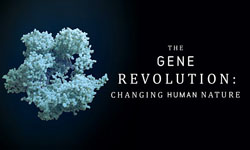
Storyville - The Gene Revolution
-
Adam Bolt
A Storyville documentary. The biggest tech revolution of the 21st century isn't digital, it's biological. What will CRISPR mean for human evolution?
- TV-Recordings
- English subtitles
- 86
A Storyville documentary. The biggest tech revolution of the 21st century isn't digital, it's biological. What will CRISPR mean for human evolution?

-
The Beauty of Diagrams
-
BBC
Series in which mathematician Marcus du Sautoy explores the stories behind some of the most familiar scientific diagrams
- TV-Recordings
- English subtitles
- 90
Series in which mathematician Marcus du Sautoy explores the stories behind some of the most familiar scientific diagrams

When Polish priest and astronomer Nicolaus Copernicus developed his extraordinary theory of a sun-centred universe 500 years ago, he was flying in the face of both science and religion. Mankind had believed for thousands of years that the earth was at the centre of the cosmos, and to disagree was to risk derision and accusations of heresy.
- TV-Recordings
- Astronomy
- Physics
- TV-Recordings
- English subtitles
- 30
When Polish priest and astronomer Nicolaus Copernicus developed his extraordinary theory of a sun-centred universe 500 years ago, he was flying in the face of both science and religion. Mankind had believed for thousands of years that the earth was at the centre of the cosmos, and to disagree was to risk derision and accusations of heresy.
In the mid-1660s, Isaac Newton bought a pair of prisms at a fair near Cambridge, which were to be the basis of a series of experiments that would unlock a secret that had occupied scientists for centuries - the nature of light itself.
- TV-Recordings
- Physics
- TV-Recordings
- English subtitles
- 30
In the mid-1660s, Isaac Newton bought a pair of prisms at a fair near Cambridge, which were to be the basis of a series of experiments that would unlock a secret that had occupied scientists for centuries - the nature of light itself.
-
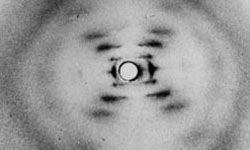
The Beauty of Diagrams - Episode 05: DNA
-
Marcus du Sautoy
Series in which mathematician Marcus du Sautoy explores the stories behind some of the world's most familiar and influential scientific diagrams.
- TV-Recordings
- Biology
- Medical Sciences
- TV-Recordings
- English subtitles
- 30
Series in which mathematician Marcus du Sautoy explores the stories behind some of the world's most familiar and influential scientific diagrams.