
-
Einstein’s Theory of Relativity
-
Dr Christian Boehmer , 2011
Pre-Sessional 2011
- Lectures
- General Science
- Lectures
- No subtitles
- 60
Pre-Sessional 2011

-
Light: Glowing Fish and How to Make Lasers
-
Dr Elinor Bailey , 2014
Diploma Lecture 2014
- Lectures
- No subtitles
- 66
Diploma Lecture 2014

 A Brief History of the End of Everything - 04 The universe is expanding - we're all doomed information (opens website preview)
-
A Brief History of the End of Everything - 04 The universe is expanding - we're all doomed
-
Brother Guy Consolmagno
The universe will die. The sun and other stars like it will throw out heat until they have no more energy to burn. The big bang threw everything outwards at a massive rate. As it gets bigger, so the gaps between matter get bigger and are filled with "dark energy". Instead of gravity pulling everything back down to a "big crunch" the dark energy accelerates the expansion process, pushing everything further apart faster and faster. In the end everything will be a cold, sad, blackness as the stars all go out, or are too far apart for us to see anything - but "us" will be long gone.
The universe will die. The sun and other stars like it will throw out heat until they have no more energy to burn. The big bang threw everything outwards at a massive rate. As it gets bigger, so the gaps between matter get bigger and are filled with "dark energy". Instead of gravity pulling everything back down to a "big crunch" the dark energy accelerates the expansion process, pushing everything further apart faster and faster. In the end everything will be a cold, sad, blackness as the stars all go out, or are too far apart for us to see anything - but "us" will be long gone.
-
A Brief History of the End of Everything - 05 Oops, I've dropped an exotic particle
-
Brother Guy Consolmagno
A strange subatomic particle produced in an atom-smashing experiment here on earth could, theoretically, tumble to the centre of the planet and start eating the planet from the inside out - death by industrial accident. Or a random quantum fluctuation in distant space could switch off the machinery that makes matter big, and this would send a bubble of destruction moving at the speed of light and shutting down all creation in its path. All of the ideas explored in this series suggest that the future is not rosy - that the universe is going to end and that we will end along with it...or can we escape?
A strange subatomic particle produced in an atom-smashing experiment here on earth could, theoretically, tumble to the centre of the planet and start eating the planet from the inside out - death by industrial accident. Or a random quantum fluctuation in distant space could switch off the machinery that makes matter big, and this would send a bubble of destruction moving at the speed of light and shutting down all creation in its path. All of the ideas explored in this series suggest that the future is not rosy - that the universe is going to end and that we will end along with it...or can we escape?
-
A Brief History of the End of Everything - 01 It's OK, the universe is eternal
-
Brother Guy Consolmagno
A series exploring how our ideas about the end of the universe have been shaped by religion, belief, and the contemporary state of scientific thinking and observation. The series is presented by Vatican Astronomer, Brother Guy Consolmagno. He is a Jesuit astro-physicist who came to religion via science and his wonder at the universe. At the Vatican Observatory in Castel Gandolfo, Italy, he compares cutting edge cosmology with Chinese, Ancient Greek, Buddhist, Medieval and Victorian ideas about the end of everything.
A series exploring how our ideas about the end of the universe have been shaped by religion, belief, and the contemporary state of scientific thinking and observation. The series is presented by Vatican Astronomer, Brother Guy Consolmagno. He is a Jesuit astro-physicist who came to religion via science and his wonder at the universe. At the Vatican Observatory in Castel Gandolfo, Italy, he compares cutting edge cosmology with Chinese, Ancient Greek, Buddhist, Medieval and Victorian ideas about the end of everything.
-
A Brief History of the End of Everything - 02 The universe will crash - we're all doomed
-
Brother Guy Consolmagno
It will die. Like a ball thrown into the air, no matter how fast the acceleration to begin with, gravity always wins. The universe will reach a critical mass, then start to fall back in on itself. This is the big crunch theory. The power of gravity wins out over the accelerating power throwing everything outwards. Microseconds from the end, black holes begin to merge with each other, little different from the collapsing state of the surrounding universe. The implosion becomes increasingly powerful, crushing all matter and every physical thing out of existence. Space and time end - there is eternal nothingness beyond this point, unless...
It will die. Like a ball thrown into the air, no matter how fast the acceleration to begin with, gravity always wins. The universe will reach a critical mass, then start to fall back in on itself. This is the big crunch theory. The power of gravity wins out over the accelerating power throwing everything outwards. Microseconds from the end, black holes begin to merge with each other, little different from the collapsing state of the surrounding universe. The implosion becomes increasingly powerful, crushing all matter and every physical thing out of existence. Space and time end - there is eternal nothingness beyond this point, unless...
-
A Brief History of the End of Everything - 03 Lets go round again
-
Brother Guy Consolmagno
Yes the universe will end, but at the crunch the process starts all over again, and could go on forever (cf. Hindu and Buddhist ideas of re-birth). Another possibility is "multiverses" - there are lots of different universes, all in different states of existence, some at moment of big bang, but will never become a universe as we know it, so grow to the size of a grape and shrink back, or expand outwards and never turn into frothy, lumpy matter - just a thin soup with no life in them. Our universe is perfect…not too fast to become a soup and not too slow so it falls back in on itself to destruct - just lumpy enough for galaxies to form and the whole thing hold together - a balancing act between gravity and acceleration, for the time being.
Yes the universe will end, but at the crunch the process starts all over again, and could go on forever (cf. Hindu and Buddhist ideas of re-birth). Another possibility is "multiverses" - there are lots of different universes, all in different states of existence, some at moment of big bang, but will never become a universe as we know it, so grow to the size of a grape and shrink back, or expand outwards and never turn into frothy, lumpy matter - just a thin soup with no life in them. Our universe is perfect…not too fast to become a soup and not too slow so it falls back in on itself to destruct - just lumpy enough for galaxies to form and the whole thing hold together - a balancing act between gravity and acceleration, for the time being.
-
A Night with the Stars
-
BBC 2
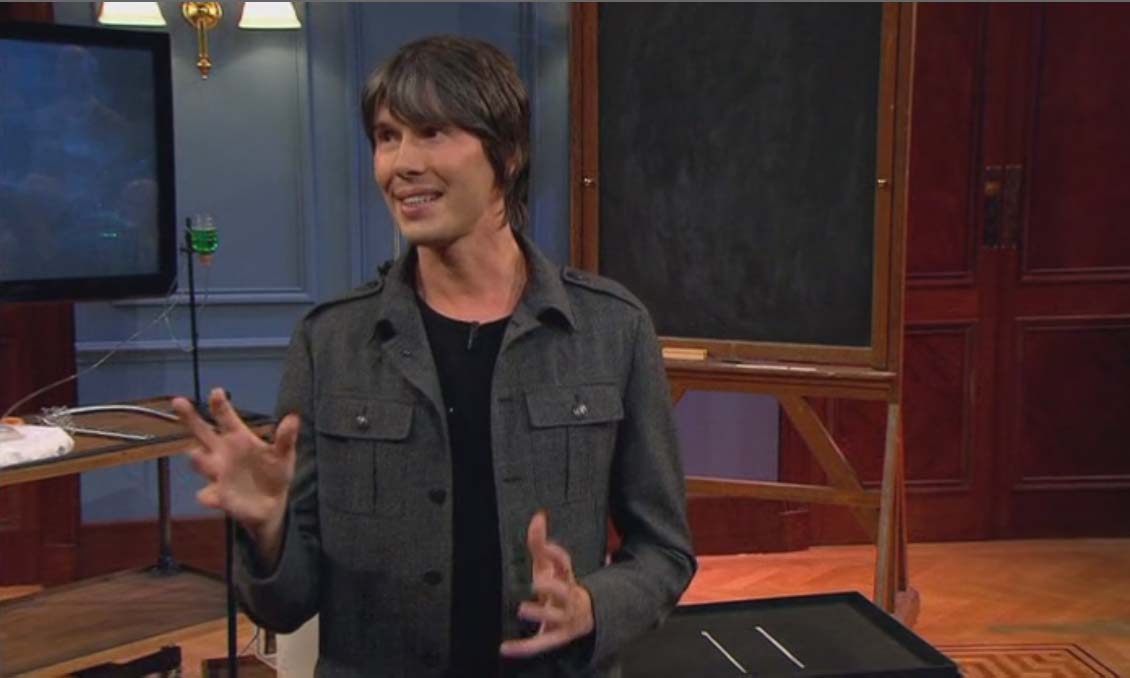
For one night only, Professor Brian Cox goes unplugged in a specially recorded programme from the lecture theatre of the Royal Institution of Great Britain. In his own inimitable style, Brian takes an audience of famous faces, scientists and members of the public on a journey through some of the most challenging concepts in physics.
- TV-Recordings
- Physics
- TV-Recordings
- No subtitles
- 60
For one night only, Professor Brian Cox goes unplugged in a specially recorded programme from the lecture theatre of the Royal Institution of Great Britain. In his own inimitable style, Brian takes an audience of famous faces, scientists and members of the public on a journey through some of the most challenging concepts in physics.
-
Atom
-
Professor Jim Al-Khalili
The first of three programmes in which nuclear physicist Professor Jim Al-Khalili tells the story of the greatest scientific discovery ever - that everything is made of atoms.
- TV-Recordings
- No subtitles
- 170
The first of three programmes in which nuclear physicist Professor Jim Al-Khalili tells the story of the greatest scientific discovery ever - that everything is made of atoms.
-
Atom I - Clash of Titans
-
Jim Al-Khalili
Professor Al-Khalili takes us from the discovery of the atom to the development of quantum mechanics
- TV-Recordings
- Chemistry
- Physics
- TV-Recordings
- No subtitles
- 50
Professor Al-Khalili takes us from the discovery of the atom to the development of quantum mechanics
-
Atom II - The Key to the Cosmos
-
Jim Al-Khalili
This episode tackles world-changing discoveries such as radioactivity, the Atom Bomb and the Big Bang, and tries to answer the biggest questions of all - why are we here and how were we made?
- TV-Recordings
- Chemistry
- Physics
- TV-Recordings
- No subtitles
- 60
This episode tackles world-changing discoveries such as radioactivity, the Atom Bomb and the Big Bang, and tries to answer the biggest questions of all - why are we here and how were we made?
-
Atom III - The Illusion of Reality
-
Jim Al-Khalili
Al-Khalili discovers that there might be parallel universes in which different versions of us exist, and finds out that empty space isn’t empty at all, but seething with activity
- TV-Recordings
- Chemistry
- Physics
- TV-Recordings
- No subtitles
- 60
Al-Khalili discovers that there might be parallel universes in which different versions of us exist, and finds out that empty space isn’t empty at all, but seething with activity
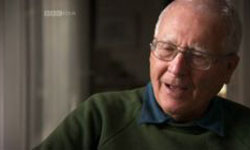
How scientist James Lovelock came to see the Earth as a holistic, self-regulating system.
- TV-Recordings
- Geography
- Physics
- TV-Recordings
- No subtitles
- 60
How scientist James Lovelock came to see the Earth as a holistic, self-regulating system.
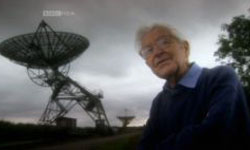
In the first of a three-part series, Professor Dame Jocelyn Bell Burnell describes how she discovered pulsars, the by-products of supernova explosions which make all life in the universe possible. She describes the moments of despair and jubilation as the discovery unfolded and her excitement as pulsars took the scientific world by storm.
- TV-Recordings
- Physics
- TV-Recordings
- No subtitles
- 60
In the first of a three-part series, Professor Dame Jocelyn Bell Burnell describes how she discovered pulsars, the by-products of supernova explosions which make all life in the universe possible. She describes the moments of despair and jubilation as the discovery unfolded and her excitement as pulsars took the scientific world by storm.
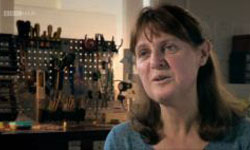
Physicist Professor Andre Geim\'s constant search for new ideas has led to some extraordinary discoveries, from levitating frogs to a tape that sticks to surfaces like a gecko\'s foot. He reveals how his playful approach to his research helped him uncover the properties of graphene, the world\'s thinnest material, and won him a Nobel Prize.
- TV-Recordings
- Physics
- TV-Recordings
- No subtitles
- 60
Physicist Professor Andre Geim\'s constant search for new ideas has led to some extraordinary discoveries, from levitating frogs to a tape that sticks to surfaces like a gecko\'s foot. He reveals how his playful approach to his research helped him uncover the properties of graphene, the world\'s thinnest material, and won him a Nobel Prize.
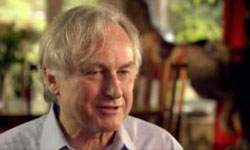
Professor Richard Dawkins reveals how he came to write his explosive first book The Selfish Gene, a work that was to divide the scientific community and make him the most influential evolutionary biologist of his generation. He also explores how this set him on the path to becoming an outspoken spokesman for atheism.
- TV-Recordings
- Biology
- TV-Recordings
- No subtitles
- 60
Professor Richard Dawkins reveals how he came to write his explosive first book The Selfish Gene, a work that was to divide the scientific community and make him the most influential evolutionary biologist of his generation. He also explores how this set him on the path to becoming an outspoken spokesman for atheism.
-
Brian Cox's Adventures in Space and Time - Series 1
-
Simon Winchcombe
Discovering our place in the universe. Brian Cox looks back on a decade of discovery and towards the next space frontier, asking the biggest question of all - what's next?
- TV-Recordings
- English subtitles
- 240
Discovering our place in the universe. Brian Cox looks back on a decade of discovery and towards the next space frontier, asking the biggest question of all - what's next?
-
Brian Cox's Adventures in Space and Time - Series 1 - Episode 1
-
Simon Winchcombe
Brian Cox explores the latest science and takes a new look at his old films and asks: how far can we go in our exploration of the cosmos?
- TV-Recordings
- English subtitles
- 59
Brian Cox explores the latest science and takes a new look at his old films and asks: how far can we go in our exploration of the cosmos?

-
Brian Cox's Adventures in Space and Time - Series 1 - Episode 2
-
Simon Winchcombe
Brian Cox looks at our attempts to answer one of the most profound questions we can ask – are we alone in the universe? In this film, he explains why this search should be taken seriously.
- TV-Recordings
- English subtitles
- 59
Brian Cox looks at our attempts to answer one of the most profound questions we can ask – are we alone in the universe? In this film, he explains why this search should be taken seriously.

-
Brian Cox's Adventures in Space and Time - Series 1 - Episode 3
-
Simon Winchcombe
Brian takes a fresh look at the concept of gravity, revealing it to be far more than just the force that makes things fall to the ground.
- TV-Recordings
- English subtitles
- 58
Brian takes a fresh look at the concept of gravity, revealing it to be far more than just the force that makes things fall to the ground.

-
Brian Cox's Adventures in Space and Time - Series 1 - Episode 4
-
Simon Winchcombe
Brian explores the enigma of time – a phenomenon that we take for granted but which, as far as physicists are concerned, is one of the biggest mysteries in the universe.
- TV-Recordings
- English subtitles
- 59
Brian explores the enigma of time – a phenomenon that we take for granted but which, as far as physicists are concerned, is one of the biggest mysteries in the universe.
-
Chasing the Moon
-
Robert Stone
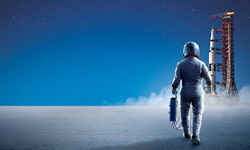
The story of the race to the Moon, from the launch of Sputnik 1 in 1957 to Apollo 11, and the first man to set foot on the Moon, in 1969.
- TV-Recordings
- English subtitles
- 288
The story of the race to the Moon, from the launch of Sputnik 1 in 1957 to Apollo 11, and the first man to set foot on the Moon, in 1969.
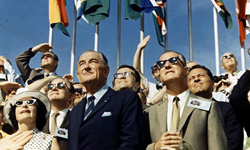
Documentary stories detailing America's determination to put a man on the moon ahead of Soviet Russia, beginning with how the launch of Sputnik 1 in 1957 compelled the USA to join the Space Race.
- TV-Recordings
- English subtitles
- 48
Documentary stories detailing America's determination to put a man on the moon ahead of Soviet Russia, beginning with how the launch of Sputnik 1 in 1957 compelled the USA to join the Space Race.
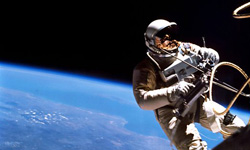
In little more than six months, America's John Glenn had matched Yuri Gagarin's feat of orbiting the Earth. But it was an event back on Earth that spurred America's ambition to win the Space Race.
- TV-Recordings
- English subtitles
- 48
In little more than six months, America's John Glenn had matched Yuri Gagarin's feat of orbiting the Earth. But it was an event back on Earth that spurred America's ambition to win the Space Race.