
In the second of a two-part documentary, David Attenborough explores how much climate change is altering our planet, suggesting ways we can help.
- TV-Recordings
- Geography
- TV-Recordings
- No subtitles
- 59
In the second of a two-part documentary, David Attenborough explores how much climate change is altering our planet, suggesting ways we can help.
-
Horizon: The Big Bang
-
BBC 4
Professor Jim Al Khalili delves into over 50 years of the BBC science archive to tell the story behind the emergence of one of the greatest theories of modern science, the Big Bang.
- TV-Recordings
- Astronomy
- Physics
- TV-Recordings
- No subtitles
- 60
Professor Jim Al Khalili delves into over 50 years of the BBC science archive to tell the story behind the emergence of one of the greatest theories of modern science, the Big Bang.
-
How Earth Made Us
-
BBC
Professor Iain Stewart uses spectacular images to tells the epic story of how geology, geography and climate have influenced mankind.
- TV-Recordings
- English subtitles
- 300
Professor Iain Stewart uses spectacular images to tells the epic story of how geology, geography and climate have influenced mankind.
Professor Iain Stewart tells the epic story of how geology, geography and climate have influenced mankind.In this first episode, Iain explores the relationship between the deep Earth and the development of human civilisation. He visits an extraordinary crystal cave in Mexico, drops down a hole in the Iranian desert and crawls through seven-thousand-year-old tunnels in Israel.
- TV-Recordings
- Environmental Studies
- Geography
- Geology
- TV-Recordings
- English subtitles
- 60
Professor Iain Stewart tells the epic story of how geology, geography and climate have influenced mankind.In this first episode, Iain explores the relationship between the deep Earth and the development of human civilisation. He visits an extraordinary crystal cave in Mexico, drops down a hole in the Iranian desert and crawls through seven-thousand-year-old tunnels in Israel.
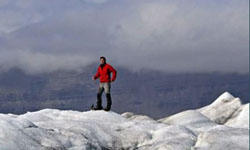
Professor Iain Stewart continues his epic exploration of how the planet has shaped human history.This time he explores our complex relationship with water. Visiting spectacular locations in Iceland, the Middle East and India, Iain shows how control over water has been central to human existence.
- TV-Recordings
- Environmental Studies
- Geography
- TV-Recordings
- English subtitles
- 60
Professor Iain Stewart continues his epic exploration of how the planet has shaped human history.This time he explores our complex relationship with water. Visiting spectacular locations in Iceland, the Middle East and India, Iain shows how control over water has been central to human existence.
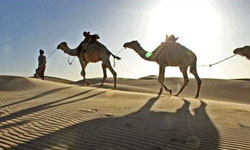
Professor Iain Stewart explores the story of our turbulent relationship with the wind.
- TV-Recordings
- Environmental Studies
- Physics
- TV-Recordings
- English subtitles
- 60
Professor Iain Stewart explores the story of our turbulent relationship with the wind.

Iain explores man\'s relationship with fire. He begins by embarking on an extraordinary encounter with this terrifying force of nature - a walk right through the heart of a raging fire.
- TV-Recordings
- Environmental Studies
- Physics
- TV-Recordings
- English subtitles
- 60
Iain explores man\'s relationship with fire. He begins by embarking on an extraordinary encounter with this terrifying force of nature - a walk right through the heart of a raging fire.
In this series Professor Iain Stewart tells a stunning new story about our planet. He reveals how the greatest changes to the Earth have been driven, above all, by plants.
- TV-Recordings
- Biology
- Physics
- TV-Recordings
- No subtitles
- 60
In this series Professor Iain Stewart tells a stunning new story about our planet. He reveals how the greatest changes to the Earth have been driven, above all, by plants.

In the second episode, Iain discovers how flowers have transformed our planet. He journeys to the remote islands of the South Pacific to track down the earliest flowers.
- TV-Recordings
- Biology
- Physics
- TV-Recordings
- No subtitles
- 60
In the second episode, Iain discovers how flowers have transformed our planet. He journeys to the remote islands of the South Pacific to track down the earliest flowers.
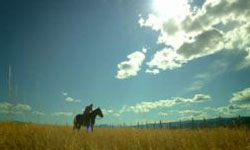
In the third episode, Iain discovers the remarkable impact of just one plant: grass. On the savannah of South Africa he sees how grass unleashed a firestorm to fight its greatest enemy, the forests.
- TV-Recordings
- Biology
- Physics
- TV-Recordings
- No subtitles
- 60
In the third episode, Iain discovers the remarkable impact of just one plant: grass. On the savannah of South Africa he sees how grass unleashed a firestorm to fight its greatest enemy, the forests.
They are constantly circling hundreds of miles above our heads, driving our daily lives - yet we barely give satellites a second thought.
- TV-Recordings
- Engineering
- TV-Recordings
- No subtitles
- 60
They are constantly circling hundreds of miles above our heads, driving our daily lives - yet we barely give satellites a second thought.
-
Life on Earth
-
BBC
The story of life, from the first primitive cells to the plants and animals that now live around us.
- TV-Recordings
- No subtitles
- 705
The story of life, from the first primitive cells to the plants and animals that now live around us.
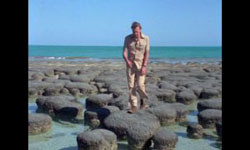
Life on Earth: A Natural History by David Attenborough is a groundbreaking television natural history series made by the BBC in association with Warner Bros. and Reiner Moritz Productions. It was transmitted in the UK from 16 January 1979.
- TV-Recordings
- Biology
- Environmental Studies
- TV-Recordings
- No subtitles
- 45
Life on Earth: A Natural History by David Attenborough is a groundbreaking television natural history series made by the BBC in association with Warner Bros. and Reiner Moritz Productions. It was transmitted in the UK from 16 January 1979.
A little furry animal from the jungles of South-East Asia, called a tree shrew, has attracted great interest from scientists because it shows how a great group of animals may have originated - the mammals.
- TV-Recordings
- Natural World
- TV-Recordings
- No subtitles
- 55
A little furry animal from the jungles of South-East Asia, called a tree shrew, has attracted great interest from scientists because it shows how a great group of animals may have originated - the mammals.
David Attenborough explores the eternal duel between the hunters and the hunted - one of the driving forces of evolution.
- TV-Recordings
- Natural World
- TV-Recordings
- No subtitles
- 55
David Attenborough explores the eternal duel between the hunters and the hunted - one of the driving forces of evolution.
David Attenborough's now legendary encounter with young gorillas is featured in this episode as he looks at the history of primates, whose ancestors sought their fortune in the treetops. There they developed binocular vision for accurately judging distances, and the ability to grasp trees with a firm grip. The group includes dazzling gymnasts, deafening choristers and highly cultured monkeys.
- TV-Recordings
- Natural World
- TV-Recordings
- No subtitles
- 55
David Attenborough's now legendary encounter with young gorillas is featured in this episode as he looks at the history of primates, whose ancestors sought their fortune in the treetops. There they developed binocular vision for accurately judging distances, and the ability to grasp trees with a firm grip. The group includes dazzling gymnasts, deafening choristers and highly cultured monkeys.

David Attenborough looks for crucial clues that help to explain how and why we have come to dominate life on Earth.
- TV-Recordings
- Natural World
- TV-Recordings
- No subtitles
- 55
David Attenborough looks for crucial clues that help to explain how and why we have come to dominate life on Earth.
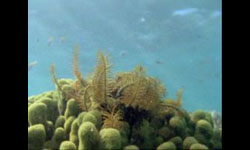
Bright blue starfish, crimson feather stars, shell-less snails in designs as extravagant as any Paris fashion show, shrimps of every colour, others that are transparent - just a sample of the animal wonders to be found in a small area of the Great Barrier Reef.
- TV-Recordings
- Natural World
- TV-Recordings
- No subtitles
- 55
Bright blue starfish, crimson feather stars, shell-less snails in designs as extravagant as any Paris fashion show, shrimps of every colour, others that are transparent - just a sample of the animal wonders to be found in a small area of the Great Barrier Reef.
For most of Earth's history there was no life on land. But over 400 million years ago some tiny plants began an invasion from the water, closely followed by the first animals - the ancestors of millipedes and insects.
- TV-Recordings
- Natural World
- TV-Recordings
- No subtitles
- 55
For most of Earth's history there was no life on land. But over 400 million years ago some tiny plants began an invasion from the water, closely followed by the first animals - the ancestors of millipedes and insects.
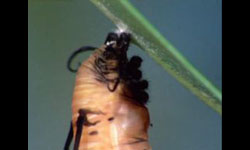
The number of insect species runs into millions; a single termite colony may consist of a million individuals; a locust swarm even a million million.
- TV-Recordings
- Natural World
- TV-Recordings
- No subtitles
- 55
The number of insect species runs into millions; a single termite colony may consist of a million individuals; a locust swarm even a million million.
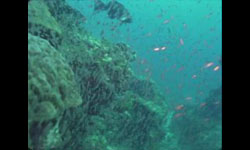
Fish occur in populations of billions and there are over 30,000 species, more than in any other group of backboned animals. The development of the backbone was a crucial advance in evolution -and it probably came from a most unlikely source, a little jelly-like creature called a sea squirt.
- TV-Recordings
- Natural World
- TV-Recordings
- No subtitles
- 55
Fish occur in populations of billions and there are over 30,000 species, more than in any other group of backboned animals. The development of the backbone was a crucial advance in evolution -and it probably came from a most unlikely source, a little jelly-like creature called a sea squirt.

Some 350 million years ago, evolution reached one of its most crucial stages when fish crawled from water onto the land and became amphibians. Today, newts, salamanders, toads and frogs still survive in great quantities, and there is even one species of frog where the male gives birth from its mouth! Presented by David Attenborough
- TV-Recordings
- Natural World
- TV-Recordings
- No subtitles
- 55
Some 350 million years ago, evolution reached one of its most crucial stages when fish crawled from water onto the land and became amphibians. Today, newts, salamanders, toads and frogs still survive in great quantities, and there is even one species of frog where the male gives birth from its mouth! Presented by David Attenborough

David Attenborough looks at the history of reptiles, the first back-boned creatures to solve the problems of living high and dry on the land. Their waterproofed skin and sealed eggs enabled the mighty reptiles to rule the world.
- TV-Recordings
- Natural World
- TV-Recordings
- No subtitles
- 55
David Attenborough looks at the history of reptiles, the first back-boned creatures to solve the problems of living high and dry on the land. Their waterproofed skin and sealed eggs enabled the mighty reptiles to rule the world.
The story of life, from the first primitive cells to the plants and animals that now live around us. David Attenborough examines the uses and advantages of birds' unique possession - the feather. Man has yet to invent anything that, weight for weight, is as strong as the feather. Feathers are insulators, they provide the surface of the most perfect aerofoils known - bird's wings
- TV-Recordings
- Natural World
- TV-Recordings
- No subtitles
- 55
The story of life, from the first primitive cells to the plants and animals that now live around us. David Attenborough examines the uses and advantages of birds' unique possession - the feather. Man has yet to invent anything that, weight for weight, is as strong as the feather. Feathers are insulators, they provide the surface of the most perfect aerofoils known - bird's wings
Mammals have proved to be one of the most adaptable products of evolution. David Attenborough looks at their evolution from reptiles 200 million years ago. This remarkable transition involved the development of mechanisms for regulating body temperature, for allowing the young to develop in the womb and for suckling newborns.
- TV-Recordings
- Natural World
- TV-Recordings
- No subtitles
- 55
Mammals have proved to be one of the most adaptable products of evolution. David Attenborough looks at their evolution from reptiles 200 million years ago. This remarkable transition involved the development of mechanisms for regulating body temperature, for allowing the young to develop in the womb and for suckling newborns.
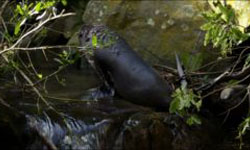
David Attenborough brings us the universal story that unites each of us with every animal on the planet, the story of the greatest of all adventures - the journey through life. In the first episode, animals overcome their first great hurdle - surviving infancy.
- TV-Recordings
- Natural World
- English subtitles
- 60
David Attenborough brings us the universal story that unites each of us with every animal on the planet, the story of the greatest of all adventures - the journey through life. In the first episode, animals overcome their first great hurdle - surviving infancy.
In the journey towards adulthood, a moment comes for all animals when they must strike out on their own. With their parents absent they must learn to survive in a dangerous world. At this stage of life every small success may mean the difference between life and death.
- TV-Recordings
- Natural World
- English subtitles
- 60
In the journey towards adulthood, a moment comes for all animals when they must strike out on their own. With their parents absent they must learn to survive in a dangerous world. At this stage of life every small success may mean the difference between life and death.
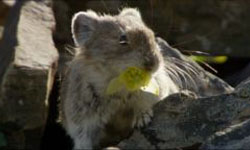
Animals must find somewhere to live - a place that provides the necessities of life, shelter from the elements and a refuge from enemies.
- TV-Recordings
- Natural World
- English subtitles
- 60
Animals must find somewhere to live - a place that provides the necessities of life, shelter from the elements and a refuge from enemies.

Animals must try to gain a position of power in their worlds. The most powerful have best access to food and water, and they are also the most attractive to the opposite sex.
- TV-Recordings
- Natural World
- English subtitles
- 60
Animals must try to gain a position of power in their worlds. The most powerful have best access to food and water, and they are also the most attractive to the opposite sex.
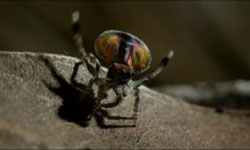
David Attenborough explores the courtship displays of flame bowerbirds and pufferfish.
- TV-Recordings
- Natural World
- English subtitles
- 60
David Attenborough explores the courtship displays of flame bowerbirds and pufferfish.