
-
The Ascent of Man
-
Adrian Malone
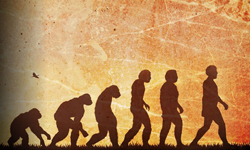
A true TV landmark. Dr Jacob Bronowski’s epic series unravelling of the making of mankind that spellbound audiences in the 1970s.
- TV-Recordings
- English subtitles
- 637
A true TV landmark. Dr Jacob Bronowski’s epic series unravelling of the making of mankind that spellbound audiences in the 1970s.
-
The Ascent of Man - Episode 1 - Lower then Angels
-
Adrian Malone
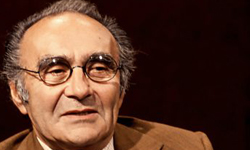
Jacob Bronowski opens the first programme at man's birthplace, the Great Rift Valley of East Africa, and traces the evolution of man's unique gifts - foresight and imagination.
- TV-Recordings
- English subtitles
- 49
Jacob Bronowski opens the first programme at man's birthplace, the Great Rift Valley of East Africa, and traces the evolution of man's unique gifts - foresight and imagination.

-
The Ascent of Man - Episode 10 - World within World
-
Adrian Malone
Dr Jacob Bronowski tells the story of the men and ideas that gave concrete expression to the invisible, intangible structure that lies beneath all matter.
- TV-Recordings
- English subtitles
- 49
Dr Jacob Bronowski tells the story of the men and ideas that gave concrete expression to the invisible, intangible structure that lies beneath all matter.

-
The Ascent of Man - Episode 11 - Knowledge or Certainty
-
Adrian Malone
Dr Jacob Bronowski considers how the great achievement of physics in the 20th century has been to show that absolute certainty, in science or outside of it, is beyond our grasp.
- TV-Recordings
- English subtitles
- 49
Dr Jacob Bronowski considers how the great achievement of physics in the 20th century has been to show that absolute certainty, in science or outside of it, is beyond our grasp.
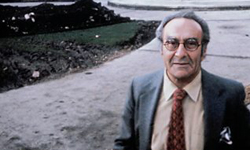
Dr Jacob Bronowski follows the history of genetics, from the lonely experiments of Gregor Mendel to the discovery of the structure of DNA. Should we see human sexuality as a gift?
- TV-Recordings
- English subtitles
- 49
Dr Jacob Bronowski follows the history of genetics, from the lonely experiments of Gregor Mendel to the discovery of the structure of DNA. Should we see human sexuality as a gift?
-
The Ascent of Man - Episode 13 - The Long Children
-
Adrian Malone
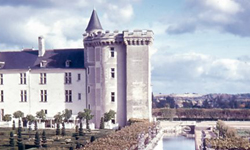
From his home, Dr Jacob Bronowski takes stock of man's complex and often precarious ascent, drawing on experiences from his own lifetime.
- TV-Recordings
- English subtitles
- 49
From his home, Dr Jacob Bronowski takes stock of man's complex and often precarious ascent, drawing on experiences from his own lifetime.

Jacob Bronowski looks at how man moved from nomadic pasturage to settled agriculture, with the domestication of the horse and the cultivation of wheat.
- TV-Recordings
- English subtitles
- 49
Jacob Bronowski looks at how man moved from nomadic pasturage to settled agriculture, with the domestication of the horse and the cultivation of wheat.
-
The Ascent of Man - Episode 3 - The Grain in the Stone
-
Adrian Malone
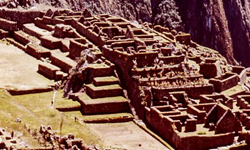
Jacob Bronowski discovers the origins of science in the interaction of hand and brain, by which man uncovers the laws of nature through building, architecture and sculpture
- TV-Recordings
- English subtitles
- 49
Jacob Bronowski discovers the origins of science in the interaction of hand and brain, by which man uncovers the laws of nature through building, architecture and sculpture
-
The Ascent of Man - Episode 4 - The Hidden Structure
-
Adrian Malone
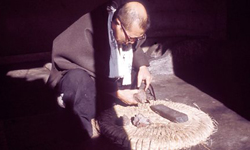
Jacob Bronowski explores the roots of chemistry, from the techniques of ancient metallurgy in China and Japan to the mystical searchings of the alchemists.
- TV-Recordings
- English subtitles
- 49
Jacob Bronowski explores the roots of chemistry, from the techniques of ancient metallurgy in China and Japan to the mystical searchings of the alchemists.
-
The Ascent of Man - Episode 5 - Music of the Spheres
-
Adrian Malone
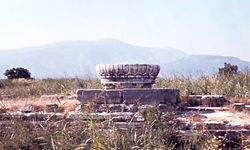
Dr Bronowski gives his own novel proof of Pythagoras' famous theorem and traces the spread of Greek ideas through the Islamic empire to Moorish Spain and Renaissance Europe.
- TV-Recordings
- English subtitles
- 49
Dr Bronowski gives his own novel proof of Pythagoras' famous theorem and traces the spread of Greek ideas through the Islamic empire to Moorish Spain and Renaissance Europe.

-
The Ascent of Man - Episode 6 - The Starry Messenger
-
Adrian Malone
Man has always wondered about the movement of the stars, sun and planets. Dr Jacob Bronowski looks at the work of Copernicus and the life, work and trial of Galileo.
- TV-Recordings
- English subtitles
- 49
Man has always wondered about the movement of the stars, sun and planets. Dr Jacob Bronowski looks at the work of Copernicus and the life, work and trial of Galileo.

-
The Ascent of Man - Episode 7 - The Majestic Clockwork
-
Adrian Malone
If the world could be understood by just two men, they may be Isaac Newton and Albert Einstein. Dr Jacob Bronowski explores how their theories are connected by light.
- TV-Recordings
- English subtitles
- 49
If the world could be understood by just two men, they may be Isaac Newton and Albert Einstein. Dr Jacob Bronowski explores how their theories are connected by light.
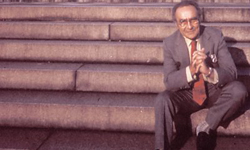
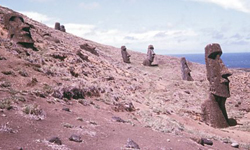
As political revolutions shook France and America, another quieter, yet more profound restructuring was taking place in Britain - the Industrial Revolution.
- TV-Recordings
- English subtitles
- 49
As political revolutions shook France and America, another quieter, yet more profound restructuring was taking place in Britain - the Industrial Revolution.
-
The Ascent of Man - Episode 9 - The Ladder of Creation
-
Adrian Malone
How did life begin on earth? Dr Jacob Bronowski recounts the adventures of Alfred Russell Wallace, and how they triggered off the ideas of Charles Darwin.
- TV-Recordings
- English subtitles
- 49
How did life begin on earth? Dr Jacob Bronowski recounts the adventures of Alfred Russell Wallace, and how they triggered off the ideas of Charles Darwin.

-
The Beauty of Diagrams
-
BBC
Series in which mathematician Marcus du Sautoy explores the stories behind some of the most familiar scientific diagrams
- TV-Recordings
- English subtitles
- 90
Series in which mathematician Marcus du Sautoy explores the stories behind some of the most familiar scientific diagrams

When Polish priest and astronomer Nicolaus Copernicus developed his extraordinary theory of a sun-centred universe 500 years ago, he was flying in the face of both science and religion. Mankind had believed for thousands of years that the earth was at the centre of the cosmos, and to disagree was to risk derision and accusations of heresy.
- TV-Recordings
- Astronomy
- Physics
- TV-Recordings
- English subtitles
- 30
When Polish priest and astronomer Nicolaus Copernicus developed his extraordinary theory of a sun-centred universe 500 years ago, he was flying in the face of both science and religion. Mankind had believed for thousands of years that the earth was at the centre of the cosmos, and to disagree was to risk derision and accusations of heresy.
In the mid-1660s, Isaac Newton bought a pair of prisms at a fair near Cambridge, which were to be the basis of a series of experiments that would unlock a secret that had occupied scientists for centuries - the nature of light itself.
- TV-Recordings
- Physics
- TV-Recordings
- English subtitles
- 30
In the mid-1660s, Isaac Newton bought a pair of prisms at a fair near Cambridge, which were to be the basis of a series of experiments that would unlock a secret that had occupied scientists for centuries - the nature of light itself.
-
The Beginning and End of the Universe - Episode 1 : The Beginning
-
Prof Jim Al-Khalili
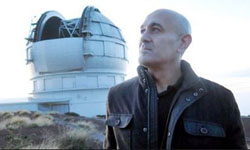
Prof Jim Al-Khalili tackles the biggest subject of all, the universe, through a series of critical observations and experiments that revolutionised our understanding of our world.
- TV-Recordings
- Astronomy
- English subtitles
- 60
Prof Jim Al-Khalili tackles the biggest subject of all, the universe, through a series of critical observations and experiments that revolutionised our understanding of our world.

-
The Beginning and End of the Universe - Episode 2 : The End
-
Prof Jim Al-Khalili
In this second part, Professor Jim Al-Khalili carries us into the distant future to try to discover how the universe will end - with a bang or a whimper?
- TV-Recordings
- Astronomy
- English subtitles
- 60
In this second part, Professor Jim Al-Khalili carries us into the distant future to try to discover how the universe will end - with a bang or a whimper?
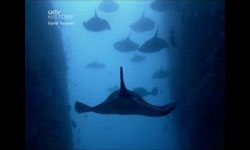
2007. A huge tidal wave, sweeps 200 miles inland up the River Amazon. It's an event that only happens on key days each month, when the moon and sun combine their gravitational pull to maximum effect. The force of the wave shatters immense rainforest trees.
- TV-Recordings
- Biology
- Environmental Studies
- TV-Recordings
- No subtitles
- 46
2007. A huge tidal wave, sweeps 200 miles inland up the River Amazon. It's an event that only happens on key days each month, when the moon and sun combine their gravitational pull to maximum effect. The force of the wave shatters immense rainforest trees.
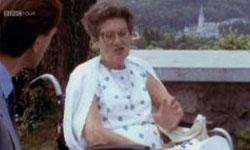
Dr Thomas Dixon delves into the BBC's archive to explore the troubled relationship between religion and science. From the creationists of America to the physicists of the Large Hadron Collider, he traces the expansion of scientific knowledge and asks whe
- TV-Recordings
- Physics
- Religion
- TV-Recordings
- No subtitles
- 60
Dr Thomas Dixon delves into the BBC's archive to explore the troubled relationship between religion and science. From the creationists of America to the physicists of the Large Hadron Collider, he traces the expansion of scientific knowledge and asks whe
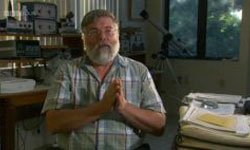
Our understanding of the world around us is better now than ever before. But are we any closer to knowing how its all going to end?
- TV-Recordings
- Physics
- TV-Recordings
- English subtitles
- 60
Our understanding of the world around us is better now than ever before. But are we any closer to knowing how its all going to end?
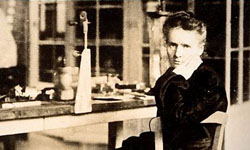
Nearly 80 years after her death, Marie Curie remains by far the best known female scientist. In her lifetime, she became that rare thing: a celebrity scientist, attracting the attention of the news cameras and tabloid gossip.
- TV-Recordings
- Science
- TV-Recordings
- English subtitles
- 60
Nearly 80 years after her death, Marie Curie remains by far the best known female scientist. In her lifetime, she became that rare thing: a celebrity scientist, attracting the attention of the news cameras and tabloid gossip.
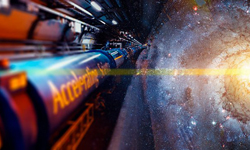
A film that blends remarkable access to the Large Hadron Collider with poetry, music and rare archival footage to explore a place where science, politics and culture collide.
- TV-Recordings
- English subtitles
- 59
A film that blends remarkable access to the Large Hadron Collider with poetry, music and rare archival footage to explore a place where science, politics and culture collide.
Professor Brian Cox takes a look through nearly 50 years of BBC archive at the story of man's relationship with the Moon.
- TV-Recordings
- Astronomy
- Physics
- TV-Recordings
- English subtitles
- 60
Professor Brian Cox takes a look through nearly 50 years of BBC archive at the story of man's relationship with the Moon.
-
The Perfect Disaster - Super Tornado
-
Channel Five
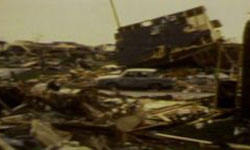
A documentary series in which expert scientific testimony and stunning CGI visuals combine to create the most realistic perfect storms imaginable. This edition speculates on what could happen if a mega-tornado were to strike.
- TV-Recordings
- Environmental Studies
- Geography
- TV-Recordings
- No subtitles
- 59
A documentary series in which expert scientific testimony and stunning CGI visuals combine to create the most realistic perfect storms imaginable. This edition speculates on what could happen if a mega-tornado were to strike.
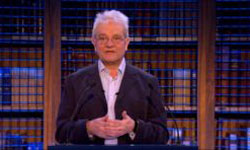
In the 2012 Richard Dimbleby Lecture, leading geneticist and Nobel laureate Sir Paul Nurse explores the wonder of science and how it enhances our culture and civilisation.
- TV-Recordings
- Genetics
- Physics
- TV-Recordings
- No subtitles
- 60
In the 2012 Richard Dimbleby Lecture, leading geneticist and Nobel laureate Sir Paul Nurse explores the wonder of science and how it enhances our culture and civilisation.

Drawing on the latest theories as well as 200 years of scientific discoveries and the genius of Einstein, Brian tries to answer the classic questions raised by the Doctor - can you really travel in time? Does extra-terrestrial life exist in our galaxy? And how do you build something as fantastical as the TARDIS?
- TV-Recordings
- Physics
- English subtitles
- 60
Drawing on the latest theories as well as 200 years of scientific discoveries and the genius of Einstein, Brian tries to answer the classic questions raised by the Doctor - can you really travel in time? Does extra-terrestrial life exist in our galaxy? And how do you build something as fantastical as the TARDIS?

For many years our place in the universe was the subject of theologians and philosophers, not scientists, but in 1960 one man changed all that.
- TV-Recordings
- Biology
- Religion
- TV-Recordings
- English subtitles
- 60
For many years our place in the universe was the subject of theologians and philosophers, not scientists, but in 1960 one man changed all that.
-
The Secret Life of Chaos
-
Nic Stacey
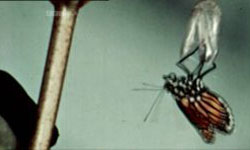
Chaos theory has a bad name, conjuring up images of unpredictable weather, economic crashes and science gone wrong. But there is a fascinating and hidden side to Chaos, one that scientists are only now beginning to understand.
- TV-Recordings
- Chemistry
- Physics
- TV-Recordings
- English subtitles
- 60
Chaos theory has a bad name, conjuring up images of unpredictable weather, economic crashes and science gone wrong. But there is a fascinating and hidden side to Chaos, one that scientists are only now beginning to understand.