

Professor Brian Cox takes a global journey in search of the energy source of the future. Called nuclear fusion, it is the process that fuels the sun and every other star in the universe. Yet despite over five decades of effort, scientists have been unable to get even a single watt of fusion electricity onto the grid.
- TV-Recordings
- Physics
- TV-Recordings
- No subtitles
- 50
Professor Brian Cox takes a global journey in search of the energy source of the future. Called nuclear fusion, it is the process that fuels the sun and every other star in the universe. Yet despite over five decades of effort, scientists have been unable to get even a single watt of fusion electricity onto the grid.
Forget the Big Bang. The real moment of creation was the moment of first light, the moment the first stars were born. Horizon tells the scientific version of the story of Genesis.
- TV-Recordings
- Astronomy
- English subtitles
- 59
Forget the Big Bang. The real moment of creation was the moment of first light, the moment the first stars were born. Horizon tells the scientific version of the story of Genesis.
Scientists genuinely don't know what most of our universe is made of. The atoms we're made from only make up four per cent. The rest is dark matter and dark energy (for 'dark', read 'don't know'). The Large Hadron Collider at CERN has been upgraded. When it's switched on in March 2015, its collisions will have twice the energy they did before. The hope is that scientists will discover the identity of dark matter in the debris.
- TV-Recordings
- English subtitles
- 60
Scientists genuinely don't know what most of our universe is made of. The atoms we're made from only make up four per cent. The rest is dark matter and dark energy (for 'dark', read 'don't know'). The Large Hadron Collider at CERN has been upgraded. When it's switched on in March 2015, its collisions will have twice the energy they did before. The hope is that scientists will discover the identity of dark matter in the debris.
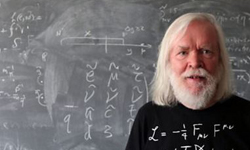
Scientists genuinely don't know what most of our universe is made of. The atoms we're made from only make up four per cent. The rest is dark matter and dark energy (for 'dark', read 'don't know'). The Large Hadron Collider at CERN has been upgraded. When it's switched on in March 2015, its collisions will have twice the energy they did before. The hope is that scientists will discover the identity of dark matter in the debris.
- TV-Recordings
- English subtitles
- 60
Scientists genuinely don't know what most of our universe is made of. The atoms we're made from only make up four per cent. The rest is dark matter and dark energy (for 'dark', read 'don't know'). The Large Hadron Collider at CERN has been upgraded. When it's switched on in March 2015, its collisions will have twice the energy they did before. The hope is that scientists will discover the identity of dark matter in the debris.

Particle physicist Professor Brian Cox asks, 'What time is it?' It's a simple question and it sounds like it has a simple answer. But do we really know what it is that we're asking?
- TV-Recordings
- Physics
- English subtitles
- 59
Particle physicist Professor Brian Cox asks, 'What time is it?' It's a simple question and it sounds like it has a simple answer. But do we really know what it is that we're asking?

Earthquakes are among the most devastating natural disasters on the planet. In the last hundred years they have claimed the lives of over one million people. Earthquakes are destructive mainly because of their unpredictable nature. It is impossible to say accurately when a quake will strike but a new theory developed by Professor Geoffrey King could help save lives by preparing cities long in advance for an earthquake
- TV-Recordings
- Physics
- No subtitles
- 46
Earthquakes are among the most devastating natural disasters on the planet. In the last hundred years they have claimed the lives of over one million people. Earthquakes are destructive mainly because of their unpredictable nature. It is impossible to say accurately when a quake will strike but a new theory developed by Professor Geoffrey King could help save lives by preparing cities long in advance for an earthquake
As Albert Einstein lay on his deathbed, he asked only for his glasses, his writing implements and his latest equations. He knew he was dying, yet he continued his work. In those final hours of his life, while fading in and out of consciousness, he was working on what he hoped would be his greatest work of all. It was a project of monumental complexity. It was a project that he hoped would unlock the mind of God.
- TV-Recordings
- Physics
- No subtitles
- 46
As Albert Einstein lay on his deathbed, he asked only for his glasses, his writing implements and his latest equations. He knew he was dying, yet he continued his work. In those final hours of his life, while fading in and out of consciousness, he was working on what he hoped would be his greatest work of all. It was a project of monumental complexity. It was a project that he hoped would unlock the mind of God.

The world's oceans claim on average one ship a week, often in mysterious circumstances. With little evidence to go on, investigators usually point at human error or poor maintenance but an alarming series of disappearances and near-sinkings, including world-class vessels with unblemished track records, has prompted the search for a more sinister cause and renewed belief in a maritime myth: the wall of water
- TV-Recordings
- Geography
- TV-Recordings
- No subtitles
- 48
The world's oceans claim on average one ship a week, often in mysterious circumstances. With little evidence to go on, investigators usually point at human error or poor maintenance but an alarming series of disappearances and near-sinkings, including world-class vessels with unblemished track records, has prompted the search for a more sinister cause and renewed belief in a maritime myth: the wall of water
It is one of the most baffling questions that scientists can ask: how big is the universe that we live in?
- TV-Recordings
- English subtitles
- 60
It is one of the most baffling questions that scientists can ask: how big is the universe that we live in?
lan Davies attempts to answer the proverbial question: how long is a piece of string? But what appears to be a simple task soon turns into a mind-bending voyage of discovery where nothing is as it seems.
- TV-Recordings
- Physics
- TV-Recordings
- No subtitles
- 58
lan Davies attempts to answer the proverbial question: how long is a piece of string? But what appears to be a simple task soon turns into a mind-bending voyage of discovery where nothing is as it seems.
-
Horizon - How Small is the Universe?
-
Toby Macdonald
Horizon plunges down the biggest rabbit-hole in history in search of the smallest thing in the universe.
- TV-Recordings
- Physics
- English subtitles
- 60
Horizon plunges down the biggest rabbit-hole in history in search of the smallest thing in the universe.
Time travel is not forbidden by the laws of nature, but to build a time machine, we would need to understand more about those laws and how to subvert them than we do now. And every day, science does learn more.
- TV-Recordings
- Physics
- English subtitles
- 60
Time travel is not forbidden by the laws of nature, but to build a time machine, we would need to understand more about those laws and how to subvert them than we do now. And every day, science does learn more.
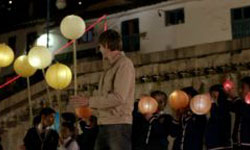
Brian Cox explores the ingredients needed for an intelligent civilisation to evolve in the universe - the need for a benign star, for a habitable planet, for life to spontaneously arise on such a planet and the time required for intelligent life to evolve and build a civilisation.
- TV-Recordings
- English subtitles
- 60
Brian Cox explores the ingredients needed for an intelligent civilisation to evolve in the universe - the need for a benign star, for a habitable planet, for life to spontaneously arise on such a planet and the time required for intelligent life to evolve and build a civilisation.

With exclusive behind-the-scenes access, Horizon follows the highs and lows of an extraordinary story in particle physics. In June 2015, teams at CERN started running the large hadron collider at the highest energy ever. Rumours quickly emerged that they were on the brink of a huge discovery.
- TV-Recordings
- English subtitles
- 60
With exclusive behind-the-scenes access, Horizon follows the highs and lows of an extraordinary story in particle physics. In June 2015, teams at CERN started running the large hadron collider at the highest energy ever. Rumours quickly emerged that they were on the brink of a huge discovery.
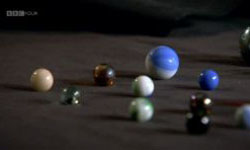
Dark flow is the latest in a long line of phenomena that have threatened to re-write the textbooks. Does it herald a new era of understanding, or does it simply mean that everything we know about the universe is wrong?
- TV-Recordings
- Physics
- TV-Recordings
- No subtitles
- 58
Dark flow is the latest in a long line of phenomena that have threatened to re-write the textbooks. Does it herald a new era of understanding, or does it simply mean that everything we know about the universe is wrong?
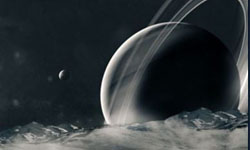
The oceans define the earth. They are crucial to life and we used to think that they were unique to our blue planet. But we were wrong.
- TV-Recordings
- English subtitles
- 60
The oceans define the earth. They are crucial to life and we used to think that they were unique to our blue planet. But we were wrong.
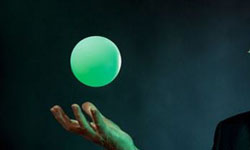
This is the story of an extraordinary scientific adventure - the attempt to control gravity. For centuries, the precise workings of gravity have confounded the greatest scientific minds - from Newton to Faraday and Einstein - and the idea of controlling gravity has been seen as little more than a fanciful dream. Yet in the mid 1990s, UK defence manufacturer BAE Systems began a ground-breaking project code-named Greenglow, which set about turning science fiction into reality.
- TV-Recordings
- English subtitles
- 60
This is the story of an extraordinary scientific adventure - the attempt to control gravity. For centuries, the precise workings of gravity have confounded the greatest scientific minds - from Newton to Faraday and Einstein - and the idea of controlling gravity has been seen as little more than a fanciful dream. Yet in the mid 1990s, UK defence manufacturer BAE Systems began a ground-breaking project code-named Greenglow, which set about turning science fiction into reality.
-
Horizon - Seeing Stars
-
BBC 2
Around the world, a new generation of astronomers are hunting for the most mysterious objects in the universe. Young stars, black holes, even other forms of life.
- TV-Recordings
- Physics
- No subtitles
- 60
Around the world, a new generation of astronomers are hunting for the most mysterious objects in the universe. Young stars, black holes, even other forms of life.
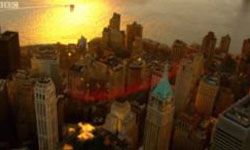
Scientists are expecting a fit of violent activity on the sun which will propel billions of tonnes of superheated gas and pulses of energy towards our planet.
- TV-Recordings
- Physics
- No subtitles
- 60
Scientists are expecting a fit of violent activity on the sun which will propel billions of tonnes of superheated gas and pulses of energy towards our planet.
-
Horizon - The Core
-
BBC 2
For centuries we have dreamt of reaching the centre of the Earth. Now scientists are uncovering a bizarre and alien world that lies 4,000 miles beneath our feet, unlike anything we know on the surface
- TV-Recordings
- Geology
- Physics
- TV-Recordings
- No subtitles
- 60
For centuries we have dreamt of reaching the centre of the Earth. Now scientists are uncovering a bizarre and alien world that lies 4,000 miles beneath our feet, unlike anything we know on the surface

Examining Stephen Hawking\'s most controversial theory and possibly his greatest mistake.
- TV-Recordings
- Physics
- Religion
- TV-Recordings
- No subtitles
- 60
Examining Stephen Hawking\'s most controversial theory and possibly his greatest mistake.
Horizon goes behind the scenes at CERN to follow one of the most epic and expensive scientific quests of all time: the search for the Higgs particle, believed to give mass to everything in our universe.
- TV-Recordings
- Engineering
- Physics
- TV-Recordings
- No subtitles
- 80
Horizon goes behind the scenes at CERN to follow one of the most epic and expensive scientific quests of all time: the search for the Higgs particle, believed to give mass to everything in our universe.
Horizon looks at dark energy - the mysterious force that is unexpectedly causing the universe's expansion to speed up.
- TV-Recordings
- English subtitles
- 60
Horizon looks at dark energy - the mysterious force that is unexpectedly causing the universe's expansion to speed up.

Mathematicians have discovered there are infinitely many infinities, each one infinitely bigger than the last. And if the universe goes on forever, the consequences are even more bizarre. In an infinite universe, there are infinitely many copies of the Earth and infinitely many copies of you. Older than time, bigger than the universe and stranger than fiction. This is the story of infinity.
- TV-Recordings
- Maths
- Physics
- TV-Recordings
- No subtitles
- 60
Mathematicians have discovered there are infinitely many infinities, each one infinitely bigger than the last. And if the universe goes on forever, the consequences are even more bizarre. In an infinite universe, there are infinitely many copies of the Earth and infinitely many copies of you. Older than time, bigger than the universe and stranger than fiction. This is the story of infinity.
Horizon takes the ultimate trip into the unknown, to explore a dizzying world of cosmic bounces, rips and multiple universes, and finds out what happened before the big bang.
- TV-Recordings
- Physics
- TV-Recordings
- English subtitles
- 60
Horizon takes the ultimate trip into the unknown, to explore a dizzying world of cosmic bounces, rips and multiple universes, and finds out what happened before the big bang.

Comedian Ben Miller returns to his roots as a physicist to try to answer a deceptively simple question: what is one degree of temperature?
- TV-Recordings
- Physics
- TV-Recordings
- No subtitles
- 60
Comedian Ben Miller returns to his roots as a physicist to try to answer a deceptively simple question: what is one degree of temperature?
There is a strange and mysterious world that surrounds us, a world largely hidden from our senses. The quest to explain the true nature of reality is one of the great scientific detective stories.
- TV-Recordings
- Physics
- TV-Recordings
- No subtitles
- 59
There is a strange and mysterious world that surrounds us, a world largely hidden from our senses. The quest to explain the true nature of reality is one of the great scientific detective stories.

Particle physicist and ex D:Ream keyboard player Dr Brian Cox wants to know why the Universe is built the way it is. He believes the answers lie in the force of gravity
- TV-Recordings
- Geography
- Physics
- TV-Recordings
- No subtitles
- 48
Particle physicist and ex D:Ream keyboard player Dr Brian Cox wants to know why the Universe is built the way it is. He believes the answers lie in the force of gravity

Physicist Dr Helen Czerski and meteorologist John Hammond make sense of Britain's recent extreme weather and discover that there is one thing that connects all our recent extreme winters.
- TV-Recordings
- English subtitles
- 60
Physicist Dr Helen Czerski and meteorologist John Hammond make sense of Britain's recent extreme weather and discover that there is one thing that connects all our recent extreme winters.

Until very recently the whole idea of the multiverse was dismissed as fantasy. Horizon asks whether multiple universes exist and, if so, which one we are actually in.
- TV-Recordings
- Astronomy
- English subtitles
- 59
Until very recently the whole idea of the multiverse was dismissed as fantasy. Horizon asks whether multiple universes exist and, if so, which one we are actually in.