

-
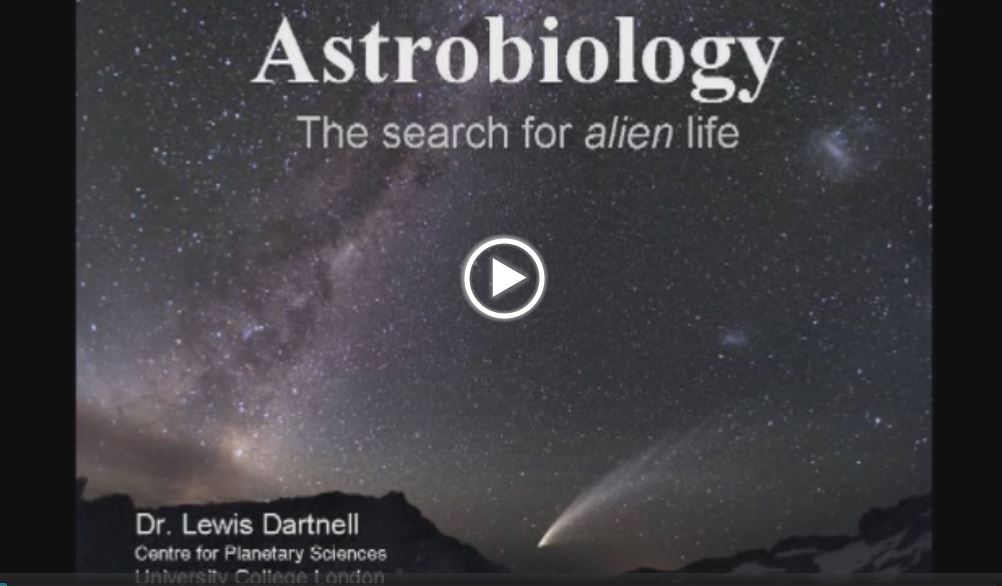
Astrobiology 2022
-
Professor Lewis Dartnell , 2022
Science and Society Lecture
- Lectures
- No subtitles
- 46
Science and Society Lecture


-
Royal Institution Christmas Lectures 2025
-
Dr Maggie Aderin-Pocock
Great scientists, even greater questions. Mind-expanding talks and hands-on science, inspiring children and adults alike since 1825.
- TV-Recordings
- English subtitles
- 177
Great scientists, even greater questions. Mind-expanding talks and hands-on science, inspiring children and adults alike since 1825.

-
Royal Institution Christmas Lectures 2025 - Episode 1 - Destination Moon
-
Dr Maggie Aderin-Pocock
Dr Maggie Aderin-Pocock begins her search for extraterrestrial life with an exploration of our nearest neighbour, and her favourite space rock, the moon.
- TV-Recordings
- English subtitles
- 59
Dr Maggie Aderin-Pocock begins her search for extraterrestrial life with an exploration of our nearest neighbour, and her favourite space rock, the moon.

-
Royal Institution Christmas Lectures 2025 - Episode 2 - Searching the Solar System
-
Dr Maggie Aderin-Pocock
Space scientist Dame Dr Maggie Aderin-Pocock continues her search for alien life with a grand tour of our solar system. Could any other planets or moons out there be habitable?
- TV-Recordings
- English subtitles
- 59
Space scientist Dame Dr Maggie Aderin-Pocock continues her search for alien life with a grand tour of our solar system. Could any other planets or moons out there be habitable?
-
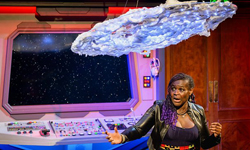
Royal Institution Christmas Lectures 2025 - Episode 3 - To the Stars and Beyond
-
Dr Maggie Aderin-Pocock
Dame Dr Maggie Aderin-Pocock, with the help of the world’s most powerful telescope, ventures through the Milky Way and into the universe beyond, on the hunt for alien worlds.
- TV-Recordings
- English subtitles
- 59
Dame Dr Maggie Aderin-Pocock, with the help of the world’s most powerful telescope, ventures through the Milky Way and into the universe beyond, on the hunt for alien worlds.
-
Stephen Hawking's Universe Episode 01
-
Channel 4
Professor Hawking considers one of the most important mysteries facing humankind: the possibility of intelligent alien life.
- TV-Recordings
- Astronomy
- Humanities
- TV-Recordings
- English subtitles
- 43
Professor Hawking considers one of the most important mysteries facing humankind: the possibility of intelligent alien life.
A new age of space exploration, and exploitation, is dawning. But surprisingly, some of the boldest efforts at putting humans into space are now those of private companies started by a handful of maverick billionaire businessmen.
- TV-Recordings
- English subtitles
- 60
A new age of space exploration, and exploitation, is dawning. But surprisingly, some of the boldest efforts at putting humans into space are now those of private companies started by a handful of maverick billionaire businessmen.
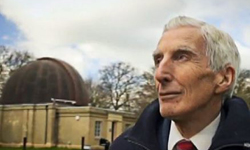
The hunt for aliens is on! After a distinguished career in cosmology Professor Martin Rees, the astronomer royal, has taken up the search for extra-terrestrials. Looking for aliens is no longer science fiction - it is a question that's engaging some of the greatest minds in science.
- TV-Recordings
- English subtitles
- 60
The hunt for aliens is on! After a distinguished career in cosmology Professor Martin Rees, the astronomer royal, has taken up the search for extra-terrestrials. Looking for aliens is no longer science fiction - it is a question that's engaging some of the greatest minds in science.

Drawing on the latest theories as well as 200 years of scientific discoveries and the genius of Einstein, Brian tries to answer the classic questions raised by the Doctor - can you really travel in time? Does extra-terrestrial life exist in our galaxy? And how do you build something as fantastical as the TARDIS?
- TV-Recordings
- Physics
- English subtitles
- 60
Drawing on the latest theories as well as 200 years of scientific discoveries and the genius of Einstein, Brian tries to answer the classic questions raised by the Doctor - can you really travel in time? Does extra-terrestrial life exist in our galaxy? And how do you build something as fantastical as the TARDIS?

For many years our place in the universe was the subject of theologians and philosophers, not scientists, but in 1960 one man changed all that.
- TV-Recordings
- Biology
- Religion
- TV-Recordings
- English subtitles
- 60
For many years our place in the universe was the subject of theologians and philosophers, not scientists, but in 1960 one man changed all that.