
Every year grizzly bear families in North America depend for their survival on a spectacular natural event: the return of hundreds of millions of salmon from the Pacific Ocean to the mountain streams where they were born. The salmon travel thousands of miles to spawn and then die.
- TV-Recordings
- Biology
- TV-Recordings
- No subtitles
- 59
Every year grizzly bear families in North America depend for their survival on a spectacular natural event: the return of hundreds of millions of salmon from the Pacific Ocean to the mountain streams where they were born. The salmon travel thousands of miles to spawn and then die.
Each year more than one million wildebeest and zebra invade the Serengeti grasslands, making it a paradise for the predators that live there. But what happens when the herds move off again? We follow the moving story of one lion family\'s struggle to survive until the return of the great migration. Nature\'s Great Events tells the story of the epic trek of herds that follow the rains to fresh pastures, and the tale of the predators they leave behind.
- TV-Recordings
- Biology
- TV-Recordings
- No subtitles
- 59
Each year more than one million wildebeest and zebra invade the Serengeti grasslands, making it a paradise for the predators that live there. But what happens when the herds move off again? We follow the moving story of one lion family\'s struggle to survive until the return of the great migration. Nature\'s Great Events tells the story of the epic trek of herds that follow the rains to fresh pastures, and the tale of the predators they leave behind.
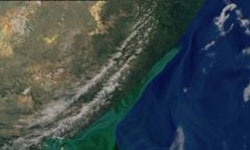
A mighty army of dolphins, sharks, whales, seals and gannets hunt down the billions of sardines along South Africa\'s east coast each winter. This is the Sardine Run: an underwater Armageddon, the greatest gathering of predators anywhere on the planet, and the most spectacular event in the world\'s oceans.
- TV-Recordings
- Biology
- Environmental Studies
- TV-Recordings
- No subtitles
- 59
A mighty army of dolphins, sharks, whales, seals and gannets hunt down the billions of sardines along South Africa\'s east coast each winter. This is the Sardine Run: an underwater Armageddon, the greatest gathering of predators anywhere on the planet, and the most spectacular event in the world\'s oceans.
The great flood in the Okavango turns 4,000 square miles of arid plains into a beautiful wetland. Elephant mothers guide their families on an epic trek across the harsh Kalahari Desert towards it, siphoning fresh water from stagnant pools and facing hungry lions. Hippos battle for territory, as the magical water draws in thousands of buffalo and birds, and vast clouds of dragonflies. Will the young elephant calves survive to reach this grassland paradise?
- TV-Recordings
- Biology
- Environmental Studies
- TV-Recordings
- No subtitles
- 59
The great flood in the Okavango turns 4,000 square miles of arid plains into a beautiful wetland. Elephant mothers guide their families on an epic trek across the harsh Kalahari Desert towards it, siphoning fresh water from stagnant pools and facing hungry lions. Hippos battle for territory, as the magical water draws in thousands of buffalo and birds, and vast clouds of dragonflies. Will the young elephant calves survive to reach this grassland paradise?

Every summer in the seas off Alaska humpback whales, sea lions and killer whales depend on an explosion of plant life, the plankton bloom. It tranforms these seas into the richest on Earth. But will these animals survive to enjoy the great feast?
- TV-Recordings
- Biology
- TV-Recordings
- No subtitles
- 59
Every summer in the seas off Alaska humpback whales, sea lions and killer whales depend on an explosion of plant life, the plankton bloom. It tranforms these seas into the richest on Earth. But will these animals survive to enjoy the great feast?
-
Nature's Microworlds
-
BBC
Series in which Steve Backshall looks at some of the world's most iconic ecosystems
- TV-Recordings
- No subtitles
- 240
Series in which Steve Backshall looks at some of the world's most iconic ecosystems
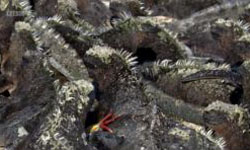
A visit to arguably the most famous archipelago on Earth, the Galapagos. It's home to a myriad of bizarre and unique creatures, endemic to these islands - but how did they get here and what is the key to these extraordinary islands that allows them to thrive? The programme reveals that this key holds not just the secret to life here, but also to how Darwin was able to leave with the ideas that would revolutionise biology.
- TV-Recordings
- Biology
- Environmental Studies
- TV-Recordings
- No subtitles
- 30
A visit to arguably the most famous archipelago on Earth, the Galapagos. It's home to a myriad of bizarre and unique creatures, endemic to these islands - but how did they get here and what is the key to these extraordinary islands that allows them to thrive? The programme reveals that this key holds not just the secret to life here, but also to how Darwin was able to leave with the ideas that would revolutionise biology.
Monterey Bay on California's coast is one of the most diverse marine ecosystems in the world, its giant kelp forest bursting with life, from microscopic plankton to visiting ocean giants. The secret key to success in such a busy microworld is balance. Steve Backshall guides us through the unique geography of the bay and introduces some of its key characters in a quest to find the one species that keeps life in the kelp forest in check.
- TV-Recordings
- Biology
- TV-Recordings
- No subtitles
- 30
Monterey Bay on California's coast is one of the most diverse marine ecosystems in the world, its giant kelp forest bursting with life, from microscopic plankton to visiting ocean giants. The secret key to success in such a busy microworld is balance. Steve Backshall guides us through the unique geography of the bay and introduces some of its key characters in a quest to find the one species that keeps life in the kelp forest in check.
Steve Backshall tries to discover just what makes it possible for a river to stop in the middle of a desert. The Okavango is the world's largest inland delta and home to a one of Africa's greatest congregations of wildlife, and in asking the difficult questions Steve reveals the astounding secret to its existence.
- TV-Recordings
- Geography
- TV-Recordings
- No subtitles
- 30
Steve Backshall tries to discover just what makes it possible for a river to stop in the middle of a desert. The Okavango is the world's largest inland delta and home to a one of Africa's greatest congregations of wildlife, and in asking the difficult questions Steve reveals the astounding secret to its existence.

In a revelatory look at Svalbard, the most northerly region in the series, Steve Backshall leaves no stone unturned as he unravels the secrets that lie covered in ice for most of each year. Svalbard is cold, dark and foreboding, yet it is home to the world's largest land predator and the most northerly population.
- TV-Recordings
- Geography
- TV-Recordings
- No subtitles
- 30
In a revelatory look at Svalbard, the most northerly region in the series, Steve Backshall leaves no stone unturned as he unravels the secrets that lie covered in ice for most of each year. Svalbard is cold, dark and foreboding, yet it is home to the world's largest land predator and the most northerly population.
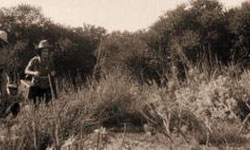
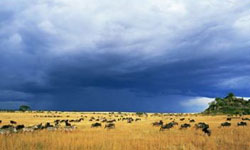
A look at one of the most famous habitats on the planet, the Serengeti in East Africa, a vast grassland that is home to some of the greatest concentrations of herbivores on the continent. But what is the key to this exceptional grassland that allows such density and diversity?
- TV-Recordings
- Biology
- Environmental Studies
- TV-Recordings
- No subtitles
- 30
A look at one of the most famous habitats on the planet, the Serengeti in East Africa, a vast grassland that is home to some of the greatest concentrations of herbivores on the continent. But what is the key to this exceptional grassland that allows such density and diversity?

Steve Backshall lifts the lid on an incredible world of intricate relationships and unexpected hardship in the Amazon rainforest, explores the way that the jungle's inhabitants interact, and reveals a hidden secret that might just be what keeps the whole place alive.
- TV-Recordings
- Biology
- Environmental Studies
- TV-Recordings
- No subtitles
- 30
Steve Backshall lifts the lid on an incredible world of intricate relationships and unexpected hardship in the Amazon rainforest, explores the way that the jungle's inhabitants interact, and reveals a hidden secret that might just be what keeps the whole place alive.

n Australia's red centre, Steve Backshall reveals two-metre-tall kangaroos, the world's most venomous snake and a burrowing toad living among the throng of animals. Parched by the sun, scorched by fire and prone to unpredictable floods, the heart of this island continent is as inhospitable as it gets
- TV-Recordings
- Natural World
- TV-Recordings
- No subtitles
- 30
n Australia's red centre, Steve Backshall reveals two-metre-tall kangaroos, the world's most venomous snake and a burrowing toad living among the throng of animals. Parched by the sun, scorched by fire and prone to unpredictable floods, the heart of this island continent is as inhospitable as it gets

Steve Backshall looks at the Scottish Highlands, home to some of the most iconic wildlife in the British Isles. The two contrasting landscapes of open moor and Caledonian forest are both crucially important to their wild inhabitants and yet the history of the Highlands show that they shouldn't exist side by side.
- TV-Recordings
- Geography
- English subtitles
- 30
Steve Backshall looks at the Scottish Highlands, home to some of the most iconic wildlife in the British Isles. The two contrasting landscapes of open moor and Caledonian forest are both crucially important to their wild inhabitants and yet the history of the Highlands show that they shouldn't exist side by side.

Steve Backshall takes us to a place few have ever visited - the deep sea. 99 per cent of the space on Earth inhabited by life is under the ocean and almost 90 per cent of this is deeper than a kilometre, a place of perpetual darkness and crushing pressure.
- TV-Recordings
- Natural World
- TV-Recordings
- No subtitles
- 30
Steve Backshall takes us to a place few have ever visited - the deep sea. 99 per cent of the space on Earth inhabited by life is under the ocean and almost 90 per cent of this is deeper than a kilometre, a place of perpetual darkness and crushing pressure.
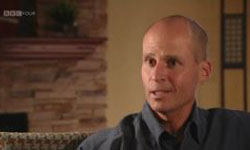
In the spectacular Yellowstone where wolves, bears, coyotes, bison and elk roam vast grasslands, wetlands and forests, Steve Backshall looks for the answer to a puzzle.
- TV-Recordings
- Natural World
- TV-Recordings
- No subtitles
- 30
In the spectacular Yellowstone where wolves, bears, coyotes, bison and elk roam vast grasslands, wetlands and forests, Steve Backshall looks for the answer to a puzzle.
-
Nature's Wonderland : Islands of Evolution
-
BBC
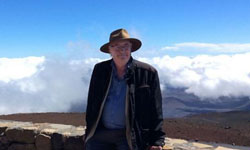
Professor Richard Fortey (pictured) investigates why islands are natural laboratories of evolution, in this three-part series for BBC Four.
- TV-Recordings
- English subtitles
- 180
Professor Richard Fortey (pictured) investigates why islands are natural laboratories of evolution, in this three-part series for BBC Four.
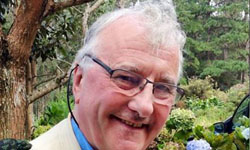
Three-part series in which Professor Richard Fortey investigates why islands are natural laboratories of evolution and meets some of the unique and remarkable species that live on them.
- TV-Recordings
- English subtitles
- 60
Three-part series in which Professor Richard Fortey investigates why islands are natural laboratories of evolution and meets some of the unique and remarkable species that live on them.
-
Nick Baker's Weird Creatures
-
Nick Baker
Wildlife documentary series in which naturalist Nick Baker hunts down some of the strangest creatures on the planet. Nick journeys to the Andes to seek out the giant 'saggy-skinned' Lake Titicaca frog, the world's largest aquatic frog
- TV-Recordings
- Biology
- TV-Recordings
- No subtitles
- 60
Wildlife documentary series in which naturalist Nick Baker hunts down some of the strangest creatures on the planet. Nick journeys to the Andes to seek out the giant 'saggy-skinned' Lake Titicaca frog, the world's largest aquatic frog

-
Pain, Pus and Poison: The Search For Modern Medicines
-
BBC
Michael Mosley tells the story of the creation of our most useful and valuable drugs.
- TV-Recordings
- English subtitles
- 180
Michael Mosley tells the story of the creation of our most useful and valuable drugs.
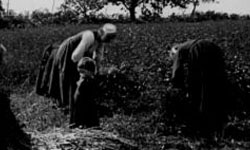
Dr Michael Mosley discovers why we want to control pain and how we ultimately did it.
- TV-Recordings
- Medical Sciences
- English subtitles
- 60
Dr Michael Mosley discovers why we want to control pain and how we ultimately did it.

Exploring early attempts to tackle infection and how we used microbes to fight back.
- TV-Recordings
- Medical Sciences
- English subtitles
- 60
Exploring early attempts to tackle infection and how we used microbes to fight back.

How scientists went from finding antidotes to poisons to applying poisons as a cure.
- TV-Recordings
- Medical Sciences
- English subtitles
- 60
How scientists went from finding antidotes to poisons to applying poisons as a cure.

Panorama investigates the global advance of antibiotic-resistant superbugs and the threat they pose to modern medicine and millions of patients worldwide. Reporter Fergus Walsh travels to India and finds restricted, life-saving antibiotics on sale without prescription and talks to NHS patients whose recovery depends on them.
- TV-Recordings
- Medical Sciences
- No subtitles
- 30
Panorama investigates the global advance of antibiotic-resistant superbugs and the threat they pose to modern medicine and millions of patients worldwide. Reporter Fergus Walsh travels to India and finds restricted, life-saving antibiotics on sale without prescription and talks to NHS patients whose recovery depends on them.
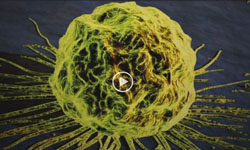
Panorama reports on the cancer patients who are pioneering a new generation of drug treatments. Patients given just months to live are keeping the disease at bay for years; for some there is even talk of a cure.
- TV-Recordings
- Medical Sciences
- English subtitles
- 60
Panorama reports on the cancer patients who are pioneering a new generation of drug treatments. Patients given just months to live are keeping the disease at bay for years; for some there is even talk of a cure.
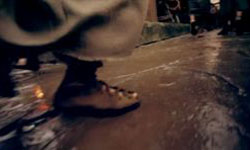
In a one off landmark drama documentary for BBC One, Dr Margaret Mountford presents Pompeii: The Mystery Of The People Frozen In Time.
- TV-Recordings
- Classical Civilisation
- TV-Recordings
- No subtitles
- 60
In a one off landmark drama documentary for BBC One, Dr Margaret Mountford presents Pompeii: The Mystery Of The People Frozen In Time.
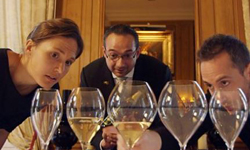
Physicist Dr Helen Czerski takes us on an amazing journey into the science of bubbles. Bubbles may seem to be just fun toys, but they are also powerful tools that push back the boundaries of science.
- TV-Recordings
- English subtitles
- 60
Physicist Dr Helen Czerski takes us on an amazing journey into the science of bubbles. Bubbles may seem to be just fun toys, but they are also powerful tools that push back the boundaries of science.
-
Precision: The Measure of All Things
-
BBC
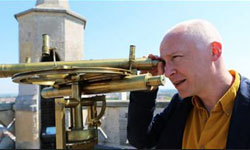
Professor Marcus du Sautoy explores why we are driven to measure and quantify the world around us and why we have reduced the universe to just a handful of fundamental units of measurement.
- TV-Recordings
- No subtitles
- 180
Professor Marcus du Sautoy explores why we are driven to measure and quantify the world around us and why we have reduced the universe to just a handful of fundamental units of measurement.
Professor Marcus du Sautoy explores why we are driven to measure and quantify the world around us and why we have reduced the universe to just a handful of fundamental units of measurement. The story of the metre and the second.
- TV-Recordings
- Maths
- No subtitles
- 60
Professor Marcus du Sautoy explores why we are driven to measure and quantify the world around us and why we have reduced the universe to just a handful of fundamental units of measurement. The story of the metre and the second.
Deep underground in a vault beneath Paris lives the most important lump of metal in the world - Le Grand K. Created in the 19th century, it's the world's master kilogramme, the weight on which every other weight is based. But there is a problem with Le Grand K - it is losing weight. Professor Marcus du Sautoy explores the history of this strange object and the astonishing modern day race to replace it
- TV-Recordings
- Maths
- No subtitles
- 60
Deep underground in a vault beneath Paris lives the most important lump of metal in the world - Le Grand K. Created in the 19th century, it's the world's master kilogramme, the weight on which every other weight is based. But there is a problem with Le Grand K - it is losing weight. Professor Marcus du Sautoy explores the history of this strange object and the astonishing modern day race to replace it