
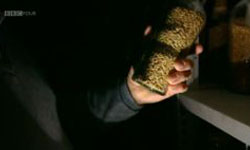
For 10,000 years or more, humans created new plant varieties for food by trial and error and a touch of serendipity. Then 150 years ago, a new era began. Pioneer botanists unlocked the patterns found in different types of plants and opened the door to a new branch of science - plant genetics. They discovered what controlled the random colours of snapdragon petals and the strange colours found in wild maize.
- TV-Recordings
- Biology
- TV-Recordings
- No subtitles
- 60
For 10,000 years or more, humans created new plant varieties for food by trial and error and a touch of serendipity. Then 150 years ago, a new era began. Pioneer botanists unlocked the patterns found in different types of plants and opened the door to a new branch of science - plant genetics. They discovered what controlled the random colours of snapdragon petals and the strange colours found in wild maize.
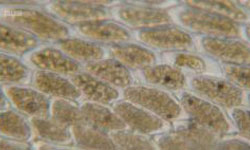
The air we breathe, and all the food we eat, is created from water, sunlight, carbon dioxide and a few minerals. That\'s it, nothing else. It sounds simple, but this process is one of the most fascinating and complicated in all of science. Without it there could be no life on earth. It\'s that important.
- TV-Recordings
- Biology
- TV-Recordings
- No subtitles
- 60
The air we breathe, and all the food we eat, is created from water, sunlight, carbon dioxide and a few minerals. That\'s it, nothing else. It sounds simple, but this process is one of the most fascinating and complicated in all of science. Without it there could be no life on earth. It\'s that important.
The experts unearth the amazing breakthroughs that are transforming the resilience and strength of the human body.
- TV-Recordings
- Biology
- TV-Recordings
- No subtitles
- 60
The experts unearth the amazing breakthroughs that are transforming the resilience and strength of the human body.

-
Charles Darwin and the Tree of Life
-
David Attenborough
David Attenborough asks three key questions: how and why did Darwin come up with his theory of evolution? Why do we think he was right? And why is it more important now than ever before?
- TV-Recordings
- Biology
- Humanities
- TV-Recordings
- No subtitles
- 50
David Attenborough asks three key questions: how and why did Darwin come up with his theory of evolution? Why do we think he was right? And why is it more important now than ever before?
Astronomer Carl Sagan leads us on an engaging guided tour of the universe, bringing such topics as Einstein\\\'s theory of relativity and Darwin\\\'s theory of evolution down to a layman\\\'s level of understanding. The first episode opens with a description of the cosmos and introduces the iconic \\\'Spaceship of the Imagination\\\'
- TV-Recordings
- Astronomy
- English subtitles
- 50
Astronomer Carl Sagan leads us on an engaging guided tour of the universe, bringing such topics as Einstein\\\'s theory of relativity and Darwin\\\'s theory of evolution down to a layman\\\'s level of understanding. The first episode opens with a description of the cosmos and introduces the iconic \\\'Spaceship of the Imagination\\\'
-
Darwin's Dangerous Idea
-
BBC
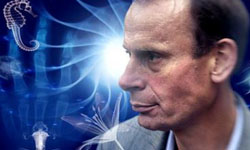
Andrew Marr explores how Darwin's theory of evolution by natural selection has taken on a life of its own far beyond the world of science
- TV-Recordings
- No subtitles
- 180
Andrew Marr explores how Darwin's theory of evolution by natural selection has taken on a life of its own far beyond the world of science
In the first episode of the three-part series, Andrew Marr explores how Darwin\'s theory of evolution by natural selection has taken on a life of its own far beyond the world of science.
- TV-Recordings
- Biology
- General Science
- TV-Recordings
- No subtitles
- 60
In the first episode of the three-part series, Andrew Marr explores how Darwin\'s theory of evolution by natural selection has taken on a life of its own far beyond the world of science.

Andrew Marr discovers something surprising about his own evolutionary history as this epic series continues with an exploration of Darwin\'s impact on politics and society.
- TV-Recordings
- Biology
- General Science
- TV-Recordings
- No subtitles
- 60
Andrew Marr discovers something surprising about his own evolutionary history as this epic series continues with an exploration of Darwin\'s impact on politics and society.

In the final episode of this ground-breaking series about Charles Darwin\'s legacy, Andrew Marr discovers how Darwin\'s ideas are helping us to save ourselves and all life on earth from extinction.
- TV-Recordings
- Biology
- General Science
- TV-Recordings
- No subtitles
- 60
In the final episode of this ground-breaking series about Charles Darwin\'s legacy, Andrew Marr discovers how Darwin\'s ideas are helping us to save ourselves and all life on earth from extinction.
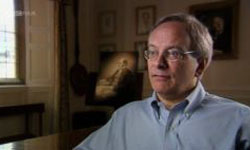
Documentary telling the little-known story of how Darwin came to write his great masterpiece, On the Origin of Species, a book which explains the wonderful variety of the natural world as emerging out of death and the struggle of life.
- TV-Recordings
- Biology
- General Science
- TV-Recordings
- No subtitles
- 60
Documentary telling the little-known story of how Darwin came to write his great masterpiece, On the Origin of Species, a book which explains the wonderful variety of the natural world as emerging out of death and the struggle of life.
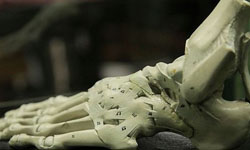
In a purpose-built dissection lab, Dr George McGavin is joined by leading anatomy experts to dissect a real foot, taking it apart layer by layer to reveal what makes it unique in the animal kingdom.
- TV-Recordings
- Medical Sciences
- English subtitles
- 60
In a purpose-built dissection lab, Dr George McGavin is joined by leading anatomy experts to dissect a real foot, taking it apart layer by layer to reveal what makes it unique in the animal kingdom.
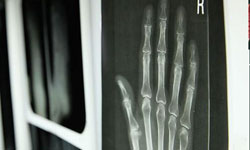
In a purpose-built dissection lab, Dr George McGavin is joined by leading anatomy experts to dissect a real hand, taking it apart layer by layer to reveal what makes it unique in the animal kingdom.
- TV-Recordings
- Medical Sciences
- English subtitles
- 60
In a purpose-built dissection lab, Dr George McGavin is joined by leading anatomy experts to dissect a real hand, taking it apart layer by layer to reveal what makes it unique in the animal kingdom.
-
Evolution - Series 1
-
Tom Hewitson
From a single spark of life, through millions of generations, animals have become diverse, weird and beautiful. Chris Packham tells the incredible story in astonishing new detail.
- TV-Recordings
- English subtitles
- 289
From a single spark of life, through millions of generations, animals have become diverse, weird and beautiful. Chris Packham tells the incredible story in astonishing new detail.
-
Evolution - Series 1 - Episode 1 - The Elephant
-
Tom Hewitson
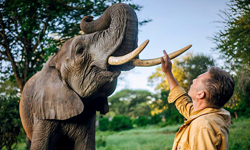
How did the elephant get so big? Chris Packham explores the four-billion-year story of how a tiny cell evolved into complex, gentle giants.
- TV-Recordings
- English subtitles
- 58
How did the elephant get so big? Chris Packham explores the four-billion-year story of how a tiny cell evolved into complex, gentle giants.
-
Evolution - Series 1 - Episode 2 - The Ostrich
-
Laura Mulholland
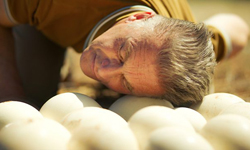
How did the ostrich come to lay the biggest egg on earth? Chris Packham explores the way reproduction has shaped life on earth and the surprising evolutionary origins of sex, eggs and birds. It's a four-billion-year journey contained within a shell.
- TV-Recordings
- English subtitles
- 58
How did the ostrich come to lay the biggest egg on earth? Chris Packham explores the way reproduction has shaped life on earth and the surprising evolutionary origins of sex, eggs and birds. It's a four-billion-year journey contained within a shell.
-
Evolution - Series 1 - Episode 3 - The Bat
-
Fleur Bone
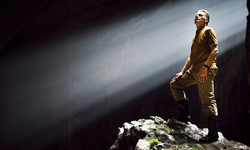
How did the bat get so hungry? Chris Packham explores how the drive to find food has shaped animal life. The origin of bums, guts, jaws and super hearing.
- TV-Recordings
- English subtitles
- 58
How did the bat get so hungry? Chris Packham explores how the drive to find food has shaped animal life. The origin of bums, guts, jaws and super hearing.

How did the dolphin get so smart? Chris Packham explores the origins of senses, brains and intelligence, in an evolutionary odyssey that ventures from ocean to land and back again.
- TV-Recordings
- English subtitles
- 58
How did the dolphin get so smart? Chris Packham explores the origins of senses, brains and intelligence, in an evolutionary odyssey that ventures from ocean to land and back again.
-
Evolution - Series 1 - Episode 5 - The Horse
-
Clementine Cheetham
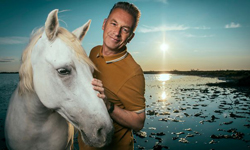
How did the horse become so fast? Chris Packham sets out on a slithering, swimming, sprinting odyssey that explores the evolutionary beginnings of animal movement and how it reached its peak in one of the most elegant and athletic animals on earth: the horse.
- TV-Recordings
- English subtitles
- 58
How did the horse become so fast? Chris Packham sets out on a slithering, swimming, sprinting odyssey that explores the evolutionary beginnings of animal movement and how it reached its peak in one of the most elegant and athletic animals on earth: the horse.
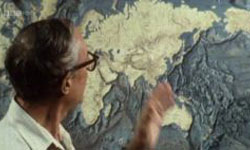
Dallas Campbell delves in to the Horizon archive to discover how our ideas about dinosaurs have changed over the past 40 years.
- TV-Recordings
- Biology
- TV-Recordings
- English subtitles
- 60
Dallas Campbell delves in to the Horizon archive to discover how our ideas about dinosaurs have changed over the past 40 years.
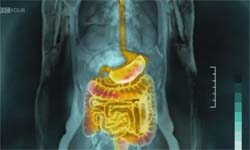
What's really going on inside your stomach? In this documentary, Michael Mosley offers up his own guts to find out. Spending the day as an exhibit at the Science Museum in London, he swallows a tiny camera and uses the latest in imaging technology to get a unique view of his innards digesting his food. He discovers pools of concentrated acid and metres of writhing tubing which is home to its own ecosystem.
- TV-Recordings
- Biology
- Medical Sciences
- TV-Recordings
- No subtitles
- 60
What's really going on inside your stomach? In this documentary, Michael Mosley offers up his own guts to find out. Spending the day as an exhibit at the Science Museum in London, he swallows a tiny camera and uses the latest in imaging technology to get a unique view of his innards digesting his food. He discovers pools of concentrated acid and metres of writhing tubing which is home to its own ecosystem.
-
Heart vs Mind: What makes us Human ?
-
David Malone
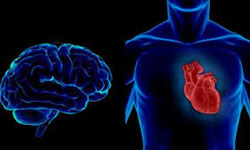
The heart is the most symbolic organ of the human body. Throughout history it has been seen as the site of our emotions, the very centre of our being. But modern medicine has come to see the heart as just a pump; a brilliant pump, but nothing more. And we see ourselves as ruled by our heads and not our hearts.
- TV-Recordings
- Humanities
- Medical Sciences
- TV-Recordings
- No subtitles
- 60
The heart is the most symbolic organ of the human body. Throughout history it has been seen as the site of our emotions, the very centre of our being. But modern medicine has come to see the heart as just a pump; a brilliant pump, but nothing more. And we see ourselves as ruled by our heads and not our hearts.
Changes to the bacteria that live inside all of us are responsible for increasing the number of people with allergies, suggests new research.
- TV-Recordings
- Medical Sciences
- English subtitles
- 60
Changes to the bacteria that live inside all of us are responsible for increasing the number of people with allergies, suggests new research.
We are in the grip of an allergy epidemic. 50 years ago one in 30 were affected, but in Britain today it is closer to one in three. Why this should be is one of modern medicine's greatest puzzles.
- TV-Recordings
- Biology
- Medical Sciences
- TV-Recordings
- No subtitles
- 58
We are in the grip of an allergy epidemic. 50 years ago one in 30 were affected, but in Britain today it is closer to one in three. Why this should be is one of modern medicine's greatest puzzles.

Dr Alice Roberts asks one of the great questions about our species: are we still evolving? Alice follows a trail of clues from ancient human bones, to studies of remarkable people living in the most inhospitable parts of the planet, to the frontiers of genetic research to discover if we are still evolving - and where we might be heading.
- TV-Recordings
- Anthropology
- TV-Recordings
- English subtitles
- 60
Dr Alice Roberts asks one of the great questions about our species: are we still evolving? Alice follows a trail of clues from ancient human bones, to studies of remarkable people living in the most inhospitable parts of the planet, to the frontiers of genetic research to discover if we are still evolving - and where we might be heading.
What makes us good or evil? It's a simple but deeply unsettling question. One that scientists are now starting to answer.
- TV-Recordings
- Biology
- Humanities
- TV-Recordings
- English subtitles
- 60
What makes us good or evil? It's a simple but deeply unsettling question. One that scientists are now starting to answer.
Touch, sight, smell, hearing and taste - our senses link us to the outside world. Dr Kevin Fong looks back through 40 years of Horizon archives to find out what science has taught us about our tools of perception - why babies use touch more than any other sense, why our eyes are so easily tricked.
- TV-Recordings
- Medical Sciences
- TV-Recordings
- No subtitles
- 60
Touch, sight, smell, hearing and taste - our senses link us to the outside world. Dr Kevin Fong looks back through 40 years of Horizon archives to find out what science has taught us about our tools of perception - why babies use touch more than any other sense, why our eyes are so easily tricked.
The film follows Rosemary, Phil and Ray as they undergo remarkable new treatments - from a billion pound genetically targeted drug designed to fight a type of skin cancer, to advanced robotic surgery.
- TV-Recordings
- Medical Sciences
- TV-Recordings
- No subtitles
- 60
The film follows Rosemary, Phil and Ray as they undergo remarkable new treatments - from a billion pound genetically targeted drug designed to fight a type of skin cancer, to advanced robotic surgery.
Horizon reveals the science behind our perception of colour, a highly subjective illusion.
- TV-Recordings
- Medical Sciences
- TV-Recordings
- No subtitles
- 60
Horizon reveals the science behind our perception of colour, a highly subjective illusion.

The Ebola virus. No-one knows exactly where it comes from but one thing is certain - it\\\\\\\'s one of the most virulent infections known to science. This special episode of Horizon meets the scientists and doctors from all around the world looking for the cure and hears first-hand accounts of what it\\\\\\\'s actually like to catch - and survive - this terrible disease.
- TV-Recordings
- Medical Sciences
- English subtitles
- 60
The Ebola virus. No-one knows exactly where it comes from but one thing is certain - it\\\\\\\'s one of the most virulent infections known to science. This special episode of Horizon meets the scientists and doctors from all around the world looking for the cure and hears first-hand accounts of what it\\\\\\\'s actually like to catch - and survive - this terrible disease.
-
Horizon - Fix Me
-
BBC
Horizon follows the emotional journey of three young people with currently untreatable conditions to see if, within their lifetime, they can be cured.
- TV-Recordings
- Medical Sciences
- TV-Recordings
- No subtitles
- 60
Horizon follows the emotional journey of three young people with currently untreatable conditions to see if, within their lifetime, they can be cured.