

-
A la poursuite de pluton
-
Terri Randall , 2015
Le 19 janvier 2006, la Nasa mettait la touche finale à un projet colossal en faisant décoller une sonde chargée de fournir la première reconnaissance de Pluton et de ses satellites. Le voyage, prévu pour durer neuf ans, ne s'achèvera réellement qu'en 2030 : après Pluton, la sonde New Horizons doit encore explorer la ceinture de Kuiper, anneau de débris et d'astéroïdes qui délimite notre Système solaire...
- TV-Recordings
- No subtitles
- 55
Le 19 janvier 2006, la Nasa mettait la touche finale à un projet colossal en faisant décoller une sonde chargée de fournir la première reconnaissance de Pluton et de ses satellites. Le voyage, prévu pour durer neuf ans, ne s'achèvera réellement qu'en 2030 : après Pluton, la sonde New Horizons doit encore explorer la ceinture de Kuiper, anneau de débris et d'astéroïdes qui délimite notre Système solaire...

Today, the topic of climate change is a major part of daily life, yet 40 years ago it was virtually unheard of. Since then, Horizon and the BBC have followed scientists as they have tried to unpick how the climate works and whether it is changing.
- TV-Recordings
- Policy Challenges
- English subtitles
- 60
Today, the topic of climate change is a major part of daily life, yet 40 years ago it was virtually unheard of. Since then, Horizon and the BBC have followed scientists as they have tried to unpick how the climate works and whether it is changing.
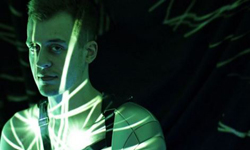
This episode looks at the issues that will change the way we live our lives in the future. Rather than relying on the minds of science fiction writers, mathematician Hannah Fry delves into the data we have today to provide an evidence-based vision of tomorrow. With the help of the BBC's science experts - and a few surprise guests - Hannah investigates the questions the British public want answered about the future.
- TV-Recordings
- English subtitles
- 60
This episode looks at the issues that will change the way we live our lives in the future. Rather than relying on the minds of science fiction writers, mathematician Hannah Fry delves into the data we have today to provide an evidence-based vision of tomorrow. With the help of the BBC's science experts - and a few surprise guests - Hannah investigates the questions the British public want answered about the future.
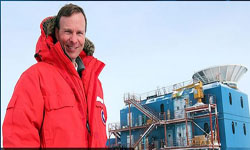
Horizon travels to the South Pole to tell the inside story of the greatest scientific quest of our time.
- TV-Recordings
- No subtitles
- 60
Horizon travels to the South Pole to tell the inside story of the greatest scientific quest of our time.
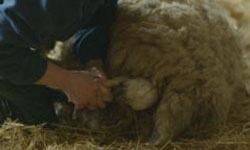
Changes to the bacteria that live inside all of us are responsible for increasing the number of people with allergies, suggests new research.
- TV-Recordings
- Medical Sciences
- English subtitles
- 60
Changes to the bacteria that live inside all of us are responsible for increasing the number of people with allergies, suggests new research.
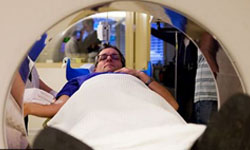
Michael Mosley puts himself through a battery of health tests available to people who feel perfectly well. From an expensive heart scan to a new national screening procedure to detect the earliest signs of bowel cancer, Mosley sets out to discover which if any of the tests are worth doing.
- TV-Recordings
- Medical Sciences
- English subtitles
- 59
Michael Mosley puts himself through a battery of health tests available to people who feel perfectly well. From an expensive heart scan to a new national screening procedure to detect the earliest signs of bowel cancer, Mosley sets out to discover which if any of the tests are worth doing.
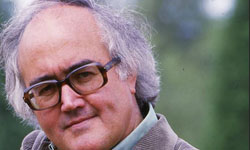
A chance to look back at a classic Horizon special in which James Burke looks at space exploration and exploitation. Originally transmitted in 1984, James begins by looking at the Apollo XI moon landing, before moving on to future space plans for humankind.
- TV-Recordings
- Astronomy
- English subtitles
- 60
A chance to look back at a classic Horizon special in which James Burke looks at space exploration and exploitation. Originally transmitted in 1984, James begins by looking at the Apollo XI moon landing, before moving on to future space plans for humankind.
Touch, sight, smell, hearing and taste - our senses link us to the outside world. Dr Kevin Fong looks back through 40 years of Horizon archives to find out what science has taught us about our tools of perception - why babies use touch more than any other sense, why our eyes are so easily tricked.
- TV-Recordings
- Medical Sciences
- TV-Recordings
- No subtitles
- 60
Touch, sight, smell, hearing and taste - our senses link us to the outside world. Dr Kevin Fong looks back through 40 years of Horizon archives to find out what science has taught us about our tools of perception - why babies use touch more than any other sense, why our eyes are so easily tricked.
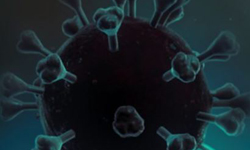
In this third Horizon special, Dr Chris Van Tulleken is joined by his brother Xand and Dr Guddi Singh to take us through the latest developments and answer current concerns.
- TV-Recordings
- English subtitles
- 59
In this third Horizon special, Dr Chris Van Tulleken is joined by his brother Xand and Dr Guddi Singh to take us through the latest developments and answer current concerns.
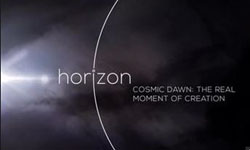
Forget the Big Bang. The real moment of creation was the moment of first light, the moment the first stars were born. Horizon tells the scientific version of the story of Genesis.
- TV-Recordings
- Astronomy
- English subtitles
- 59
Forget the Big Bang. The real moment of creation was the moment of first light, the moment the first stars were born. Horizon tells the scientific version of the story of Genesis.
-
Horizon - Cosmic Dawn: The Real Moment of Creation
-
Toby Macdonald
Horizon investigates the cosmic dawn, the moment one hundred million years after the big bang when the first stars were born.
- TV-Recordings
- English subtitles
- 59
Horizon investigates the cosmic dawn, the moment one hundred million years after the big bang when the first stars were born.

Horizon investigates a new era of Alzheimer's research, which is bringing hope to millions of sufferers across the world.
- TV-Recordings
- English subtitles
- 60
Horizon investigates a new era of Alzheimer's research, which is bringing hope to millions of sufferers across the world.
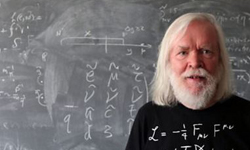
Scientists genuinely don't know what most of our universe is made of. The atoms we're made from only make up four per cent. The rest is dark matter and dark energy (for 'dark', read 'don't know'). The Large Hadron Collider at CERN has been upgraded. When it's switched on in March 2015, its collisions will have twice the energy they did before. The hope is that scientists will discover the identity of dark matter in the debris.
- TV-Recordings
- English subtitles
- 60
Scientists genuinely don't know what most of our universe is made of. The atoms we're made from only make up four per cent. The rest is dark matter and dark energy (for 'dark', read 'don't know'). The Large Hadron Collider at CERN has been upgraded. When it's switched on in March 2015, its collisions will have twice the energy they did before. The hope is that scientists will discover the identity of dark matter in the debris.
Scientists genuinely don't know what most of our universe is made of. The atoms we're made from only make up four per cent. The rest is dark matter and dark energy (for 'dark', read 'don't know'). The Large Hadron Collider at CERN has been upgraded. When it's switched on in March 2015, its collisions will have twice the energy they did before. The hope is that scientists will discover the identity of dark matter in the debris.
- TV-Recordings
- English subtitles
- 60
Scientists genuinely don't know what most of our universe is made of. The atoms we're made from only make up four per cent. The rest is dark matter and dark energy (for 'dark', read 'don't know'). The Large Hadron Collider at CERN has been upgraded. When it's switched on in March 2015, its collisions will have twice the energy they did before. The hope is that scientists will discover the identity of dark matter in the debris.
The film follows Rosemary, Phil and Ray as they undergo remarkable new treatments - from a billion pound genetically targeted drug designed to fight a type of skin cancer, to advanced robotic surgery.
- TV-Recordings
- Medical Sciences
- TV-Recordings
- No subtitles
- 60
The film follows Rosemary, Phil and Ray as they undergo remarkable new treatments - from a billion pound genetically targeted drug designed to fight a type of skin cancer, to advanced robotic surgery.

Exploring the murky and fast-paced world of the hackers out to steal money and identities and wreak havoc with people's online lives, and the scientists who are joining forces to help defeat them.
- TV-Recordings
- Computer Science
- English subtitles
- 60
Exploring the murky and fast-paced world of the hackers out to steal money and identities and wreak havoc with people's online lives, and the scientists who are joining forces to help defeat them.

The hunt for life within the long-dead bones of dinosaurs may sound like the stuff of Hollywood fantasy - but one woman has found traces of life within the fossilised bones of a T Rex.
- TV-Recordings
- Genetics
- English subtitles
- 60
The hunt for life within the long-dead bones of dinosaurs may sound like the stuff of Hollywood fantasy - but one woman has found traces of life within the fossilised bones of a T Rex.

Particle physicist Professor Brian Cox asks, 'What time is it?' It's a simple question and it sounds like it has a simple answer. But do we really know what it is that we're asking?
- TV-Recordings
- Physics
- English subtitles
- 59
Particle physicist Professor Brian Cox asks, 'What time is it?' It's a simple question and it sounds like it has a simple answer. But do we really know what it is that we're asking?

The Ebola virus. No-one knows exactly where it comes from but one thing is certain - it\\\\\\\'s one of the most virulent infections known to science. This special episode of Horizon meets the scientists and doctors from all around the world looking for the cure and hears first-hand accounts of what it\\\\\\\'s actually like to catch - and survive - this terrible disease.
- TV-Recordings
- Medical Sciences
- English subtitles
- 60
The Ebola virus. No-one knows exactly where it comes from but one thing is certain - it\\\\\\\'s one of the most virulent infections known to science. This special episode of Horizon meets the scientists and doctors from all around the world looking for the cure and hears first-hand accounts of what it\\\\\\\'s actually like to catch - and survive - this terrible disease.
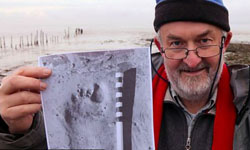
Horizon reveals how new archaeological discoveries are painting a different picture of the very first native Britons. For centuries it's been thought that these hunter-gatherers lived a brutal, hand-to-mouth existence. But extraordinary new evidence has forced scientists to rethink who these people were, where they came from and what impact they had on our early history.
- TV-Recordings
- Archaeology
- English subtitles
- 59
Horizon reveals how new archaeological discoveries are painting a different picture of the very first native Britons. For centuries it's been thought that these hunter-gatherers lived a brutal, hand-to-mouth existence. But extraordinary new evidence has forced scientists to rethink who these people were, where they came from and what impact they had on our early history.
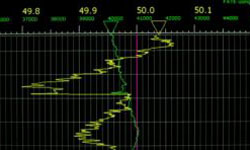
Iain Stewart investigates a new and controversial energy rush for the natural gas found deep underground. Sometimes, this is right under the places people live in. Getting it out of the ground involves hydraulic fracturing - or fracking.
- TV-Recordings
- Engineering
- TV-Recordings
- English subtitles
- 60
Iain Stewart investigates a new and controversial energy rush for the natural gas found deep underground. Sometimes, this is right under the places people live in. Getting it out of the ground involves hydraulic fracturing - or fracking.

In the past few years we have shivered through two record-breaking cold winters and parts of the country have experienced intense droughts and torrential floods. It is a pattern that appears to be playing out across the globe.
- TV-Recordings
- Environmental Studies
- Other
- TV-Recordings
- No subtitles
- 60
In the past few years we have shivered through two record-breaking cold winters and parts of the country have experienced intense droughts and torrential floods. It is a pattern that appears to be playing out across the globe.
It is one of the most baffling questions that scientists can ask: how big is the universe that we live in?
- TV-Recordings
- English subtitles
- 60
It is one of the most baffling questions that scientists can ask: how big is the universe that we live in?
-
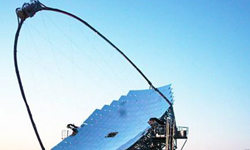
Horizon - How Small is the Universe?
-
Toby Macdonald
Horizon plunges down the biggest rabbit-hole in history in search of the smallest thing in the universe.
- TV-Recordings
- Physics
- English subtitles
- 60
Horizon plunges down the biggest rabbit-hole in history in search of the smallest thing in the universe.
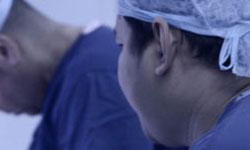
Dr Kevin Fong finds out how doctors can avoid making mistakes in the high-pressure, high-stakes world of the operating theatre.
- TV-Recordings
- Medical Sciences
- TV-Recordings
- No subtitles
- 60
Dr Kevin Fong finds out how doctors can avoid making mistakes in the high-pressure, high-stakes world of the operating theatre.
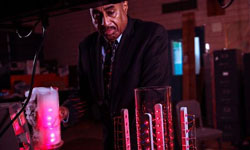
Time travel is not forbidden by the laws of nature, but to build a time machine, we would need to understand more about those laws and how to subvert them than we do now. And every day, science does learn more.
- TV-Recordings
- Physics
- English subtitles
- 60
Time travel is not forbidden by the laws of nature, but to build a time machine, we would need to understand more about those laws and how to subvert them than we do now. And every day, science does learn more.
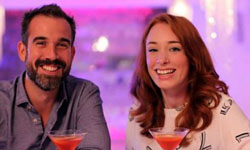
Dr Xand Van Tulleken is single and looking for love. Mathematician Dr Hannah Fry wants to use him as her guinea pig to test whether the algorithms that dating sites use to match people actually work.
- TV-Recordings
- English subtitles
- 60
Dr Xand Van Tulleken is single and looking for love. Mathematician Dr Hannah Fry wants to use him as her guinea pig to test whether the algorithms that dating sites use to match people actually work.

Every day you make thousands of decisions, big and small, and behind all them is a powerful battle in your mind, pitting intuition against logic.Horizon uncovers the truth about how you really make decisions.
- TV-Recordings
- General Science
- English subtitles
- 60
Every day you make thousands of decisions, big and small, and behind all them is a powerful battle in your mind, pitting intuition against logic.Horizon uncovers the truth about how you really make decisions.
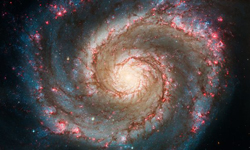
To celebrate the 30th anniversary of its launch, this film tells the remarkable story of how Hubble revealed the awe and wonder of our universe and how a team of daring astronauts risked their lives to keep it working.
- TV-Recordings
- English subtitles
- 59
To celebrate the 30th anniversary of its launch, this film tells the remarkable story of how Hubble revealed the awe and wonder of our universe and how a team of daring astronauts risked their lives to keep it working.
Brian Cox explores the ingredients needed for an intelligent civilisation to evolve in the universe - the need for a benign star, for a habitable planet, for life to spontaneously arise on such a planet and the time required for intelligent life to evolve and build a civilisation.
- TV-Recordings
- English subtitles
- 60
Brian Cox explores the ingredients needed for an intelligent civilisation to evolve in the universe - the need for a benign star, for a habitable planet, for life to spontaneously arise on such a planet and the time required for intelligent life to evolve and build a civilisation.