

-
All Watched Over by Machines of Loving Grace Part 2: The Use and Abuse of Vegetational Concepts
-
Adam Curtis
This looks at how the idea of nature as a self-regulating ecosystem is a machine fantasy.
- TV-Recordings
- History
- Politics & Public Policy
- TV-Recordings
- No subtitles
- 60
This looks at how the idea of nature as a self-regulating ecosystem is a machine fantasy.

-
All Watched Over by Machines of Loving Grace Part 3: The Monkey in the Machine and the Machine in the Monkey
-
Adam Curtis
Why do humans find the machine vision so beguiling - does it excuse our failure?
- TV-Recordings
- History
- Politics & Public Policy
- TV-Recordings
- No subtitles
- 60
Why do humans find the machine vision so beguiling - does it excuse our failure?
The Bible describes how Sodom and Gomorrah were destroyed in a storm of fire and brimstone. Could the inspiration for this story come from a natural apocalypse around the Dead Sea in the Middle East?
- TV-Recordings
- Classical Civilisation
- Religion
- TV-Recordings
- No subtitles
- 50
The Bible describes how Sodom and Gomorrah were destroyed in a storm of fire and brimstone. Could the inspiration for this story come from a natural apocalypse around the Dead Sea in the Middle East?
Richard Miles explores the power and the paradox of the \'Greek Thing\' - a blossoming in art, philosophy and science that went hand in hand with political discord, social injustice and endless war.
- TV-Recordings
- Archaeology
- Classical Civilisation
- History
- TV-Recordings
- English subtitles
- 60
Richard Miles explores the power and the paradox of the \'Greek Thing\' - a blossoming in art, philosophy and science that went hand in hand with political discord, social injustice and endless war.

Time Shift reveals the history of the frozen continent, finding out why the most inhospitable place on the planet has exerted such a powerful hold on the imagination of explorers, scientists, writers and photographers.
- TV-Recordings
- Geography
- TV-Recordings
- No subtitles
- 60
Time Shift reveals the history of the frozen continent, finding out why the most inhospitable place on the planet has exerted such a powerful hold on the imagination of explorers, scientists, writers and photographers.
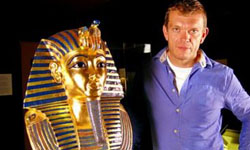
He shows how 20th-century attention turned from civilisation and kings to the search for the common man against a background of science and competing political ideologies.
- TV-Recordings
- Archaeology
- TV-Recordings
- No subtitles
- 60
He shows how 20th-century attention turned from civilisation and kings to the search for the common man against a background of science and competing political ideologies.
David Attenborough explores just how far climate change is altering our planet, from drought-stricken rainforest to declining polar bears, from flooded homes to bleached coral. He searches for the evidence that it is our daily activities which are radically changing the climate, leaving the future of Earth largely up to us.
- TV-Recordings
- Geography
- Natural World
- TV-Recordings
- No subtitles
- 59
David Attenborough explores just how far climate change is altering our planet, from drought-stricken rainforest to declining polar bears, from flooded homes to bleached coral. He searches for the evidence that it is our daily activities which are radically changing the climate, leaving the future of Earth largely up to us.

In the 4th century BC the Greek philosopher Aristotle travelled to Lesvos, an island in the Aegean teeming, then as now, with wildlife.
- TV-Recordings
- Biology
- Classical Civilisation
- TV-Recordings
- No subtitles
- 60
In the 4th century BC the Greek philosopher Aristotle travelled to Lesvos, an island in the Aegean teeming, then as now, with wildlife.
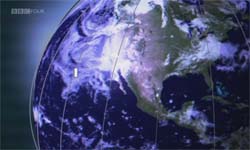
A unique journey around the weird and wonderful planet that we call home.
- TV-Recordings
- Geography
- TV-Recordings
- No subtitles
- 60
A unique journey around the weird and wonderful planet that we call home.
-
Artemis: To the Moon and Back
-
Tim Lambert, Tom Ranson
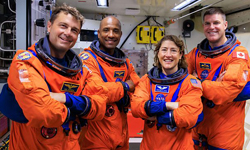
The inside story of the Artemis II mission - filmed over three and a half years at NASA. How did four astronauts travel to the moon, going deeper into space than ever before?
- TV-Recordings
- English subtitles
- 59
The inside story of the Artemis II mission - filmed over three and a half years at NASA. How did four astronauts travel to the moon, going deeper into space than ever before?

-
AstraZeneca: A Vaccine for the World?
-
Jennifer Shaw
BBC medical editor Fergus Walsh examines the extraordinary ambition behind the Oxford-AstraZeneca Covid jab. Intended as a vaccine for the world, did politics get in its way?
- TV-Recordings
- English subtitles
- 59
BBC medical editor Fergus Walsh examines the extraordinary ambition behind the Oxford-AstraZeneca Covid jab. Intended as a vaccine for the world, did politics get in its way?
-
Atom
-
Professor Jim Al-Khalili
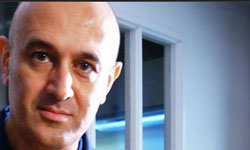
The first of three programmes in which nuclear physicist Professor Jim Al-Khalili tells the story of the greatest scientific discovery ever - that everything is made of atoms.
- TV-Recordings
- No subtitles
- 170
The first of three programmes in which nuclear physicist Professor Jim Al-Khalili tells the story of the greatest scientific discovery ever - that everything is made of atoms.
-
Atom I - Clash of Titans
-
Jim Al-Khalili
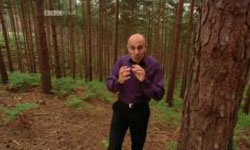
Professor Al-Khalili takes us from the discovery of the atom to the development of quantum mechanics
- TV-Recordings
- Chemistry
- Physics
- TV-Recordings
- No subtitles
- 50
Professor Al-Khalili takes us from the discovery of the atom to the development of quantum mechanics
-
Atom II - The Key to the Cosmos
-
Jim Al-Khalili
This episode tackles world-changing discoveries such as radioactivity, the Atom Bomb and the Big Bang, and tries to answer the biggest questions of all - why are we here and how were we made?
- TV-Recordings
- Chemistry
- Physics
- TV-Recordings
- No subtitles
- 60
This episode tackles world-changing discoveries such as radioactivity, the Atom Bomb and the Big Bang, and tries to answer the biggest questions of all - why are we here and how were we made?
-
Atom III - The Illusion of Reality
-
Jim Al-Khalili
Al-Khalili discovers that there might be parallel universes in which different versions of us exist, and finds out that empty space isn’t empty at all, but seething with activity
- TV-Recordings
- Chemistry
- Physics
- TV-Recordings
- No subtitles
- 60
Al-Khalili discovers that there might be parallel universes in which different versions of us exist, and finds out that empty space isn’t empty at all, but seething with activity
David Attenborough returns to the island of Madagascar on a very personal quest.
- TV-Recordings
- Geography
- TV-Recordings
- English subtitles
- 60
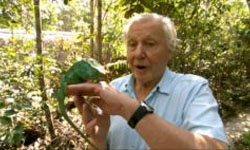
David Attenborough returns to the island of Madagascar on a very personal quest.
-
Attenborough: 60 Years in the Wild
-
BBC
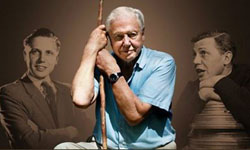
Over three very personal films, Sir David Attenborough looks back at the unparalleled changes in natural history that he has witnessed during his 60-year career
- TV-Recordings
- No subtitles
- 180
Over three very personal films, Sir David Attenborough looks back at the unparalleled changes in natural history that he has witnessed during his 60-year career
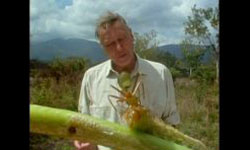
Sir David Attenborough gives his unique perspective on over half a century of innovation in wildlife filmmaking - developments that have brought ever more breathtaking and intimate images of wildlife to our television screens, changing our view of life on the planet forever.
- TV-Recordings
- Natural World
- TV-Recordings
- No subtitles
- 60
Sir David Attenborough gives his unique perspective on over half a century of innovation in wildlife filmmaking - developments that have brought ever more breathtaking and intimate images of wildlife to our television screens, changing our view of life on the planet forever.

David Attenborough reviews the most exciting scientific discoveries that have transformed our view of life on earth during his lifetime. How and where did life first begin? How do continents move? How do animals communicate? And why do they behave the way they do?
- TV-Recordings
- Natural World
- TV-Recordings
- No subtitles
- 60
David Attenborough reviews the most exciting scientific discoveries that have transformed our view of life on earth during his lifetime. How and where did life first begin? How do continents move? How do animals communicate? And why do they behave the way they do?
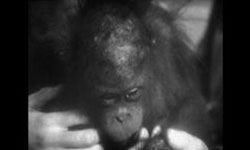
Sir David Attenborough reflects on the dramatic impact that humankind has had on the natural world within his own lifetime. He tells the surprising and deeply personal story of the changes he has seen, of the pioneering conservationists with who he has worked - and of the global revolution in attitudes towards nature that has taken place within the last six decades.
- TV-Recordings
- Natural World
- TV-Recordings
- No subtitles
- 60
Sir David Attenborough reflects on the dramatic impact that humankind has had on the natural world within his own lifetime. He tells the surprising and deeply personal story of the changes he has seen, of the pioneering conservationists with who he has worked - and of the global revolution in attitudes towards nature that has taken place within the last six decades.

-
Attenborough's Life in Colour - Episode 1 - Seeing in Colour
-
David Attenborough
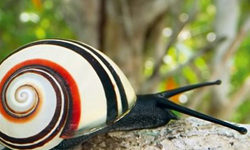
Using the latest camera technology, David Attenborough reveals the extraordinary ways in which animals use colour: to win a mate, to fight off rivals and to warn enemies.
- TV-Recordings
- English subtitles
- 58
Using the latest camera technology, David Attenborough reveals the extraordinary ways in which animals use colour: to win a mate, to fight off rivals and to warn enemies.
-
Attenborough's Life in Colour - Episode 2 - Hiding in Colour
-
David Attenborough
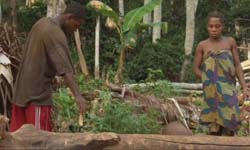
David Attenborough reveals the extraordinary ways that some animals use colour to hide and disappear into the background.
- TV-Recordings
- English subtitles
- 58
David Attenborough reveals the extraordinary ways that some animals use colour to hide and disappear into the background.
-
Baka: A Cry from the Rainforest
-
Phil Agland
Phil Agland revisits the Baka Pygmy family he filmed 25 years ago in his BAFTA award winning documentary 'Baka: People of the Rainforest'. An extraordinary journey into the heart of the rainforest in Cameroon.
- TV-Recordings
- Geography
- TV-Recordings
- No subtitles
- 90
Phil Agland revisits the Baka Pygmy family he filmed 25 years ago in his BAFTA award winning documentary 'Baka: People of the Rainforest'. An extraordinary journey into the heart of the rainforest in Cameroon.
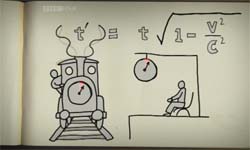
Artist and writer Matt Collings takes the plunge into an alien world of equations. He asks top scientists to help him understand five of the most famous equations in science, talks to Stephen Hawking about his equation for black holes and comes face to face with a particle of anti-matter.
- TV-Recordings
- Maths
- TV-Recordings
- No subtitles
- 60
Artist and writer Matt Collings takes the plunge into an alien world of equations. He asks top scientists to help him understand five of the most famous equations in science, talks to Stephen Hawking about his equation for black holes and comes face to face with a particle of anti-matter.
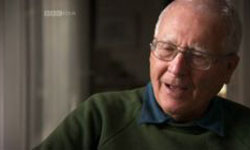
How scientist James Lovelock came to see the Earth as a holistic, self-regulating system.
- TV-Recordings
- Geography
- Physics
- TV-Recordings
- No subtitles
- 60
How scientist James Lovelock came to see the Earth as a holistic, self-regulating system.
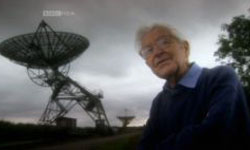
In the first of a three-part series, Professor Dame Jocelyn Bell Burnell describes how she discovered pulsars, the by-products of supernova explosions which make all life in the universe possible. She describes the moments of despair and jubilation as the discovery unfolded and her excitement as pulsars took the scientific world by storm.
- TV-Recordings
- Physics
- TV-Recordings
- No subtitles
- 60
In the first of a three-part series, Professor Dame Jocelyn Bell Burnell describes how she discovered pulsars, the by-products of supernova explosions which make all life in the universe possible. She describes the moments of despair and jubilation as the discovery unfolded and her excitement as pulsars took the scientific world by storm.

The final part of this series looking at three brilliant contemporary scientists features Sir Tim Hunt, awarded the Nobel Prize for his discovery of the mechanism of how cells divide - a discovery fundamental to the life and growth of every single creature on the planet, as well as a vital clue into the mystery of cancer.
- TV-Recordings
- Chemistry
- TV-Recordings
- No subtitles
- 60
The final part of this series looking at three brilliant contemporary scientists features Sir Tim Hunt, awarded the Nobel Prize for his discovery of the mechanism of how cells divide - a discovery fundamental to the life and growth of every single creature on the planet, as well as a vital clue into the mystery of cancer.

-
Beautiful Minds Series 1 and 2
-
BBC
Influential and respected scientists explain how their unique scientific perspectives have redefined how we think about the world around us
- TV-Recordings
- No subtitles
- 360
Influential and respected scientists explain how their unique scientific perspectives have redefined how we think about the world around us
Physicist Professor Andre Geim\'s constant search for new ideas has led to some extraordinary discoveries, from levitating frogs to a tape that sticks to surfaces like a gecko\'s foot. He reveals how his playful approach to his research helped him uncover the properties of graphene, the world\'s thinnest material, and won him a Nobel Prize.
- TV-Recordings
- Physics
- TV-Recordings
- No subtitles
- 60
Physicist Professor Andre Geim\'s constant search for new ideas has led to some extraordinary discoveries, from levitating frogs to a tape that sticks to surfaces like a gecko\'s foot. He reveals how his playful approach to his research helped him uncover the properties of graphene, the world\'s thinnest material, and won him a Nobel Prize.
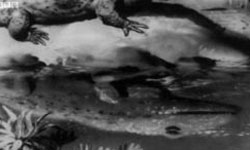
For paleontologist Professor Jenny Clack, who solved one of the greatest mysteries in the history of life on Earth, success was far from inevitable. She recounts how she had to overcome a series of setbacks before she found and described the fossil Acanthostega, a 365 million-year-old creature that offered dramatic new evidence of how fish made the transition onto land.
- TV-Recordings
- Biology
- TV-Recordings
- No subtitles
- 60
For paleontologist Professor Jenny Clack, who solved one of the greatest mysteries in the history of life on Earth, success was far from inevitable. She recounts how she had to overcome a series of setbacks before she found and described the fossil Acanthostega, a 365 million-year-old creature that offered dramatic new evidence of how fish made the transition onto land.