
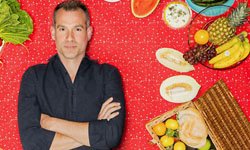
Using some explosive experiments, Dr Chris van Tulleken reveals how our food not only provides us with energy, but also the construction we need to constantly rebuild our bodies.
- TV-Recordings
- English subtitles
- 59
Using some explosive experiments, Dr Chris van Tulleken reveals how our food not only provides us with energy, but also the construction we need to constantly rebuild our bodies.
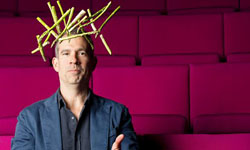
Dr Chris van Tulleken investigates how we have hacked our food system to create an amazing array of things to eat, but also some serious problems to solve.
- TV-Recordings
- English subtitles
- 59
Dr Chris van Tulleken investigates how we have hacked our food system to create an amazing array of things to eat, but also some serious problems to solve.
-
Royal Institution Christmas Lectures 2025
-
Dr Maggie Aderin-Pocock
Great scientists, even greater questions. Mind-expanding talks and hands-on science, inspiring children and adults alike since 1825.
- TV-Recordings
- English subtitles
- 177
Great scientists, even greater questions. Mind-expanding talks and hands-on science, inspiring children and adults alike since 1825.

-
Royal Institution Christmas Lectures 2025 - Episode 1 - Destination Moon
-
Dr Maggie Aderin-Pocock
Dr Maggie Aderin-Pocock begins her search for extraterrestrial life with an exploration of our nearest neighbour, and her favourite space rock, the moon.
- TV-Recordings
- English subtitles
- 59
Dr Maggie Aderin-Pocock begins her search for extraterrestrial life with an exploration of our nearest neighbour, and her favourite space rock, the moon.

-
Royal Institution Christmas Lectures 2025 - Episode 2 - Searching the Solar System
-
Dr Maggie Aderin-Pocock
Space scientist Dame Dr Maggie Aderin-Pocock continues her search for alien life with a grand tour of our solar system. Could any other planets or moons out there be habitable?
- TV-Recordings
- English subtitles
- 59
Space scientist Dame Dr Maggie Aderin-Pocock continues her search for alien life with a grand tour of our solar system. Could any other planets or moons out there be habitable?
-
Royal Institution Christmas Lectures 2025 - Episode 3 - To the Stars and Beyond
-
Dr Maggie Aderin-Pocock
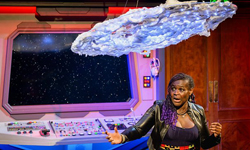
Dame Dr Maggie Aderin-Pocock, with the help of the world’s most powerful telescope, ventures through the Milky Way and into the universe beyond, on the hunt for alien worlds.
- TV-Recordings
- English subtitles
- 59
Dame Dr Maggie Aderin-Pocock, with the help of the world’s most powerful telescope, ventures through the Milky Way and into the universe beyond, on the hunt for alien worlds.

Professor Brian Cox uses this year's Huw Wheldon Memorial Lecture to address the main challenges in bringing science to television.
- TV-Recordings
- General Science
- TV-Recordings
- English subtitles
- 40
Professor Brian Cox uses this year's Huw Wheldon Memorial Lecture to address the main challenges in bringing science to television.

-
Saving Planet Earth: Fixing a Hole
-
Jamie Lochhead
The story of how we defeated the first great man-made threat to our planet's environment: the hole in the ozone layer
- TV-Recordings
- English subtitles
- 47
The story of how we defeated the first great man-made threat to our planet's environment: the hole in the ozone layer
-
Science and Islam
-
Prof. Jim Al-Khalili
Jim Al-Khalili travels through Syria, Iran, Tunisia and Spain to tell the story of the great leap in scientific knowledge that took place in the Islamic world between the 8th and 14th centuries
- TV-Recordings
- English subtitles
- 180
Jim Al-Khalili travels through Syria, Iran, Tunisia and Spain to tell the story of the great leap in scientific knowledge that took place in the Islamic world between the 8th and 14th centuries
-
Science and Islam Episode 1 - The Language of Science
-
Prof. Jim Al-Khalili
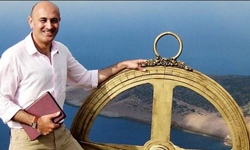
Physicist Jim Al-Khalili travels through Syria, Iran, Tunisia and Spain to tell the story of the great leap in scientific knowledge that took place in the Islamic world between the 8th and 14th centuries.
- TV-Recordings
- English subtitles
- 60
Physicist Jim Al-Khalili travels through Syria, Iran, Tunisia and Spain to tell the story of the great leap in scientific knowledge that took place in the Islamic world between the 8th and 14th centuries.
-
Science and Islam Episode 2 - The Empire of Reason
-
Prof. Jim Al-Khalili
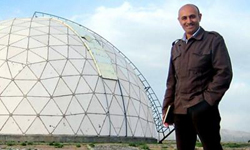
Physicist Jim Al-Khalili travels through Syria, Iran, Tunisia and Spain to tell the story of the great leap in scientific knowledge that took place in the Islamic world between the 8th and 14th centuries.
- TV-Recordings
- English subtitles
- 60
Physicist Jim Al-Khalili travels through Syria, Iran, Tunisia and Spain to tell the story of the great leap in scientific knowledge that took place in the Islamic world between the 8th and 14th centuries.
-
Science and Islam Episode 3 - The Power of Doubt
-
Prof. Jim Al-Khalili
Physicist Jim Al-Khalili tells the story of the great leap in scientific knowledge that took place in the Islamic world between the 8th and 14th centuries.
- TV-Recordings
- English subtitles
- 60
Physicist Jim Al-Khalili tells the story of the great leap in scientific knowledge that took place in the Islamic world between the 8th and 14th centuries.
-
Science Britannica
-
BBC
Professor Brian Cox introduces Britain's science heroes.
- TV-Recordings
- English subtitles
- 180
Professor Brian Cox introduces Britain's science heroes.

-
Science Britannica - Episode 1 : Frankenstein's Monsters
-
Professor Brian Cox
Professor Brian Cox guides viewers through 350 years of British science to reveal what science really is, who the people are who practise it, and how it is inextricably linked to the past, present and future of each and every one of us.
- TV-Recordings
- General Science
- English subtitles
- 60
Professor Brian Cox guides viewers through 350 years of British science to reveal what science really is, who the people are who practise it, and how it is inextricably linked to the past, present and future of each and every one of us.

-
Science Britannica - Episode 2 : Method and Madness
-
Professor Brian Cox
This time, Professor Cox celebrates Britain's pivotal role in creating modern science. From performing Isaac Newton's iconic light experiment to meeting a wartime code breaker and making hydrogen explosions, Professor Cox leads the way through 300 years of British history.
- TV-Recordings
- General Science
- English subtitles
- 60
This time, Professor Cox celebrates Britain's pivotal role in creating modern science. From performing Isaac Newton's iconic light experiment to meeting a wartime code breaker and making hydrogen explosions, Professor Cox leads the way through 300 years of British history.

Professor Brian Cox ends his homage to British Science by looking at how discoveries are made, asking whether it is better to let the scientists do their own thing, and hope for happy accidents, or to only back scientific winners at the risk of missing the occasional gems
- TV-Recordings
- General Science
- English subtitles
- 60
Professor Brian Cox ends his homage to British Science by looking at how discoveries are made, asking whether it is better to let the scientists do their own thing, and hope for happy accidents, or to only back scientific winners at the risk of missing the occasional gems
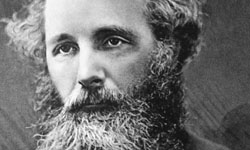
Professor Iain Stewart reveals the story behind the Scottish physicist who was Einstein's hero; James Clerk Maxwell. Maxwell's discoveries not only inspired Einstein, but they helped shape our modern world - allowing the development of radio, TV, mobile phones and much more.
- TV-Recordings
- Physics
- English subtitles
- 60
Professor Iain Stewart reveals the story behind the Scottish physicist who was Einstein's hero; James Clerk Maxwell. Maxwell's discoveries not only inspired Einstein, but they helped shape our modern world - allowing the development of radio, TV, mobile phones and much more.

There is a battle playing out inside your body right now. It started billions of years ago and it is still being fought in every one of us every minute of every day. It is the story of a viral infection - the battle for the cell.
- TV-Recordings
- Biology
- Genetics
- TV-Recordings
- No subtitles
- 60
There is a battle playing out inside your body right now. It started billions of years ago and it is still being fought in every one of us every minute of every day. It is the story of a viral infection - the battle for the cell.
-
Secrets of Bones
-
BBC 4
Evolutionary biologist and master skeleton builder Ben Garrod presents a six-part series looking at how bones have enabled vertebrates to colonise and dominate practically every habitat on Earth.
- TV-Recordings
- English subtitles
- 180
Evolutionary biologist and master skeleton builder Ben Garrod presents a six-part series looking at how bones have enabled vertebrates to colonise and dominate practically every habitat on Earth.

Evolutionary biologist and master skeleton builder Ben Garrod begins a six-part journey to discover how bones have enabled vertebrates to colonise and dominate practically every habitat on Earth
- TV-Recordings
- Medical Sciences
- English subtitles
- 30
Evolutionary biologist and master skeleton builder Ben Garrod begins a six-part journey to discover how bones have enabled vertebrates to colonise and dominate practically every habitat on Earth
Evolutionary biologist and master skeleton builder Ben Garrod discovers how the skeleton has adapted for vertebrates to move on land in a remarkable number of ways.
- TV-Recordings
- Biology
- English subtitles
- 30
Evolutionary biologist and master skeleton builder Ben Garrod discovers how the skeleton has adapted for vertebrates to move on land in a remarkable number of ways.
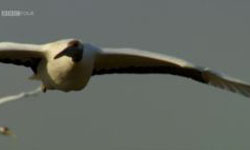
Ben Garrod finds out how the skeleton has allowed vertebrates to do the most remarkable thing of all - take to the air.
- TV-Recordings
- Biology
- English subtitles
- 30
Ben Garrod finds out how the skeleton has allowed vertebrates to do the most remarkable thing of all - take to the air.
Ben Garrod delves into the surprising ways in which bone has evolved to help vertebrates sense the world around them. He reveals why predators like the wolf have eyes at the front of their skull whereas prey animals such as sheep usually have eye sockets on the side of their heads.
- TV-Recordings
- Biology
- English subtitles
- 30
Ben Garrod delves into the surprising ways in which bone has evolved to help vertebrates sense the world around them. He reveals why predators like the wolf have eyes at the front of their skull whereas prey animals such as sheep usually have eye sockets on the side of their heads.
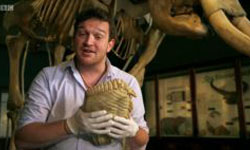
Ben Garrod uncovers the secrets of how vertebrates capture and devour their food using extreme jaws, bizarre teeth and specialized bony tools. He takes a cherry picker up a giant sperm whale's jaw, finds out which animal has teeth weighing five kilos each and which uses its skull as a suction pump.
- TV-Recordings
- Biology
- No subtitles
- 30
Ben Garrod uncovers the secrets of how vertebrates capture and devour their food using extreme jaws, bizarre teeth and specialized bony tools. He takes a cherry picker up a giant sperm whale's jaw, finds out which animal has teeth weighing five kilos each and which uses its skull as a suction pump.
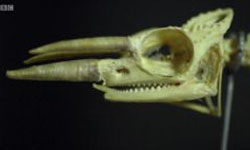
Ben Garrod seeks out the big part that bones can play in reproduction. Through sexual selection, the skeleton has adapted to aid courtship, competition and even copulation.
- TV-Recordings
- Biology
- No subtitles
- 30
Ben Garrod seeks out the big part that bones can play in reproduction. Through sexual selection, the skeleton has adapted to aid courtship, competition and even copulation.

-
Secrets of Skin
-
Sue Doody
Featuring groundbreaking new science, experiments and leading scientists from a variety of disciplines, the series unravels the natural history of the body's largest organ.
- TV-Recordings
- English subtitles
- 168
Featuring groundbreaking new science, experiments and leading scientists from a variety of disciplines, the series unravels the natural history of the body's largest organ.
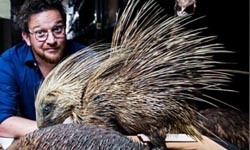
Professor Ben Garrod explores how versatile the basic skin structure truly is, revealing how slight adaptations have created birds' feathers and a rhinoceros’s horn.
- TV-Recordings
- English subtitles
- 28
Professor Ben Garrod explores how versatile the basic skin structure truly is, revealing how slight adaptations have created birds' feathers and a rhinoceros’s horn.
-
Secrets of Skin - Episode 2 - Moving
-
Sue Doody
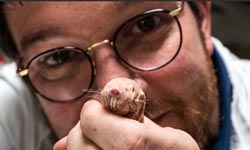
What makes sharks built for speed? How do snakes move without limbs? How do sugar gliders fly without feathers? The answers all lie in their skin.
- TV-Recordings
- English subtitles
- 29
What makes sharks built for speed? How do snakes move without limbs? How do sugar gliders fly without feathers? The answers all lie in their skin.
-
Secrets of Skin - Episode 3 - Protection
-
Sue Doody
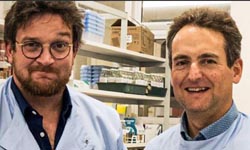
Professor Ben Garrod reveals how skin protects vertebrates from extremes of temperature, the harmful effect of UV and a host of living organisms that want to get in.
- TV-Recordings
- English subtitles
- 28
Professor Ben Garrod reveals how skin protects vertebrates from extremes of temperature, the harmful effect of UV and a host of living organisms that want to get in.
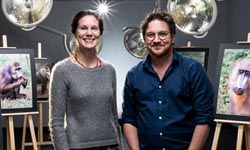
Professor Ben Garrod explores how skin has evolved remarkable ways to enable animals to communicate with each other, from vibrant displays of colour to skin pouches to amplify sound.
- TV-Recordings
- English subtitles
- 28
Professor Ben Garrod explores how skin has evolved remarkable ways to enable animals to communicate with each other, from vibrant displays of colour to skin pouches to amplify sound.