
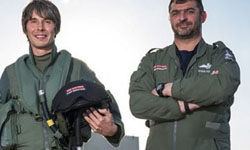
Professor Brian Cox follows Earth's epic journey through space. He takes to the air in a top-secret fighter jet to race the spin of the planet and reverse the passage of the day.
- TV-Recordings
- English subtitles
- 60
Professor Brian Cox follows Earth's epic journey through space. He takes to the air in a top-secret fighter jet to race the spin of the planet and reverse the passage of the day.

In this episode, Professor Brian Cox shows how Earth's basic ingredients, like the pure sulphur mined in the heart of a deadly volcano in Indonesia, have become the building blocks of life. Hidden deep in a cave in the Dominican Republic lies a magical world created by the same property of water that makes it essential to life.
- TV-Recordings
- English subtitles
- 60
In this episode, Professor Brian Cox shows how Earth's basic ingredients, like the pure sulphur mined in the heart of a deadly volcano in Indonesia, have become the building blocks of life. Hidden deep in a cave in the Dominican Republic lies a magical world created by the same property of water that makes it essential to life.

In this final episode Professor Brian Cox travels to Iceland, where the delicate splendour of a moonbow reveals the colours that paint our world, and he visits a volcano to explain why the sun shines.
- TV-Recordings
- English subtitles
- 60
In this final episode Professor Brian Cox travels to Iceland, where the delicate splendour of a moonbow reveals the colours that paint our world, and he visits a volcano to explain why the sun shines.

-
Forces of Nature with Brian Cox
-
BBC
Professor Brian Cox combines some of the most spectacular sights on Earth with our deepest understanding of the universe to reveal how the planet's beauty is created by just a handful of forces.
- TV-Recordings
- English subtitles
- 240
Professor Brian Cox combines some of the most spectacular sights on Earth with our deepest understanding of the universe to reveal how the planet's beauty is created by just a handful of forces.

-
From Ice to Fire: The Incredible Science of Temperature
-
BBC
Dr Helen Czerski goes on a spectacular journey to the extremes of the temperature scale, where everyday laws of physics break down and a new world of scientific possibility begins.
- TV-Recordings
- English subtitles
- 180
Dr Helen Czerski goes on a spectacular journey to the extremes of the temperature scale, where everyday laws of physics break down and a new world of scientific possibility begins.

-
Frozen Planet II
-
David Attenborough
Life in the extreme. In a fragile world of beauty and hostility, nature finds a way to survive and thrive. Sir David Attenborough explores a planet on the brink of major change.
- TV-Recordings
- English subtitles
- 348
Life in the extreme. In a fragile world of beauty and hostility, nature finds a way to survive and thrive. Sir David Attenborough explores a planet on the brink of major change.

-
Galapagos Series 1
-
BBC
Liz Bonnin joins a scientific team on an expedition across the Galapagos Islands to carry out important research that will help protect the islands and their inhabitants.
- TV-Recordings
- Natural World
- English subtitles
- 180
Liz Bonnin joins a scientific team on an expedition across the Galapagos Islands to carry out important research that will help protect the islands and their inhabitants.
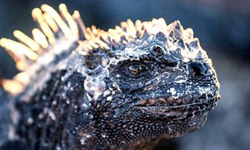
Liz Bonnin joins a scientific team aboard the research vessel the Alucia on an expedition across the Galapagos Island.
- TV-Recordings
- Natural World
- English subtitles
- 60
Liz Bonnin joins a scientific team aboard the research vessel the Alucia on an expedition across the Galapagos Island.
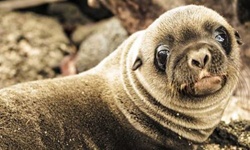
On the second leg of this incredible mission, Liz Bonnin and a team of scientific experts set off beneath the waves to explore this spectacular archipelago. It is an exciting opportunity for the team to delve into a world that still largely remains a mystery to science.
- TV-Recordings
- Natural World
- English subtitles
- 60
On the second leg of this incredible mission, Liz Bonnin and a team of scientific experts set off beneath the waves to explore this spectacular archipelago. It is an exciting opportunity for the team to delve into a world that still largely remains a mystery to science.
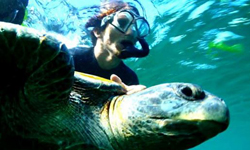
In the culmination of this 1,000km scientific expedition aboard the Alucia, Liz Bonnin and the team of scientific experts journey south to visit the oldest islands in the Galapagos to see first-hand the impact that humans have had on this pristine wilderness.
- TV-Recordings
- Natural World
- English subtitles
- 60
In the culmination of this 1,000km scientific expedition aboard the Alucia, Liz Bonnin and the team of scientific experts journey south to visit the oldest islands in the Galapagos to see first-hand the impact that humans have had on this pristine wilderness.

-
Genius of Britain Episode 01
-
More 4
The first programme begins 350 years ago when a small group of friends, colleagues and rivals defied everything that was known about the world at that time.
- TV-Recordings
- History
- TV-Recordings
- No subtitles
- 47
The first programme begins 350 years ago when a small group of friends, colleagues and rivals defied everything that was known about the world at that time.
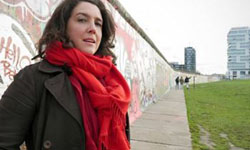
The philosopher Friedrich Nietzsche was one of the most brilliant and dangerous minds of the 19th century. His uncompromising and often brutal ideas smashed the comfortable presuppositions and assumptions of religion, morality and science.
- TV-Recordings
- English subtitles
- 60
The philosopher Friedrich Nietzsche was one of the most brilliant and dangerous minds of the 19th century. His uncompromising and often brutal ideas smashed the comfortable presuppositions and assumptions of religion, morality and science.
-
Great Ormond Street Series 3
-
BBC
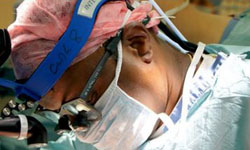
Following Great Ormond Street Hospital's doctors.
- TV-Recordings
- English subtitles
- 180
Following Great Ormond Street Hospital's doctors.

In the Bone Marrow Transplant Unit at Great Ormond Street Hospital, doctors strive to save the lives of children with life-threatening congenital diseases. They must attempt treatments which have very uncertain chances of success and can even threaten the lives of the children they are trying to save.
- TV-Recordings
- Medical Sciences
- English subtitles
- 60
In the Bone Marrow Transplant Unit at Great Ormond Street Hospital, doctors strive to save the lives of children with life-threatening congenital diseases. They must attempt treatments which have very uncertain chances of success and can even threaten the lives of the children they are trying to save.
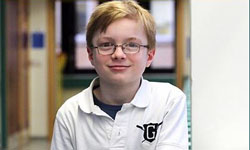
Great Ormond Street Hospital is the last chance for children in the UK whose lungs are failing because of cystic fibrosis and other conditions. In a few very severe cases each year, their only hope of survival is to undergo a radical and risky step - a double lung transplant.
- TV-Recordings
- Medical Sciences
- English subtitles
- 60
Great Ormond Street Hospital is the last chance for children in the UK whose lungs are failing because of cystic fibrosis and other conditions. In a few very severe cases each year, their only hope of survival is to undergo a radical and risky step - a double lung transplant.
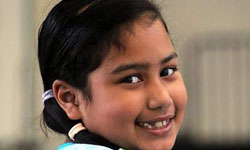
Great Ormond Street is Britain's leading hospital for treating children with serious diseases of the brain - from tumours to epilepsy to rare neurovascular conditions. To save lives, doctors have no option but to undertake treatments which carry grave risks - children may be left with a mental impairment or may not even survive.
- TV-Recordings
- Medical Sciences
- English subtitles
- 60
Great Ormond Street is Britain's leading hospital for treating children with serious diseases of the brain - from tumours to epilepsy to rare neurovascular conditions. To save lives, doctors have no option but to undertake treatments which carry grave risks - children may be left with a mental impairment or may not even survive.

-
Greta Thunberg: A Year to Change the World
-
BBC
Climate activist Greta Thunberg takes a year off school to explore the science of global warming and challenge world leaders, calling for action on climate change.
- TV-Recordings
- English subtitles
- 177
Climate activist Greta Thunberg takes a year off school to explore the science of global warming and challenge world leaders, calling for action on climate change.
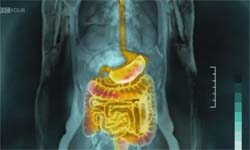
What's really going on inside your stomach? In this documentary, Michael Mosley offers up his own guts to find out. Spending the day as an exhibit at the Science Museum in London, he swallows a tiny camera and uses the latest in imaging technology to get a unique view of his innards digesting his food. He discovers pools of concentrated acid and metres of writhing tubing which is home to its own ecosystem.
- TV-Recordings
- Biology
- Medical Sciences
- TV-Recordings
- No subtitles
- 60
What's really going on inside your stomach? In this documentary, Michael Mosley offers up his own guts to find out. Spending the day as an exhibit at the Science Museum in London, he swallows a tiny camera and uses the latest in imaging technology to get a unique view of his innards digesting his food. He discovers pools of concentrated acid and metres of writhing tubing which is home to its own ecosystem.
-
Heart vs Mind: What makes us Human ?
-
David Malone
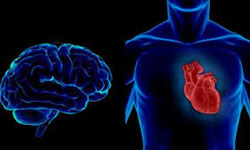
The heart is the most symbolic organ of the human body. Throughout history it has been seen as the site of our emotions, the very centre of our being. But modern medicine has come to see the heart as just a pump; a brilliant pump, but nothing more. And we see ourselves as ruled by our heads and not our hearts.
- TV-Recordings
- Humanities
- Medical Sciences
- TV-Recordings
- No subtitles
- 60
The heart is the most symbolic organ of the human body. Throughout history it has been seen as the site of our emotions, the very centre of our being. But modern medicine has come to see the heart as just a pump; a brilliant pump, but nothing more. And we see ourselves as ruled by our heads and not our hearts.
-
Hidden Kingdoms
-
BBC
Immerse yourself in the lives of extraordinary characters that stand a few inches tall. From chipmunks to mice, be entertained and spellbound by the creatures that call the Hidden Kingdoms home.
- TV-Recordings
- English subtitles
- 180
Immerse yourself in the lives of extraordinary characters that stand a few inches tall. From chipmunks to mice, be entertained and spellbound by the creatures that call the Hidden Kingdoms home.

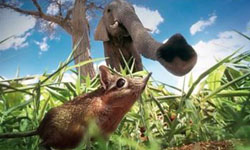
This is the story of two young animals forced to grow up fast. In Africa's savannah, a baby elephant shrew learns how speed is the secret to survival amongst the largest animals on Earth; and in America, a young grasshopper mouse confronts the Wild West's deadliest creatures to stake a claim of his own.
- TV-Recordings
- Natural World
- English subtitles
- 60
This is the story of two young animals forced to grow up fast. In Africa's savannah, a baby elephant shrew learns how speed is the secret to survival amongst the largest animals on Earth; and in America, a young grasshopper mouse confronts the Wild West's deadliest creatures to stake a claim of his own.
This is the story of two tiny animals coming of age.
- TV-Recordings
- Natural World
- English subtitles
- 60
This is the story of two tiny animals coming of age.
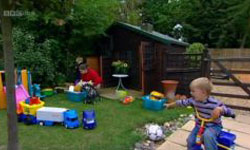
Child psychologist Laverne Antrobus delves into the Horizon archive to find out how science has shaped our approach to parenting and education over the last fifty years.
- TV-Recordings
- Medical Sciences
- TV-Recordings
- No subtitles
- 60
Child psychologist Laverne Antrobus delves into the Horizon archive to find out how science has shaped our approach to parenting and education over the last fifty years.
This episode looks at the issues that will change the way we live our lives in the future. Rather than relying on the minds of science fiction writers, mathematician Hannah Fry delves into the data we have today to provide an evidence-based vision of tomorrow. With the help of the BBC's science experts - and a few surprise guests - Hannah investigates the questions the British public want answered about the future.
- TV-Recordings
- English subtitles
- 60
This episode looks at the issues that will change the way we live our lives in the future. Rather than relying on the minds of science fiction writers, mathematician Hannah Fry delves into the data we have today to provide an evidence-based vision of tomorrow. With the help of the BBC's science experts - and a few surprise guests - Hannah investigates the questions the British public want answered about the future.
Changes to the bacteria that live inside all of us are responsible for increasing the number of people with allergies, suggests new research.
- TV-Recordings
- Medical Sciences
- English subtitles
- 60
Changes to the bacteria that live inside all of us are responsible for increasing the number of people with allergies, suggests new research.
We are in the grip of an allergy epidemic. 50 years ago one in 30 were affected, but in Britain today it is closer to one in three. Why this should be is one of modern medicine's greatest puzzles.
- TV-Recordings
- Biology
- Medical Sciences
- TV-Recordings
- No subtitles
- 58
We are in the grip of an allergy epidemic. 50 years ago one in 30 were affected, but in Britain today it is closer to one in three. Why this should be is one of modern medicine's greatest puzzles.
It's the process that powers the Sun, and scientists know that if they could just make nuclear fusion happen here on Earth they could solve all the world's energy problems. Billions of dollars have been spent on trying to make it happen, but now an American scientist claims to have created nuclear fusion simply by bombarding a flask of liquid with sound waves. Many scientists refuse to believe his claims, so Horizon has assembled a team to replicate the experiment. This film reveals the team's findings
- TV-Recordings
- Physics
- TV-Recordings
- No subtitles
- 11
It's the process that powers the Sun, and scientists know that if they could just make nuclear fusion happen here on Earth they could solve all the world's energy problems. Billions of dollars have been spent on trying to make it happen, but now an American scientist claims to have created nuclear fusion simply by bombarding a flask of liquid with sound waves. Many scientists refuse to believe his claims, so Horizon has assembled a team to replicate the experiment. This film reveals the team's findings
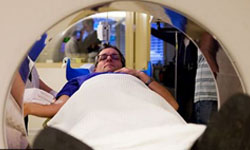
Michael Mosley puts himself through a battery of health tests available to people who feel perfectly well. From an expensive heart scan to a new national screening procedure to detect the earliest signs of bowel cancer, Mosley sets out to discover which if any of the tests are worth doing.
- TV-Recordings
- Medical Sciences
- English subtitles
- 59
Michael Mosley puts himself through a battery of health tests available to people who feel perfectly well. From an expensive heart scan to a new national screening procedure to detect the earliest signs of bowel cancer, Mosley sets out to discover which if any of the tests are worth doing.
The search for extra-terrestrial life has been going for 50 years - but there's been a recent breakthrough. Astronomers have discovered a new planet called Gliese 581 c. It is the most Earth-like planet ever found. It orbits a star and may have habitats capable of supporting life. NASA hopes to find 50 more Earth-like planets by the end of the decade, all of which increases the chance that alien life has begun elsewhere.
- TV-Recordings
- Astronomy
- Biology
- TV-Recordings
- English subtitles
- 50
The search for extra-terrestrial life has been going for 50 years - but there's been a recent breakthrough. Astronomers have discovered a new planet called Gliese 581 c. It is the most Earth-like planet ever found. It orbits a star and may have habitats capable of supporting life. NASA hopes to find 50 more Earth-like planets by the end of the decade, all of which increases the chance that alien life has begun elsewhere.