
The team explores the coastal waters of the Indian Ocean to discover what happens when the powerful Indian Ocean collides with the edge of a continent.
- TV-Recordings
- Geography
- No subtitles
- 57
The team explores the coastal waters of the Indian Ocean to discover what happens when the powerful Indian Ocean collides with the edge of a continent.
-
Oceans - Episode 07: Mediterranean Ocean
-
Paul Rose
The team embarks on an expedition to explore the profound effect that man is having on the Mediterranean Sea. Western civilisation developed around its shores, but now human activity is threatening to destroy it.
- TV-Recordings
- Geography
- No subtitles
- 57
The team embarks on an expedition to explore the profound effect that man is having on the Mediterranean Sea. Western civilisation developed around its shores, but now human activity is threatening to destroy it.
-
Oceans - Episode 08: Arctic Ocean
-
Paul Rose
The team ventures into one of the world's most hostile environments, the Arctic Ocean, which plays a crucial role in controlling our climate.
- TV-Recordings
- Geography
- No subtitles
- 60
The team ventures into one of the world's most hostile environments, the Arctic Ocean, which plays a crucial role in controlling our climate.
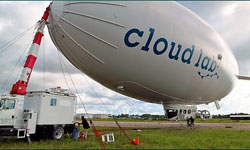
A team of scientists take to the skies in one of the world\'s largest airships, for a unique exploration of Earth\'s most precious and mysterious environment - the atmosphere.
- TV-Recordings
- Environmental Studies
- English subtitles
- 60
A team of scientists take to the skies in one of the world\'s largest airships, for a unique exploration of Earth\'s most precious and mysterious environment - the atmosphere.
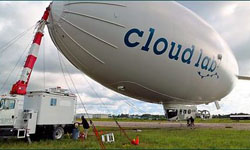
Continuing their journey across the USA in one of the world\\\'s largest airships, the team questions how the atmosphere changes with altitude and how that has an impact on the life found there.
- TV-Recordings
- Environmental Studies
- English subtitles
- 60
Continuing their journey across the USA in one of the world\\\'s largest airships, the team questions how the atmosphere changes with altitude and how that has an impact on the life found there.

-
Orbit: Earth's Extraordinary Journey
-
BBC
Right now you're hurtling around the Sun at a hundred thousand kilometres an hour. Join Kate Humble and Dr Helen Czerski as they explore the relationship between the Earth's orbit and the weather
- TV-Recordings
- No subtitles
- 180
Right now you're hurtling around the Sun at a hundred thousand kilometres an hour. Join Kate Humble and Dr Helen Czerski as they explore the relationship between the Earth's orbit and the weather

Right now you're hurtling around the sun at 64,000 miles an hour (100,000 kms an hour). In the next year you'll travel 584 million miles, to end up back where you started. Presenters Kate Humble and Dr Helen Czerski follow the Earth's voyage around the sun for one complete orbit, to witness the astonishing consequences this journey has for us all. In this first episode they travel from July to the December solstice, experiencing spectacular weather and the largest tides on Earth. To show how the Earth's orbit affects our lives, Helen jumps out of an aeroplane and Kate briefly becomes the fastest driver on Earth.
- TV-Recordings
- Physics
- TV-Recordings
- No subtitles
- 60
Right now you're hurtling around the sun at 64,000 miles an hour (100,000 kms an hour). In the next year you'll travel 584 million miles, to end up back where you started. Presenters Kate Humble and Dr Helen Czerski follow the Earth's voyage around the sun for one complete orbit, to witness the astonishing consequences this journey has for us all. In this first episode they travel from July to the December solstice, experiencing spectacular weather and the largest tides on Earth. To show how the Earth's orbit affects our lives, Helen jumps out of an aeroplane and Kate briefly becomes the fastest driver on Earth.
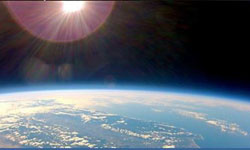
In this final episode we complete our journey, travelling back from the March equinox to the end of June. Kate Humble is in the Arctic at a place where spring arrives with a bang, whilst Helen Czerski chases a tornado to show how the earth's angle of tilt creates the most extreme weather on earth.
- TV-Recordings
- Astronomy
- TV-Recordings
- No subtitles
- 60
In this final episode we complete our journey, travelling back from the March equinox to the end of June. Kate Humble is in the Arctic at a place where spring arrives with a bang, whilst Helen Czerski chases a tornado to show how the earth's angle of tilt creates the most extreme weather on earth.
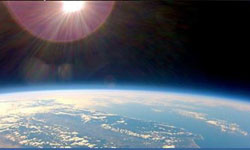
In this second episode we travel from January to the March equinox. Kate Humble gets closer to the Sun than she has ever been before, whilst Helen Czerski visits a place that gets some of the biggest and fastest snowstorms on Earth.
- TV-Recordings
- TV-Recordings
- No subtitles
- 60
In this second episode we travel from January to the March equinox. Kate Humble gets closer to the Sun than she has ever been before, whilst Helen Czerski visits a place that gets some of the biggest and fastest snowstorms on Earth.
Panorama talks to pilots who have almost passed out at the controls and passengers who say they've been made ill by toxic fumes. The air breathed on airliners is drawn past the engines and can become polluted by any leaks of engine oil. 'Fume events' are rare but there are no accurate figures of just how many occur each year. Panorama wanted to discover what was really in the air passengers, crew and pilots breathe on planes
- TV-Recordings
- Geography
- No subtitles
- 29
Panorama talks to pilots who have almost passed out at the controls and passengers who say they've been made ill by toxic fumes. The air breathed on airliners is drawn past the engines and can become polluted by any leaks of engine oil. 'Fume events' are rare but there are no accurate figures of just how many occur each year. Panorama wanted to discover what was really in the air passengers, crew and pilots breathe on planes
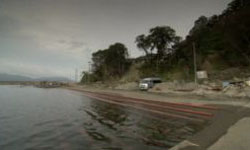
Six months on from one of the world's most devastating tsunamis, Panorama's Paul Kenyon returns to Japan to hear remarkable tales of survival amid the epic destruction.
- TV-Recordings
- Environmental Studies
- Geography
- TV-Recordings
- English subtitles
- 30
Six months on from one of the world's most devastating tsunamis, Panorama's Paul Kenyon returns to Japan to hear remarkable tales of survival amid the epic destruction.
-
Planet Earth
-
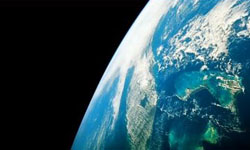
David Attenborough celebrates the amazing variety of the natural world in this epic documentary series, filmed over four years across 64 different countries.
- TV-Recordings
- No subtitles
- 460
David Attenborough celebrates the amazing variety of the natural world in this epic documentary series, filmed over four years across 64 different countries.

This episode looks at the influence of the sun and reveals how its seasonal journey affects the lives of all creatures.
- TV-Recordings
- Astronomy
- Biology
- Natural World
- TV-Recordings
- English subtitles
- 46
This episode looks at the influence of the sun and reveals how its seasonal journey affects the lives of all creatures.
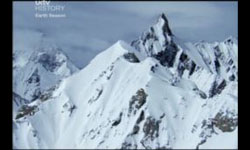
Tour the mightiest mountain ranges, starting with the birth of a mountain at one of the lowest places on Earth and ending at the summit of Everest.
- TV-Recordings
- Geography
- TV-Recordings
- No subtitles
- 46
Tour the mightiest mountain ranges, starting with the birth of a mountain at one of the lowest places on Earth and ending at the summit of Everest.
Fresh water defines the distribution of life on land. Follow the descent of rivers from their mountain sources to the sea. Watch spectacular waterfalls, fly inside the Grand Canyon and explore the wildlife in the world's deepest lake.
- TV-Recordings
- Biology
- Geography
- TV-Recordings
- No subtitles
- 46
Fresh water defines the distribution of life on land. Follow the descent of rivers from their mountain sources to the sea. Watch spectacular waterfalls, fly inside the Grand Canyon and explore the wildlife in the world's deepest lake.

Caves are remarkable habitats with equally bizarre wildlife. Cave angel fish cling to the walls behind waterfalls with microscopic hooks on their fins. Cave swiftlets navigate by echo-location and build nests out of saliva. The Texas cave salamander has neither eyes nor pigment. Planet Earth gets unique access to a hidden world of stalactites, stalagmites, snotites and troglodytes.
- TV-Recordings
- Biology
- Geography
- TV-Recordings
- No subtitles
- 46
Caves are remarkable habitats with equally bizarre wildlife. Cave angel fish cling to the walls behind waterfalls with microscopic hooks on their fins. Cave swiftlets navigate by echo-location and build nests out of saliva. The Texas cave salamander has neither eyes nor pigment. Planet Earth gets unique access to a hidden world of stalactites, stalagmites, snotites and troglodytes.
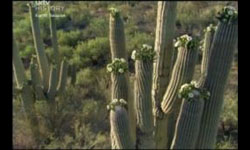
12-01-2007, Around 30% of the land's surface is desert, the most varied of our ecosystems despite the lack of rain. Saharan sandstorms reach nearly a mile high and desert rivers run for a single day.
- TV-Recordings
- Geography
- TV-Recordings
- No subtitles
- 46
12-01-2007, Around 30% of the land's surface is desert, the most varied of our ecosystems despite the lack of rain. Saharan sandstorms reach nearly a mile high and desert rivers run for a single day.

The Arctic and Antarctic experience the most extreme seasons on Earth. Time-lapse cameras watch a colony of emperor penguins, transforming them into a single organism. The film reveals new science about the dynamics of emperor penguin behaviour. In the north, unique aerial images show a polar bear swimming more than 100km. Diving for up to two minutes at a time. The exhausted polar bear later attacks a herd of walrus in a true clash of the Titans.
- TV-Recordings
- Biology
- Geography
- TV-Recordings
- No subtitles
- 46
The Arctic and Antarctic experience the most extreme seasons on Earth. Time-lapse cameras watch a colony of emperor penguins, transforming them into a single organism. The film reveals new science about the dynamics of emperor penguin behaviour. In the north, unique aerial images show a polar bear swimming more than 100km. Diving for up to two minutes at a time. The exhausted polar bear later attacks a herd of walrus in a true clash of the Titans.

06-01-2007, Jungles cover roughly three per cent of our planet yet contain 50 per cent of the world's species. High-definition cameras enable unprecedented views of animals living on the dark jungle floor
- TV-Recordings
- Biology
- TV-Recordings
- No subtitles
- 46
06-01-2007, Jungles cover roughly three per cent of our planet yet contain 50 per cent of the world's species. High-definition cameras enable unprecedented views of animals living on the dark jungle floor
06-01-2007, A humpback whale mother and calf embark on an epic journey from tropical coral paradises to storm ravaged polar seas.
- TV-Recordings
- Biology
- TV-Recordings
- No subtitles
- 46
06-01-2007, A humpback whale mother and calf embark on an epic journey from tropical coral paradises to storm ravaged polar seas.

05-01-2007, The Taiga forest, on the edge of the Arctic, is a silent world of stunted conifers. The trees may be small but filming from the air reveals its true scale. A third of all trees on Earth grow here and during the short summer they produce enough oxygen to change the atmosphere.
- TV-Recordings
- Environmental Studies
- Geography
- TV-Recordings
- No subtitles
- 46
05-01-2007, The Taiga forest, on the edge of the Arctic, is a silent world of stunted conifers. The trees may be small but filming from the air reveals its true scale. A third of all trees on Earth grow here and during the short summer they produce enough oxygen to change the atmosphere.
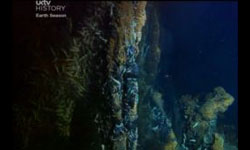
06-01-2007, Life goes to extraordinary lengths to survive this immense realm. A 30 tonne whale shark gorges on a school of fish and the unique overhead heli-gimbal camera reveals common dolphins rocketing at more than 30km an hour.
- TV-Recordings
- Biology
- TV-Recordings
- No subtitles
- 46
06-01-2007, Life goes to extraordinary lengths to survive this immense realm. A 30 tonne whale shark gorges on a school of fish and the unique overhead heli-gimbal camera reveals common dolphins rocketing at more than 30km an hour.

-
Planet Earth 2
-
David Attenborough presents a documentary series exploring how animals meet the challenges of surviving in the most iconic habitats on earth.
- TV-Recordings
- English subtitles
- 360
David Attenborough presents a documentary series exploring how animals meet the challenges of surviving in the most iconic habitats on earth.
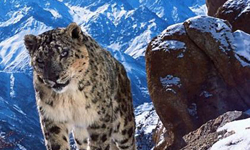
A compilation episode of the wildlife documentary series presented by David Attenborough, uncovering the secrets of animals across the globe.
- TV-Recordings
- English subtitles
- 90
A compilation episode of the wildlife documentary series presented by David Attenborough, uncovering the secrets of animals across the globe.

-
Planet Earth 2 - Episode 1 : Islands
-
David Attenbourough
Remote islands offer sanctuary for some of the planet's strangest and rarest creatures. The rare pygmy three-toed sloth enjoys a peaceful existence on an idyllic Caribbean island, while nesting albatross thrive in predator-free isolation.
- TV-Recordings
- Natural World
- English subtitles
- 60
Remote islands offer sanctuary for some of the planet's strangest and rarest creatures. The rare pygmy three-toed sloth enjoys a peaceful existence on an idyllic Caribbean island, while nesting albatross thrive in predator-free isolation.
-
Planet Earth 2 - Episode 2 : Mountains
-
David Attenborough
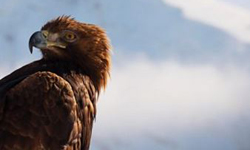
The great mountain ranges are some of the planet's most spectacular landscapes, but they are unforgiving places to live in, and only a few animals have what it takes to live at extreme altitude.
- TV-Recordings
- Natural World
- English subtitles
- 60
The great mountain ranges are some of the planet's most spectacular landscapes, but they are unforgiving places to live in, and only a few animals have what it takes to live at extreme altitude.

-
Planet Earth 2 - Episode 3 : Jungles
-
David Attenbourough
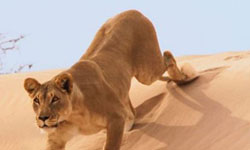
Jungles provide the richest habitats on the planet - mysterious worlds of high drama where extraordinary animals attempt to survive in the most competitive place on earth.
- TV-Recordings
- Natural World
- English subtitles
- 60
Jungles provide the richest habitats on the planet - mysterious worlds of high drama where extraordinary animals attempt to survive in the most competitive place on earth.
-
Planet Earth 2 - Episode 4 : Deserts
-
David Attenbourough
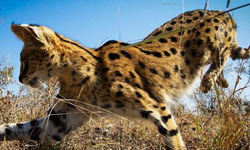
The world's deserts are lands of extremes that force animals to come up with ingenious ways of coping with hostile conditions, giving rise to the most incredible survival stories on earth.
- TV-Recordings
- Natural World
- English subtitles
- 60
The world's deserts are lands of extremes that force animals to come up with ingenious ways of coping with hostile conditions, giving rise to the most incredible survival stories on earth.
-
Planet Earth 2 - Episode 5 : Grasslands
-
David Attenborough
Grasslands cover one quarter of all land and support the vast gatherings of wildlife, but to survive here animals must endure the most hostile seasonal changes on the planet.
- TV-Recordings
- Natural World
- English subtitles
- 60
Grasslands cover one quarter of all land and support the vast gatherings of wildlife, but to survive here animals must endure the most hostile seasonal changes on the planet.

Cities are growing at a faster rate than any other habitat on Earth. They may seem an unlikely place for animals to thrive, but they can be a world of surprising opportunity.
- TV-Recordings
- Natural World
- English subtitles
- 60
Cities are growing at a faster rate than any other habitat on Earth. They may seem an unlikely place for animals to thrive, but they can be a world of surprising opportunity.