
Two-part series in which Professor Jim Al-Khalili shows how, by uncovering its secrets, scientists have used light to reveal almost everything we know about the universe.
- TV-Recordings
- Physics
- Science
- English subtitles
- 60
Two-part series in which Professor Jim Al-Khalili shows how, by uncovering its secrets, scientists have used light to reveal almost everything we know about the universe.
Professor Jim Al-Khalili tells the story of how we went from thinking we were close to a complete understanding of the universe to realising we had seen almost none of it. Today, our best estimate is that more than 99 per cent of the cosmos is hidden in the dark, invisible to our telescopes and beyond our comprehension.
- TV-Recordings
- Physics
- Science
- English subtitles
- 60
Professor Jim Al-Khalili tells the story of how we went from thinking we were close to a complete understanding of the universe to realising we had seen almost none of it. Today, our best estimate is that more than 99 per cent of the cosmos is hidden in the dark, invisible to our telescopes and beyond our comprehension.

In 2009, NASA celebrated the 40th anniversary of the first moon landing. This documentary series offers audiences a unique chance to glimpse an astronaut\'s view of spaceflight.
- TV-Recordings
- History
- TV-Recordings
- No subtitles
- 60
In 2009, NASA celebrated the 40th anniversary of the first moon landing. This documentary series offers audiences a unique chance to glimpse an astronaut\'s view of spaceflight.

-
Orbit: Earth's Extraordinary Journey
-
BBC
Right now you're hurtling around the Sun at a hundred thousand kilometres an hour. Join Kate Humble and Dr Helen Czerski as they explore the relationship between the Earth's orbit and the weather
- TV-Recordings
- No subtitles
- 180
Right now you're hurtling around the Sun at a hundred thousand kilometres an hour. Join Kate Humble and Dr Helen Czerski as they explore the relationship between the Earth's orbit and the weather

Right now you're hurtling around the sun at 64,000 miles an hour (100,000 kms an hour). In the next year you'll travel 584 million miles, to end up back where you started. Presenters Kate Humble and Dr Helen Czerski follow the Earth's voyage around the sun for one complete orbit, to witness the astonishing consequences this journey has for us all. In this first episode they travel from July to the December solstice, experiencing spectacular weather and the largest tides on Earth. To show how the Earth's orbit affects our lives, Helen jumps out of an aeroplane and Kate briefly becomes the fastest driver on Earth.
- TV-Recordings
- Physics
- TV-Recordings
- No subtitles
- 60
Right now you're hurtling around the sun at 64,000 miles an hour (100,000 kms an hour). In the next year you'll travel 584 million miles, to end up back where you started. Presenters Kate Humble and Dr Helen Czerski follow the Earth's voyage around the sun for one complete orbit, to witness the astonishing consequences this journey has for us all. In this first episode they travel from July to the December solstice, experiencing spectacular weather and the largest tides on Earth. To show how the Earth's orbit affects our lives, Helen jumps out of an aeroplane and Kate briefly becomes the fastest driver on Earth.
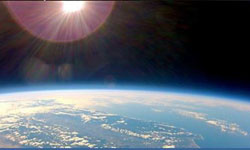
In this final episode we complete our journey, travelling back from the March equinox to the end of June. Kate Humble is in the Arctic at a place where spring arrives with a bang, whilst Helen Czerski chases a tornado to show how the earth's angle of tilt creates the most extreme weather on earth.
- TV-Recordings
- Astronomy
- TV-Recordings
- No subtitles
- 60
In this final episode we complete our journey, travelling back from the March equinox to the end of June. Kate Humble is in the Arctic at a place where spring arrives with a bang, whilst Helen Czerski chases a tornado to show how the earth's angle of tilt creates the most extreme weather on earth.
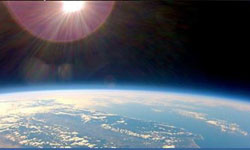
In this second episode we travel from January to the March equinox. Kate Humble gets closer to the Sun than she has ever been before, whilst Helen Czerski visits a place that gets some of the biggest and fastest snowstorms on Earth.
- TV-Recordings
- TV-Recordings
- No subtitles
- 60
In this second episode we travel from January to the March equinox. Kate Humble gets closer to the Sun than she has ever been before, whilst Helen Czerski visits a place that gets some of the biggest and fastest snowstorms on Earth.

This episode looks at the influence of the sun and reveals how its seasonal journey affects the lives of all creatures.
- TV-Recordings
- Astronomy
- English subtitles
- 46
This episode looks at the influence of the sun and reveals how its seasonal journey affects the lives of all creatures.

Film telling the story of the greatest physicists of the 20th century and the discoveries they made, told in their own words. Men and women who transformed our understanding of the universe, from unlocking the secrets of the atom to solving the mysteries of the cosmos.
- TV-Recordings
- Physics
- English subtitles
- 60
Film telling the story of the greatest physicists of the 20th century and the discoveries they made, told in their own words. Men and women who transformed our understanding of the universe, from unlocking the secrets of the atom to solving the mysteries of the cosmos.
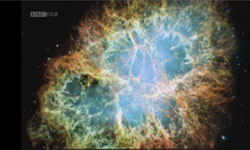
This is the epic story of the stars, and how discovering their tale has transformed our own understanding of the universe.
- TV-Recordings
- Astronomy
- Physics
- TV-Recordings
- English subtitles
- 90
This is the epic story of the stars, and how discovering their tale has transformed our own understanding of the universe.
-
Solar System - Series 1
-
Brian Cox
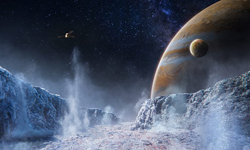
Diamond rain, supersized volcanoes, exploding oceans - and we have a front row seat for it all. Professor Brian Cox reveals the strange worlds visible to us as never before.
- TV-Recordings
- English subtitles
- 290
Diamond rain, supersized volcanoes, exploding oceans - and we have a front row seat for it all. Professor Brian Cox reveals the strange worlds visible to us as never before.
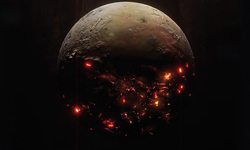
Professor Brian Cox journeys to the volcano worlds of the solar system and explore alien landscapes bursting with fire and ice. There are planets and moons covered in volcanoes, with eruptions so violent they reach into space. Understanding what makes these worlds active is critical in the search for life beyond Earth.
- TV-Recordings
- English subtitles
- 59
Professor Brian Cox journeys to the volcano worlds of the solar system and explore alien landscapes bursting with fire and ice. There are planets and moons covered in volcanoes, with eruptions so violent they reach into space. Understanding what makes these worlds active is critical in the search for life beyond Earth.
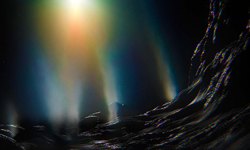
He visits some of its least explored regions and finds out what lies beyond the reach of even the most powerful telescopes. The solar system is not just a few worlds orbiting close to the Sun - it’s an enormous structure that stretches halfway to the nearest star.
- TV-Recordings
- English subtitles
- 58
He visits some of its least explored regions and finds out what lies beyond the reach of even the most powerful telescopes. The solar system is not just a few worlds orbiting close to the Sun - it’s an enormous structure that stretches halfway to the nearest star.
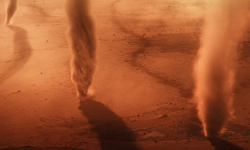
Professor Brian Cox explores the solar system’s wildest weather, encountering powerful lightning, strange metallic frosts and monsoon rains on a moon a billion kilometres from Earth.
- TV-Recordings
- English subtitles
- 58
Professor Brian Cox explores the solar system’s wildest weather, encountering powerful lightning, strange metallic frosts and monsoon rains on a moon a billion kilometres from Earth.
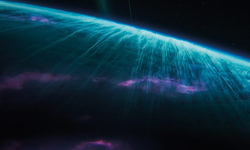
Professor Brian Cox explores the solar system’s ice giants, frozen moons and worlds where ice behaves in unimaginable ways.
- TV-Recordings
- English subtitles
- 58
Professor Brian Cox explores the solar system’s ice giants, frozen moons and worlds where ice behaves in unimaginable ways.
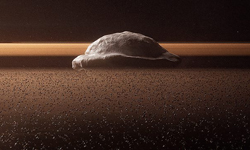
Professor Brian Cox explores the solar system’s misfits and oddballs, and investigates the forces that sculpted the bizarre features on these strange worlds.
- TV-Recordings
- English subtitles
- 58
Professor Brian Cox explores the solar system’s misfits and oddballs, and investigates the forces that sculpted the bizarre features on these strange worlds.
In the last month of the space shuttle programme, Kevin Fong is granted extraordinary access to the astronauts and ground crew as they prepare for their final mission.
- TV-Recordings
- Astronomy
- Physics
- TV-Recordings
- English subtitles
- 60
In the last month of the space shuttle programme, Kevin Fong is granted extraordinary access to the astronauts and ground crew as they prepare for their final mission.
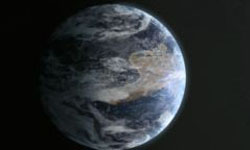
-
Stephen Hawking's Universe Episode 01
-
Channel 4
Professor Hawking considers one of the most important mysteries facing humankind: the possibility of intelligent alien life.
- TV-Recordings
- Astronomy
- Humanities
- TV-Recordings
- English subtitles
- 43
Professor Hawking considers one of the most important mysteries facing humankind: the possibility of intelligent alien life.
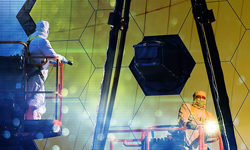
-
Super Telescope: Mission to the Edge of the Universe
-
Martin Gorst
The inside story of the James Webb Space Telescope, following the Nasa team building the £8 billion device and the scientists taking its first image of distant stars and galaxies.
- TV-Recordings
- English subtitles
- 59
The inside story of the James Webb Space Telescope, following the Nasa team building the £8 billion device and the scientists taking its first image of distant stars and galaxies.
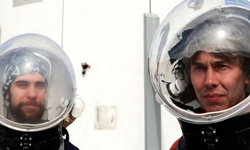
A new age of space exploration, and exploitation, is dawning. But surprisingly, some of the boldest efforts at putting humans into space are now those of private companies started by a handful of maverick billionaire businessmen.
- TV-Recordings
- English subtitles
- 60
A new age of space exploration, and exploitation, is dawning. But surprisingly, some of the boldest efforts at putting humans into space are now those of private companies started by a handful of maverick billionaire businessmen.

-
The Beauty of Diagrams
-
BBC
Series in which mathematician Marcus du Sautoy explores the stories behind some of the most familiar scientific diagrams
- TV-Recordings
- English subtitles
- 90
Series in which mathematician Marcus du Sautoy explores the stories behind some of the most familiar scientific diagrams

When Polish priest and astronomer Nicolaus Copernicus developed his extraordinary theory of a sun-centred universe 500 years ago, he was flying in the face of both science and religion. Mankind had believed for thousands of years that the earth was at the centre of the cosmos, and to disagree was to risk derision and accusations of heresy.
- TV-Recordings
- Astronomy
- Physics
- TV-Recordings
- English subtitles
- 30
When Polish priest and astronomer Nicolaus Copernicus developed his extraordinary theory of a sun-centred universe 500 years ago, he was flying in the face of both science and religion. Mankind had believed for thousands of years that the earth was at the centre of the cosmos, and to disagree was to risk derision and accusations of heresy.
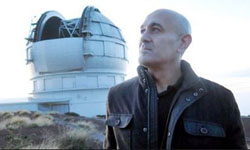
-
The Beginning and End of the Universe - Episode 1 : The Beginning
-
Prof Jim Al-Khalili
Prof Jim Al-Khalili tackles the biggest subject of all, the universe, through a series of critical observations and experiments that revolutionised our understanding of our world.
- TV-Recordings
- Astronomy
- English subtitles
- 60
Prof Jim Al-Khalili tackles the biggest subject of all, the universe, through a series of critical observations and experiments that revolutionised our understanding of our world.

-
The Beginning and End of the Universe - Episode 2 : The End
-
Prof Jim Al-Khalili
In this second part, Professor Jim Al-Khalili carries us into the distant future to try to discover how the universe will end - with a bang or a whimper?
- TV-Recordings
- Astronomy
- English subtitles
- 60
In this second part, Professor Jim Al-Khalili carries us into the distant future to try to discover how the universe will end - with a bang or a whimper?
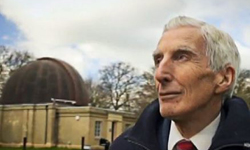
The hunt for aliens is on! After a distinguished career in cosmology Professor Martin Rees, the astronomer royal, has taken up the search for extra-terrestrials. Looking for aliens is no longer science fiction - it is a question that's engaging some of the greatest minds in science.
- TV-Recordings
- English subtitles
- 60
The hunt for aliens is on! After a distinguished career in cosmology Professor Martin Rees, the astronomer royal, has taken up the search for extra-terrestrials. Looking for aliens is no longer science fiction - it is a question that's engaging some of the greatest minds in science.

The attempt to send and land astronauts on Mars risks billions of dollars and the lives of those brave enough to attempt it. Is the possible benefit really worth the risk? And is it really achievable?
- TV-Recordings
- Astronomy
- English subtitles
- 60
The attempt to send and land astronauts on Mars risks billions of dollars and the lives of those brave enough to attempt it. Is the possible benefit really worth the risk? And is it really achievable?

Professor Brian Cox takes a look through nearly 50 years of BBC archive at the story of man's relationship with the Moon.
- TV-Recordings
- Astronomy
- Physics
- TV-Recordings
- English subtitles
- 60
Professor Brian Cox takes a look through nearly 50 years of BBC archive at the story of man's relationship with the Moon.
-
The Planets
-
Updated documentary series using computer animations, archive footage and interviews to examine our current knowledge and contact with the bodies of our solar system.
- TV-Recordings
- No subtitles
- No
Updated documentary series using computer animations, archive footage and interviews to examine our current knowledge and contact with the bodies of our solar system.

-
The Planets
-
Professor Brian Cox
Professor Brian Cox explores the dramatic lives of the eight majestic planets/worlds that make up our solar system.
- TV-Recordings
- English subtitles
- 300
Professor Brian Cox explores the dramatic lives of the eight majestic planets/worlds that make up our solar system.

-
The Planets - A Moment in the Sun - The Terrestrial Planets
-
Professor Brian Cox
The rocky planets Mercury, Venus, Earth, and Mars were born at the same time from the same material - yet have lived radically different lives. What immense forces are at play?
- TV-Recordings
- English subtitles
- 60
The rocky planets Mercury, Venus, Earth, and Mars were born at the same time from the same material - yet have lived radically different lives. What immense forces are at play?