
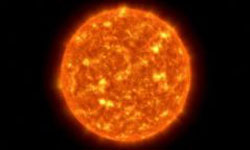
From lightning bolts and watt engines to electromagnetic waves and single electrons, Professor Marcus du Sautoy continues his journey into the world of measurement as he reveals how we came to measure and harness the power of heat, light and electricity.
- TV-Recordings
- Maths
- No subtitles
- 60
From lightning bolts and watt engines to electromagnetic waves and single electrons, Professor Marcus du Sautoy continues his journey into the world of measurement as he reveals how we came to measure and harness the power of heat, light and electricity.
-
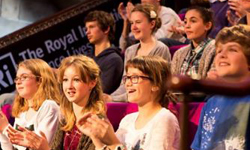
Royal Institution Christmas Lectures - 2016
-
Professor Saiful Islam
Series of lectures on a single topic, presenting scientific subjects to a general audience in an informative and entertaining manner
- TV-Recordings
- English subtitles
- 180
Series of lectures on a single topic, presenting scientific subjects to a general audience in an informative and entertaining manner

-
Royal Institution Christmas Lectures - 2016 : 01 Let There Be Light !
-
Professor Saiful Islam
In his first lecture, Saiful investigates how to generate energy without destroying the planet in the process. Saiful begins his lecture by being plunged into darkness.
- TV-Recordings
- English subtitles
- 60
In his first lecture, Saiful investigates how to generate energy without destroying the planet in the process. Saiful begins his lecture by being plunged into darkness.
-
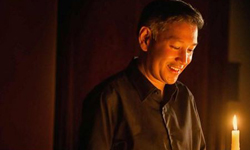
Royal Institution Christmas Lectures - 2016 : 02 People Power
-
Professor Saiful Islam
In his second lecture, chemist Saiful Islam continues his exploration of one of the most important questions facing humankind.
- TV-Recordings
- English subtitles
- 60
In his second lecture, chemist Saiful Islam continues his exploration of one of the most important questions facing humankind.
-
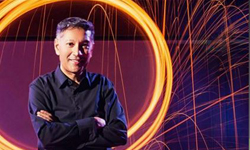
Royal Institution Christmas Lectures - 2016 : 03 Fully Charged
-
Professor Saiful Islam
In this year's final Royal Institution Christmas Lecture, chemist Saiful Islam explores one of the most important issues facing the modern world.
- TV-Recordings
- English subtitles
- 60
In this year's final Royal Institution Christmas Lecture, chemist Saiful Islam explores one of the most important issues facing the modern world.

-
Royal Institution Christmas Lectures 2010
-
BBC
Series of lectures on a single topic, presenting scientific subjects to a general audience in an informative and entertaining manner
- TV-Recordings
- English subtitles
- 180
Series of lectures on a single topic, presenting scientific subjects to a general audience in an informative and entertaining manner
How can a hamster survive falling from the top of a skyscraper, ants carry over 100 times their own body weight and geckos climb across the ceiling?
- TV-Recordings
- Biology
- TV-Recordings
- English subtitles
- 60
How can a hamster survive falling from the top of a skyscraper, ants carry over 100 times their own body weight and geckos climb across the ceiling?

Dr Mark Miodownik zooms into the microscopic world beneath our fingertips. In this unfamiliar landscape, strange forces dominate the world and common sense goes out of the window.
- TV-Recordings
- Biology
- TV-Recordings
- English subtitles
- 60
Dr Mark Miodownik zooms into the microscopic world beneath our fingertips. In this unfamiliar landscape, strange forces dominate the world and common sense goes out of the window.
Why is the tallest building on earth less than half a mile high? Why don't we have mountains as tall as those on Mars?
- TV-Recordings
- Built Environment & Architecture
- Geography
- TV-Recordings
- English subtitles
- 60
Why is the tallest building on earth less than half a mile high? Why don't we have mountains as tall as those on Mars?
-
Royal Institution Christmas Lectures 2012
-
BBC
Series of lectures on a single topic, presenting scientific subjects to a general audience in an informative and entertaining manner
- TV-Recordings
- English subtitles
- 180
Series of lectures on a single topic, presenting scientific subjects to a general audience in an informative and entertaining manner
The medieval alchemists made elements react to create magnificent shows, enthralling kings and commoners alike, but their secrets were never revealed until now.
- TV-Recordings
- Chemistry
- TV-Recordings
- No subtitles
- 60
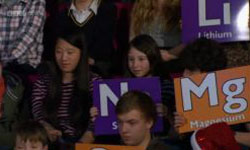
The medieval alchemists made elements react to create magnificent shows, enthralling kings and commoners alike, but their secrets were never revealed until now.
-
Royal Institution Christmas Lectures 2012 - The Modern Alchemist: 02 - Water: The Fountain of Youth
-
BBC
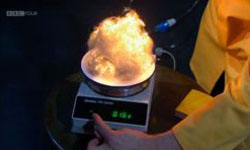
In the second of this year's Christmas Lectures, Dr Peter Wothers drinks from the fountain and finds out whether the elements lurking in the water can restore his youth. Along the way he discovers how exploding balloons could solve the energy crisis, how water contains the remains of the most violent reactions on Earth and that the real secret to eternal youth might be drinking no water at all.
- TV-Recordings
- Chemistry
- TV-Recordings
- No subtitles
- 60
In the second of this year's Christmas Lectures, Dr Peter Wothers drinks from the fountain and finds out whether the elements lurking in the water can restore his youth. Along the way he discovers how exploding balloons could solve the energy crisis, how water contains the remains of the most violent reactions on Earth and that the real secret to eternal youth might be drinking no water at all.
-
Royal Institution Christmas Lectures 2012 - The Modern Alchemist: 03 - The Philosopher's Stone
-
BBC 4
In the final Christmas Lecture, Dr Peter Wothers explores the elements within the earth and discovers just how difficult it is for chemists to extract the planet's greatest treasures. He discovers how our knowledge of the elements can allow us to levitate, turn carbon dioxide into diamonds and maybe turn lead into gold.
- TV-Recordings
- TV-Recordings
- No subtitles
- 60
In the final Christmas Lecture, Dr Peter Wothers explores the elements within the earth and discovers just how difficult it is for chemists to extract the planet's greatest treasures. He discovers how our knowledge of the elements can allow us to levitate, turn carbon dioxide into diamonds and maybe turn lead into gold.
-
Royal Institution Christmas Lectures 2024
-
BBC
Dr Chris van Tulleken explores the incredible science of food - from its journey through our bodies, to how it gives us energy, to ultra-processed food
- TV-Recordings
- English subtitles
- 177
Dr Chris van Tulleken explores the incredible science of food - from its journey through our bodies, to how it gives us energy, to ultra-processed food
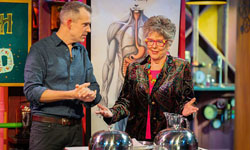
Dr Chris van Tulleken is joined by leading experts, including his twin brother Xand, to explore the incredible journey food takes through our bodies.
- TV-Recordings
- English subtitles
- 59
Dr Chris van Tulleken is joined by leading experts, including his twin brother Xand, to explore the incredible journey food takes through our bodies.
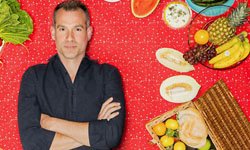
Using some explosive experiments, Dr Chris van Tulleken reveals how our food not only provides us with energy, but also the construction we need to constantly rebuild our bodies.
- TV-Recordings
- English subtitles
- 59
Using some explosive experiments, Dr Chris van Tulleken reveals how our food not only provides us with energy, but also the construction we need to constantly rebuild our bodies.
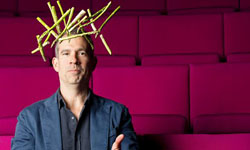
Dr Chris van Tulleken investigates how we have hacked our food system to create an amazing array of things to eat, but also some serious problems to solve.
- TV-Recordings
- English subtitles
- 59
Dr Chris van Tulleken investigates how we have hacked our food system to create an amazing array of things to eat, but also some serious problems to solve.

Professor Brian Cox uses this year's Huw Wheldon Memorial Lecture to address the main challenges in bringing science to television.
- TV-Recordings
- General Science
- TV-Recordings
- English subtitles
- 40
Professor Brian Cox uses this year's Huw Wheldon Memorial Lecture to address the main challenges in bringing science to television.
-
Science and Islam
-
Prof. Jim Al-Khalili
Jim Al-Khalili travels through Syria, Iran, Tunisia and Spain to tell the story of the great leap in scientific knowledge that took place in the Islamic world between the 8th and 14th centuries
- TV-Recordings
- English subtitles
- 180
Jim Al-Khalili travels through Syria, Iran, Tunisia and Spain to tell the story of the great leap in scientific knowledge that took place in the Islamic world between the 8th and 14th centuries
-
Science and Islam Episode 1 - The Language of Science
-
Prof. Jim Al-Khalili
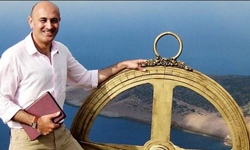
Physicist Jim Al-Khalili travels through Syria, Iran, Tunisia and Spain to tell the story of the great leap in scientific knowledge that took place in the Islamic world between the 8th and 14th centuries.
- TV-Recordings
- English subtitles
- 60
Physicist Jim Al-Khalili travels through Syria, Iran, Tunisia and Spain to tell the story of the great leap in scientific knowledge that took place in the Islamic world between the 8th and 14th centuries.
-
Science and Islam Episode 2 - The Empire of Reason
-
Prof. Jim Al-Khalili
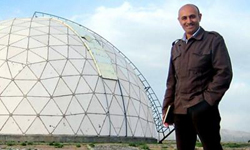
Physicist Jim Al-Khalili travels through Syria, Iran, Tunisia and Spain to tell the story of the great leap in scientific knowledge that took place in the Islamic world between the 8th and 14th centuries.
- TV-Recordings
- English subtitles
- 60
Physicist Jim Al-Khalili travels through Syria, Iran, Tunisia and Spain to tell the story of the great leap in scientific knowledge that took place in the Islamic world between the 8th and 14th centuries.
-
Science and Islam Episode 3 - The Power of Doubt
-
Prof. Jim Al-Khalili
Physicist Jim Al-Khalili tells the story of the great leap in scientific knowledge that took place in the Islamic world between the 8th and 14th centuries.
- TV-Recordings
- English subtitles
- 60
Physicist Jim Al-Khalili tells the story of the great leap in scientific knowledge that took place in the Islamic world between the 8th and 14th centuries.
-
Science Britannica
-
BBC
Professor Brian Cox introduces Britain's science heroes.
- TV-Recordings
- English subtitles
- 180
Professor Brian Cox introduces Britain's science heroes.

-
Science Britannica - Episode 1 : Frankenstein's Monsters
-
Professor Brian Cox
Professor Brian Cox guides viewers through 350 years of British science to reveal what science really is, who the people are who practise it, and how it is inextricably linked to the past, present and future of each and every one of us.
- TV-Recordings
- General Science
- English subtitles
- 60
Professor Brian Cox guides viewers through 350 years of British science to reveal what science really is, who the people are who practise it, and how it is inextricably linked to the past, present and future of each and every one of us.

-
Science Britannica - Episode 2 : Method and Madness
-
Professor Brian Cox
This time, Professor Cox celebrates Britain's pivotal role in creating modern science. From performing Isaac Newton's iconic light experiment to meeting a wartime code breaker and making hydrogen explosions, Professor Cox leads the way through 300 years of British history.
- TV-Recordings
- General Science
- English subtitles
- 60
This time, Professor Cox celebrates Britain's pivotal role in creating modern science. From performing Isaac Newton's iconic light experiment to meeting a wartime code breaker and making hydrogen explosions, Professor Cox leads the way through 300 years of British history.

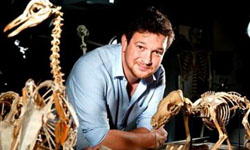
Professor Brian Cox ends his homage to British Science by looking at how discoveries are made, asking whether it is better to let the scientists do their own thing, and hope for happy accidents, or to only back scientific winners at the risk of missing the occasional gems
- TV-Recordings
- General Science
- English subtitles
- 60
Professor Brian Cox ends his homage to British Science by looking at how discoveries are made, asking whether it is better to let the scientists do their own thing, and hope for happy accidents, or to only back scientific winners at the risk of missing the occasional gems
-
Secrets of Bones
-
BBC 4
Evolutionary biologist and master skeleton builder Ben Garrod presents a six-part series looking at how bones have enabled vertebrates to colonise and dominate practically every habitat on Earth.
- TV-Recordings
- English subtitles
- 180
Evolutionary biologist and master skeleton builder Ben Garrod presents a six-part series looking at how bones have enabled vertebrates to colonise and dominate practically every habitat on Earth.

Evolutionary biologist and master skeleton builder Ben Garrod begins a six-part journey to discover how bones have enabled vertebrates to colonise and dominate practically every habitat on Earth
- TV-Recordings
- Medical Sciences
- English subtitles
- 30
Evolutionary biologist and master skeleton builder Ben Garrod begins a six-part journey to discover how bones have enabled vertebrates to colonise and dominate practically every habitat on Earth
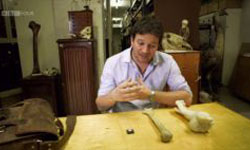
Evolutionary biologist and master skeleton builder Ben Garrod discovers how the skeleton has adapted for vertebrates to move on land in a remarkable number of ways.
- TV-Recordings
- Biology
- English subtitles
- 30
Evolutionary biologist and master skeleton builder Ben Garrod discovers how the skeleton has adapted for vertebrates to move on land in a remarkable number of ways.
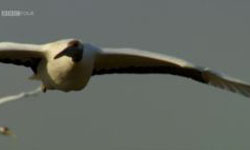
Ben Garrod finds out how the skeleton has allowed vertebrates to do the most remarkable thing of all - take to the air.
- TV-Recordings
- Biology
- English subtitles
- 30
Ben Garrod finds out how the skeleton has allowed vertebrates to do the most remarkable thing of all - take to the air.