
This programme describes the investigation of weather systems found throughout the solar system. Scientists have discovered sulphuric acid rain and metallic snow on Venus, while space probes have revealed the arid surface and frozen seas of Mars and the mysteries of the gas giant, Saturn.
- TV-Recordings
- Astronomy
- TV-Recordings
- English subtitles
- 50
This programme describes the investigation of weather systems found throughout the solar system. Scientists have discovered sulphuric acid rain and metallic snow on Venus, while space probes have revealed the arid surface and frozen seas of Mars and the mysteries of the gas giant, Saturn.
The documentary series about the solar system examines how our understanding of the evolution of life on earth has changed, and explores the evidence for life on other planets. In 1976, two robotic probes suggested that the surface of Mars was dead. But the latest research reveals that this may not be the case and that it is possible that life on earth may have evolved from Mars.
- TV-Recordings
- Astronomy
- Biology
- TV-Recordings
- English subtitles
- 50
The documentary series about the solar system examines how our understanding of the evolution of life on earth has changed, and explores the evidence for life on other planets. In 1976, two robotic probes suggested that the surface of Mars was dead. But the latest research reveals that this may not be the case and that it is possible that life on earth may have evolved from Mars.

Documentary series tracing the exploration of our solar system. This programme looks at the fate of the solar system and explores the new planetary systems that are being found around nearby stars.
- TV-Recordings
- Astronomy
- TV-Recordings
- English subtitles
- 50
Documentary series tracing the exploration of our solar system. This programme looks at the fate of the solar system and explores the new planetary systems that are being found around nearby stars.

-
The Planets - Into the Darkness: Ice Worlds
-
Professor Brian Cox
In the final episode, Professor Brian Cox journeys to the remotest part of the solar system, a place that the most mysterious planets call home.
- TV-Recordings
- English subtitles
- 60
In the final episode, Professor Brian Cox journeys to the remotest part of the solar system, a place that the most mysterious planets call home.

-
The Planets - Life Beyond the Sun: Saturn
-
Professor Brian Cox
Professor Brian Cox reveals the history of Saturn. Saturn began life as a strange planet of rock and ice and in time transformed into a gas giant, ring-less and similar looking to its rival, Jupiter.
- TV-Recordings
- English subtitles
- 60
Professor Brian Cox reveals the history of Saturn. Saturn began life as a strange planet of rock and ice and in time transformed into a gas giant, ring-less and similar looking to its rival, Jupiter.

-
The Planets - The Godfather: Jupiter
-
Professor Brian Cox
Brian Cox continues his exploration of the solar system with a visit to a planet that dwarfs all the others: Jupiter. Its size gives it a great power that it has used to manipulate the other planets.
- TV-Recordings
- English subtitles
- 60
Brian Cox continues his exploration of the solar system with a visit to a planet that dwarfs all the others: Jupiter. Its size gives it a great power that it has used to manipulate the other planets.
-
The Planets - The Two Sisters - Earth & Mars
-
Professor Brian Cox
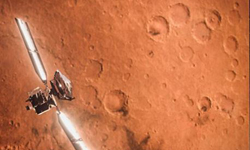
Professor Brian Cox continues his tour of the solar system revealing that it was once home to not one, but two blue planets.
- TV-Recordings
- English subtitles
- 60
Professor Brian Cox continues his tour of the solar system revealing that it was once home to not one, but two blue planets.

In this landmark film Professor Hawking, alongside engineer and radio astronomy expert Professor Danielle George and a former student, Christophe Galfard, join forces to find out if, and how, humans can reach for the stars and relocate to different planets.
- TV-Recordings
- English subtitles
- 90
In this landmark film Professor Hawking, alongside engineer and radio astronomy expert Professor Danielle George and a former student, Christophe Galfard, join forces to find out if, and how, humans can reach for the stars and relocate to different planets.

90 million miles away from us is the power that shapes our world - the sun. We see it shine in the sky above us, but beyond our sight something dramatic is happening - the sun is going into overdrive.
- TV-Recordings
- Astronomy
- English subtitles
- 60
90 million miles away from us is the power that shapes our world - the sun. We see it shine in the sky above us, but beyond our sight something dramatic is happening - the sun is going into overdrive.

-
The Sky at Night - The James Webb Road Trip
-
Marina Hui
The Sky at Night team meets the scientists in the UK researching the astonishing new data returned by the James Webb Space Telescope.
- TV-Recordings
- English subtitles
- 29
The Sky at Night team meets the scientists in the UK researching the astonishing new data returned by the James Webb Space Telescope.

It's the start of a new solar cycle, and the spacecraft Ulysses faces retirement, but solar missions Stereo and SOHO are still revealing our nearest star in a new light
- TV-Recordings
- Astronomy
- Physics
- TV-Recordings
- No subtitles
- 29
It's the start of a new solar cycle, and the spacecraft Ulysses faces retirement, but solar missions Stereo and SOHO are still revealing our nearest star in a new light
-
The Story of Science: Power, Proof and Passion
-
BBC
Michael Mosley embarks on an informative and ambitious journey exploring how the evolution of scientific understanding is intimately interwoven with society's historical path.
- TV-Recordings
- English subtitles
- 300
Michael Mosley embarks on an informative and ambitious journey exploring how the evolution of scientific understanding is intimately interwoven with society's historical path.
Michael Mosley embarks on an informative and ambitious journey exploring how the evolution of scientific understanding is intimately interwoven with society's historical path.
- TV-Recordings
- Astronomy
- History
- TV-Recordings
- English subtitles
- 60
Michael Mosley embarks on an informative and ambitious journey exploring how the evolution of scientific understanding is intimately interwoven with society's historical path.

This is the story of the most extraordinary journey in human exploration, the Voyager space mission. In 1977 two unmanned spacecraft were launched by NASA, heading for distant worlds. It would be the first time any man-made object would ever visit the farthest planets of the solar system - Jupiter, Saturn, Neptune and Uranus.
- TV-Recordings
- Astronomy
- Other
- TV-Recordings
- No subtitles
- 60
This is the story of the most extraordinary journey in human exploration, the Voyager space mission. In 1977 two unmanned spacecraft were launched by NASA, heading for distant worlds. It would be the first time any man-made object would ever visit the farthest planets of the solar system - Jupiter, Saturn, Neptune and Uranus.
-
Wonders of Life - 5 : Home
-
Brian Cox
As far as we know, there is only one place in the universe on which life has taken hold - Earth - but for how much longer will this distinction remain? Astronomers are on the brink of finding other worlds the same size as Earth and the same distance from their star.
- TV-Recordings
- Astronomy
- TV-Recordings
- No subtitles
- 60
As far as we know, there is only one place in the universe on which life has taken hold - Earth - but for how much longer will this distinction remain? Astronomers are on the brink of finding other worlds the same size as Earth and the same distance from their star.

-
Wonders of the Solar System
-
BBC
In this spellbinding series Professor Brian Cox visits the most extreme locations on Earth to explain how the laws of physics carved natural wonders across the solar system.
- TV-Recordings
- English subtitles
- 350
In this spellbinding series Professor Brian Cox visits the most extreme locations on Earth to explain how the laws of physics carved natural wonders across the solar system.
Professor Brian Cox explores the sun - the powerhouse of our solar system.
- TV-Recordings
- Astronomy
- Physics
- TV-Recordings
- English subtitles
- 60
Professor Brian Cox explores the sun - the powerhouse of our solar system.

Professor Brian Cox looks at the rings of Saturn, formed from a chaotic cloud of gas.
- TV-Recordings
- Astronomy
- Physics
- TV-Recordings
- English subtitles
- 60
Professor Brian Cox looks at the rings of Saturn, formed from a chaotic cloud of gas.
How an envelope of gas can create some of the most wondrous sights in the solar system.
- TV-Recordings
- Astronomy
- Physics
- TV-Recordings
- English subtitles
- 60
How an envelope of gas can create some of the most wondrous sights in the solar system.
Brian Cox shows how a planet's size can make the difference between life and death.
- TV-Recordings
- Astronomy
- Physics
- TV-Recordings
- English subtitles
- 60
Brian Cox shows how a planet's size can make the difference between life and death.

Brian Cox explores how the search for aliens has followed the search for water.
- TV-Recordings
- Astronomy
- Physics
- TV-Recordings
- English subtitles
- 60
Brian Cox explores how the search for aliens has followed the search for water.