

-
Rudeboy: The story of Trojan Records
-
Nicolas Jack Davies
Inspiring film from Grammy-nominated Nicolas Jack Davies, exploring the origins and impact of the iconic Trojan Records, and the influence of Jamaican music on modern Britain.
- TV-Recordings
- English subtitles
- 85
Inspiring film from Grammy-nominated Nicolas Jack Davies, exploring the origins and impact of the iconic Trojan Records, and the influence of Jamaican music on modern Britain.
-
Russia 1917: Countdown to Revolution
-
Renny Bartlett
This film dramatizes the 245 days that brought these men to supreme power. As the history unfolds, a stellar cast of writers and historians, including Martin Amis, Orlando Figes, Helen Rappaport, Simon Sebag-Montefiore and China Mieville, battle over the meaning of the Russian Revolution and explore how it shaped the world we live in today.
- TV-Recordings
- English subtitles
- 59
This film dramatizes the 245 days that brought these men to supreme power. As the history unfolds, a stellar cast of writers and historians, including Martin Amis, Orlando Figes, Helen Rappaport, Simon Sebag-Montefiore and China Mieville, battle over the meaning of the Russian Revolution and explore how it shaped the world we live in today.
Jonathan Dimbleby explores ten thousand miles of one of the world's most awe-inspiring countries. Summer 2006. Having lived through the Cold War, Jonathan makes his first stop in the city of Murmansk, which stands as a reminder to the years when England and Russia were close allies in a war of survival against the Nazis.
- TV-Recordings
- History
- TV-Recordings
- No subtitles
- 58
Jonathan Dimbleby explores ten thousand miles of one of the world's most awe-inspiring countries. Summer 2006. Having lived through the Cold War, Jonathan makes his first stop in the city of Murmansk, which stands as a reminder to the years when England and Russia were close allies in a war of survival against the Nazis.
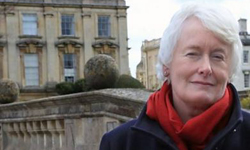
With a PhD in papyrology, Margaret Mountford goes in search of the truth behind the legend of Sappho, the most controversial writer of the ancient world and the first authentic woman's voice in western history.
- TV-Recordings
- Classical Civilisation
- English subtitles
- 60
With a PhD in papyrology, Margaret Mountford goes in search of the truth behind the legend of Sappho, the most controversial writer of the ancient world and the first authentic woman's voice in western history.
-
Science Britannica
-
BBC
Professor Brian Cox introduces Britain's science heroes.
- TV-Recordings
- English subtitles
- 180
Professor Brian Cox introduces Britain's science heroes.

-
Science Britannica - Episode 1 : Frankenstein's Monsters
-
Professor Brian Cox
Professor Brian Cox guides viewers through 350 years of British science to reveal what science really is, who the people are who practise it, and how it is inextricably linked to the past, present and future of each and every one of us.
- TV-Recordings
- General Science
- English subtitles
- 60
Professor Brian Cox guides viewers through 350 years of British science to reveal what science really is, who the people are who practise it, and how it is inextricably linked to the past, present and future of each and every one of us.

-
Science Britannica - Episode 2 : Method and Madness
-
Professor Brian Cox
This time, Professor Cox celebrates Britain's pivotal role in creating modern science. From performing Isaac Newton's iconic light experiment to meeting a wartime code breaker and making hydrogen explosions, Professor Cox leads the way through 300 years of British history.
- TV-Recordings
- General Science
- English subtitles
- 60
This time, Professor Cox celebrates Britain's pivotal role in creating modern science. From performing Isaac Newton's iconic light experiment to meeting a wartime code breaker and making hydrogen explosions, Professor Cox leads the way through 300 years of British history.

Professor Brian Cox ends his homage to British Science by looking at how discoveries are made, asking whether it is better to let the scientists do their own thing, and hope for happy accidents, or to only back scientific winners at the risk of missing the occasional gems
- TV-Recordings
- General Science
- English subtitles
- 60
Professor Brian Cox ends his homage to British Science by looking at how discoveries are made, asking whether it is better to let the scientists do their own thing, and hope for happy accidents, or to only back scientific winners at the risk of missing the occasional gems
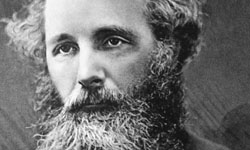
Professor Iain Stewart reveals the story behind the Scottish physicist who was Einstein's hero; James Clerk Maxwell. Maxwell's discoveries not only inspired Einstein, but they helped shape our modern world - allowing the development of radio, TV, mobile phones and much more.
- TV-Recordings
- Physics
- English subtitles
- 60
Professor Iain Stewart reveals the story behind the Scottish physicist who was Einstein's hero; James Clerk Maxwell. Maxwell's discoveries not only inspired Einstein, but they helped shape our modern world - allowing the development of radio, TV, mobile phones and much more.

-
Secrets of Skin
-
Sue Doody
Featuring groundbreaking new science, experiments and leading scientists from a variety of disciplines, the series unravels the natural history of the body's largest organ.
- TV-Recordings
- English subtitles
- 168
Featuring groundbreaking new science, experiments and leading scientists from a variety of disciplines, the series unravels the natural history of the body's largest organ.

Film telling the story of the greatest physicists of the 20th century and the discoveries they made, told in their own words. Men and women who transformed our understanding of the universe, from unlocking the secrets of the atom to solving the mysteries of the cosmos.
- TV-Recordings
- Physics
- English subtitles
- 60
Film telling the story of the greatest physicists of the 20th century and the discoveries they made, told in their own words. Men and women who transformed our understanding of the universe, from unlocking the secrets of the atom to solving the mysteries of the cosmos.
-
Seven Ages of Britain
-
Channel 4
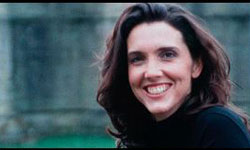
Bettany Hughes explores the history of Britain from a fresh perspective: through the lives and aspirations of the ordinary citizens
- TV-Recordings
- No subtitles
- 300
Bettany Hughes explores the history of Britain from a fresh perspective: through the lives and aspirations of the ordinary citizens
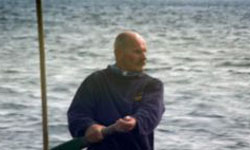
David Dimbleby tells the story of Britain through its art and treasure. The first part of the chronicle begins with the Roman invasion and ends with the Norman Conquest.
- TV-Recordings
- Art & Design
- History
- TV-Recordings
- English subtitles
- 58
David Dimbleby tells the story of Britain through its art and treasure. The first part of the chronicle begins with the Roman invasion and ends with the Norman Conquest.
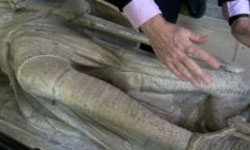
Britain's art from the murder of Thomas Becket in 1170 to the death of Richard II in 1400.
- TV-Recordings
- Art & Design
- History
- TV-Recordings
- English subtitles
- 58
Britain's art from the murder of Thomas Becket in 1170 to the death of Richard II in 1400.
Spanning from Henry VIII's accession in 1509 to Shakespeare's Henry VIII 100 years later.
- TV-Recordings
- Art & Design
- History
- TV-Recordings
- English subtitles
- 58
Spanning from Henry VIII's accession in 1509 to Shakespeare's Henry VIII 100 years later.

In the 17th century British people learned to question everything, resulting in civil war.
- TV-Recordings
- Art & Design
- History
- TV-Recordings
- English subtitles
- 58
In the 17th century British people learned to question everything, resulting in civil war.
The story of Britain in the 18th century, as a new 'middle' class emerged.
- TV-Recordings
- Art & Design
- History
- TV-Recordings
- English subtitles
- 58
The story of Britain in the 18th century, as a new 'middle' class emerged.
The story of the British Empire from 1750 to 1900, revealed through its art and treasures.
- TV-Recordings
- Art & Design
- History
- TV-Recordings
- English subtitles
- 58
The story of the British Empire from 1750 to 1900, revealed through its art and treasures.

In the last episode, David Dimbleby looks at how the 20th century saw ordinary Britons upturning ancient power structures and class hierarchies.
- TV-Recordings
- Art & Design
- History
- TV-Recordings
- English subtitles
- 58
In the last episode, David Dimbleby looks at how the 20th century saw ordinary Britons upturning ancient power structures and class hierarchies.
Bettany Hughes provides an insight into how British inhabitants evolved over 8,000 years, beginning with the story of man's battle with the environment in 6,000 BC, when global warming transformed Britain into an island covered by dense, impenetrable forests.
- TV-Recordings
- History
- TV-Recordings
- English subtitles
- 60
Bettany Hughes provides an insight into how British inhabitants evolved over 8,000 years, beginning with the story of man's battle with the environment in 6,000 BC, when global warming transformed Britain into an island covered by dense, impenetrable forests.

Sweeping changes transformed the lives of the masses beyond recognition during the Bronze and Iron Ages.
- TV-Recordings
- History
- TV-Recordings
- English subtitles
- 60
Sweeping changes transformed the lives of the masses beyond recognition during the Bronze and Iron Ages.
The gradual collapse of the Roman Empire led to the disintegration of Britannia. For the next 600 years people would watch their homelands become battlegrounds invaded and plundered by men from Scandinavia and northern Europe, hungry for power and land.
- TV-Recordings
- History
- TV-Recordings
- English subtitles
- 60
The gradual collapse of the Roman Empire led to the disintegration of Britannia. For the next 600 years people would watch their homelands become battlegrounds invaded and plundered by men from Scandinavia and northern Europe, hungry for power and land.

Bettany Hughes considers the fifth age of Britain, from 1066 to 1350, charting the period between two shattering historical events - the invasion of William the Conqueror and the Black Death.
- TV-Recordings
- History
- TV-Recordings
- English subtitles
- 60
Bettany Hughes considers the fifth age of Britain, from 1066 to 1350, charting the period between two shattering historical events - the invasion of William the Conqueror and the Black Death.
The penultimate programme in the series follows the course of the greatest revolution in British history: a revolution of the mind.
- TV-Recordings
- History
- TV-Recordings
- English subtitles
- 60
The penultimate programme in the series follows the course of the greatest revolution in British history: a revolution of the mind.
-
Seven Wonders of the Industrial World - Episode 01: The Great Ship
-
Christopher Spencer
At a time when most ships were built to traditional designs in wood, and powered by sail, Isambard Kingdom Brunel’s colossal ship, the Great Eastern, was almost 700 feet long and built of iron. His vision was that it should carry 4,000 passengers, in magnificent style, as far as the Antipodes - without needing to refuel.
- TV-Recordings
- Built Environment & Architecture
- Engineering
- TV-Recordings
- No subtitles
- 8
At a time when most ships were built to traditional designs in wood, and powered by sail, Isambard Kingdom Brunel’s colossal ship, the Great Eastern, was almost 700 feet long and built of iron. His vision was that it should carry 4,000 passengers, in magnificent style, as far as the Antipodes - without needing to refuel.

In 1869, John Roebling won the contract to build the largest bridge in the world, the Brooklyn Bridge in New York. It was to stretch 1,600 feet, in one giant leap, across the wide and turbulent East River that separates New York from Brooklyn.
- TV-Recordings
- Built Environment & Architecture
- Engineering
- TV-Recordings
- No subtitles
- 45
In 1869, John Roebling won the contract to build the largest bridge in the world, the Brooklyn Bridge in New York. It was to stretch 1,600 feet, in one giant leap, across the wide and turbulent East River that separates New York from Brooklyn.

-
Seven Wonders of the Industrial World - Episode 03: The Bell Rock Lighthouse
-
Christopher Spencer
In 1800 Robert Stevenson set about building a lighthouse on the deadly Bell Rock reef off the east of Scotland.
- TV-Recordings
- Built Environment & Architecture
- Engineering
- TV-Recordings
- No subtitles
- 40
In 1800 Robert Stevenson set about building a lighthouse on the deadly Bell Rock reef off the east of Scotland.
By the middle of the 19th century, the benefits brought by the countless advances of the Industrial Age were gradually beginning to reach America,
- TV-Recordings
- Engineering
- History
- TV-Recordings
- No subtitles
- 45
By the middle of the 19th century, the benefits brought by the countless advances of the Industrial Age were gradually beginning to reach America,
-
Seven Wonders of the Industrial World - Episode 05: The Sewer King
-
Edward Bazalgette
In the summer of 1858, while the Great Eastern was being fitted out for her maiden voyage, London was in the grip of a crisis known as the 'Great Stink'. The population had grown rapidly during the first half of the 19th century, yet there had been no provision for sanitation.
- TV-Recordings
- Engineering
- History
- TV-Recordings
- No subtitles
- 12
In the summer of 1858, while the Great Eastern was being fitted out for her maiden voyage, London was in the grip of a crisis known as the 'Great Stink'. The population had grown rapidly during the first half of the 19th century, yet there had been no provision for sanitation.

Having completed the building of the Suez Canal in 1869, Ferdinand de Lesseps dreamed of an even bolder scheme: the Panama Canal. Lesseps decided he would cut a path across the Isthmus of Panama,and thus unite the great oceans of the Atlantic and Pacific, making the long journey round South America unnecessary.
- TV-Recordings
- Engineering
- TV-Recordings
- No subtitles
- 45
Having completed the building of the Suez Canal in 1869, Ferdinand de Lesseps dreamed of an even bolder scheme: the Panama Canal. Lesseps decided he would cut a path across the Isthmus of Panama,and thus unite the great oceans of the Atlantic and Pacific, making the long journey round South America unnecessary.