
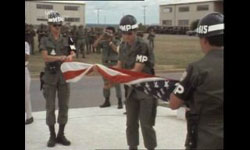
Reviews the BBC's coverage of the Vietnam war
- TV-Recordings
- History
- TV-Recordings
- No subtitles
- 12
Reviews the BBC's coverage of the Vietnam war
-
The Beauty of Books
-
BBC
Series combining human stories, expert interviews, book illustrations and historic archive to reveal the beauty of books
- TV-Recordings
- English subtitles
- 90
Series combining human stories, expert interviews, book illustrations and historic archive to reveal the beauty of books
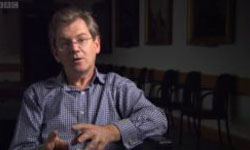
A look at the 4th-century Codex Sinaiticus and 12th-century Winchester bibles.
- TV-Recordings
- Literature Books
- TV-Recordings
- English subtitles
- 30
A look at the 4th-century Codex Sinaiticus and 12th-century Winchester bibles.
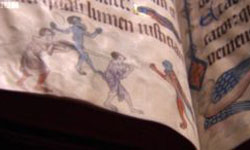
Examining medieval books such as the Luttrell Psalter and Chaucer's Canterbury Tales.
- TV-Recordings
- Literature Books
- TV-Recordings
- English subtitles
- 30
Examining medieval books such as the Luttrell Psalter and Chaucer's Canterbury Tales.

-
The Beauty of Diagrams
-
BBC
Series in which mathematician Marcus du Sautoy explores the stories behind some of the most familiar scientific diagrams
- TV-Recordings
- English subtitles
- 90
Series in which mathematician Marcus du Sautoy explores the stories behind some of the most familiar scientific diagrams

When Polish priest and astronomer Nicolaus Copernicus developed his extraordinary theory of a sun-centred universe 500 years ago, he was flying in the face of both science and religion. Mankind had believed for thousands of years that the earth was at the centre of the cosmos, and to disagree was to risk derision and accusations of heresy.
- TV-Recordings
- Astronomy
- Physics
- TV-Recordings
- English subtitles
- 30
When Polish priest and astronomer Nicolaus Copernicus developed his extraordinary theory of a sun-centred universe 500 years ago, he was flying in the face of both science and religion. Mankind had believed for thousands of years that the earth was at the centre of the cosmos, and to disagree was to risk derision and accusations of heresy.
In the mid-1660s, Isaac Newton bought a pair of prisms at a fair near Cambridge, which were to be the basis of a series of experiments that would unlock a secret that had occupied scientists for centuries - the nature of light itself.
- TV-Recordings
- Physics
- TV-Recordings
- English subtitles
- 30
In the mid-1660s, Isaac Newton bought a pair of prisms at a fair near Cambridge, which were to be the basis of a series of experiments that would unlock a secret that had occupied scientists for centuries - the nature of light itself.
-
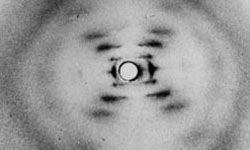
The Beauty of Diagrams - Episode 05: DNA
-
Marcus du Sautoy
Series in which mathematician Marcus du Sautoy explores the stories behind some of the world's most familiar and influential scientific diagrams.
- TV-Recordings
- Biology
- Medical Sciences
- TV-Recordings
- English subtitles
- 30
Series in which mathematician Marcus du Sautoy explores the stories behind some of the world's most familiar and influential scientific diagrams.
-
The Beauty of Maps
-
BBC
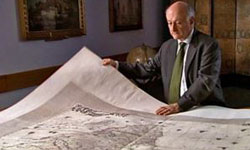
Documentary series charting the visual appeal and historical meaning of maps.
- TV-Recordings
- English subtitles
- 120
Documentary series charting the visual appeal and historical meaning of maps.

Documentary series charting the visual appeal and historical meaning of maps.
- TV-Recordings
- Geography
- History
- TV-Recordings
- English subtitles
- 30
Documentary series charting the visual appeal and historical meaning of maps.
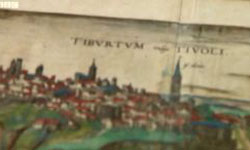
The British Library is home to a staggering 4.5 million maps, most of which remain hidden away in its colossal basement, and the programme delves behind the scenes to explore some amazing treasures in more detail.
- TV-Recordings
- Geography
- History
- TV-Recordings
- English subtitles
- 30
The British Library is home to a staggering 4.5 million maps, most of which remain hidden away in its colossal basement, and the programme delves behind the scenes to explore some amazing treasures in more detail.

The Dutch Golden Age saw map-making reach a fever pitch of creative and commercial ambition. This was the era of the first ever atlases - elaborate, lavish and beautiful.
- TV-Recordings
- Geography
- History
- TV-Recordings
- English subtitles
- 30
The Dutch Golden Age saw map-making reach a fever pitch of creative and commercial ambition. This was the era of the first ever atlases - elaborate, lavish and beautiful.
The series concludes by delving into the world of satirical maps. How did maps take on a new form, not as geographical tools, but as devices for humour, satire or storytelling?
- TV-Recordings
- Geography
- History
- TV-Recordings
- English subtitles
- 30
The series concludes by delving into the world of satirical maps. How did maps take on a new form, not as geographical tools, but as devices for humour, satire or storytelling?
-
The Beginning and End of the Universe - Episode 1 : The Beginning
-
Prof Jim Al-Khalili
Prof Jim Al-Khalili tackles the biggest subject of all, the universe, through a series of critical observations and experiments that revolutionised our understanding of our world.
- TV-Recordings
- Astronomy
- English subtitles
- 60
Prof Jim Al-Khalili tackles the biggest subject of all, the universe, through a series of critical observations and experiments that revolutionised our understanding of our world.

-
The Beginning and End of the Universe - Episode 2 : The End
-
Prof Jim Al-Khalili
In this second part, Professor Jim Al-Khalili carries us into the distant future to try to discover how the universe will end - with a bang or a whimper?
- TV-Recordings
- Astronomy
- English subtitles
- 60
In this second part, Professor Jim Al-Khalili carries us into the distant future to try to discover how the universe will end - with a bang or a whimper?
-
The Black American Fight for Freedom
-
Des Daniels
Fifty years on from the promise of equality and the Civil Rights Act, this documentary reveals the moments where America had the chance to become more equal and why that didn’t happen.
- TV-Recordings
- English subtitles
- 59
Fifty years on from the promise of equality and the Civil Rights Act, this documentary reveals the moments where America had the chance to become more equal and why that didn’t happen.

-
The Blue Planet
-
BBC
David Attenborough narrates a natural history of the oceans
- TV-Recordings
- No subtitles
- No
David Attenborough narrates a natural history of the oceans

In a compelling and at times disturbing series, Dr Michael Mosley explores the brutal history of experimental psychology.To begin, Michael traces the sinister ways this science has been used to try to control our minds.
- TV-Recordings
- Psychology
- English subtitles
- 60
In a compelling and at times disturbing series, Dr Michael Mosley explores the brutal history of experimental psychology.To begin, Michael traces the sinister ways this science has been used to try to control our minds.
In this film, Michael investigates how scientists have struggled to understand that most irrational and deeply complex part of our minds - our emotions.
- TV-Recordings
- Psychology
- English subtitles
- 60
In this film, Michael investigates how scientists have struggled to understand that most irrational and deeply complex part of our minds - our emotions.
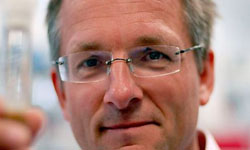
Dr Michael Mosley concludes his series exploring the brutal history of experimental psychology by looking at how experiments on abnormal brains have revealed the workings of the normal brain.
- TV-Recordings
- Psychology
- English subtitles
- 60
Dr Michael Mosley concludes his series exploring the brutal history of experimental psychology by looking at how experiments on abnormal brains have revealed the workings of the normal brain.
-
The Brain: A Secret History : Series 1
-
Michael Mosley embarks on three journeys to understand science's last great frontier - the human mind - as he traces the history of the attempts to understand and manipulate the brain
- TV-Recordings
- English subtitles
- No
Michael Mosley embarks on three journeys to understand science's last great frontier - the human mind - as he traces the history of the attempts to understand and manipulate the brain
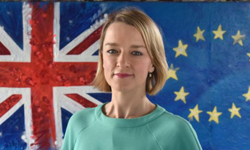
Over nine tumultuous months, BBC political editor Laura Kuenssberg takes us inside the most extraordinary political story of our time – Brexit.
- TV-Recordings
- English subtitles
- 60
Over nine tumultuous months, BBC political editor Laura Kuenssberg takes us inside the most extraordinary political story of our time – Brexit.

Dan Cruickshank explores the secrets of the bridges that have made London what it is. Along the way, he uncovers stories of the sublime ambition of London's bridge builders.
- TV-Recordings
- English subtitles
- 59
Dan Cruickshank explores the secrets of the bridges that have made London what it is. Along the way, he uncovers stories of the sublime ambition of London's bridge builders.
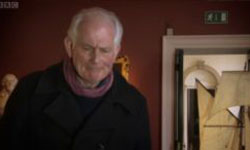
Dan Cruickshank explores the mysteries and secrets of the bridges that have made London what it is. He uncovers stories of bronze-age relics emerging from the Vauxhall shore, of why London Bridge was falling down.
- TV-Recordings
- History
- No subtitles
- 60
Dan Cruickshank explores the mysteries and secrets of the bridges that have made London what it is. He uncovers stories of bronze-age relics emerging from the Vauxhall shore, of why London Bridge was falling down.

-
The British at Work
-
BBC
Kirsty Young looks at British working lives since the Second World War
- TV-Recordings
- English subtitles
- 240
Kirsty Young looks at British working lives since the Second World War
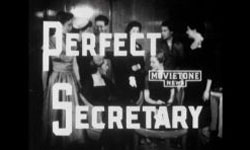
Kirsty Young looks at British working lives since the Second World War. This programme combines the memories of ordinary working people with vivid archive from documentary, television and film to look at an era in which work was a great mass experience and work places were lively, welcoming communities.
- TV-Recordings
- History
- Politics & Public Policy
- TV-Recordings
- English subtitles
- 60
Kirsty Young looks at British working lives since the Second World War. This programme combines the memories of ordinary working people with vivid archive from documentary, television and film to look at an era in which work was a great mass experience and work places were lively, welcoming communities.

In the second of this series on the history of work, Kirsty Young looks at the years in which the post-war baby boom generation joined the workforce, from the buoyant optimism of the 60s to the union versus management conflicts of the 70s.
- TV-Recordings
- History
- Politics & Public Policy
- TV-Recordings
- English subtitles
- 60
In the second of this series on the history of work, Kirsty Young looks at the years in which the post-war baby boom generation joined the workforce, from the buoyant optimism of the 60s to the union versus management conflicts of the 70s.
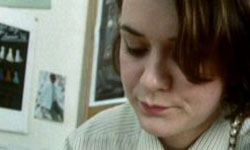
Kirsty Young looks at work in the 80s and 90s, an era of startling contrasts where our jobs could enrich and exhilarate or humble and humiliate. Kirsty meets people who were flush with entrepreneurial spirit, building careers and starting their own businesses, but also those who fell out of work during the collapse of traditional heavy industry.
- TV-Recordings
- History
- Politics & Public Policy
- TV-Recordings
- English subtitles
- 60
Kirsty Young looks at work in the 80s and 90s, an era of startling contrasts where our jobs could enrich and exhilarate or humble and humiliate. Kirsty meets people who were flush with entrepreneurial spirit, building careers and starting their own businesses, but also those who fell out of work during the collapse of traditional heavy industry.

In the final episode of the series, Kirsty Young looks at how work has changed from the late 90s to the present. Using comedy, drama and archive from the period, she examines how work has crept into the very centre of our lives.
- TV-Recordings
- History
- Politics & Public Policy
- TV-Recordings
- English subtitles
- 60
In the final episode of the series, Kirsty Young looks at how work has changed from the late 90s to the present. Using comedy, drama and archive from the period, she examines how work has crept into the very centre of our lives.

The Camera that Changed the World tells the story of the filmmakers and ingenious engineers who led this revolution by building the first hand-held cameras that followed real life as it happened.
- TV-Recordings
- History
- TV-Recordings
- English subtitles
- 59
The Camera that Changed the World tells the story of the filmmakers and ingenious engineers who led this revolution by building the first hand-held cameras that followed real life as it happened.