

-
Rules of Life 6
-
Aubrey Manning
Programme 6 - Food Is Not For Free For many animals there's a balance between getting enough food whilst not being eaten yourself. Spiny lobsters screech like a violin to scare off predators.
Programme 6 - Food Is Not For Free For many animals there's a balance between getting enough food whilst not being eaten yourself. Spiny lobsters screech like a violin to scare off predators.

-
Scars of Evolution 1
-
David Attenborough
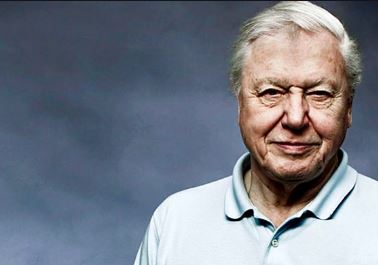
The hypothesis proposes that the physical characteristics that distinguish us from our nearest cousin apes - standing and moving bipedally, being naked and sweaty, our swimming and diving abilities, fat babies, big brains and language - all of these and others are best explained as adaptations to a prolonged period of our evolutionary history being spent in and around the seashore and lake margins, not on the hot dry savannah or in the forest with the other apes. The programmes explore the varieties of response to the theory, from when it was first proposed to the present day.
The hypothesis proposes that the physical characteristics that distinguish us from our nearest cousin apes - standing and moving bipedally, being naked and sweaty, our swimming and diving abilities, fat babies, big brains and language - all of these and others are best explained as adaptations to a prolonged period of our evolutionary history being spent in and around the seashore and lake margins, not on the hot dry savannah or in the forest with the other apes. The programmes explore the varieties of response to the theory, from when it was first proposed to the present day.
-
Scars of Evolution 2
-
David Attenborough
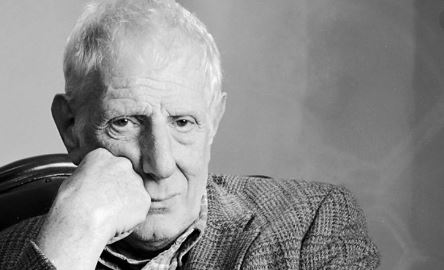
The second programme looks at the evidence that has accumulated in the last 5 - 10 years which seems to be driving the anthropological herd inexorably down to the water's edge. It includes reports on brain evolution, highlighting the essential fatty acids and nutrients that can only be sourced in the marine food chain; the global coastal migrations of early hominids, including major water crossings 1 million years ago; diving response and voluntary breath-control as semi-aquatic pre-adaptation for speech and some new and intriguing research findings that seem to indicate that water-births may be a very ancient human adaptation indeed.
The second programme looks at the evidence that has accumulated in the last 5 - 10 years which seems to be driving the anthropological herd inexorably down to the water's edge. It includes reports on brain evolution, highlighting the essential fatty acids and nutrients that can only be sourced in the marine food chain; the global coastal migrations of early hominids, including major water crossings 1 million years ago; diving response and voluntary breath-control as semi-aquatic pre-adaptation for speech and some new and intriguing research findings that seem to indicate that water-births may be a very ancient human adaptation indeed.
-
Self Made Things 1
-
Jonathan Miller
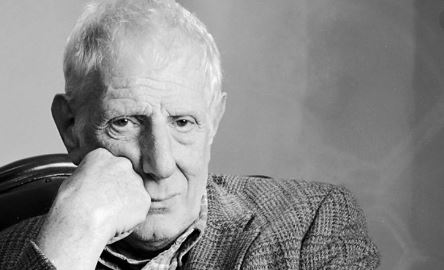
In this five-part series, Jonathan Miller returns to his roots in medicine and tells the story of how we came to understand reproduction & heredity. Disposing with the idea of an external, perhaps even supernatural, vitalising force, he describes how we have arrived at the picture of ourselves and all organisms as Self-Made Things. Darwinism in the second half of the 19th century gave us a theoretical framework that captured in one stroke the seemingly limitless variety that zoologists, botanists and paleontologists were finding in every dimension in nature.
In this five-part series, Jonathan Miller returns to his roots in medicine and tells the story of how we came to understand reproduction & heredity. Disposing with the idea of an external, perhaps even supernatural, vitalising force, he describes how we have arrived at the picture of ourselves and all organisms as Self-Made Things. Darwinism in the second half of the 19th century gave us a theoretical framework that captured in one stroke the seemingly limitless variety that zoologists, botanists and paleontologists were finding in every dimension in nature.
-
Self Made Things 2
-
Jonathan Miller
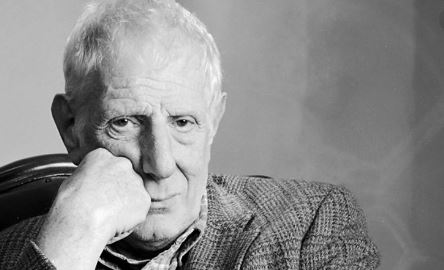
This week Jonathan Miller looks at the birth of ideas about reproduction and heredity. Starting with the ideas of Aristotle and the early Greeks, he argues that because knowledge of underlying structures such as cells and genes are comparatively recent, it was necessary for thinkers addressing the problem, right through the renaissance, to resort to immaterial agents acting upon the raw substances of fertilization.
This week Jonathan Miller looks at the birth of ideas about reproduction and heredity. Starting with the ideas of Aristotle and the early Greeks, he argues that because knowledge of underlying structures such as cells and genes are comparatively recent, it was necessary for thinkers addressing the problem, right through the renaissance, to resort to immaterial agents acting upon the raw substances of fertilization.
-
Self Made Things 3
-
Jonathan Miller
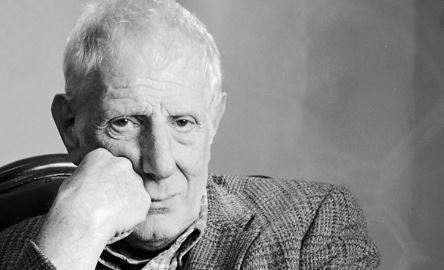
This week, Jonathan Miller describes eighteenth and nineteenth century efforts to identify the cell as the underlying structure of living things.
This week, Jonathan Miller describes eighteenth and nineteenth century efforts to identify the cell as the underlying structure of living things.
-
Self Made Things 4
-
Jonathan Miller
This week, Jonathan Miller describes the research that eventually led us to identify the gene as the key agent of inheritance.
This week, Jonathan Miller describes the research that eventually led us to identify the gene as the key agent of inheritance.

-
Self Made Things 5
-
Jonathan Miller
In the final programme in the series, Jonathan Miller brings the story of reproduction and generation up to the present. He hears first from Nobel prize-winner Sir Aaron Klug who describes the work done by Crick and Watson in 1953 to identify the chemical structure of deoxyribonucleic acid, better know as DNA, which they represented as a double helix.
In the final programme in the series, Jonathan Miller brings the story of reproduction and generation up to the present. He hears first from Nobel prize-winner Sir Aaron Klug who describes the work done by Crick and Watson in 1953 to identify the chemical structure of deoxyribonucleic acid, better know as DNA, which they represented as a double helix.

To most of us, viruses are the cause of illnesses like flu and measles. But to Angela Belcher of MIT, they’re the ideal building blocks for creating new materials at close to the atomic scale, in the new science of nanotechnology.
To most of us, viruses are the cause of illnesses like flu and measles. But to Angela Belcher of MIT, they’re the ideal building blocks for creating new materials at close to the atomic scale, in the new science of nanotechnology.

-
The Essay - Naturalists: Animals and Human Nature - 1
-
David Matless
Episode 1 - Ted Ellis. Biographical portraits of five 20th-century animal lovers and the creatures and landscapes they championed
Episode 1 - Ted Ellis. Biographical portraits of five 20th-century animal lovers and the creatures and landscapes they championed

-
The Essay - Naturalists: Animals and Human Nature - 2
-
Hayden Lorimer
Episode 2 - Reindeer Herders in the Cairngorms. Biographical portraits of five 20th-century animal lovers and the creatures and landscapes they championed
Episode 2 - Reindeer Herders in the Cairngorms. Biographical portraits of five 20th-century animal lovers and the creatures and landscapes they championed

-
The Essay - Naturalists: Animals and Human Nature - 3
-
David Matless
Episode 3 - James Wentworth Day - The Prejudiced Naturalist. Biographical portraits of five 20th-century animal lovers and the creatures and landscapes they championed
Episode 3 - James Wentworth Day - The Prejudiced Naturalist. Biographical portraits of five 20th-century animal lovers and the creatures and landscapes they championed

-
The Essay - Naturalists: Animals and Human Nature - 4
-
Hayden Lorimer
Episode 4 - Ludwig Koch and Bird Song. Biographical portraits of five 20th-century animal lovers and the creatures and landscapes they championed
Episode 4 - Ludwig Koch and Bird Song. Biographical portraits of five 20th-century animal lovers and the creatures and landscapes they championed

-
The Essay - Naturalists: Animals and Human Nature - 5
-
David Matless
Episode 5 - Marietta Pallis - Swimming in the Eagle. Biographical portraits of five 20th-century animal lovers and the creatures and landscapes they championed
Episode 5 - Marietta Pallis - Swimming in the Eagle. Biographical portraits of five 20th-century animal lovers and the creatures and landscapes they championed

-
The Reith Lectures 2003 - 1 - Phantoms in the Brain
-
Vilayanur S. Ramachandran
Scientists need no longer be afraid to ask the big questions about what it means to be human with empirical evidence now answering ancient philosophical questions about meaning and existence
Scientists need no longer be afraid to ask the big questions about what it means to be human with empirical evidence now answering ancient philosophical questions about meaning and existence

-
The Reith Lectures 2003 - 2 - Synapses and the Self
-
Vilayanur S. Ramachandran
How does the activity of the 100 billion little wisps of protoplasm - the neurons in your brain - give rise to all the richness of our conscious experience, including the "redness" of red, the painfulness of pain or the exquisite flavour of Marmite or Vindaloo?
How does the activity of the 100 billion little wisps of protoplasm - the neurons in your brain - give rise to all the richness of our conscious experience, including the "redness" of red, the painfulness of pain or the exquisite flavour of Marmite or Vindaloo?

-
The Reith Lectures 2003 - 3 - The Artful Brain
-
Vilayanur S. Ramachandran
Professor Ramachandran draws on neurological case studies and work from ethology (animal behavior) to present a new framework for understanding how the brain creates and responds to art. He will use examples mainly from Indian art and Cubism to illustrate these ideas.
Professor Ramachandran draws on neurological case studies and work from ethology (animal behavior) to present a new framework for understanding how the brain creates and responds to art. He will use examples mainly from Indian art and Cubism to illustrate these ideas.

-
The Reith Lectures 2003 - 4 - Purple Numbers and Sharp Cheese
-
Vilayanur S. Ramachandran
Professor Ramachandran demonstrates experimentally that the phenomenon of synesthaesia is a genuine sensory effect. For example, some subjects literally "see" red every time they see the number 5 or green when they see 2.
Professor Ramachandran demonstrates experimentally that the phenomenon of synesthaesia is a genuine sensory effect. For example, some subjects literally "see" red every time they see the number 5 or green when they see 2.

-
The Reith Lectures 2003 - 5 - Neuroscience: The New Philosophy
-
Vilayanur S. Ramachandran
Professor Ramachandran argues that neuroscience, perhaps more than any other discipline, is capable of transforming man's understanding of himself and his place in the cosmos.
Professor Ramachandran argues that neuroscience, perhaps more than any other discipline, is capable of transforming man's understanding of himself and his place in the cosmos.

-
Alien Empire
-
Christopher O'Toole , BBC Books , 1995
This book, and the television series it accompanies, open the doors into a world that we have never seen. We discover the design miracle of insects' bodies; their sophisticated communication systems; their fast and furious reproductive systems, and much more about their strange structures and lives. As this book shows, in their looks and behaviour, insects are as close to an alien lifeform as any we are likely to find in the stars
- 0-563-36910-8 1281
- Special Interest
- Biology
- 1 copies
- C1 C2
This book, and the television series it accompanies, open the doors into a world that we have never seen. We discover the design miracle of insects' bodies; their sophisticated communication systems; their fast and furious reproductive systems, and much more about their strange structures and lives. As this book shows, in their looks and behaviour, insects are as close to an alien lifeform as any we are likely to find in the stars
-
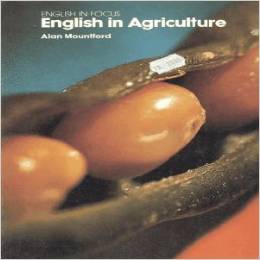
English in Agriculture
-
Alan Mountford , Oxford University Press , 1977
This book is aimed at developing a basic knowledge of how English is used for communication in dealing with topics in agriculture. Intended for students who already know how to handle the common English sentence patterns but who need to learn how these patterns are used to convey information and to conduct coherent discussion
- 0-194-37514-5 2414
- Special Interest
- Biology
- 1 copies
- B1 B2 C1
This book is aimed at developing a basic knowledge of how English is used for communication in dealing with topics in agriculture. Intended for students who already know how to handle the common English sentence patterns but who need to learn how these patterns are used to convey information and to conduct coherent discussion
-
Trees of Britain and Europe
-
Bob Press & David Hosking , New Holland Ltd , 1992
This book explains how trees can be identified correctly, and also includes a history of trees and a comprehensive account of tree families
- 1-853-68264-0 488
- Special Interest
- Biology
- 1 copies
- C1 C2
This book explains how trees can be identified correctly, and also includes a history of trees and a comprehensive account of tree families
Ever wondered what would happen in your own home if you were taken away, and everything inside was left to rot? The answer is revealed in this fascinating programme.
- TV-Recordings
- Biology
- TV-Recordings
- No subtitles
- 90
Ever wondered what would happen in your own home if you were taken away, and everything inside was left to rot? The answer is revealed in this fascinating programme.

In the 4th century BC the Greek philosopher Aristotle travelled to Lesvos, an island in the Aegean teeming, then as now, with wildlife.
- TV-Recordings
- Biology
- Classical Civilisation
- TV-Recordings
- No subtitles
- 60
In the 4th century BC the Greek philosopher Aristotle travelled to Lesvos, an island in the Aegean teeming, then as now, with wildlife.
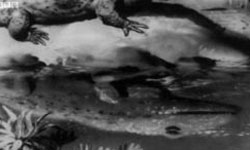
For paleontologist Professor Jenny Clack, who solved one of the greatest mysteries in the history of life on Earth, success was far from inevitable. She recounts how she had to overcome a series of setbacks before she found and described the fossil Acanthostega, a 365 million-year-old creature that offered dramatic new evidence of how fish made the transition onto land.
- TV-Recordings
- Biology
- No subtitles
- 60
For paleontologist Professor Jenny Clack, who solved one of the greatest mysteries in the history of life on Earth, success was far from inevitable. She recounts how she had to overcome a series of setbacks before she found and described the fossil Acanthostega, a 365 million-year-old creature that offered dramatic new evidence of how fish made the transition onto land.
Professor Richard Dawkins reveals how he came to write his explosive first book The Selfish Gene, a work that was to divide the scientific community and make him the most influential evolutionary biologist of his generation. He also explores how this set him on the path to becoming an outspoken spokesman for atheism.
- TV-Recordings
- Biology
- TV-Recordings
- No subtitles
- 60
Professor Richard Dawkins reveals how he came to write his explosive first book The Selfish Gene, a work that was to divide the scientific community and make him the most influential evolutionary biologist of his generation. He also explores how this set him on the path to becoming an outspoken spokesman for atheism.
-
Botany: A Blooming History
-
BBC 4
Series which tells the story of how people came to understand the natural order of the plant world, and how the quest to discover how plants grow uncovered the secret to life on the planet.
- TV-Recordings
- No subtitles
- 180
Series which tells the story of how people came to understand the natural order of the plant world, and how the quest to discover how plants grow uncovered the secret to life on the planet.
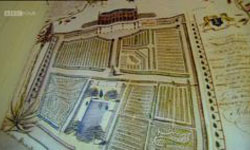
What makes plants grow is a simple enough question. The answer turns out to be one of the most complicated and fascinating stories in science and took over 300 years to unravel.
- TV-Recordings
- Biology
- TV-Recordings
- No subtitles
- 60
What makes plants grow is a simple enough question. The answer turns out to be one of the most complicated and fascinating stories in science and took over 300 years to unravel.
For 10,000 years or more, humans created new plant varieties for food by trial and error and a touch of serendipity. Then 150 years ago, a new era began. Pioneer botanists unlocked the patterns found in different types of plants and opened the door to a new branch of science - plant genetics. They discovered what controlled the random colours of snapdragon petals and the strange colours found in wild maize.
- TV-Recordings
- Biology
- TV-Recordings
- No subtitles
- 60
For 10,000 years or more, humans created new plant varieties for food by trial and error and a touch of serendipity. Then 150 years ago, a new era began. Pioneer botanists unlocked the patterns found in different types of plants and opened the door to a new branch of science - plant genetics. They discovered what controlled the random colours of snapdragon petals and the strange colours found in wild maize.
The air we breathe, and all the food we eat, is created from water, sunlight, carbon dioxide and a few minerals. That\'s it, nothing else. It sounds simple, but this process is one of the most fascinating and complicated in all of science. Without it there could be no life on earth. It\'s that important.
- TV-Recordings
- Biology
- TV-Recordings
- No subtitles
- 60
The air we breathe, and all the food we eat, is created from water, sunlight, carbon dioxide and a few minerals. That\'s it, nothing else. It sounds simple, but this process is one of the most fascinating and complicated in all of science. Without it there could be no life on earth. It\'s that important.