

When Polish priest and astronomer Nicolaus Copernicus developed his extraordinary theory of a sun-centred universe 500 years ago, he was flying in the face of both science and religion. Mankind had believed for thousands of years that the earth was at the centre of the cosmos, and to disagree was to risk derision and accusations of heresy.
- TV-Recordings
- Astronomy
- Physics
- TV-Recordings
- English subtitles
- 30
When Polish priest and astronomer Nicolaus Copernicus developed his extraordinary theory of a sun-centred universe 500 years ago, he was flying in the face of both science and religion. Mankind had believed for thousands of years that the earth was at the centre of the cosmos, and to disagree was to risk derision and accusations of heresy.
In the mid-1660s, Isaac Newton bought a pair of prisms at a fair near Cambridge, which were to be the basis of a series of experiments that would unlock a secret that had occupied scientists for centuries - the nature of light itself.
- TV-Recordings
- Physics
- TV-Recordings
- English subtitles
- 30
In the mid-1660s, Isaac Newton bought a pair of prisms at a fair near Cambridge, which were to be the basis of a series of experiments that would unlock a secret that had occupied scientists for centuries - the nature of light itself.
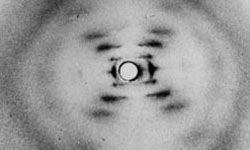
-
The Beauty of Diagrams - Episode 05: DNA
-
Marcus du Sautoy
Series in which mathematician Marcus du Sautoy explores the stories behind some of the world's most familiar and influential scientific diagrams.
- TV-Recordings
- Biology
- Medical Sciences
- TV-Recordings
- English subtitles
- 30
Series in which mathematician Marcus du Sautoy explores the stories behind some of the world's most familiar and influential scientific diagrams.
-
The Beginning and End of the Universe - Episode 1 : The Beginning
-
Prof Jim Al-Khalili
Prof Jim Al-Khalili tackles the biggest subject of all, the universe, through a series of critical observations and experiments that revolutionised our understanding of our world.
- TV-Recordings
- Astronomy
- English subtitles
- 60
Prof Jim Al-Khalili tackles the biggest subject of all, the universe, through a series of critical observations and experiments that revolutionised our understanding of our world.

-
The Beginning and End of the Universe - Episode 2 : The End
-
Prof Jim Al-Khalili
In this second part, Professor Jim Al-Khalili carries us into the distant future to try to discover how the universe will end - with a bang or a whimper?
- TV-Recordings
- Astronomy
- English subtitles
- 60
In this second part, Professor Jim Al-Khalili carries us into the distant future to try to discover how the universe will end - with a bang or a whimper?
The hunt for aliens is on! After a distinguished career in cosmology Professor Martin Rees, the astronomer royal, has taken up the search for extra-terrestrials. Looking for aliens is no longer science fiction - it is a question that's engaging some of the greatest minds in science.
- TV-Recordings
- English subtitles
- 60
The hunt for aliens is on! After a distinguished career in cosmology Professor Martin Rees, the astronomer royal, has taken up the search for extra-terrestrials. Looking for aliens is no longer science fiction - it is a question that's engaging some of the greatest minds in science.
Our lifespan is increasing by 2.5 years every decade - and a third of all babies born today can expect to live to 100. But living longer can come at a cost. Old age itself brings with it a range of debilitating illnesses, many of which are the result of accumulating damage during our lifetime.
- TV-Recordings
- English subtitles
- 60
Our lifespan is increasing by 2.5 years every decade - and a third of all babies born today can expect to live to 100. But living longer can come at a cost. Old age itself brings with it a range of debilitating illnesses, many of which are the result of accumulating damage during our lifetime.
-
The Brain with David Eagleman
-
Neuroscientist David Eagleman explores the wonders of the human brain in a series that reveals the ultimate story of us, why we feel and think the things we do.
- TV-Recordings
- English subtitles
- No
Neuroscientist David Eagleman explores the wonders of the human brain in a series that reveals the ultimate story of us, why we feel and think the things we do.
-
The Brain with David Eagleman - 1. What is Reality
-
Dr David Eagleman
Series in which Dr David Eagleman takes viewers on an extraordinary journey that explores how the brain, locked in silence and darkness without direct access to the world, conjures up the rich and beautiful world we all take for granted.
- TV-Recordings
- English subtitles
- 60
Series in which Dr David Eagleman takes viewers on an extraordinary journey that explores how the brain, locked in silence and darkness without direct access to the world, conjures up the rich and beautiful world we all take for granted.
-
The Brain with David Eagleman - 2. What Makes Me?
-
Dr David Eagleman
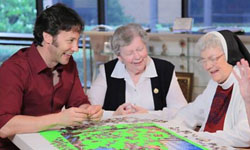
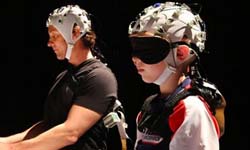
This episode explores the question of how the brain gives rise to our thoughts, emotions, memories and personality. We see how the process of becoming 'you' starts at birth. The brain of a newborn baby is not yet fully developed, instead it grows and shapes itself around life experience.
- TV-Recordings
- English subtitles
- 60
This episode explores the question of how the brain gives rise to our thoughts, emotions, memories and personality. We see how the process of becoming 'you' starts at birth. The brain of a newborn baby is not yet fully developed, instead it grows and shapes itself around life experience.
-
The Brain with David Eagleman - 3. Who Is in Control?
-
Dr David Eagleman
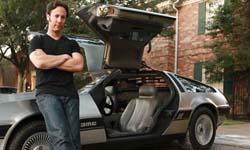
This episode explores the great deception that greets us each morning when we wake up - it feels as though we are in conscious control of our lives, but in fact almost every action we take, every decision we make, every belief that we hold is driven by parts of the brain that we have no access to.
- TV-Recordings
- English subtitles
- 60
This episode explores the great deception that greets us each morning when we wake up - it feels as though we are in conscious control of our lives, but in fact almost every action we take, every decision we make, every belief that we hold is driven by parts of the brain that we have no access to.
-
The Brain with David Eagleman - 4. How do I decide ?
-
Dr David Eagleman
The human brain is the most complex object we've discovered in the universe, and every day much of its neural circuitry is taken up with the tens of thousands of decisions we need to make. This episode takes a journey through the unseen world of decisions, and how they get made. We start with a simple one - choosing a flavour of frozen yoghurt - and learn that every decision we make is born of a 'winner takes all' competition between rival neural networks.
- TV-Recordings
- English subtitles
- 60
The human brain is the most complex object we've discovered in the universe, and every day much of its neural circuitry is taken up with the tens of thousands of decisions we need to make. This episode takes a journey through the unseen world of decisions, and how they get made. We start with a simple one - choosing a flavour of frozen yoghurt - and learn that every decision we make is born of a 'winner takes all' competition between rival neural networks.

-
The Brain with David Eagleman - 5. Why do I need You ?
-
Dr David Eagleman
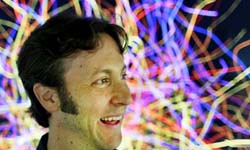
This episode explores how the human brain relies on other brains to thrive and survive. Dr Eagleman demonstrates how, from as young as ten months old, babies can discern who is trustworthy and who isn't.
- TV-Recordings
- English subtitles
- 60
This episode explores how the human brain relies on other brains to thrive and survive. Dr Eagleman demonstrates how, from as young as ten months old, babies can discern who is trustworthy and who isn't.
-
The Brain with David Eagleman - 6. Who Will We Be?
-
Dr David Eagleman
In this episode Dr Eagleman journeys into the future, and asks what's next for the human brain and for our species. Mother nature has evolved a brain that is able to rewire itself according to its environment. We meet Cameron Mott, who had half her brain removed at the age of four, but was able to develop normally as her brain rewired itself to take over the functions of the missing half.
- TV-Recordings
- English subtitles
- 60
In this episode Dr Eagleman journeys into the future, and asks what's next for the human brain and for our species. Mother nature has evolved a brain that is able to rewire itself according to its environment. We meet Cameron Mott, who had half her brain removed at the age of four, but was able to develop normally as her brain rewired itself to take over the functions of the missing half.

In a compelling and at times disturbing series, Dr Michael Mosley explores the brutal history of experimental psychology.To begin, Michael traces the sinister ways this science has been used to try to control our minds.
- TV-Recordings
- Psychology
- English subtitles
- 60
In a compelling and at times disturbing series, Dr Michael Mosley explores the brutal history of experimental psychology.To begin, Michael traces the sinister ways this science has been used to try to control our minds.
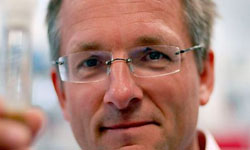
In this film, Michael investigates how scientists have struggled to understand that most irrational and deeply complex part of our minds - our emotions.
- TV-Recordings
- Psychology
- English subtitles
- 60
In this film, Michael investigates how scientists have struggled to understand that most irrational and deeply complex part of our minds - our emotions.
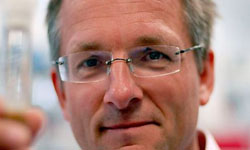
Dr Michael Mosley concludes his series exploring the brutal history of experimental psychology by looking at how experiments on abnormal brains have revealed the workings of the normal brain.
- TV-Recordings
- Psychology
- English subtitles
- 60
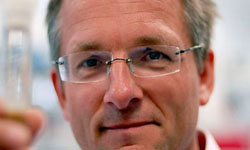
Dr Michael Mosley concludes his series exploring the brutal history of experimental psychology by looking at how experiments on abnormal brains have revealed the workings of the normal brain.
-
The Brain: A Secret History : Series 1
-
Michael Mosley embarks on three journeys to understand science's last great frontier - the human mind - as he traces the history of the attempts to understand and manipulate the brain
- TV-Recordings
- English subtitles
- No
Michael Mosley embarks on three journeys to understand science's last great frontier - the human mind - as he traces the history of the attempts to understand and manipulate the brain
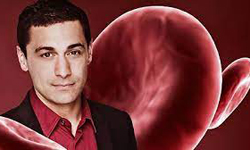
In a three-part series, Dr Adam Rutherford tells the extraordinary story of the scientific quest to discover the secrets of the cell and of life itself. Every living thing is made of cells, microscopic building blocks of almost unimaginable power and complexity. This episode explores how scientists delved ever deeper into the world of the cell, seeking to reveal the magic ingredient that can spark a bundle of chemicals into life.
- TV-Recordings
- Biology
- TV-Recordings
- No subtitles
- 60
In a three-part series, Dr Adam Rutherford tells the extraordinary story of the scientific quest to discover the secrets of the cell and of life itself. Every living thing is made of cells, microscopic building blocks of almost unimaginable power and complexity. This episode explores how scientists delved ever deeper into the world of the cell, seeking to reveal the magic ingredient that can spark a bundle of chemicals into life.
In a three-part series, Dr Adam Rutherford tells the extraordinary story of the scientific quest to discover the secrets of the cell and of life itself. Every living thing is made of cells, microscopic building blocks of almost unimaginable power and complexity. The final part reveals how our knowledge of cells has brought us to the brink of one of the most important moments in history.
- TV-Recordings
- Biology
- TV-Recordings
- No subtitles
- 60
In a three-part series, Dr Adam Rutherford tells the extraordinary story of the scientific quest to discover the secrets of the cell and of life itself. Every living thing is made of cells, microscopic building blocks of almost unimaginable power and complexity. The final part reveals how our knowledge of cells has brought us to the brink of one of the most important moments in history.
-
The Code
-
BBC 2
A mysterious code underpins the world. But what does it mean and what can we learn from it? Marcus du Sautoy takes us on an odyssey to uncover the code and reveal its meaning
- TV-Recordings
- No subtitles
- No
A mysterious code underpins the world. But what does it mean and what can we learn from it? Marcus du Sautoy takes us on an odyssey to uncover the code and reveal its meaning
Marcus du Sautoy reveals a hidden numerical code that underpins all nature. A code that has the power to explain everything, from the numbers and shapes we see all around us to the rules that govern our own lives. In this first episode, Marcus reveals how significant numbers apear throughout the natural world. They're part of a hidden mathematical world that contains the rules that govern everything on our planet and beyond.
- TV-Recordings
- Maths
- TV-Recordings
- English subtitles
- 60
Marcus du Sautoy reveals a hidden numerical code that underpins all nature. A code that has the power to explain everything, from the numbers and shapes we see all around us to the rules that govern our own lives. In this first episode, Marcus reveals how significant numbers apear throughout the natural world. They're part of a hidden mathematical world that contains the rules that govern everything on our planet and beyond.
Marcus du Sautoy uncovers the patterns that explain the shape of the world around us. Starting at the hexagonal columns of Northern Ireland's Giant's Causeway, he discovers the code underpinning the extraordinary order found in nature - from rock formations to honeycomb and from salt crystals to soap bubbles.
- TV-Recordings
- Maths
- TV-Recordings
- English subtitles
- 60
Marcus du Sautoy uncovers the patterns that explain the shape of the world around us. Starting at the hexagonal columns of Northern Ireland's Giant's Causeway, he discovers the code underpinning the extraordinary order found in nature - from rock formations to honeycomb and from salt crystals to soap bubbles.
Marcus du Sautoy continues his exploration of the hidden numerical code that underpins all nature. This time it's the strange world of what happens next. Professor du Sautoy's odyssey starts with the lunar eclipse - once thought supernatural, now routinely predicted through the power of the code. But more intriguing is what the code can say about our future.
- TV-Recordings
- Maths
- TV-Recordings
- English subtitles
- 60
Marcus du Sautoy continues his exploration of the hidden numerical code that underpins all nature. This time it's the strange world of what happens next. Professor du Sautoy's odyssey starts with the lunar eclipse - once thought supernatural, now routinely predicted through the power of the code. But more intriguing is what the code can say about our future.
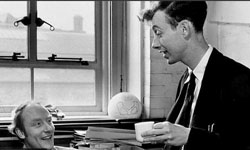
The film is an unvarnished account of the scientists who dared to discover the secret of life - told through fascinating and revealing archive - in their own words.
- TV-Recordings
- Biology
- English subtitles
- 60
The film is an unvarnished account of the scientists who dared to discover the secret of life - told through fascinating and revealing archive - in their own words.
-
The Day the Universe Changed : 10. Worlds without End: Changing Knowledge, Changing Reality
-
James Burke
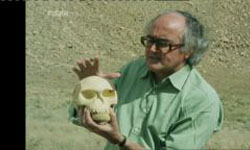
James Burke reviews his classic 80s series about the development of western science and explores what we mean by knowledge.
- TV-Recordings
- General Science
- English subtitles
- 50
James Burke reviews his classic 80s series about the development of western science and explores what we mean by knowledge.
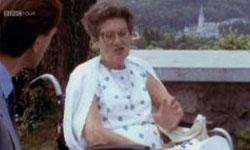
Dr Thomas Dixon delves into the BBC's archive to explore the troubled relationship between religion and science. From the creationists of America to the physicists of the Large Hadron Collider, he traces the expansion of scientific knowledge and asks whe
- TV-Recordings
- Physics
- Religion
- TV-Recordings
- No subtitles
- 60
Dr Thomas Dixon delves into the BBC's archive to explore the troubled relationship between religion and science. From the creationists of America to the physicists of the Large Hadron Collider, he traces the expansion of scientific knowledge and asks whe
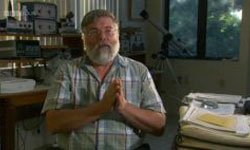
Our understanding of the world around us is better now than ever before. But are we any closer to knowing how its all going to end?
- TV-Recordings
- Physics
- TV-Recordings
- English subtitles
- 60
Our understanding of the world around us is better now than ever before. But are we any closer to knowing how its all going to end?

Hormones shape each and every one of us, affecting almost every aspect of our lives - our height, our weight, our appetites, how we grow and reproduce, and even how we behave and feel.
- TV-Recordings
- Medical Sciences
- English subtitles
- 60
Hormones shape each and every one of us, affecting almost every aspect of our lives - our height, our weight, our appetites, how we grow and reproduce, and even how we behave and feel.
-
The Flu That Killed 50 Million
-
Andrew Thompson
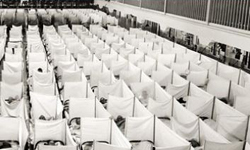
Christopher Eccleston narrates a docudrama about the 1918 flu pandemic, which killed more than 50 million people. Told using powerful personal testimony.
- TV-Recordings
- English subtitles
- 60
Christopher Eccleston narrates a docudrama about the 1918 flu pandemic, which killed more than 50 million people. Told using powerful personal testimony.