
-
How We Got to Now with Steven Johnson Series 1
-
Steven Johnson
A five-part series presented by best-selling author Steven Johnson (Where Good Ideas Come From, Everything Bad Is Good for You), investigating the little-known stories of revolutionary innovations.
- TV-Recordings
- No subtitles
- 300
A five-part series presented by best-selling author Steven Johnson (Where Good Ideas Come From, Everything Bad Is Good for You), investigating the little-known stories of revolutionary innovations.
-
Human Planet
-
BBC
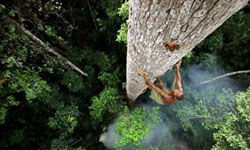
Human Planet, a cinematic experience, bringing you the most amazing human stories in the world today. Humans and wildlife surviving in the most extreme environments on Earth.
- TV-Recordings
- No subtitles
- 980
Human Planet, a cinematic experience, bringing you the most amazing human stories in the world today. Humans and wildlife surviving in the most extreme environments on Earth.
The Arctic is the harshest environment on Earth: little food grows, it\'s dark for months on end, and temperatures stay well below freezing for much of the year. Yet four million people manage to survive here.
- TV-Recordings
- Geography
- TV-Recordings
- No subtitles
- 60
The Arctic is the harshest environment on Earth: little food grows, it\'s dark for months on end, and temperatures stay well below freezing for much of the year. Yet four million people manage to survive here.
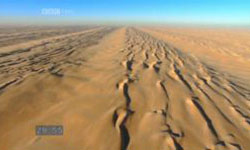
A total of 10 stories from across the Human Planet series, closely linked to the KS2 Geography curriculum, look at how humans have learnt to live with extremes, and explore how people across the globe live with extreme cold; live in desert environments without water; and how they live in mountain regions facing daily hazards.
- TV-Recordings
- Geography
- TV-Recordings
- No subtitles
- 60
A total of 10 stories from across the Human Planet series, closely linked to the KS2 Geography curriculum, look at how humans have learnt to live with extremes, and explore how people across the globe live with extreme cold; live in desert environments without water; and how they live in mountain regions facing daily hazards.

A look at the one environment that\'s been made by us for us - the city. Over half of the world\'s population now lives in the urban jungle. The city is built to keep untamed nature out - but nature can\'t be pushed away. From bed bugs sucking our blood at night to rats in our restaurants, many animals have adapted to a life with us.
- TV-Recordings
- Built Environment & Architecture
- TV-Recordings
- No subtitles
- 60
A look at the one environment that\'s been made by us for us - the city. Over half of the world\'s population now lives in the urban jungle. The city is built to keep untamed nature out - but nature can\'t be pushed away. From bed bugs sucking our blood at night to rats in our restaurants, many animals have adapted to a life with us.
We can survive for weeks without food, but only days without water: it is the essential element of life. Yet many millions of us live in parched deserts around the world. In the second episode of Human Planet, we discover how the eternal quest for water brings huge challenges - and ingenious solutions - in the driest places on Earth.
- TV-Recordings
- Environmental Studies
- Other
- TV-Recordings
- No subtitles
- 60
We can survive for weeks without food, but only days without water: it is the essential element of life. Yet many millions of us live in parched deserts around the world. In the second episode of Human Planet, we discover how the eternal quest for water brings huge challenges - and ingenious solutions - in the driest places on Earth.
Grasslands feed the world. Over thousands of years, we humans have learned to grow grains on the grasslands and domesticate the creatures that live there. Our success has propelled our population to almost seven billion people.
- TV-Recordings
- Environmental Studies
- Other
- TV-Recordings
- No subtitles
- 60
Grasslands feed the world. Over thousands of years, we humans have learned to grow grains on the grasslands and domesticate the creatures that live there. Our success has propelled our population to almost seven billion people.
The rainforest is home to more species of plants and animals than any other habitat on the planet. But for humans, life there is not as easy as it looks. Life in the trees requires great skill, ingenuity and sheer bravery.
- TV-Recordings
- Environmental Studies
- Other
- TV-Recordings
- No subtitles
- 60
The rainforest is home to more species of plants and animals than any other habitat on the planet. But for humans, life there is not as easy as it looks. Life in the trees requires great skill, ingenuity and sheer bravery.
From lush cloud forests to bare summits that take your breath away, the higher you climb the tougher life gets on a mountain. Human Planet explores the extraordinary ways in which people survive at extreme altitudes where nature becomes utterly unforgiving.
- TV-Recordings
- Geography
- TV-Recordings
- No subtitles
- 60
From lush cloud forests to bare summits that take your breath away, the higher you climb the tougher life gets on a mountain. Human Planet explores the extraordinary ways in which people survive at extreme altitudes where nature becomes utterly unforgiving.

As an air-breathing animal, the human is not built to survive in water. But people have found ways to live an almost aquatic life so they can exploit the sea\'s riches.
- TV-Recordings
- Geography
- TV-Recordings
- No subtitles
- 60
As an air-breathing animal, the human is not built to survive in water. But people have found ways to live an almost aquatic life so they can exploit the sea\'s riches.

Rivers provide the essentials of life: fresh food and water. They often provide natural highways and enable us to live in just about every environment on Earth. But rivers can also flood, freeze or disappear altogether!
- TV-Recordings
- Environmental Studies
- TV-Recordings
- No subtitles
- 60
Rivers provide the essentials of life: fresh food and water. They often provide natural highways and enable us to live in just about every environment on Earth. But rivers can also flood, freeze or disappear altogether!
-
Human Universe - 01: Apeman - Spaceman
-
Brian Cox
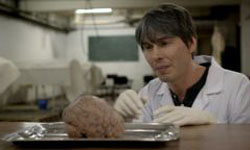
Beginning in Ethiopia, Professor Brian Cox discovers how the universe played a key role in our ascent from apeman to spaceman by driving the expansion of our brains. But big brains alone did not get us to space.
- TV-Recordings
- English subtitles
- 60
Beginning in Ethiopia, Professor Brian Cox discovers how the universe played a key role in our ascent from apeman to spaceman by driving the expansion of our brains. But big brains alone did not get us to space.

-
Human Universe - 02: Why Are We Here?
-
Brian Cox
Brian Cox reveals how the wonderful complexity of nature and human life is simply the consequence of chance events constrained by the laws of physics that govern our universe. But this leads him to a deeper question - why does our universe seem to have been set up with just the right rules to create us?
- TV-Recordings
- English subtitles
- 60
Brian Cox reveals how the wonderful complexity of nature and human life is simply the consequence of chance events constrained by the laws of physics that govern our universe. But this leads him to a deeper question - why does our universe seem to have been set up with just the right rules to create us?
Professor Brian Cox explores our origins, place and destiny in the universe. We all start our lives thinking that we are at the centre of the universe, surrounded by our family and the world as it spins around us. But the urge to explore is strong.
- TV-Recordings
- English subtitles
- 60
Professor Brian Cox explores our origins, place and destiny in the universe. We all start our lives thinking that we are at the centre of the universe, surrounded by our family and the world as it spins around us. But the urge to explore is strong.
-
Human Universe - 05: What is our Future?
-
Brian Cox
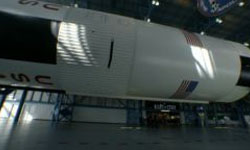
What is our future/destiny?
- TV-Recordings
- English subtitles
- 60
What is our future/destiny?
-
Human Universe Series 1
-
Brian Cox
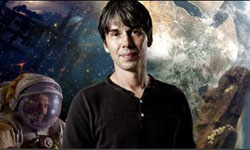
Professor Brian Cox explores the most precious, most wonderful thing in the universe, us.
- TV-Recordings
- English subtitles
- 300
Professor Brian Cox explores the most precious, most wonderful thing in the universe, us.
-
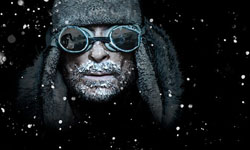
Hunt for the Oldest DNA
-
Niobe Thompson
Film following a team of scientists in their dramatic quest to recover DNA that is millions of years old and reveal a lost world from before the last Ice Age.
- TV-Recordings
- English subtitles
- 59
Film following a team of scientists in their dramatic quest to recover DNA that is millions of years old and reveal a lost world from before the last Ice Age.
-
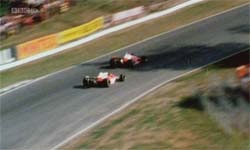
Hunt vs Lauda: F1's Greatest Racing Rivals
-
Matthew Whiteman
James Hunt has never been equalled. Could swashbuckling Hunt catch the scientific Lauda? Could Niki overcome an appalling crash to come back from the dead and fight James all the way to the last race of the season?
- TV-Recordings
- Sport
- English subtitles
- 60
James Hunt has never been equalled. Could swashbuckling Hunt catch the scientific Lauda? Could Niki overcome an appalling crash to come back from the dead and fight James all the way to the last race of the season?
-
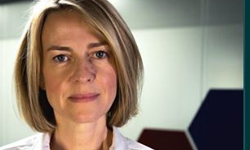
Incredible Medicine: Dr Weston's Casebook - Series 1
-
BBC
Surgeon Gabriel Weston introduces us to people from across the globe with the world's most unique bodies. She uncovers the rare and extraordinary cases that are bringing new discoveries about the human body and leading to the medical cures of the future.
- TV-Recordings
- English subtitles
- 360
Surgeon Gabriel Weston introduces us to people from across the globe with the world's most unique bodies. She uncovers the rare and extraordinary cases that are bringing new discoveries about the human body and leading to the medical cures of the future.

This week, we meet a girl whose heart has formed outside her ribcage, a man who can spend nine minutes underwater without taking a breath, a woman who is growing a second skeleton and a paralysed man who is regaining movement thanks to a chip implanted into his brain that can 'read' his brain signals.
- TV-Recordings
- English subtitles
- 60
This week, we meet a girl whose heart has formed outside her ribcage, a man who can spend nine minutes underwater without taking a breath, a woman who is growing a second skeleton and a paralysed man who is regaining movement thanks to a chip implanted into his brain that can 'read' his brain signals.

In this episode, we take a look at the human body's amazing capacity for survival. We meet a man who injects himself with deadly snake venom, a woman who leads a normal life with only half a brain, a girl who collapses 50 times a day and the only man in the world to be completely cured of HIV.
- TV-Recordings
- English subtitles
- 60
In this episode, we take a look at the human body's amazing capacity for survival. We meet a man who injects himself with deadly snake venom, a woman who leads a normal life with only half a brain, a girl who collapses 50 times a day and the only man in the world to be completely cured of HIV.
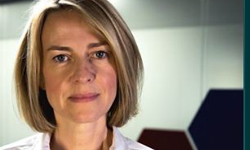
This time, we meet a man who feels no pain, a woman who can smell Parkinson's disease, a man who can remember every face he has ever seen and a survivor of a head injury who woke up to find he could suddenly play the piano.
- TV-Recordings
- English subtitles
- 60
This time, we meet a man who feels no pain, a woman who can smell Parkinson's disease, a man who can remember every face he has ever seen and a survivor of a head injury who woke up to find he could suddenly play the piano.
This time, we meet a girl with two hearts, a man who can sing two notes at once, a woman who can bend in amazing ways, a girl who is allergic to everything and a man who can run 350 miles without stopping. These remarkable cases reveal the secret inner workings of our bodies - the ultimate piece of natural engineering.
- TV-Recordings
- English subtitles
- 60
This time, we meet a girl with two hearts, a man who can sing two notes at once, a woman who can bend in amazing ways, a girl who is allergic to everything and a man who can run 350 miles without stopping. These remarkable cases reveal the secret inner workings of our bodies - the ultimate piece of natural engineering.

This time, Gabriel uncovers the stories of a man with bones as strong as granite, a woman who became pregnant with twins in two separate wombs, a girl whose arm won't stop growing and a woman who gets lost in her own home.
- TV-Recordings
- English subtitles
- 60
This time, Gabriel uncovers the stories of a man with bones as strong as granite, a woman who became pregnant with twins in two separate wombs, a girl whose arm won't stop growing and a woman who gets lost in her own home.

In this episode, Gabriel uncovers the cases of an engineer who fixed his own heart, a toddler whose bones were repaired before he was even born and a girl whose immune system attacked her own brain.
- TV-Recordings
- English subtitles
- 60
In this episode, Gabriel uncovers the cases of an engineer who fixed his own heart, a toddler whose bones were repaired before he was even born and a girl whose immune system attacked her own brain.
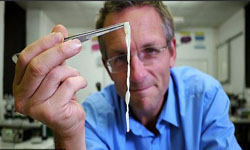
Dr Michael Mosley explores the bizarre and fascinating world of parasites by turning his body into a living laboratory and deliberately infesting himself with them. He travels to Kenya to give himself a tapeworm - a parasite that can grow to many metres inside the human gut.
- TV-Recordings
- English subtitles
- 60
Dr Michael Mosley explores the bizarre and fascinating world of parasites by turning his body into a living laboratory and deliberately infesting himself with them. He travels to Kenya to give himself a tapeworm - a parasite that can grow to many metres inside the human gut.

The story of the most elegant and powerful theory in science, Albert Einstein's general relativity. It takes us inside the head of Einstein to witness how his idea evolved.
- TV-Recordings
- Physics
- English subtitles
- 60
The story of the most elegant and powerful theory in science, Albert Einstein's general relativity. It takes us inside the head of Einstein to witness how his idea evolved.

As Facebook heads for its 100 billion dollar flotation, Emily Maitlis updates her recent documentary on the prospects for Mark Zuckerberg's social network phenomenon.
- TV-Recordings
- Computer Science
- TV-Recordings
- No subtitles
- 60
As Facebook heads for its 100 billion dollar flotation, Emily Maitlis updates her recent documentary on the prospects for Mark Zuckerberg's social network phenomenon.
-
Inside Nature's Giants
-
Channel 4
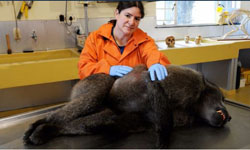
The award-winning series that gets under the skin of some of the largest animals on the planet,exploring their anatomy to reveal how these creatures really work.
- TV-Recordings
- No subtitles
- 550
The award-winning series that gets under the skin of some of the largest animals on the planet,exploring their anatomy to reveal how these creatures really work.

The second run of the BAFTA Award-winning series reveals the anatomy of some of nature\'s most successful predators.The experts travel to South Africa to dissect a 900kg, 15-foot-long great white shark.
- TV-Recordings
- Biology
- Medical Sciences
- TV-Recordings
- No subtitles
- 50
The second run of the BAFTA Award-winning series reveals the anatomy of some of nature\'s most successful predators.The experts travel to South Africa to dissect a 900kg, 15-foot-long great white shark.