
-
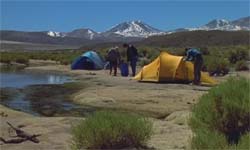
Earth Story - 03 Ring of Fire
-
Danielle Peck
Aubrey Manning discovers Pacific seawater in a Bolivian volcano 6,000m above sea level. Third in the series
- TV-Recordings
- Geography
- TV-Recordings
- No subtitles
- 58
Aubrey Manning discovers Pacific seawater in a Bolivian volcano 6,000m above sea level. Third in the series
-
Earth Story - 04 Journey to the Centre of the Earth
-
Danielle Peck
Aubrey Manning investigates volcanic activity worldwide. Fourth in the series
- TV-Recordings
- Geography
- TV-Recordings
- No subtitles
- 60
Aubrey Manning investigates volcanic activity worldwide. Fourth in the series
-
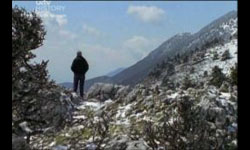
Earth Story - 05 The Roof of the World
-
Danielle Peck
Aubrey Manning explains how scientists have developed new theories concerning mountain formation, by studying the Himalayas at the top of the Indian subcontinent. Fifth in the series
- TV-Recordings
- Geography
- TV-Recordings
- No subtitles
- 60
Aubrey Manning explains how scientists have developed new theories concerning mountain formation, by studying the Himalayas at the top of the Indian subcontinent. Fifth in the series
-
Earth Story - 06 The Big Freeze
-
Danielle Peck
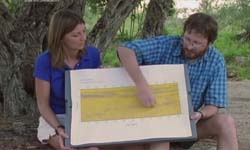
Aubrey Manning traces the turbulent history of the Ice Age in a journey spanning the globe. Sixth in the series
- TV-Recordings
- Geography
- TV-Recordings
- No subtitles
- 60
Aubrey Manning traces the turbulent history of the Ice Age in a journey spanning the globe. Sixth in the series
-
Earth Story - 07 The Living Earth
-
Danielle Peck
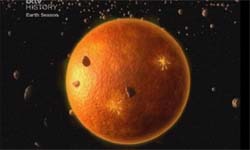
Aubrey Manning continues his global trek from the jungles of Indonesia to the plains of Africa, and discovers how chance events in history have shaped the evolution of life on Earth. Seventh in the series
- TV-Recordings
- Geography
- TV-Recordings
- No subtitles
- 60
Aubrey Manning continues his global trek from the jungles of Indonesia to the plains of Africa, and discovers how chance events in history have shaped the evolution of life on Earth. Seventh in the series
-
Earth Story - 08 A World Apart
-
Danielle Peck
Aubrey Manning sets out to discover why the Earth is a living planet and our planetary neighbours like Mars and Venus are not. Eighth in the series
- TV-Recordings
- Geography
- TV-Recordings
- No subtitles
- 60
Aubrey Manning sets out to discover why the Earth is a living planet and our planetary neighbours like Mars and Venus are not. Eighth in the series
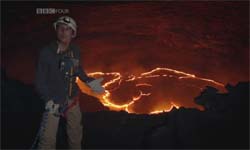
Documentary series. Dr Iain Stewart reveals the role natural forces have played in the creation of the planet Earth, beginning with volcanoes
- TV-Recordings
- Geography
- TV-Recordings
- No subtitles
- 59
Documentary series. Dr Iain Stewart reveals the role natural forces have played in the creation of the planet Earth, beginning with volcanoes
-
Earths Tropical Islands
-
Mark Brownlow
Exploring some of the world's most isolated and iconic tropical islands.
- TV-Recordings
- English subtitles
- 177
Exploring some of the world's most isolated and iconic tropical islands.

Journey across Madagascar, the oldest island on Earth. Over time, it has given rise to more unique plants and animals, from its lemurs to chameleons, than any other island.
- TV-Recordings
- English subtitles
- 58
Journey across Madagascar, the oldest island on Earth. Over time, it has given rise to more unique plants and animals, from its lemurs to chameleons, than any other island.
-
Earths Tropical Islands - Series 1 - Episode 2 - Borneo
-
Mark Brownlow
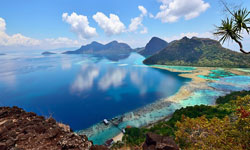
A journey from Borneo's rich coral reefs, through lush jungles to its mountainous heart, revealing why this island is home to a greater variety of life than almost any other.
- TV-Recordings
- English subtitles
- 59
A journey from Borneo's rich coral reefs, through lush jungles to its mountainous heart, revealing why this island is home to a greater variety of life than almost any other.

-
Earths Tropical Islands - Series 1 - Episode 3 - Hawaii
-
Mark Brownlow
Exploring Hawaii, a tropical sanctuary for any wildlife that can reach its remote shores. From humpback whales to waterfall-climbing fish, it is home to an extraordinary wealth of wildlife.
- TV-Recordings
- English subtitles
- 59
Exploring Hawaii, a tropical sanctuary for any wildlife that can reach its remote shores. From humpback whales to waterfall-climbing fish, it is home to an extraordinary wealth of wildlife.

-
Einstein's Quantum Riddle
-
Jamie Lochhead
The story of quantum entanglement, perhaps the strangest concept in science. Mind-bending concepts and brilliant experiments lead us to a profound new understanding of reality.
- TV-Recordings
- English subtitles
- 58
The story of quantum entanglement, perhaps the strangest concept in science. Mind-bending concepts and brilliant experiments lead us to a profound new understanding of reality.
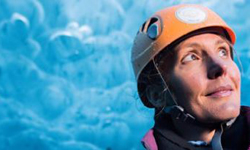
Everything around us - from the tiniest insect on Earth to the most distant stars of the cosmos - exists somewhere on a vast scale from cold to hot. In this series, physicist Dr Helen Czerski explores the extraordinary science of temperature.
- TV-Recordings
- English subtitles
- 60
Everything around us - from the tiniest insect on Earth to the most distant stars of the cosmos - exists somewhere on a vast scale from cold to hot. In this series, physicist Dr Helen Czerski explores the extraordinary science of temperature.

Dr Helen Czerksi explores the extraordinary science of heat. She reveals how heat is the hidden energy contained within matter, with the power to transform it from one state to another.
- TV-Recordings
- English subtitles
- 60
Dr Helen Czerksi explores the extraordinary science of heat. She reveals how heat is the hidden energy contained within matter, with the power to transform it from one state to another.
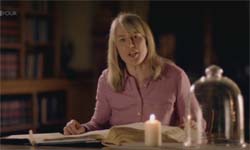
The air around us is not just empty space; it is an integral part of the chemistry of life. Plants are made from carbon dioxide, nitrogen nourishes the soil and oxygen gives us the energy we need to keep our hearts pumping and our brains alive. But how did we come to understand what air is made of? How did we come to know that this invisible stuff around us contains anything at all?
- TV-Recordings
- Chemistry
- English subtitles
- 60
The air around us is not just empty space; it is an integral part of the chemistry of life. Plants are made from carbon dioxide, nitrogen nourishes the soil and oxygen gives us the energy we need to keep our hearts pumping and our brains alive. But how did we come to understand what air is made of? How did we come to know that this invisible stuff around us contains anything at all?
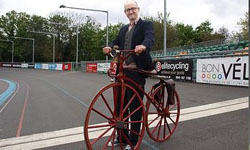
Mark Miodownik reveals the amazing stories behind everyday objects of desire and how they are miraculously transformed from raw materials into the very stuff of the modern world.
- TV-Recordings
- English subtitles
- 60
Mark Miodownik reveals the amazing stories behind everyday objects of desire and how they are miraculously transformed from raw materials into the very stuff of the modern world.
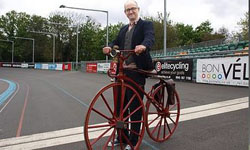
Professor Mark Miodownik concludes his odyssey of the stuff of modern life. This time he looks at how materials have enabled us to indulge our curiosity about the world around us.
- TV-Recordings
- English subtitles
- 60
Professor Mark Miodownik concludes his odyssey of the stuff of modern life. This time he looks at how materials have enabled us to indulge our curiosity about the world around us.
Professor Jim Al-Khalili sets out to discover what the universe might actually look like.
- TV-Recordings
- Astronomy
- Other
- TV-Recordings
- No subtitles
- 60
Professor Jim Al-Khalili sets out to discover what the universe might actually look like.

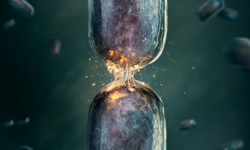
The second part, Nothing, explores science at the very limits of human perception, where we now understand the deepest mysteries of the universe lie. Jim sets out to answer one very simple question - what is nothing?
- TV-Recordings
- Astronomy
- Other
- TV-Recordings
- No subtitles
- 60
The second part, Nothing, explores science at the very limits of human perception, where we now understand the deepest mysteries of the universe lie. Jim sets out to answer one very simple question - what is nothing?
-
Evolution - Series 1
-
Tom Hewitson
From a single spark of life, through millions of generations, animals have become diverse, weird and beautiful. Chris Packham tells the incredible story in astonishing new detail.
- TV-Recordings
- English subtitles
- 289
From a single spark of life, through millions of generations, animals have become diverse, weird and beautiful. Chris Packham tells the incredible story in astonishing new detail.
-
Evolution - Series 1 - Episode 1 - The Elephant
-
Tom Hewitson
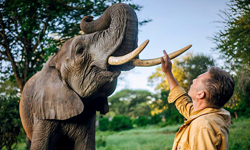
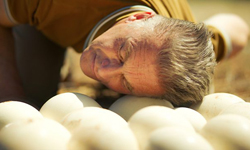
How did the elephant get so big? Chris Packham explores the four-billion-year story of how a tiny cell evolved into complex, gentle giants.
- TV-Recordings
- English subtitles
- 58
How did the elephant get so big? Chris Packham explores the four-billion-year story of how a tiny cell evolved into complex, gentle giants.
-
Evolution - Series 1 - Episode 2 - The Ostrich
-
Laura Mulholland
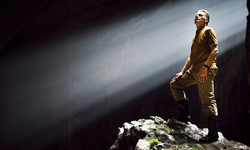
How did the ostrich come to lay the biggest egg on earth? Chris Packham explores the way reproduction has shaped life on earth and the surprising evolutionary origins of sex, eggs and birds. It's a four-billion-year journey contained within a shell.
- TV-Recordings
- English subtitles
- 58
How did the ostrich come to lay the biggest egg on earth? Chris Packham explores the way reproduction has shaped life on earth and the surprising evolutionary origins of sex, eggs and birds. It's a four-billion-year journey contained within a shell.
-
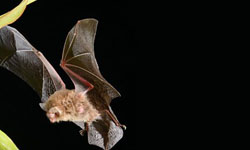
Evolution - Series 1 - Episode 3 - The Bat
-
Fleur Bone
How did the bat get so hungry? Chris Packham explores how the drive to find food has shaped animal life. The origin of bums, guts, jaws and super hearing.
- TV-Recordings
- English subtitles
- 58
How did the bat get so hungry? Chris Packham explores how the drive to find food has shaped animal life. The origin of bums, guts, jaws and super hearing.

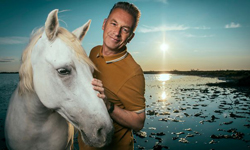
How did the dolphin get so smart? Chris Packham explores the origins of senses, brains and intelligence, in an evolutionary odyssey that ventures from ocean to land and back again.
- TV-Recordings
- English subtitles
- 58
How did the dolphin get so smart? Chris Packham explores the origins of senses, brains and intelligence, in an evolutionary odyssey that ventures from ocean to land and back again.
-
Evolution - Series 1 - Episode 5 - The Horse
-
Clementine Cheetham
How did the horse become so fast? Chris Packham sets out on a slithering, swimming, sprinting odyssey that explores the evolutionary beginnings of animal movement and how it reached its peak in one of the most elegant and athletic animals on earth: the horse.
- TV-Recordings
- English subtitles
- 58
How did the horse become so fast? Chris Packham sets out on a slithering, swimming, sprinting odyssey that explores the evolutionary beginnings of animal movement and how it reached its peak in one of the most elegant and athletic animals on earth: the horse.

Engineer Jem Stansfield is used to creating explosions, but in this programme he uncovers the story of how we have learnt to control them and harness their power for our own means.
- TV-Recordings
- History
- Physics
- TV-Recordings
- English subtitles
- 60
Engineer Jem Stansfield is used to creating explosions, but in this programme he uncovers the story of how we have learnt to control them and harness their power for our own means.
Dallas Campbell delves in to the Horizon archive to discover how our ideas about dinosaurs have changed over the past 40 years.
- TV-Recordings
- Biology
- TV-Recordings
- English subtitles
- 60
Dallas Campbell delves in to the Horizon archive to discover how our ideas about dinosaurs have changed over the past 40 years.
In this film, Professor Marcus du Sautoy explores one of the most dramatic scientific announcements for a generation. In clear, simple language he tells the story of the science we thought we knew, how it is being challenged, and why it matters.
- TV-Recordings
- Physics
- TV-Recordings
- No subtitles
- 60
In this film, Professor Marcus du Sautoy explores one of the most dramatic scientific announcements for a generation. In clear, simple language he tells the story of the science we thought we knew, how it is being challenged, and why it matters.

-
Five Ways to Save the World
-
Jonathan Barker
Five of the world's top scientists present the revolutionary scientific inventions they believe could stop global warming and prevent worldwide disaster. Ideas include putting a giant glass sunshade in space to deflect a small portion of the sun's rays back into space and the firing ofrockets loaded with tons of sulphur into the stratosphere creating a vast, but very thin sunscreen of sulphur around the earth
- TV-Recordings
- Physics
- Politics & Public Policy
- TV-Recordings
- No subtitles
- 60
Five of the world's top scientists present the revolutionary scientific inventions they believe could stop global warming and prevent worldwide disaster. Ideas include putting a giant glass sunshade in space to deflect a small portion of the sun's rays back into space and the firing ofrockets loaded with tons of sulphur into the stratosphere creating a vast, but very thin sunscreen of sulphur around the earth

In this episode Brian uncovers how the stunning diversity of shapes in the natural world are shadows of the rules that govern the universe. In Spain he shows how an attempt by hundreds of people to build the highest human tower reveals the force that shapes our planet.
- TV-Recordings
- English subtitles
- 60
In this episode Brian uncovers how the stunning diversity of shapes in the natural world are shadows of the rules that govern the universe. In Spain he shows how an attempt by hundreds of people to build the highest human tower reveals the force that shapes our planet.