
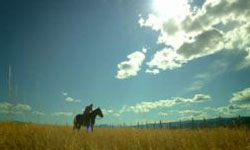
In the third episode, Iain discovers the remarkable impact of just one plant: grass. On the savannah of South Africa he sees how grass unleashed a firestorm to fight its greatest enemy, the forests.
- TV-Recordings
- Biology
- Physics
- TV-Recordings
- No subtitles
- 60
In the third episode, Iain discovers the remarkable impact of just one plant: grass. On the savannah of South Africa he sees how grass unleashed a firestorm to fight its greatest enemy, the forests.

-
How to see a Black Hole
-
Henry Fraser
Documentary following researchers as they try to take the first-ever picture of a black hole. They must travel the globe to build a revolutionary telescope that spans planet Earth.
- TV-Recordings
- English subtitles
- 59
Documentary following researchers as they try to take the first-ever picture of a black hole. They must travel the globe to build a revolutionary telescope that spans planet Earth.

Documentary following researchers as they try to take the first-ever picture of a black hole. They must travel the globe to build a revolutionary telescope that spans planet Earth.
- TV-Recordings
- English subtitles
- 59
Documentary following researchers as they try to take the first-ever picture of a black hole. They must travel the globe to build a revolutionary telescope that spans planet Earth.
-
Human Universe - 01: Apeman - Spaceman
-
Brian Cox
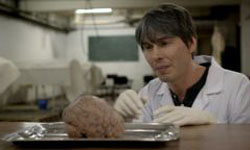
Beginning in Ethiopia, Professor Brian Cox discovers how the universe played a key role in our ascent from apeman to spaceman by driving the expansion of our brains. But big brains alone did not get us to space.
- TV-Recordings
- English subtitles
- 60
Beginning in Ethiopia, Professor Brian Cox discovers how the universe played a key role in our ascent from apeman to spaceman by driving the expansion of our brains. But big brains alone did not get us to space.

-
Human Universe - 02: Why Are We Here?
-
Brian Cox
Brian Cox reveals how the wonderful complexity of nature and human life is simply the consequence of chance events constrained by the laws of physics that govern our universe. But this leads him to a deeper question - why does our universe seem to have been set up with just the right rules to create us?
- TV-Recordings
- English subtitles
- 60
Brian Cox reveals how the wonderful complexity of nature and human life is simply the consequence of chance events constrained by the laws of physics that govern our universe. But this leads him to a deeper question - why does our universe seem to have been set up with just the right rules to create us?
Professor Brian Cox explores our origins, place and destiny in the universe. We all start our lives thinking that we are at the centre of the universe, surrounded by our family and the world as it spins around us. But the urge to explore is strong.
- TV-Recordings
- English subtitles
- 60
Professor Brian Cox explores our origins, place and destiny in the universe. We all start our lives thinking that we are at the centre of the universe, surrounded by our family and the world as it spins around us. But the urge to explore is strong.
-
Human Universe - 05: What is our Future?
-
Brian Cox
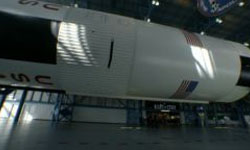
What is our future/destiny?
- TV-Recordings
- English subtitles
- 60
What is our future/destiny?
-
Human Universe Series 1
-
Brian Cox
Professor Brian Cox explores the most precious, most wonderful thing in the universe, us.
- TV-Recordings
- English subtitles
- 300
Professor Brian Cox explores the most precious, most wonderful thing in the universe, us.
-
Hunt vs Lauda: F1's Greatest Racing Rivals
-
Matthew Whiteman
James Hunt has never been equalled. Could swashbuckling Hunt catch the scientific Lauda? Could Niki overcome an appalling crash to come back from the dead and fight James all the way to the last race of the season?
- TV-Recordings
- Sport
- English subtitles
- 60
James Hunt has never been equalled. Could swashbuckling Hunt catch the scientific Lauda? Could Niki overcome an appalling crash to come back from the dead and fight James all the way to the last race of the season?
Using cutting edge visual effects and CGI, this scientific visual extravaganza creates the first accurate non-stop journey from here to the edge of the universe
- TV-Recordings
- Astronomy
- Physics
- TV-Recordings
- No subtitles
- 60
Using cutting edge visual effects and CGI, this scientific visual extravaganza creates the first accurate non-stop journey from here to the edge of the universe
How atomic theories and concepts of quantum physics underpin modern technology.
- TV-Recordings
- No subtitles
- 60
How atomic theories and concepts of quantum physics underpin modern technology.
Two-part series in which Professor Jim Al-Khalili shows how, by uncovering its secrets, scientists have used light to reveal almost everything we know about the universe.
- TV-Recordings
- Physics
- Science
- English subtitles
- 60
Two-part series in which Professor Jim Al-Khalili shows how, by uncovering its secrets, scientists have used light to reveal almost everything we know about the universe.
Professor Jim Al-Khalili tells the story of how we went from thinking we were close to a complete understanding of the universe to realising we had seen almost none of it. Today, our best estimate is that more than 99 per cent of the cosmos is hidden in the dark, invisible to our telescopes and beyond our comprehension.
- TV-Recordings
- Physics
- Science
- English subtitles
- 60
Professor Jim Al-Khalili tells the story of how we went from thinking we were close to a complete understanding of the universe to realising we had seen almost none of it. Today, our best estimate is that more than 99 per cent of the cosmos is hidden in the dark, invisible to our telescopes and beyond our comprehension.
-
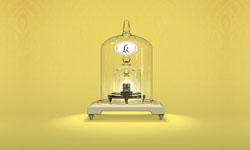
Measuring Mass: The Last Artefact
-
Jaime Jacobsen
A piece of metal that defines the mass of a kilogramme has, over time, lost the equivalent of the weight of an eyelash. What are the consequences for how we measure our world?
- TV-Recordings
- English subtitles
- 56
A piece of metal that defines the mass of a kilogramme has, over time, lost the equivalent of the weight of an eyelash. What are the consequences for how we measure our world?

-
Mythe Einstein - la vie et l'œuvre d'un rebelle
-
Sylvia Strasser Wolfgang Würker , 2015
Who was this man who embodies like no other triumph and tragedy of the 20th century? And what he has to say to us today? "Myth Einstein" embarks on a journey through the life of the physicist and feel the true and invented stories about the genius after.
- TV-Recordings
- No subtitles
- 90
Who was this man who embodies like no other triumph and tragedy of the 20th century? And what he has to say to us today? "Myth Einstein" embarks on a journey through the life of the physicist and feel the true and invented stories about the genius after.

-
Mythos Einstein - Leben und Werk eines Rebellen
-
Sylvia Strasser, Wolfgang Würker , 2015
Albert Einstein ist ein Popstar der Wissenschaft, um den sich etliche Legenden ranken. Erst posthum treten mit der Herausgabe privater Dokumente die nicht nur strahlenden Seiten des Jahrhundert-Genies ans Licht. Wer war dieser Mann, der wie kein anderer Triumph und Tragik des 20. Jahrhunderts verkörpert hat? Und was hat er uns heute noch zu sagen? "Mythos Einstein" begibt sich auf eine Reise durch das Leben des Physikers und spürt den wahren und erfundenen Geschichten um das Genie nach.
- TV-Recordings
- No subtitles
- 90
Albert Einstein ist ein Popstar der Wissenschaft, um den sich etliche Legenden ranken. Erst posthum treten mit der Herausgabe privater Dokumente die nicht nur strahlenden Seiten des Jahrhundert-Genies ans Licht. Wer war dieser Mann, der wie kein anderer Triumph und Tragik des 20. Jahrhunderts verkörpert hat? Und was hat er uns heute noch zu sagen? "Mythos Einstein" begibt sich auf eine Reise durch das Leben des Physikers und spürt den wahren und erfundenen Geschichten um das Genie nach.

-
Orbit: Earth's Extraordinary Journey
-
BBC
Right now you're hurtling around the Sun at a hundred thousand kilometres an hour. Join Kate Humble and Dr Helen Czerski as they explore the relationship between the Earth's orbit and the weather
- TV-Recordings
- No subtitles
- 180
Right now you're hurtling around the Sun at a hundred thousand kilometres an hour. Join Kate Humble and Dr Helen Czerski as they explore the relationship between the Earth's orbit and the weather

Right now you're hurtling around the sun at 64,000 miles an hour (100,000 kms an hour). In the next year you'll travel 584 million miles, to end up back where you started. Presenters Kate Humble and Dr Helen Czerski follow the Earth's voyage around the sun for one complete orbit, to witness the astonishing consequences this journey has for us all. In this first episode they travel from July to the December solstice, experiencing spectacular weather and the largest tides on Earth. To show how the Earth's orbit affects our lives, Helen jumps out of an aeroplane and Kate briefly becomes the fastest driver on Earth.
- TV-Recordings
- Physics
- TV-Recordings
- No subtitles
- 60
Right now you're hurtling around the sun at 64,000 miles an hour (100,000 kms an hour). In the next year you'll travel 584 million miles, to end up back where you started. Presenters Kate Humble and Dr Helen Czerski follow the Earth's voyage around the sun for one complete orbit, to witness the astonishing consequences this journey has for us all. In this first episode they travel from July to the December solstice, experiencing spectacular weather and the largest tides on Earth. To show how the Earth's orbit affects our lives, Helen jumps out of an aeroplane and Kate briefly becomes the fastest driver on Earth.
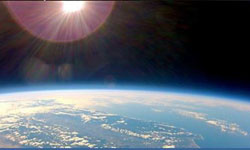
In this final episode we complete our journey, travelling back from the March equinox to the end of June. Kate Humble is in the Arctic at a place where spring arrives with a bang, whilst Helen Czerski chases a tornado to show how the earth's angle of tilt creates the most extreme weather on earth.
- TV-Recordings
- Astronomy
- TV-Recordings
- No subtitles
- 60
In this final episode we complete our journey, travelling back from the March equinox to the end of June. Kate Humble is in the Arctic at a place where spring arrives with a bang, whilst Helen Czerski chases a tornado to show how the earth's angle of tilt creates the most extreme weather on earth.
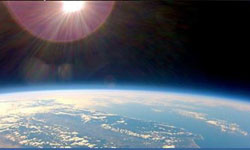
In this second episode we travel from January to the March equinox. Kate Humble gets closer to the Sun than she has ever been before, whilst Helen Czerski visits a place that gets some of the biggest and fastest snowstorms on Earth.
- TV-Recordings
- TV-Recordings
- No subtitles
- 60
In this second episode we travel from January to the March equinox. Kate Humble gets closer to the Sun than she has ever been before, whilst Helen Czerski visits a place that gets some of the biggest and fastest snowstorms on Earth.
Professor Jim Al-Khalili discovers the intriguing story of how we discovered the rules that drive the universe. Energy is vital to us all, but what exactly is energy?
- TV-Recordings
- Physics
- TV-Recordings
- English subtitles
- 60
Professor Jim Al-Khalili discovers the intriguing story of how we discovered the rules that drive the universe. Energy is vital to us all, but what exactly is energy?
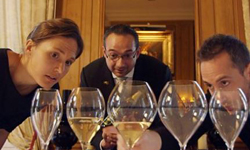
Physicist Dr Helen Czerski takes us on an amazing journey into the science of bubbles. Bubbles may seem to be just fun toys, but they are also powerful tools that push back the boundaries of science.
- TV-Recordings
- English subtitles
- 60
Physicist Dr Helen Czerski takes us on an amazing journey into the science of bubbles. Bubbles may seem to be just fun toys, but they are also powerful tools that push back the boundaries of science.
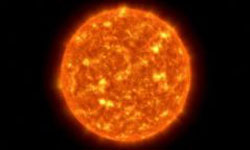
From lightning bolts and watt engines to electromagnetic waves and single electrons, Professor Marcus du Sautoy continues his journey into the world of measurement as he reveals how we came to measure and harness the power of heat, light and electricity.
- TV-Recordings
- Maths
- No subtitles
- 60
From lightning bolts and watt engines to electromagnetic waves and single electrons, Professor Marcus du Sautoy continues his journey into the world of measurement as he reveals how we came to measure and harness the power of heat, light and electricity.
-
Science and Islam
-
Prof. Jim Al-Khalili
Jim Al-Khalili travels through Syria, Iran, Tunisia and Spain to tell the story of the great leap in scientific knowledge that took place in the Islamic world between the 8th and 14th centuries
- TV-Recordings
- English subtitles
- 180
Jim Al-Khalili travels through Syria, Iran, Tunisia and Spain to tell the story of the great leap in scientific knowledge that took place in the Islamic world between the 8th and 14th centuries
-
Science and Islam Episode 1 - The Language of Science
-
Prof. Jim Al-Khalili
Physicist Jim Al-Khalili travels through Syria, Iran, Tunisia and Spain to tell the story of the great leap in scientific knowledge that took place in the Islamic world between the 8th and 14th centuries.
- TV-Recordings
- English subtitles
- 60
Physicist Jim Al-Khalili travels through Syria, Iran, Tunisia and Spain to tell the story of the great leap in scientific knowledge that took place in the Islamic world between the 8th and 14th centuries.
-
Science and Islam Episode 2 - The Empire of Reason
-
Prof. Jim Al-Khalili
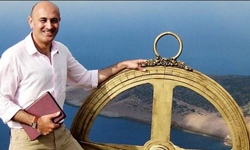
Physicist Jim Al-Khalili travels through Syria, Iran, Tunisia and Spain to tell the story of the great leap in scientific knowledge that took place in the Islamic world between the 8th and 14th centuries.
- TV-Recordings
- English subtitles
- 60
Physicist Jim Al-Khalili travels through Syria, Iran, Tunisia and Spain to tell the story of the great leap in scientific knowledge that took place in the Islamic world between the 8th and 14th centuries.
-
Science and Islam Episode 3 - The Power of Doubt
-
Prof. Jim Al-Khalili
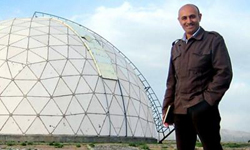
Physicist Jim Al-Khalili tells the story of the great leap in scientific knowledge that took place in the Islamic world between the 8th and 14th centuries.
- TV-Recordings
- English subtitles
- 60
Physicist Jim Al-Khalili tells the story of the great leap in scientific knowledge that took place in the Islamic world between the 8th and 14th centuries.
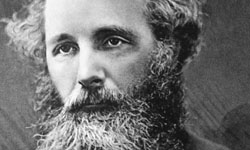
Professor Iain Stewart reveals the story behind the Scottish physicist who was Einstein's hero; James Clerk Maxwell. Maxwell's discoveries not only inspired Einstein, but they helped shape our modern world - allowing the development of radio, TV, mobile phones and much more.
- TV-Recordings
- Physics
- English subtitles
- 60
Professor Iain Stewart reveals the story behind the Scottish physicist who was Einstein's hero; James Clerk Maxwell. Maxwell's discoveries not only inspired Einstein, but they helped shape our modern world - allowing the development of radio, TV, mobile phones and much more.
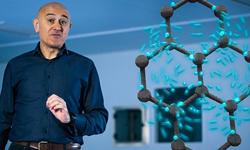
What would the universe look like if you were a billion times smaller or a billion times bigger? In this mind-bending series, Jim Al-Khalili will look at the universe across its vast range of size.
- TV-Recordings
- English subtitles
- 58
What would the universe look like if you were a billion times smaller or a billion times bigger? In this mind-bending series, Jim Al-Khalili will look at the universe across its vast range of size.
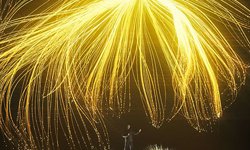
At an even greater scale, Jim encounters huge structures such as the Laniakea Supercluster, of which the Milky Way is only a tiny part.
- TV-Recordings
- English subtitles
- 58
At an even greater scale, Jim encounters huge structures such as the Laniakea Supercluster, of which the Milky Way is only a tiny part.