

-
3D Printing
-
Dr Yiannis Koutsonas , 2017
Science and Society Lecture - 10th October 2017
- Lectures
- No subtitles
- 42
Science and Society Lecture - 10th October 2017
-
3D Printing
-
Dr Yiannis Koutsonas , 2017
Science and Society Lecture - 7th February 2017
- Lectures
- No subtitles
- 42
Science and Society Lecture - 7th February 2017

-
3D Printing
-
Dr Martyn Carter , 2018
Science and Society Lecture 16/10/2018
- Lectures
- No subtitles
- 46
Science and Society Lecture 16/10/2018

-
From Opium to Opioids: Opium Through the Ages
-
Dr Deborah Gater , 2020
Science and Society Lecture 4th February 2020
- Lectures
- No subtitles
- 41
Science and Society Lecture 4th February 2020
Absolute Zero is the ultimate limit of cold – a Holy Grail as exciting for scientists as the North and South Poles were to the great polar explorers. The Conquest of Cold is an epic journey from dark beginnings to an ultra-cool frontier.
- TV-Recordings
- Chemistry
- TV-Recordings
- No subtitles
- 60
Absolute Zero is the ultimate limit of cold – a Holy Grail as exciting for scientists as the North and South Poles were to the great polar explorers. The Conquest of Cold is an epic journey from dark beginnings to an ultra-cool frontier.
The Conquest of Cold charts the attempts of many great names in science such as Francis Bacon, Robert Boyle, Michael Faraday and Antoinne Lavoisier to grapple with the perplexing mystery of cold.
- TV-Recordings
- Chemistry
- TV-Recordings
- No subtitles
- 60
The Conquest of Cold charts the attempts of many great names in science such as Francis Bacon, Robert Boyle, Michael Faraday and Antoinne Lavoisier to grapple with the perplexing mystery of cold.
-
Atom
-
Professor Jim Al-Khalili
The first of three programmes in which nuclear physicist Professor Jim Al-Khalili tells the story of the greatest scientific discovery ever - that everything is made of atoms.
- TV-Recordings
- No subtitles
- 170
The first of three programmes in which nuclear physicist Professor Jim Al-Khalili tells the story of the greatest scientific discovery ever - that everything is made of atoms.
-
Atom I - Clash of Titans
-
Jim Al-Khalili
Professor Al-Khalili takes us from the discovery of the atom to the development of quantum mechanics
- TV-Recordings
- Chemistry
- Physics
- TV-Recordings
- No subtitles
- 50
Professor Al-Khalili takes us from the discovery of the atom to the development of quantum mechanics
-
Atom II - The Key to the Cosmos
-
Jim Al-Khalili
This episode tackles world-changing discoveries such as radioactivity, the Atom Bomb and the Big Bang, and tries to answer the biggest questions of all - why are we here and how were we made?
- TV-Recordings
- Chemistry
- Physics
- TV-Recordings
- No subtitles
- 60
This episode tackles world-changing discoveries such as radioactivity, the Atom Bomb and the Big Bang, and tries to answer the biggest questions of all - why are we here and how were we made?
-
Atom III - The Illusion of Reality
-
Jim Al-Khalili
Al-Khalili discovers that there might be parallel universes in which different versions of us exist, and finds out that empty space isn’t empty at all, but seething with activity
- TV-Recordings
- Chemistry
- Physics
- TV-Recordings
- No subtitles
- 60
Al-Khalili discovers that there might be parallel universes in which different versions of us exist, and finds out that empty space isn’t empty at all, but seething with activity

The final part of this series looking at three brilliant contemporary scientists features Sir Tim Hunt, awarded the Nobel Prize for his discovery of the mechanism of how cells divide - a discovery fundamental to the life and growth of every single creature on the planet, as well as a vital clue into the mystery of cancer.
- TV-Recordings
- Chemistry
- TV-Recordings
- No subtitles
- 60
The final part of this series looking at three brilliant contemporary scientists features Sir Tim Hunt, awarded the Nobel Prize for his discovery of the mechanism of how cells divide - a discovery fundamental to the life and growth of every single creature on the planet, as well as a vital clue into the mystery of cancer.
-
Botany: A Blooming History
-
BBC 4
Series which tells the story of how people came to understand the natural order of the plant world, and how the quest to discover how plants grow uncovered the secret to life on the planet.
- TV-Recordings
- No subtitles
- 180
Series which tells the story of how people came to understand the natural order of the plant world, and how the quest to discover how plants grow uncovered the secret to life on the planet.
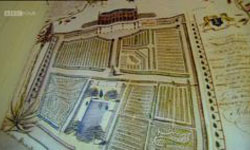
What makes plants grow is a simple enough question. The answer turns out to be one of the most complicated and fascinating stories in science and took over 300 years to unravel.
- TV-Recordings
- Biology
- TV-Recordings
- No subtitles
- 60
What makes plants grow is a simple enough question. The answer turns out to be one of the most complicated and fascinating stories in science and took over 300 years to unravel.
For 10,000 years or more, humans created new plant varieties for food by trial and error and a touch of serendipity. Then 150 years ago, a new era began. Pioneer botanists unlocked the patterns found in different types of plants and opened the door to a new branch of science - plant genetics. They discovered what controlled the random colours of snapdragon petals and the strange colours found in wild maize.
- TV-Recordings
- Biology
- TV-Recordings
- No subtitles
- 60
For 10,000 years or more, humans created new plant varieties for food by trial and error and a touch of serendipity. Then 150 years ago, a new era began. Pioneer botanists unlocked the patterns found in different types of plants and opened the door to a new branch of science - plant genetics. They discovered what controlled the random colours of snapdragon petals and the strange colours found in wild maize.
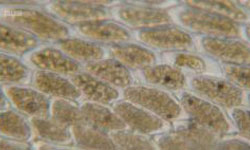
The air we breathe, and all the food we eat, is created from water, sunlight, carbon dioxide and a few minerals. That\'s it, nothing else. It sounds simple, but this process is one of the most fascinating and complicated in all of science. Without it there could be no life on earth. It\'s that important.
- TV-Recordings
- Biology
- TV-Recordings
- No subtitles
- 60
The air we breathe, and all the food we eat, is created from water, sunlight, carbon dioxide and a few minerals. That\'s it, nothing else. It sounds simple, but this process is one of the most fascinating and complicated in all of science. Without it there could be no life on earth. It\'s that important.
-
Chemistry: A Volatile History
-
BBC
Series in which Jim Al-Khalili traces the story of how the elements, the building blocks that make up our entire world, were discovered and mapped
- TV-Recordings
- No subtitles
- No
Series in which Jim Al-Khalili traces the story of how the elements, the building blocks that make up our entire world, were discovered and mapped
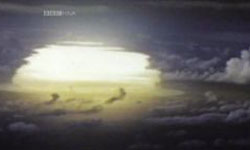
Series in which Jim Al-Khalili traces the story of how the elements, the building blocks that make up our entire world, were discovered and mapped.He follows in the footsteps of the pioneers who cracked their secrets and created a new science, propelling us into the modern age.
- TV-Recordings
- Chemistry
- TV-Recordings
- No subtitles
- 60
Series in which Jim Al-Khalili traces the story of how the elements, the building blocks that make up our entire world, were discovered and mapped.He follows in the footsteps of the pioneers who cracked their secrets and created a new science, propelling us into the modern age.

In part two, Professor Al-Khalili looks at the 19th century chemists who struggled to impose an order on the apparently random world of the elements. From working out how many there were to discovering their unique relationships with each other, the early scientists\' bid to decode the hidden order of the elements was driven by false starts and bitter disputes. But ultimately the quest would lead to one of chemistry\'s most beautiful intellectual creations - the periodic table.
- TV-Recordings
- Chemistry
- TV-Recordings
- No subtitles
- 60
In part two, Professor Al-Khalili looks at the 19th century chemists who struggled to impose an order on the apparently random world of the elements. From working out how many there were to discovering their unique relationships with each other, the early scientists\' bid to decode the hidden order of the elements was driven by false starts and bitter disputes. But ultimately the quest would lead to one of chemistry\'s most beautiful intellectual creations - the periodic table.
In the final part, Professor Al-Khalili uncovers tales of success and heartache in the story of chemists' battle to control and combine the elements, and build our modern world. He reveals the dramatic breakthroughs which harnessed their might to release almost unimaginable power, and he journeys to the centre of modern day alchemy, where scientists are attempting to command the extreme forces of nature and create brand new elements.
- TV-Recordings
- Chemistry
- TV-Recordings
- English subtitles
- 60
In the final part, Professor Al-Khalili uncovers tales of success and heartache in the story of chemists' battle to control and combine the elements, and build our modern world. He reveals the dramatic breakthroughs which harnessed their might to release almost unimaginable power, and he journeys to the centre of modern day alchemy, where scientists are attempting to command the extreme forces of nature and create brand new elements.
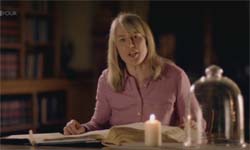
The air around us is not just empty space; it is an integral part of the chemistry of life. Plants are made from carbon dioxide, nitrogen nourishes the soil and oxygen gives us the energy we need to keep our hearts pumping and our brains alive. But how did we come to understand what air is made of? How did we come to know that this invisible stuff around us contains anything at all?
- TV-Recordings
- Chemistry
- English subtitles
- 60
The air around us is not just empty space; it is an integral part of the chemistry of life. Plants are made from carbon dioxide, nitrogen nourishes the soil and oxygen gives us the energy we need to keep our hearts pumping and our brains alive. But how did we come to understand what air is made of? How did we come to know that this invisible stuff around us contains anything at all?

Engineer Jem Stansfield is used to creating explosions, but in this programme he uncovers the story of how we have learnt to control them and harness their power for our own means.
- TV-Recordings
- History
- Physics
- TV-Recordings
- English subtitles
- 60
Engineer Jem Stansfield is used to creating explosions, but in this programme he uncovers the story of how we have learnt to control them and harness their power for our own means.

In this episode Brian uncovers how the stunning diversity of shapes in the natural world are shadows of the rules that govern the universe. In Spain he shows how an attempt by hundreds of people to build the highest human tower reveals the force that shapes our planet.
- TV-Recordings
- English subtitles
- 60
In this episode Brian uncovers how the stunning diversity of shapes in the natural world are shadows of the rules that govern the universe. In Spain he shows how an attempt by hundreds of people to build the highest human tower reveals the force that shapes our planet.

Professor Brian Cox follows Earth's epic journey through space. He takes to the air in a top-secret fighter jet to race the spin of the planet and reverse the passage of the day.
- TV-Recordings
- English subtitles
- 60
Professor Brian Cox follows Earth's epic journey through space. He takes to the air in a top-secret fighter jet to race the spin of the planet and reverse the passage of the day.

In this episode, Professor Brian Cox shows how Earth's basic ingredients, like the pure sulphur mined in the heart of a deadly volcano in Indonesia, have become the building blocks of life. Hidden deep in a cave in the Dominican Republic lies a magical world created by the same property of water that makes it essential to life.
- TV-Recordings
- English subtitles
- 60
In this episode, Professor Brian Cox shows how Earth's basic ingredients, like the pure sulphur mined in the heart of a deadly volcano in Indonesia, have become the building blocks of life. Hidden deep in a cave in the Dominican Republic lies a magical world created by the same property of water that makes it essential to life.

In this final episode Professor Brian Cox travels to Iceland, where the delicate splendour of a moonbow reveals the colours that paint our world, and he visits a volcano to explain why the sun shines.
- TV-Recordings
- English subtitles
- 60
In this final episode Professor Brian Cox travels to Iceland, where the delicate splendour of a moonbow reveals the colours that paint our world, and he visits a volcano to explain why the sun shines.

-
Forces of Nature with Brian Cox
-
BBC
Professor Brian Cox combines some of the most spectacular sights on Earth with our deepest understanding of the universe to reveal how the planet's beauty is created by just a handful of forces.
- TV-Recordings
- English subtitles
- 240
Professor Brian Cox combines some of the most spectacular sights on Earth with our deepest understanding of the universe to reveal how the planet's beauty is created by just a handful of forces.
It's the process that powers the Sun, and scientists know that if they could just make nuclear fusion happen here on Earth they could solve all the world's energy problems. Billions of dollars have been spent on trying to make it happen, but now an American scientist claims to have created nuclear fusion simply by bombarding a flask of liquid with sound waves. Many scientists refuse to believe his claims, so Horizon has assembled a team to replicate the experiment. This film reveals the team's findings
- TV-Recordings
- Physics
- TV-Recordings
- No subtitles
- 11
It's the process that powers the Sun, and scientists know that if they could just make nuclear fusion happen here on Earth they could solve all the world's energy problems. Billions of dollars have been spent on trying to make it happen, but now an American scientist claims to have created nuclear fusion simply by bombarding a flask of liquid with sound waves. Many scientists refuse to believe his claims, so Horizon has assembled a team to replicate the experiment. This film reveals the team's findings

They are the miracle pills that shouldn\'t really work at all. Placebos come in all shapes and sizes, but they contain no active ingredient. Now they are being shown to help treat pain, depression and even alleviate some of the symptoms of Parkinson\'s disease. Horizon explores why they work, and how we could all benefit from the hidden power of the placebo.
- TV-Recordings
- Medical Sciences
- English subtitles
- 60
They are the miracle pills that shouldn\'t really work at all. Placebos come in all shapes and sizes, but they contain no active ingredient. Now they are being shown to help treat pain, depression and even alleviate some of the symptoms of Parkinson\'s disease. Horizon explores why they work, and how we could all benefit from the hidden power of the placebo.

Comedian Ben Miller returns to his roots as a physicist to try to answer a deceptively simple question: what is one degree of temperature?
- TV-Recordings
- Physics
- TV-Recordings
- No subtitles
- 60
Comedian Ben Miller returns to his roots as a physicist to try to answer a deceptively simple question: what is one degree of temperature?
-
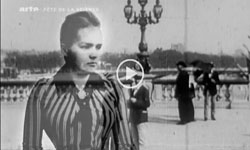
Marie Curie, au-delà du mythe
-
Arte , 2011
Intimate portrait of the scientist and Nobel Prize winner.
- TV-Recordings
- English subtitles
- 60
Intimate portrait of the scientist and Nobel Prize winner.