

David Attenborough looks for crucial clues that help to explain how and why we have come to dominate life on Earth.
- TV-Recordings
- Natural World
- TV-Recordings
- No subtitles
- 55
David Attenborough looks for crucial clues that help to explain how and why we have come to dominate life on Earth.
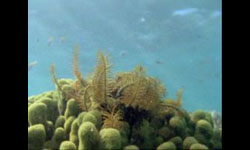
Bright blue starfish, crimson feather stars, shell-less snails in designs as extravagant as any Paris fashion show, shrimps of every colour, others that are transparent - just a sample of the animal wonders to be found in a small area of the Great Barrier Reef.
- TV-Recordings
- Natural World
- TV-Recordings
- No subtitles
- 55
Bright blue starfish, crimson feather stars, shell-less snails in designs as extravagant as any Paris fashion show, shrimps of every colour, others that are transparent - just a sample of the animal wonders to be found in a small area of the Great Barrier Reef.
For most of Earth's history there was no life on land. But over 400 million years ago some tiny plants began an invasion from the water, closely followed by the first animals - the ancestors of millipedes and insects.
- TV-Recordings
- Natural World
- TV-Recordings
- No subtitles
- 55
For most of Earth's history there was no life on land. But over 400 million years ago some tiny plants began an invasion from the water, closely followed by the first animals - the ancestors of millipedes and insects.
The number of insect species runs into millions; a single termite colony may consist of a million individuals; a locust swarm even a million million.
- TV-Recordings
- Natural World
- TV-Recordings
- No subtitles
- 55
The number of insect species runs into millions; a single termite colony may consist of a million individuals; a locust swarm even a million million.
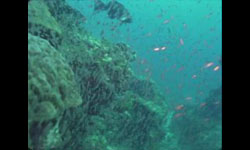
Fish occur in populations of billions and there are over 30,000 species, more than in any other group of backboned animals. The development of the backbone was a crucial advance in evolution -and it probably came from a most unlikely source, a little jelly-like creature called a sea squirt.
- TV-Recordings
- Natural World
- TV-Recordings
- No subtitles
- 55
Fish occur in populations of billions and there are over 30,000 species, more than in any other group of backboned animals. The development of the backbone was a crucial advance in evolution -and it probably came from a most unlikely source, a little jelly-like creature called a sea squirt.

Some 350 million years ago, evolution reached one of its most crucial stages when fish crawled from water onto the land and became amphibians. Today, newts, salamanders, toads and frogs still survive in great quantities, and there is even one species of frog where the male gives birth from its mouth! Presented by David Attenborough
- TV-Recordings
- Natural World
- TV-Recordings
- No subtitles
- 55
Some 350 million years ago, evolution reached one of its most crucial stages when fish crawled from water onto the land and became amphibians. Today, newts, salamanders, toads and frogs still survive in great quantities, and there is even one species of frog where the male gives birth from its mouth! Presented by David Attenborough

David Attenborough looks at the history of reptiles, the first back-boned creatures to solve the problems of living high and dry on the land. Their waterproofed skin and sealed eggs enabled the mighty reptiles to rule the world.
- TV-Recordings
- Natural World
- TV-Recordings
- No subtitles
- 55
David Attenborough looks at the history of reptiles, the first back-boned creatures to solve the problems of living high and dry on the land. Their waterproofed skin and sealed eggs enabled the mighty reptiles to rule the world.
The story of life, from the first primitive cells to the plants and animals that now live around us. David Attenborough examines the uses and advantages of birds' unique possession - the feather. Man has yet to invent anything that, weight for weight, is as strong as the feather. Feathers are insulators, they provide the surface of the most perfect aerofoils known - bird's wings
- TV-Recordings
- Natural World
- TV-Recordings
- No subtitles
- 55
The story of life, from the first primitive cells to the plants and animals that now live around us. David Attenborough examines the uses and advantages of birds' unique possession - the feather. Man has yet to invent anything that, weight for weight, is as strong as the feather. Feathers are insulators, they provide the surface of the most perfect aerofoils known - bird's wings
Mammals have proved to be one of the most adaptable products of evolution. David Attenborough looks at their evolution from reptiles 200 million years ago. This remarkable transition involved the development of mechanisms for regulating body temperature, for allowing the young to develop in the womb and for suckling newborns.
- TV-Recordings
- Natural World
- TV-Recordings
- No subtitles
- 55
Mammals have proved to be one of the most adaptable products of evolution. David Attenborough looks at their evolution from reptiles 200 million years ago. This remarkable transition involved the development of mechanisms for regulating body temperature, for allowing the young to develop in the womb and for suckling newborns.
David Attenborough brings us the universal story that unites each of us with every animal on the planet, the story of the greatest of all adventures - the journey through life. In the first episode, animals overcome their first great hurdle - surviving infancy.
- TV-Recordings
- Natural World
- English subtitles
- 60
David Attenborough brings us the universal story that unites each of us with every animal on the planet, the story of the greatest of all adventures - the journey through life. In the first episode, animals overcome their first great hurdle - surviving infancy.
In the journey towards adulthood, a moment comes for all animals when they must strike out on their own. With their parents absent they must learn to survive in a dangerous world. At this stage of life every small success may mean the difference between life and death.
- TV-Recordings
- Natural World
- English subtitles
- 60
In the journey towards adulthood, a moment comes for all animals when they must strike out on their own. With their parents absent they must learn to survive in a dangerous world. At this stage of life every small success may mean the difference between life and death.
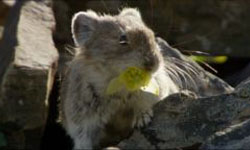
Animals must find somewhere to live - a place that provides the necessities of life, shelter from the elements and a refuge from enemies.
- TV-Recordings
- Natural World
- English subtitles
- 60
Animals must find somewhere to live - a place that provides the necessities of life, shelter from the elements and a refuge from enemies.

Animals must try to gain a position of power in their worlds. The most powerful have best access to food and water, and they are also the most attractive to the opposite sex.
- TV-Recordings
- Natural World
- English subtitles
- 60
Animals must try to gain a position of power in their worlds. The most powerful have best access to food and water, and they are also the most attractive to the opposite sex.
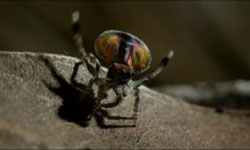
David Attenborough explores the courtship displays of flame bowerbirds and pufferfish.
- TV-Recordings
- Natural World
- English subtitles
- 60
David Attenborough explores the courtship displays of flame bowerbirds and pufferfish.
In this final episode, animals attempt to rear their offspring.
- TV-Recordings
- Natural World
- English subtitles
- 60
In this final episode, animals attempt to rear their offspring.
-
Life Story Series 1
-
BBC
Life Story takes us on the greatest of all adventures - the journey through life.
- TV-Recordings
- English subtitles
- 360
Life Story takes us on the greatest of all adventures - the journey through life.
-
Lockdown 1.0 - Following the Science?
-
Richard Cookson
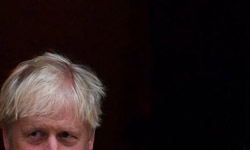
The scientists behind the scenes tell the extraordinary story of what really happened in the run up to the first lockdown, when ministers claimed to be 'following the science'.
- TV-Recordings
- English subtitles
- 59
The scientists behind the scenes tell the extraordinary story of what really happened in the run up to the first lockdown, when ministers claimed to be 'following the science'.

-
London - The Modern Babylon
-
Julian Temple
Julien Temple's epic time-travelling voyage to the heart of his hometown. From musicians, writers and artists to dangerous thinkers, political radicals and above all ordinary people, this is the story of London's immigrants, its bohemians and how together they changed the city forever.
- TV-Recordings
- Art & Design
- History
- Humanities
- TV-Recordings
- No subtitles
- 125
Julien Temple's epic time-travelling voyage to the heart of his hometown. From musicians, writers and artists to dangerous thinkers, political radicals and above all ordinary people, this is the story of London's immigrants, its bohemians and how together they changed the city forever.

-
London Calling: Cold War Letters
-
Christian Hans Schulz
How the BBC radio programme Letters without Signature, which ran from the 1950s to the 1970s, provided a voice for the citizens of the former communist state of East Germany.
- TV-Recordings
- English subtitles
- 58
How the BBC radio programme Letters without Signature, which ran from the 1950s to the 1970s, provided a voice for the citizens of the former communist state of East Germany.

-
London Districts
-
Dewyne Lindsay
London Districts is a series of short films exploring the districts of London. It delves into the historical backgrounds to discover how they came to be and collectively informs the viewer on contemporary things to do in London.
- TV-Recordings
- No subtitles
- 254
London Districts is a series of short films exploring the districts of London. It delves into the historical backgrounds to discover how they came to be and collectively informs the viewer on contemporary things to do in London.
-
London on Film
-
BBC
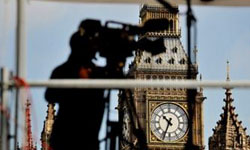
Portraits of different areas of London revealed entirely through archive images.
- TV-Recordings
- No subtitles
- No
Portraits of different areas of London revealed entirely through archive images.

Portrait of life in London's East End, from the docks and the rag trade to market traders.
- TV-Recordings
- History
- TV-Recordings
- No subtitles
- No
Portrait of life in London's East End, from the docks and the rag trade to market traders.
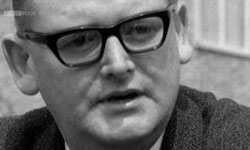
A look at how suburban London has been captured on film over time.
- TV-Recordings
- History
- TV-Recordings
- No subtitles
- 30
A look at how suburban London has been captured on film over time.
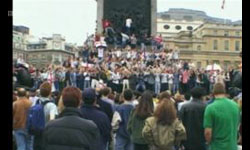
Portraits of different areas of London as seen through the eyes of film-makers.
- TV-Recordings
- History
- TV-Recordings
- No subtitles
- 30
Portraits of different areas of London as seen through the eyes of film-makers.

A collection of performances from the BBC archives, celebrating the sights and sounds and the ups and downs of London through the words and songs through the years .
- TV-Recordings
- Music
- Other
- TV-Recordings
- No subtitles
- 60
A collection of performances from the BBC archives, celebrating the sights and sounds and the ups and downs of London through the words and songs through the years .

-
London: 2,000 Years of History
-
Channel 5
This series will chart the origins of London and its meteoric rise to power and take viewers through the frequently glorious and always compelling history of the British capital. The series examines how it grew from a small Roman trading post, to the capital of the British Empire, and ultimately to the thriving megacity we know today, despite facing dramatic invasions, fires and deadly plague.
- TV-Recordings
- English subtitles
- 160
This series will chart the origins of London and its meteoric rise to power and take viewers through the frequently glorious and always compelling history of the British capital. The series examines how it grew from a small Roman trading post, to the capital of the British Empire, and ultimately to the thriving megacity we know today, despite facing dramatic invasions, fires and deadly plague.

Historians Dan Jones and Dr Suzannah Lipscomb and engineer Rob Bell explore how London faced daring invasions, catastrophic fires and deadly plague. Also, how it grew from a small Roman trading post, to the capital of the British Empire, and ultimately to the thriving megacity we know today.
- TV-Recordings
- English subtitles
- 40
Historians Dan Jones and Dr Suzannah Lipscomb and engineer Rob Bell explore how London faced daring invasions, catastrophic fires and deadly plague. Also, how it grew from a small Roman trading post, to the capital of the British Empire, and ultimately to the thriving megacity we know today.

Suzannah discovers what evidence Westminster Abbey holds about the contest between the Crown and the City, while Dan fills in the holes left by the nursery rhyme as he reveals the little-known true story of the businessman-cum-mayor Dick Whittington, who went on to control the fortunes of kings.
- TV-Recordings
- English subtitles
- 40
Suzannah discovers what evidence Westminster Abbey holds about the contest between the Crown and the City, while Dan fills in the holes left by the nursery rhyme as he reveals the little-known true story of the businessman-cum-mayor Dick Whittington, who went on to control the fortunes of kings.
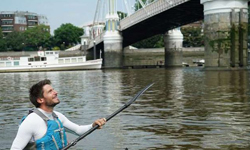
Dan Jones, Suzannah Lipscomb and Rob Bell examine the Great Fire of London, which swept through the city in September 1666, and the rebuilding process that took place in the years afterwards, accelerated by the Industrial Revolution.
- TV-Recordings
- English subtitles
- 40
Dan Jones, Suzannah Lipscomb and Rob Bell examine the Great Fire of London, which swept through the city in September 1666, and the rebuilding process that took place in the years afterwards, accelerated by the Industrial Revolution.

The programme examines the impact of both World wars and a Spanish flu pandemic on the city, as well as the marketing campaign that tempted millions to relocate to London's vast suburbia.
- TV-Recordings
- English subtitles
- 40
The programme examines the impact of both World wars and a Spanish flu pandemic on the city, as well as the marketing campaign that tempted millions to relocate to London's vast suburbia.