

In this final episode Professor Brian Cox travels to Iceland, where the delicate splendour of a moonbow reveals the colours that paint our world, and he visits a volcano to explain why the sun shines.
- TV-Recordings
- English subtitles
- 60
In this final episode Professor Brian Cox travels to Iceland, where the delicate splendour of a moonbow reveals the colours that paint our world, and he visits a volcano to explain why the sun shines.

-
Forces of Nature with Brian Cox
-
BBC
Professor Brian Cox combines some of the most spectacular sights on Earth with our deepest understanding of the universe to reveal how the planet's beauty is created by just a handful of forces.
- TV-Recordings
- English subtitles
- 240
Professor Brian Cox combines some of the most spectacular sights on Earth with our deepest understanding of the universe to reveal how the planet's beauty is created by just a handful of forces.
It's the process that powers the Sun, and scientists know that if they could just make nuclear fusion happen here on Earth they could solve all the world's energy problems. Billions of dollars have been spent on trying to make it happen, but now an American scientist claims to have created nuclear fusion simply by bombarding a flask of liquid with sound waves. Many scientists refuse to believe his claims, so Horizon has assembled a team to replicate the experiment. This film reveals the team's findings
- TV-Recordings
- Physics
- TV-Recordings
- No subtitles
- 11
It's the process that powers the Sun, and scientists know that if they could just make nuclear fusion happen here on Earth they could solve all the world's energy problems. Billions of dollars have been spent on trying to make it happen, but now an American scientist claims to have created nuclear fusion simply by bombarding a flask of liquid with sound waves. Many scientists refuse to believe his claims, so Horizon has assembled a team to replicate the experiment. This film reveals the team's findings

They are the miracle pills that shouldn\'t really work at all. Placebos come in all shapes and sizes, but they contain no active ingredient. Now they are being shown to help treat pain, depression and even alleviate some of the symptoms of Parkinson\'s disease. Horizon explores why they work, and how we could all benefit from the hidden power of the placebo.
- TV-Recordings
- Medical Sciences
- English subtitles
- 60
They are the miracle pills that shouldn\'t really work at all. Placebos come in all shapes and sizes, but they contain no active ingredient. Now they are being shown to help treat pain, depression and even alleviate some of the symptoms of Parkinson\'s disease. Horizon explores why they work, and how we could all benefit from the hidden power of the placebo.

Comedian Ben Miller returns to his roots as a physicist to try to answer a deceptively simple question: what is one degree of temperature?
- TV-Recordings
- Physics
- TV-Recordings
- No subtitles
- 60
Comedian Ben Miller returns to his roots as a physicist to try to answer a deceptively simple question: what is one degree of temperature?
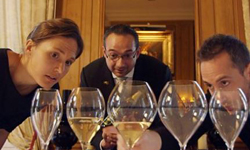
Physicist Dr Helen Czerski takes us on an amazing journey into the science of bubbles. Bubbles may seem to be just fun toys, but they are also powerful tools that push back the boundaries of science.
- TV-Recordings
- English subtitles
- 60
Physicist Dr Helen Czerski takes us on an amazing journey into the science of bubbles. Bubbles may seem to be just fun toys, but they are also powerful tools that push back the boundaries of science.

-
Royal Institution Christmas Lectures - 2016
-
Professor Saiful Islam
Series of lectures on a single topic, presenting scientific subjects to a general audience in an informative and entertaining manner
- TV-Recordings
- English subtitles
- 180
Series of lectures on a single topic, presenting scientific subjects to a general audience in an informative and entertaining manner

-
Royal Institution Christmas Lectures - 2016 : 01 Let There Be Light !
-
Professor Saiful Islam
In his first lecture, Saiful investigates how to generate energy without destroying the planet in the process. Saiful begins his lecture by being plunged into darkness.
- TV-Recordings
- English subtitles
- 60
In his first lecture, Saiful investigates how to generate energy without destroying the planet in the process. Saiful begins his lecture by being plunged into darkness.
-
Royal Institution Christmas Lectures - 2016 : 02 People Power
-
Professor Saiful Islam
In his second lecture, chemist Saiful Islam continues his exploration of one of the most important questions facing humankind.
- TV-Recordings
- English subtitles
- 60
In his second lecture, chemist Saiful Islam continues his exploration of one of the most important questions facing humankind.
-
Royal Institution Christmas Lectures - 2016 : 03 Fully Charged
-
Professor Saiful Islam
In this year's final Royal Institution Christmas Lecture, chemist Saiful Islam explores one of the most important issues facing the modern world.
- TV-Recordings
- English subtitles
- 60
In this year's final Royal Institution Christmas Lecture, chemist Saiful Islam explores one of the most important issues facing the modern world.
-
Royal Institution Christmas Lectures 2012
-
BBC
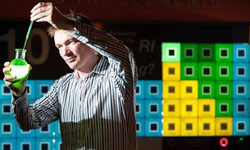
Series of lectures on a single topic, presenting scientific subjects to a general audience in an informative and entertaining manner
- TV-Recordings
- English subtitles
- 180
Series of lectures on a single topic, presenting scientific subjects to a general audience in an informative and entertaining manner

The medieval alchemists made elements react to create magnificent shows, enthralling kings and commoners alike, but their secrets were never revealed until now.
- TV-Recordings
- Chemistry
- TV-Recordings
- No subtitles
- 60
The medieval alchemists made elements react to create magnificent shows, enthralling kings and commoners alike, but their secrets were never revealed until now.

-
Royal Institution Christmas Lectures 2012 - The Modern Alchemist: 02 - Water: The Fountain of Youth
-
BBC
In the second of this year's Christmas Lectures, Dr Peter Wothers drinks from the fountain and finds out whether the elements lurking in the water can restore his youth. Along the way he discovers how exploding balloons could solve the energy crisis, how water contains the remains of the most violent reactions on Earth and that the real secret to eternal youth might be drinking no water at all.
- TV-Recordings
- Chemistry
- TV-Recordings
- No subtitles
- 60
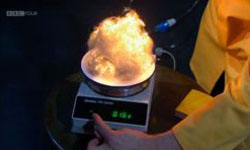
In the second of this year's Christmas Lectures, Dr Peter Wothers drinks from the fountain and finds out whether the elements lurking in the water can restore his youth. Along the way he discovers how exploding balloons could solve the energy crisis, how water contains the remains of the most violent reactions on Earth and that the real secret to eternal youth might be drinking no water at all.
-
Royal Institution Christmas Lectures 2012 - The Modern Alchemist: 03 - The Philosopher's Stone
-
BBC 4
In the final Christmas Lecture, Dr Peter Wothers explores the elements within the earth and discovers just how difficult it is for chemists to extract the planet's greatest treasures. He discovers how our knowledge of the elements can allow us to levitate, turn carbon dioxide into diamonds and maybe turn lead into gold.
- TV-Recordings
- TV-Recordings
- No subtitles
- 60
In the final Christmas Lecture, Dr Peter Wothers explores the elements within the earth and discovers just how difficult it is for chemists to extract the planet's greatest treasures. He discovers how our knowledge of the elements can allow us to levitate, turn carbon dioxide into diamonds and maybe turn lead into gold.
Engineer Jem Stansfield looks back through the Horizon archives to find out how scientists have come to understand and manipulate the materials that built the modern world.
- TV-Recordings
- Chemistry
- Physics
- TV-Recordings
- No subtitles
- 60
Engineer Jem Stansfield looks back through the Horizon archives to find out how scientists have come to understand and manipulate the materials that built the modern world.
-
The Ascent of Man - Episode 4 - The Hidden Structure
-
Adrian Malone
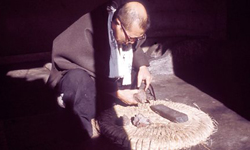
Jacob Bronowski explores the roots of chemistry, from the techniques of ancient metallurgy in China and Japan to the mystical searchings of the alchemists.
- TV-Recordings
- English subtitles
- 49
Jacob Bronowski explores the roots of chemistry, from the techniques of ancient metallurgy in China and Japan to the mystical searchings of the alchemists.
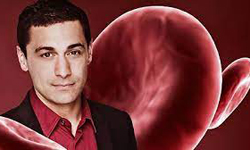
In a three-part series, Dr Adam Rutherford tells the extraordinary story of the scientific quest to discover the secrets of the cell and of life itself. Every living thing is made of cells, microscopic building blocks of almost unimaginable power and complexity. This episode explores how scientists delved ever deeper into the world of the cell, seeking to reveal the magic ingredient that can spark a bundle of chemicals into life.
- TV-Recordings
- Biology
- TV-Recordings
- No subtitles
- 60
In a three-part series, Dr Adam Rutherford tells the extraordinary story of the scientific quest to discover the secrets of the cell and of life itself. Every living thing is made of cells, microscopic building blocks of almost unimaginable power and complexity. This episode explores how scientists delved ever deeper into the world of the cell, seeking to reveal the magic ingredient that can spark a bundle of chemicals into life.
-
The Secret Life of Chaos
-
Nic Stacey
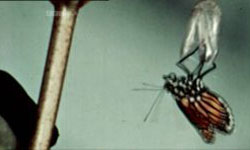
Chaos theory has a bad name, conjuring up images of unpredictable weather, economic crashes and science gone wrong. But there is a fascinating and hidden side to Chaos, one that scientists are only now beginning to understand.
- TV-Recordings
- Chemistry
- Physics
- TV-Recordings
- English subtitles
- 60
Chaos theory has a bad name, conjuring up images of unpredictable weather, economic crashes and science gone wrong. But there is a fascinating and hidden side to Chaos, one that scientists are only now beginning to understand.
-
The Secret Life of Ice
-
BBC 4
Science writer Dr Gabrielle Walker has been obsessed with ice ever since she first set foot on Arctic sea ice. In this programme she searches out some of the secrets hidden deep within the ice crystal to try to discover how something so ephemeral has the
- TV-Recordings
- Chemistry
- Physics
- TV-Recordings
- No subtitles
- 60
Science writer Dr Gabrielle Walker has been obsessed with ice ever since she first set foot on Arctic sea ice. In this programme she searches out some of the secrets hidden deep within the ice crystal to try to discover how something so ephemeral has the

Michael Mosley takes an informative and ambitious journey exploring how the evolution of scientific understanding is intimately interwoven with society's historical path.
- TV-Recordings
- Chemistry
- History
- TV-Recordings
- English subtitles
- 60
Michael Mosley takes an informative and ambitious journey exploring how the evolution of scientific understanding is intimately interwoven with society's historical path.

Michael Mosley takes an informative and ambitious journey exploring how the evolution of scientific understanding is intimately interwoven with society's historical path.
- TV-Recordings
- Chemistry
- English subtitles
- 60
Michael Mosley takes an informative and ambitious journey exploring how the evolution of scientific understanding is intimately interwoven with society's historical path.
-
Wonders of Life
-
BBC
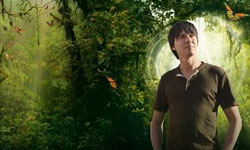
Professor Brian Cox explores the globe to reveal how a few fundamental laws of science gave birth to the most complex and unique feature of the universe - life.
- TV-Recordings
- No subtitles
- No
Professor Brian Cox explores the globe to reveal how a few fundamental laws of science gave birth to the most complex and unique feature of the universe - life.
-
Wonders of Life - 1: What Is Life? HD
-
Brian Cox
In this episode Brian Cox visits South East Asia's 'Ring of Fire'. In the world's most volcanic region he explores the thin line that separates the living from the dead and poses that most enduring of questions: what is life?
- TV-Recordings
- Physics
- TV-Recordings
- No subtitles
- 60
In this episode Brian Cox visits South East Asia's 'Ring of Fire'. In the world's most volcanic region he explores the thin line that separates the living from the dead and poses that most enduring of questions: what is life?
The universe is almost entirely devoid of life. Earth, the planet we call home, seems to defy the laws of physics. It is teeming with life in all colours, shapes and sizes. No-one knows for sure how many different species are alive right now, our best guess is close to 8.7 million
- TV-Recordings
- Astronomy
- TV-Recordings
- No subtitles
- 60
The universe is almost entirely devoid of life. Earth, the planet we call home, seems to defy the laws of physics. It is teeming with life in all colours, shapes and sizes. No-one knows for sure how many different species are alive right now, our best guess is close to 8.7 million