
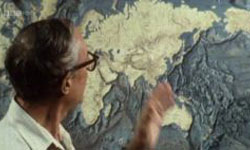
Dallas Campbell delves in to the Horizon archive to discover how our ideas about dinosaurs have changed over the past 40 years.
- TV-Recordings
- Biology
- TV-Recordings
- English subtitles
- 60
Dallas Campbell delves in to the Horizon archive to discover how our ideas about dinosaurs have changed over the past 40 years.

In this episode Brian uncovers how the stunning diversity of shapes in the natural world are shadows of the rules that govern the universe. In Spain he shows how an attempt by hundreds of people to build the highest human tower reveals the force that shapes our planet.
- TV-Recordings
- English subtitles
- 60
In this episode Brian uncovers how the stunning diversity of shapes in the natural world are shadows of the rules that govern the universe. In Spain he shows how an attempt by hundreds of people to build the highest human tower reveals the force that shapes our planet.
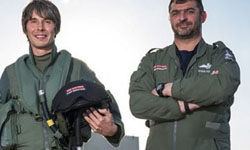
Professor Brian Cox follows Earth's epic journey through space. He takes to the air in a top-secret fighter jet to race the spin of the planet and reverse the passage of the day.
- TV-Recordings
- English subtitles
- 60
Professor Brian Cox follows Earth's epic journey through space. He takes to the air in a top-secret fighter jet to race the spin of the planet and reverse the passage of the day.

In this episode, Professor Brian Cox shows how Earth's basic ingredients, like the pure sulphur mined in the heart of a deadly volcano in Indonesia, have become the building blocks of life. Hidden deep in a cave in the Dominican Republic lies a magical world created by the same property of water that makes it essential to life.
- TV-Recordings
- English subtitles
- 60
In this episode, Professor Brian Cox shows how Earth's basic ingredients, like the pure sulphur mined in the heart of a deadly volcano in Indonesia, have become the building blocks of life. Hidden deep in a cave in the Dominican Republic lies a magical world created by the same property of water that makes it essential to life.

In this final episode Professor Brian Cox travels to Iceland, where the delicate splendour of a moonbow reveals the colours that paint our world, and he visits a volcano to explain why the sun shines.
- TV-Recordings
- English subtitles
- 60
In this final episode Professor Brian Cox travels to Iceland, where the delicate splendour of a moonbow reveals the colours that paint our world, and he visits a volcano to explain why the sun shines.

-
Forces of Nature with Brian Cox
-
BBC
Professor Brian Cox combines some of the most spectacular sights on Earth with our deepest understanding of the universe to reveal how the planet's beauty is created by just a handful of forces.
- TV-Recordings
- English subtitles
- 240
Professor Brian Cox combines some of the most spectacular sights on Earth with our deepest understanding of the universe to reveal how the planet's beauty is created by just a handful of forces.

David Attenborough travels to the end of the earth, taking viewers on an extraordinary journey across the polar regions of our planet, North and South.
- TV-Recordings
- Biology
- Environmental Studies
- TV-Recordings
- English subtitles
- 60
David Attenborough travels to the end of the earth, taking viewers on an extraordinary journey across the polar regions of our planet, North and South.

Spring arrives in the polar regions, and the sun appears after an absence of five months; warmth and life return to these magical ice worlds - the greatest seasonal transformation on our planet is underway.
- TV-Recordings
- Biology
- Environmental Studies
- TV-Recordings
- English subtitles
- 60
Spring arrives in the polar regions, and the sun appears after an absence of five months; warmth and life return to these magical ice worlds - the greatest seasonal transformation on our planet is underway.

It is high summer in the polar regions, and the sun never sets. Vast hordes of summer visitors cram a lifetime of drama into one long, magical day; they must feed, fight and rear their young in this brief window of plenty.
- TV-Recordings
- Biology
- Environmental Studies
- TV-Recordings
- English subtitles
- 60
It is high summer in the polar regions, and the sun never sets. Vast hordes of summer visitors cram a lifetime of drama into one long, magical day; they must feed, fight and rear their young in this brief window of plenty.
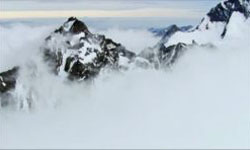
For the animals in the polar regions, autumn means dramatic battles and epic journeys. Time is running out - the Arctic Ocean is freezing over and the sea ice is advancing at 2.5 miles per day around Antarctica.
- TV-Recordings
- Biology
- Environmental Studies
- TV-Recordings
- English subtitles
- 60
For the animals in the polar regions, autumn means dramatic battles and epic journeys. Time is running out - the Arctic Ocean is freezing over and the sea ice is advancing at 2.5 miles per day around Antarctica.
There is no greater test for life than winter, as temperatures plummet to 70 below and winds reach 200kph. Darkness and ice extend across the polar regions and only a few remarkable survivors gamble on remaining.
- TV-Recordings
- Biology
- Environmental Studies
- TV-Recordings
- English subtitles
- 60
There is no greater test for life than winter, as temperatures plummet to 70 below and winds reach 200kph. Darkness and ice extend across the polar regions and only a few remarkable survivors gamble on remaining.

David Attenborough reveals the vast wildnerness of the polar regions and their inhabitants. At the North Pole, the sun returns after six months of darkness.
- TV-Recordings
- Biology
- Environmental Studies
- TV-Recordings
- English subtitles
- 60
David Attenborough reveals the vast wildnerness of the polar regions and their inhabitants. At the North Pole, the sun returns after six months of darkness.
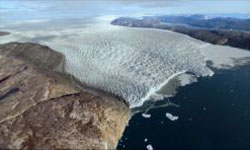
David Attenborough journeys to both polar regions to investigate what rising temperatures will mean for the people and wildlife that live there and for the rest of the planet.
- TV-Recordings
- Biology
- Environmental Studies
- TV-Recordings
- English subtitles
- 60
David Attenborough journeys to both polar regions to investigate what rising temperatures will mean for the people and wildlife that live there and for the rest of the planet.

This Frozen Planet special brings together the very best highlights of the series, taking viewers on a spectacular journey through the entire polar year - from the depths of winter to the melting world of the polar summer.
- TV-Recordings
- Biology
- Environmental Studies
- TV-Recordings
- English subtitles
- 60
This Frozen Planet special brings together the very best highlights of the series, taking viewers on a spectacular journey through the entire polar year - from the depths of winter to the melting world of the polar summer.

-
Frozen Planet II
-
David Attenborough
Life in the extreme. In a fragile world of beauty and hostility, nature finds a way to survive and thrive. Sir David Attenborough explores a planet on the brink of major change.
- TV-Recordings
- English subtitles
- 348
Life in the extreme. In a fragile world of beauty and hostility, nature finds a way to survive and thrive. Sir David Attenborough explores a planet on the brink of major change.
This Frozen Planet special brings together the very best highlights of the series, taking viewers on a spectacular journey through the entire polar year - from the depths of winter to the melting world of the polar summer.
- TV-Recordings
- Natural World
- TV-Recordings
- English subtitles
- 60
This Frozen Planet special brings together the very best highlights of the series, taking viewers on a spectacular journey through the entire polar year - from the depths of winter to the melting world of the polar summer.

-
Galapagos Series 1
-
BBC
Liz Bonnin joins a scientific team on an expedition across the Galapagos Islands to carry out important research that will help protect the islands and their inhabitants.
- TV-Recordings
- Natural World
- English subtitles
- 180
Liz Bonnin joins a scientific team on an expedition across the Galapagos Islands to carry out important research that will help protect the islands and their inhabitants.
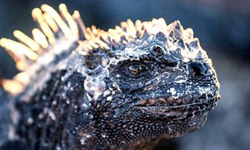
Liz Bonnin joins a scientific team aboard the research vessel the Alucia on an expedition across the Galapagos Island.
- TV-Recordings
- Natural World
- English subtitles
- 60
Liz Bonnin joins a scientific team aboard the research vessel the Alucia on an expedition across the Galapagos Island.
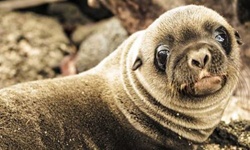
On the second leg of this incredible mission, Liz Bonnin and a team of scientific experts set off beneath the waves to explore this spectacular archipelago. It is an exciting opportunity for the team to delve into a world that still largely remains a mystery to science.
- TV-Recordings
- Natural World
- English subtitles
- 60
On the second leg of this incredible mission, Liz Bonnin and a team of scientific experts set off beneath the waves to explore this spectacular archipelago. It is an exciting opportunity for the team to delve into a world that still largely remains a mystery to science.
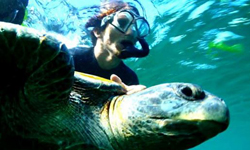
In the culmination of this 1,000km scientific expedition aboard the Alucia, Liz Bonnin and the team of scientific experts journey south to visit the oldest islands in the Galapagos to see first-hand the impact that humans have had on this pristine wilderness.
- TV-Recordings
- Natural World
- English subtitles
- 60
In the culmination of this 1,000km scientific expedition aboard the Alucia, Liz Bonnin and the team of scientific experts journey south to visit the oldest islands in the Galapagos to see first-hand the impact that humans have had on this pristine wilderness.
-
Ganges
-
Dan Rees
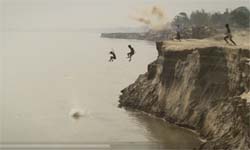
This programme tells the story of the most extraordinary river in the world - the Ganges. Human life and nature bustle along her river banks, in a kaleidoscope of colour and energy in this dramatic BBC documentary.
- TV-Recordings
- Geography
- TV-Recordings
- No subtitles
- 49
This programme tells the story of the most extraordinary river in the world - the Ganges. Human life and nature bustle along her river banks, in a kaleidoscope of colour and energy in this dramatic BBC documentary.
-
Hidden Kingdoms
-
BBC
Immerse yourself in the lives of extraordinary characters that stand a few inches tall. From chipmunks to mice, be entertained and spellbound by the creatures that call the Hidden Kingdoms home.
- TV-Recordings
- English subtitles
- 180
Immerse yourself in the lives of extraordinary characters that stand a few inches tall. From chipmunks to mice, be entertained and spellbound by the creatures that call the Hidden Kingdoms home.

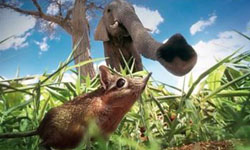
This is the story of two young animals forced to grow up fast. In Africa's savannah, a baby elephant shrew learns how speed is the secret to survival amongst the largest animals on Earth; and in America, a young grasshopper mouse confronts the Wild West's deadliest creatures to stake a claim of his own.
- TV-Recordings
- Natural World
- English subtitles
- 60
This is the story of two young animals forced to grow up fast. In Africa's savannah, a baby elephant shrew learns how speed is the secret to survival amongst the largest animals on Earth; and in America, a young grasshopper mouse confronts the Wild West's deadliest creatures to stake a claim of his own.
This is the story of two tiny animals coming of age.
- TV-Recordings
- Natural World
- English subtitles
- 60
This is the story of two tiny animals coming of age.
-
Home
-
Yann Arthus-Bertrand , 2009
A Stunning Visual Portrayal of Earth.With aerial footage from 54 countries, Home is a depiction of how the Earth's problems are all interlinked.
- TV-Recordings
- No subtitles
- 95
A Stunning Visual Portrayal of Earth.With aerial footage from 54 countries, Home is a depiction of how the Earth's problems are all interlinked.

The world's oceans claim on average one ship a week, often in mysterious circumstances. With little evidence to go on, investigators usually point at human error or poor maintenance but an alarming series of disappearances and near-sinkings, including world-class vessels with unblemished track records, has prompted the search for a more sinister cause and renewed belief in a maritime myth: the wall of water
- TV-Recordings
- Geography
- TV-Recordings
- No subtitles
- 48
The world's oceans claim on average one ship a week, often in mysterious circumstances. With little evidence to go on, investigators usually point at human error or poor maintenance but an alarming series of disappearances and near-sinkings, including world-class vessels with unblemished track records, has prompted the search for a more sinister cause and renewed belief in a maritime myth: the wall of water
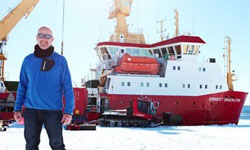
Antarctica is the last great wilderness. It's the coldest, windiest, driest and most isolated place on Earth. And every winter, for over three months of the year, the sun never rises. But it's also home to the British Antarctic Survey's Halley Research Station.
- TV-Recordings
- English subtitles
- 60
Antarctica is the last great wilderness. It's the coldest, windiest, driest and most isolated place on Earth. And every winter, for over three months of the year, the sun never rises. But it's also home to the British Antarctic Survey's Halley Research Station.
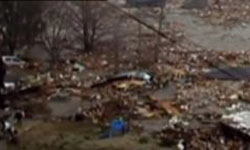
Professor Iain Stewart examines the powerful geological forces that unleashed the devastating Japanese earthquake, and explores how the release of this power of the planet brought Japan to the brink of a nuclear meltdown.
- TV-Recordings
- Environmental Studies
- Geology
- TV-Recordings
- No subtitles
- 60
Professor Iain Stewart examines the powerful geological forces that unleashed the devastating Japanese earthquake, and explores how the release of this power of the planet brought Japan to the brink of a nuclear meltdown.
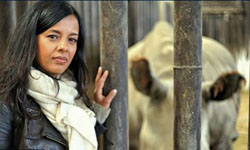
Liz Bonnin presents a controversial and provocative episode of Horizon, investigating how new scientific research is raising hard questions about zoos - the film explores how and why zoos keep animals, and whether they need to change to keep up with modern science or ultimately be consigned to history.
- TV-Recordings
- English subtitles
- 60
Liz Bonnin presents a controversial and provocative episode of Horizon, investigating how new scientific research is raising hard questions about zoos - the film explores how and why zoos keep animals, and whether they need to change to keep up with modern science or ultimately be consigned to history.