
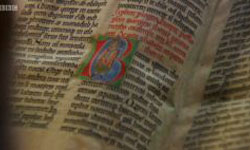
For a medieval women approaching the moment of labour and birth, there were no antiseptics to ward off infection or anaesthetics to deal with pain. Historian Helen Castor reveals how this was one of the most dangerous moments a medieval woman would ever encounter, with some aristocratic and royal women giving birth as young as 13.
- TV-Recordings
- History
- No subtitles
- 60
For a medieval women approaching the moment of labour and birth, there were no antiseptics to ward off infection or anaesthetics to deal with pain. Historian Helen Castor reveals how this was one of the most dangerous moments a medieval woman would ever encounter, with some aristocratic and royal women giving birth as young as 13.

Unlike birth and death, which are inescapable facts of life, marriage is rite of passage made by choice and in the Middle Ages it wasn't just a choice made by bride and groom - they were often the last pieces in a puzzle, put together by their parents, with help from their family and friends, according to rules laid down by the Church.
- TV-Recordings
- History
- English subtitles
- 60
Unlike birth and death, which are inescapable facts of life, marriage is rite of passage made by choice and in the Middle Ages it wasn't just a choice made by bride and groom - they were often the last pieces in a puzzle, put together by their parents, with help from their family and friends, according to rules laid down by the Church.

-
Melvyn Bragg on Class and Culture
-
BBC 2
Melvyn Bragg explores the relationship, from 1911 to 2011, between class and culture
- TV-Recordings
- No subtitles
- 180
Melvyn Bragg explores the relationship, from 1911 to 2011, between class and culture
-
Melvyn Bragg on Class and Culture 01
-
Melvyn Bragg
In this three-part series, Melvyn Bragg explores the relationship, from 1911 to 2011, between class and culture. Melvyn starts with the period from 1911 to 1945.
- TV-Recordings
- Art & Design
- TV-Recordings
- No subtitles
- 60
In this three-part series, Melvyn Bragg explores the relationship, from 1911 to 2011, between class and culture. Melvyn starts with the period from 1911 to 1945.

-
Melvyn Bragg on Class and Culture 02
-
Melvyn Bragg
Melvyn Bragg looks at how his generation of writers, artists and film makers entered the breach made by the Angry Young Men of the Fifties, and came to dominate the culture and television, sweeping aside an earlier, powerful and more class bound generation. Alongside them were the teenagers whose new wealth and energy was spawning a rich pop culture, in music, art and fashion
- TV-Recordings
- Art & Design
- TV-Recordings
- No subtitles
- 60
Melvyn Bragg looks at how his generation of writers, artists and film makers entered the breach made by the Angry Young Men of the Fifties, and came to dominate the culture and television, sweeping aside an earlier, powerful and more class bound generation. Alongside them were the teenagers whose new wealth and energy was spawning a rich pop culture, in music, art and fashion
-
Melvyn Bragg on Class and Culture 03
-
Melvyn Bragg
Melvyn looks at the last 30 years of culture in the UK, and examines whether class is still relevant to what culture we create and consume.
- TV-Recordings
- Art & Design
- TV-Recordings
- No subtitles
- 60
Melvyn looks at the last 30 years of culture in the UK, and examines whether class is still relevant to what culture we create and consume.
Melvyn Bragg examines the lives, work and legacy of two men whose ideas have had tremendous consequences both in their own time and down the centuries: John Ball and Thomas Paine.
- TV-Recordings
- History
- No subtitles
- 60
Melvyn Bragg examines the lives, work and legacy of two men whose ideas have had tremendous consequences both in their own time and down the centuries: John Ball and Thomas Paine.

Melvyn Bragg tells the remarkable story of the 18th-century English radical political writer, Thomas Paine (1737-1809).
- TV-Recordings
- History
- English subtitles
- 60
Melvyn Bragg tells the remarkable story of the 18th-century English radical political writer, Thomas Paine (1737-1809).
-
Michael Wood: The Story of India
-
Jeremy Jeffs
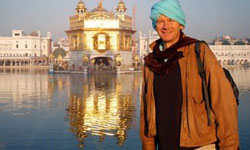
Michael Wood journeys through the Indian subcontinent, tracing the incredible richness and diversity of its peoples, cultures and landscapes.
- TV-Recordings
- No subtitles
- 380
Michael Wood journeys through the Indian subcontinent, tracing the incredible richness and diversity of its peoples, cultures and landscapes.

Michael Wood journeys through the subcontinent, tracing the incredible richness and diversity of its peoples, cultures and landscapes. Through ancient manuscripts and oral tales Michael charts the first human migrations out of Africa. He travels from the tropical backwaters of South India through lost ancient cities in Pakistan to the vibrant landscapes of the Ganges plain.
- TV-Recordings
- History
- TV-Recordings
- No subtitles
- 60
Michael Wood journeys through the subcontinent, tracing the incredible richness and diversity of its peoples, cultures and landscapes. Through ancient manuscripts and oral tales Michael charts the first human migrations out of Africa. He travels from the tropical backwaters of South India through lost ancient cities in Pakistan to the vibrant landscapes of the Ganges plain.
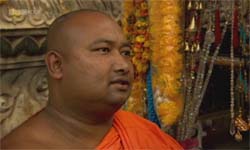
Michael Wood's epic series moves on to the revolutionary years after 500BC - the Age of the Buddha. Travelling by rail to the ancient cities of the Ganges plain, by army convoy through northern Iraq and on down the Khyber Pass, he shows how Alexander the Great's invasion of India inspired her first empire.
- TV-Recordings
- History
- TV-Recordings
- No subtitles
- 60
Michael Wood's epic series moves on to the revolutionary years after 500BC - the Age of the Buddha. Travelling by rail to the ancient cities of the Ganges plain, by army convoy through northern Iraq and on down the Khyber Pass, he shows how Alexander the Great's invasion of India inspired her first empire.
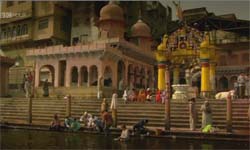
Michael Wood traces India in the days of the Roman Empire. In Kerala the spice trade opened India to the world, whilst gold and silk bazaars in the ancient city of Madurai were a delight for visiting Greek traders. From the deserts of Turkmenistan, Michael travels down the Khyber Pass to Pakistan to discover a forgotten Indian Empire that opened up the Silk Road and at Peshawar built a lost Wonder of the World.
- TV-Recordings
- History
- TV-Recordings
- No subtitles
- 60
Michael Wood traces India in the days of the Roman Empire. In Kerala the spice trade opened India to the world, whilst gold and silk bazaars in the ancient city of Madurai were a delight for visiting Greek traders. From the deserts of Turkmenistan, Michael travels down the Khyber Pass to Pakistan to discover a forgotten Indian Empire that opened up the Silk Road and at Peshawar built a lost Wonder of the World.

Reaching the time of the Fall of Rome in the West, Michael Wood seeks out the amazing achievements of India's golden age. We learn how India discovered zero, calculated the circumference of the earth and wrote the world's first sex guide, the Kama Sutra.
- TV-Recordings
- History
- TV-Recordings
- No subtitles
- 60
Reaching the time of the Fall of Rome in the West, Michael Wood seeks out the amazing achievements of India's golden age. We learn how India discovered zero, calculated the circumference of the earth and wrote the world's first sex guide, the Kama Sutra.
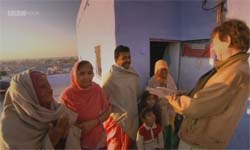
Michael Wood charts the coming of Islam to the subcontinent and one of the greatest ages of world civilisation: the Mughals. Michael visits Sufi shrines in Old Delhi, desert fortresses in Rajasthan and the cities of Lahore and Agra, where he offers a new theory on the design of the Taj Mahal.
- TV-Recordings
- History
- TV-Recordings
- No subtitles
- 60
Michael Wood charts the coming of Islam to the subcontinent and one of the greatest ages of world civilisation: the Mughals. Michael visits Sufi shrines in Old Delhi, desert fortresses in Rajasthan and the cities of Lahore and Agra, where he offers a new theory on the design of the Taj Mahal.
-
Michael Wood: The Story of India - Part 6: Freedom
-
Jeremy Jeffs
The final episode examines the British Raj and India's freedom struggle. In South India, Michael sees how a global corporation, the East India Company, came to control much of the subcontinent. He visits the magical culture of Lucknow and discovers the enigmatic Briton, 'the rebel in the Raj' who helped found the freedom movement.
- TV-Recordings
- History
- TV-Recordings
- No subtitles
- 60
The final episode examines the British Raj and India's freedom struggle. In South India, Michael sees how a global corporation, the East India Company, came to control much of the subcontinent. He visits the magical culture of Lucknow and discovers the enigmatic Briton, 'the rebel in the Raj' who helped found the freedom movement.

-
Michael Wood's Story of England
-
Michael Wood tells the story of one place, the Leicestershire village of Kibworth, throughout the whole of English history
- TV-Recordings
- No subtitles
- 360
Michael Wood tells the story of one place, the Leicestershire village of Kibworth, throughout the whole of English history

With the help of the residents, he charts events in the village leading to the people\'s involvement in the Civil War of Simon de Montfort. Intertwining the local and national narratives, this is a moving and informative picture of one local community through time.
- TV-Recordings
- History
- TV-Recordings
- No subtitles
- 60
With the help of the residents, he charts events in the village leading to the people\'s involvement in the Civil War of Simon de Montfort. Intertwining the local and national narratives, this is a moving and informative picture of one local community through time.

The tale reaches the dramatic events of Henry VIII\'s Reformation and the battles of the English Civil War. We track Kibworth\'s 17th century dissenters, travel on the Grand Union Canal and meet an 18th century feminist writer from Kibworth who was a pioneer of children\'s books.
- TV-Recordings
- History
- TV-Recordings
- No subtitles
- 60
The tale reaches the dramatic events of Henry VIII\'s Reformation and the battles of the English Civil War. We track Kibworth\'s 17th century dissenters, travel on the Grand Union Canal and meet an 18th century feminist writer from Kibworth who was a pioneer of children\'s books.
Wood\'s gripping tale moves on to dramatic battles of conscience in the time of the Hundred Years\' War. Amazing finds in the school archive help trace peasant education back to the 14th century and we see how the people themselves set up the first school for their children.
- TV-Recordings
- History
- TV-Recordings
- No subtitles
- 60
Wood\'s gripping tale moves on to dramatic battles of conscience in the time of the Hundred Years\' War. Amazing finds in the school archive help trace peasant education back to the 14th century and we see how the people themselves set up the first school for their children.
Groundbreaking series in which Michael Wood tells the story of one place throughout the whole of English history. Michael uncovers the lost history of the first thousand years of the village, featuring a Roman villa, Anglo-Saxons and Vikings and graphic evidence of life on the eve of the Norman Conquest.
- TV-Recordings
- History
- TV-Recordings
- No subtitles
- 60
Groundbreaking series in which Michael Wood tells the story of one place throughout the whole of English history. Michael uncovers the lost history of the first thousand years of the village, featuring a Roman villa, Anglo-Saxons and Vikings and graphic evidence of life on the eve of the Norman Conquest.

Wood\'s fascinating tale reaches the catastrophic 14th century. Kibworth goes through the worst famine in European history, and then, as revealed in the astonishing village archive in Merton College Oxford, two thirds of the people die in the Black Death.
- TV-Recordings
- History
- TV-Recordings
- No subtitles
- 60
Wood\'s fascinating tale reaches the catastrophic 14th century. Kibworth goes through the worst famine in European history, and then, as revealed in the astonishing village archive in Merton College Oxford, two thirds of the people die in the Black Death.
In this final episode, Michael uncovers the secret history of a Victorian village more colourful than even Dickens could have imagined. Visiting World War I battlefields with the school and recalling the Home Guard, local land girls and the bombing of the village in 1940, the series finally moves into the brave new world of 'homes for heroes' and the villagers come together to leave a reminder of their world for future generations.
- TV-Recordings
- History
- TV-Recordings
- English subtitles
- 60
In this final episode, Michael uncovers the secret history of a Victorian village more colourful than even Dickens could have imagined. Visiting World War I battlefields with the school and recalling the Home Guard, local land girls and the bombing of the village in 1940, the series finally moves into the brave new world of 'homes for heroes' and the villagers come together to leave a reminder of their world for future generations.
-
Mixed Britannia
-
The previously untold history of Britain's mixed-race community and the many love stories that created it.
- TV-Recordings
- No subtitles
- 180
The previously untold history of Britain's mixed-race community and the many love stories that created it.
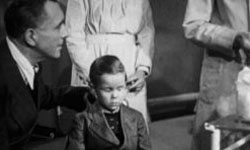
In the first of this three-part series, George Alagiah tells the story of romance in the First World War between female workers and foreign seamen.
- TV-Recordings
- History
- TV-Recordings
- No subtitles
- 60
In the first of this three-part series, George Alagiah tells the story of romance in the First World War between female workers and foreign seamen.
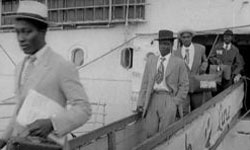
In the second of this three-part series, George Alagiah tells the story of the GI babies labelled war casualties, the boom in mixed-race couples following mass migration and how Sixties trendsetters crossed the racial divide.
- TV-Recordings
- History
- TV-Recordings
- English subtitles
- 60
In the second of this three-part series, George Alagiah tells the story of the GI babies labelled war casualties, the boom in mixed-race couples following mass migration and how Sixties trendsetters crossed the racial divide.
In the last of this three-part series, George Alagiah tells the story of couples facing violence on the streets during the 70s, how adoption became a battleground and how mixed race became one of Britain\'s fastest growing ethnic groups.
- TV-Recordings
- History
- TV-Recordings
- English subtitles
- 60
In the last of this three-part series, George Alagiah tells the story of couples facing violence on the streets during the 70s, how adoption became a battleground and how mixed race became one of Britain\'s fastest growing ethnic groups.
One of the very few universal laws of history is this: whenever and wherever people of different races have been brought together they have always mixed.
- TV-Recordings
- History
- TV-Recordings
- No subtitles
- 60
One of the very few universal laws of history is this: whenever and wherever people of different races have been brought together they have always mixed.

Documentary looking at how Detroit became home to a musical revolution that captured the sound of a nation in upheaval. In the early 60s, Motown transcended Detroit\'s inner city to take black music to a white audience, whilst in the late 60s suburban kids like the MC5 and the Stooges descended into the black inner city to create revolutionary rock expressing the rage of young white America.
- TV-Recordings
- Music
- Other
- TV-Recordings
- No subtitles
- 60
Documentary looking at how Detroit became home to a musical revolution that captured the sound of a nation in upheaval. In the early 60s, Motown transcended Detroit\'s inner city to take black music to a white audience, whilst in the late 60s suburban kids like the MC5 and the Stooges descended into the black inner city to create revolutionary rock expressing the rage of young white America.

A chronicle of Bob Dylan's strange evolution between 1961 and 1966 from folk singer to protest singer to "voice of a generation" to rock star.
- TV-Recordings
- History
- Music
- TV-Recordings
- English subtitles
- 115
A chronicle of Bob Dylan's strange evolution between 1961 and 1966 from folk singer to protest singer to "voice of a generation" to rock star.

A chronicle of Bob Dylan's strange evolution between 1961 and 1966 from folk singer to protest singer to "voice of a generation" to rock star.
- TV-Recordings
- Music
- Other
- TV-Recordings
- English subtitles
- 90
A chronicle of Bob Dylan's strange evolution between 1961 and 1966 from folk singer to protest singer to "voice of a generation" to rock star.