

-
Lost Cities of the Ancients
-
BBC 4
Documentary series which unearths lost civilisations and reveals the wonder of some of the world's greatest lost cities.
- TV-Recordings
- No subtitles
- 180
Documentary series which unearths lost civilisations and reveals the wonder of some of the world's greatest lost cities.
In the Lambeyeque valley in Northern Peru lies a strange lost world - the forgotten ruins of 250 mysterious pyramids, including some of the biggest on the planet.
- TV-Recordings
- Archaeology
- History
- TV-Recordings
- No subtitles
- 60
In the Lambeyeque valley in Northern Peru lies a strange lost world - the forgotten ruins of 250 mysterious pyramids, including some of the biggest on the planet.
More than 3,000 years ago a mysterious and ruthless civilization rose from nothing, created a brutal and unstoppable army and built an empire that rivalled Egypt and Babylon.
- TV-Recordings
- Archaeology
- History
- TV-Recordings
- No subtitles
- 60
More than 3,000 years ago a mysterious and ruthless civilization rose from nothing, created a brutal and unstoppable army and built an empire that rivalled Egypt and Babylon.

This episode looks at the legendary lost city of Piramesse. This magnificent ancient capital was built 3,000 years ago by the Egyptian pharaoh Ramesses the Great, but long ago the whole city disappeared.
- TV-Recordings
- Archaeology
- History
- TV-Recordings
- No subtitles
- 60
This episode looks at the legendary lost city of Piramesse. This magnificent ancient capital was built 3,000 years ago by the Egyptian pharaoh Ramesses the Great, but long ago the whole city disappeared.
In this series, art historian Dr Gus Casely-Hayford explores some of the richest and most vibrant histories in the world, revealing fascinating stories of four complex and sophisticated civilisations.
- TV-Recordings
- History
- TV-Recordings
- No subtitles
- 60
In this series, art historian Dr Gus Casely-Hayford explores some of the richest and most vibrant histories in the world, revealing fascinating stories of four complex and sophisticated civilisations.
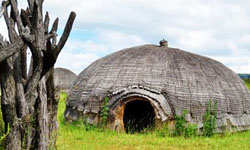
n this episode, Dr Casely-Hayford travels to South Africa to explore the history of one of Africa's most famous kingdoms. Visiting some of the most evocative sites in Zulu history, he examines the origins of the Zulu in the 17th century, their expansion under controversial military leader King Shaka and their brutal encounters with the Boers and the British.
- TV-Recordings
- History
- TV-Recordings
- No subtitles
- 60
n this episode, Dr Casely-Hayford travels to South Africa to explore the history of one of Africa's most famous kingdoms. Visiting some of the most evocative sites in Zulu history, he examines the origins of the Zulu in the 17th century, their expansion under controversial military leader King Shaka and their brutal encounters with the Boers and the British.

It is easy to think of Islamic North Africa as Arab rather than African, but the land that is now Morocco once lay at the centre of a vast African kingdom that stretched from northern Spain to the heart of West Africa.
- TV-Recordings
- History
- TV-Recordings
- No subtitles
- 60
It is easy to think of Islamic North Africa as Arab rather than African, but the land that is now Morocco once lay at the centre of a vast African kingdom that stretched from northern Spain to the heart of West Africa.
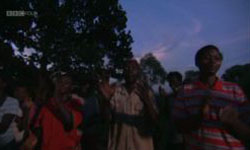
For centuries Bunyoro was the region's dominant power, using history and mythology to make a claim on the land. But its position was challenged by the rapid rise of Buganda, a neighbouring kingdom that had once been a collection of cultivators on the shores of Lake Victoria.
- TV-Recordings
- History
- TV-Recordings
- No subtitles
- 60
For centuries Bunyoro was the region's dominant power, using history and mythology to make a claim on the land. But its position was challenged by the rapid rise of Buganda, a neighbouring kingdom that had once been a collection of cultivators on the shores of Lake Victoria.
-
Lost Kingdoms of Africa Series 2
-
BBC
British art historian Dr Gus Casely-Hayford explores the pre-colonial history of some of Africa's most important kingdoms
- TV-Recordings
- No subtitles
- 240
British art historian Dr Gus Casely-Hayford explores the pre-colonial history of some of Africa's most important kingdoms

Louis Theroux spends time with a small and very committed subculture of ultra-nationalist Jewish settlers.
- TV-Recordings
- Politics & Public Policy
- Religion
- TV-Recordings
- No subtitles
- 60
Louis Theroux spends time with a small and very committed subculture of ultra-nationalist Jewish settlers.
-
Lucy Worsley Investigates
-
Linda Sands
Lucy Worsley investigates the mysteries of some of the most infamous and brutal chapters in British history, finding new witnesses and compelling evidence. What will she uncover?
- TV-Recordings
- English subtitles
- 232
Lucy Worsley investigates the mysteries of some of the most infamous and brutal chapters in British history, finding new witnesses and compelling evidence. What will she uncover?
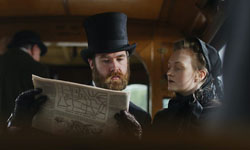
How did the Jack the Ripper case shape the way true crime is covered today? Lucy Worsley investigates how these shocking killings created a world of entertainment based on murder.
- TV-Recordings
- English subtitles
- 58
How did the Jack the Ripper case shape the way true crime is covered today? Lucy Worsley investigates how these shocking killings created a world of entertainment based on murder.

On 5 November 1605, a group of conspirators planned to blow up parliament. Lucy Worsley investigates the Gunpowder Plot, asking what drove them to this radical act of extremism.
- TV-Recordings
- English subtitles
- 59
On 5 November 1605, a group of conspirators planned to blow up parliament. Lucy Worsley investigates the Gunpowder Plot, asking what drove them to this radical act of extremism.
-
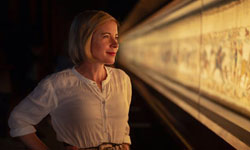
Lucy Worsley Investigates - Series 2 - Episode 3 - 1066
-
Edmund Moriarty
Was winning the Battle of Hastings in 1066 all it took for William to become king? Lucy Worsley investigates the aftermath to reveal how he really conquered England.
- TV-Recordings
- English subtitles
- 59
Was winning the Battle of Hastings in 1066 all it took for William to become king? Lucy Worsley investigates the aftermath to reveal how he really conquered England.
In a series about the extraordinary stories behind maps, Professor Jerry Brotton uncovers how maps aren\'t simply about getting from A to B but are revealing snapshots of defining moments in history and tools of political power and persuasion.
- TV-Recordings
- Geography
- TV-Recordings
- No subtitles
- 58
In a series about the extraordinary stories behind maps, Professor Jerry Brotton uncovers how maps aren\'t simply about getting from A to B but are revealing snapshots of defining moments in history and tools of political power and persuasion.

Jerry Brotton shows how maps can reveal the fears, obsessions and prejudices of their age.
- TV-Recordings
- Geography
- TV-Recordings
- No subtitles
- 58
Jerry Brotton shows how maps can reveal the fears, obsessions and prejudices of their age.

In the last of a three-part series about the extraordinary stories behind maps, Professor Jerry Brotton uncovers how maps are snapshots of a moment in history and offer visions of distant lands, tempting explorers to plunder and conquer.
- TV-Recordings
- Geography
- TV-Recordings
- No subtitles
- 60
In the last of a three-part series about the extraordinary stories behind maps, Professor Jerry Brotton uncovers how maps are snapshots of a moment in history and offer visions of distant lands, tempting explorers to plunder and conquer.
-
Maps: Power, Plunder and Possession
-
BBC
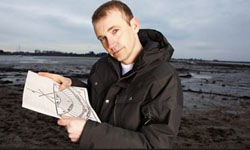
Map expert Professor Jerry Brotton uncovers how maps aren't simply about getting from A to B, but are revealing snapshots of defining moments in history and tools of political power and persuasion.
- TV-Recordings
- No subtitles
- 180
Map expert Professor Jerry Brotton uncovers how maps aren't simply about getting from A to B, but are revealing snapshots of defining moments in history and tools of political power and persuasion.
-
Margaret
-
BBC
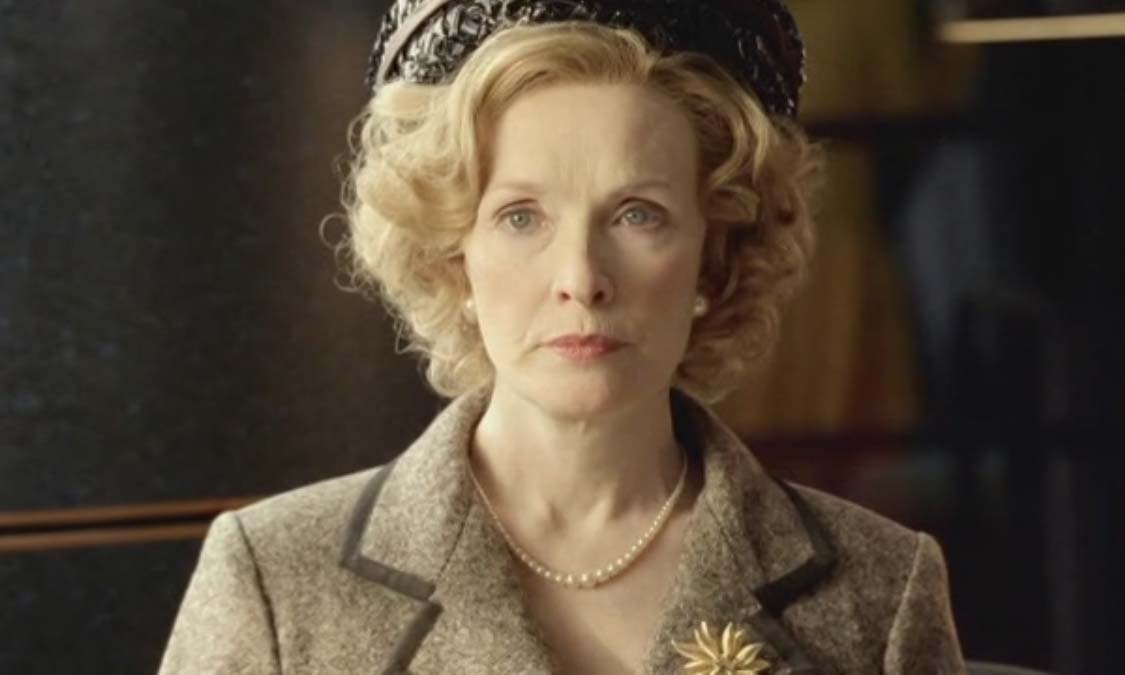
Drama charting Margaret Thatcher\'s astonishing fall from power, one of the most extraordinary stories of political assassination the world has seen. It took only eleven days for Thatcher to go from being the most powerful woman in the world to the tearful figure in the back of the car.
- TV-Recordings
- History
- Politics & Public Policy
- TV-Recordings
- No subtitles
- 115
Drama charting Margaret Thatcher\'s astonishing fall from power, one of the most extraordinary stories of political assassination the world has seen. It took only eleven days for Thatcher to go from being the most powerful woman in the world to the tearful figure in the back of the car.
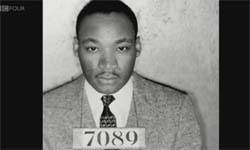
Documentary commemorating the 50th anniversary of Martin Luther King's March on Washington, a pivotal moment in the Civil Rights Movement in the United States. This programme tells the story of the how the march for jobs and freedom began, speaking to the people who organised and participated in it.
- TV-Recordings
- Politics & Public Policy
- English subtitles
- 60
Documentary commemorating the 50th anniversary of Martin Luther King's March on Washington, a pivotal moment in the Civil Rights Movement in the United States. This programme tells the story of the how the march for jobs and freedom began, speaking to the people who organised and participated in it.

-
Mary Beard's Ultimate Rome: Empire Without Limit
-
BBC
How could a mediocre city in central Italy come to dominate such a huge area? What held the empire together and tore it apart? Mary Beard takes in the history and archaeology of the ancient world.
- TV-Recordings
- Classical Civilisation
- English subtitles
- 240
How could a mediocre city in central Italy come to dominate such a huge area? What held the empire together and tore it apart? Mary Beard takes in the history and archaeology of the ancient world.
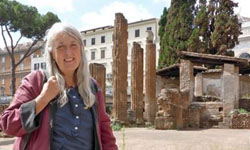
In this first episode, Mary Beard reaches back to the myths and legends of the origins of Rome to gain an insight into the deep-rooted psyche of the people of Rome - a city born through fratricide and rape.
- TV-Recordings
- Classical Civilisation
- English subtitles
- 59
In this first episode, Mary Beard reaches back to the myths and legends of the origins of Rome to gain an insight into the deep-rooted psyche of the people of Rome - a city born through fratricide and rape.
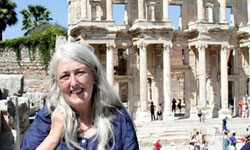
In the second episode, Mary Beard explores the physical world of the Roman Empire, and finds surprising parallels with our own world. Setting out in the footsteps of the emperor Hadrian, she discovers a vast empire bound together by a common material culture, and a globalised economy of such scale that evidence of its side-effects can still be seen today, thousands of miles away from Rome.
- TV-Recordings
- Classical Civilisation
- English subtitles
- 59
In the second episode, Mary Beard explores the physical world of the Roman Empire, and finds surprising parallels with our own world. Setting out in the footsteps of the emperor Hadrian, she discovers a vast empire bound together by a common material culture, and a globalised economy of such scale that evidence of its side-effects can still be seen today, thousands of miles away from Rome.
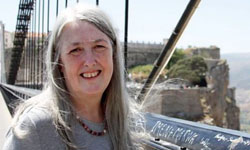
In the third episode Mary takes an in-depth look at the question of identity and citizenship within the Roman Empire. What did it mean to be, or to become, Roman, and how did the very different parts of the empire react to Roman rule?
- TV-Recordings
- Classical Civilisation
- English subtitles
- 59
In the third episode Mary takes an in-depth look at the question of identity and citizenship within the Roman Empire. What did it mean to be, or to become, Roman, and how did the very different parts of the empire react to Roman rule?

In the fourth and final episode, Mary tackles the biggest puzzle of all: why, and how, did the Roman Empire fall? Surveying the massive walls and fortifications of Britain and Germany, she discovers an empire under pressure, struggling to control its borders.
- TV-Recordings
- Classical Civilisation
- English subtitles
- 59
In the fourth and final episode, Mary tackles the biggest puzzle of all: why, and how, did the Roman Empire fall? Surveying the massive walls and fortifications of Britain and Germany, she discovers an empire under pressure, struggling to control its borders.
-
Mary Seacole: A Hidden History
-
Paul Kerr
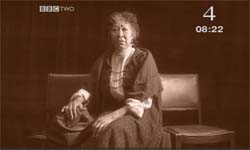
Short series of biographical films showing the debt Britons owes to pioneers of multi-racial Britain. Mary Seacole was an accomplished Jamaican nurse who, on deciding to help during the Crimean War, had to travel there at her own expense and risk because Florence Nightingale's organisation rejected her for being 'too dark'. One there, she saved the lives of thousands of British soldiers.
- TV-Recordings
- History
- TV-Recordings
- No subtitles
- 28
Short series of biographical films showing the debt Britons owes to pioneers of multi-racial Britain. Mary Seacole was an accomplished Jamaican nurse who, on deciding to help during the Crimean War, had to travel there at her own expense and risk because Florence Nightingale's organisation rejected her for being 'too dark'. One there, she saved the lives of thousands of British soldiers.
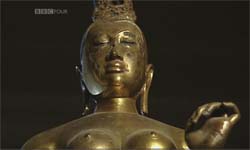
This edition takes a look at the near life-size bronze statue of the Buddhist goddess Tara, which has long been one of the most striking and memorable exhibits in the Asia gallery of the British Museum
- TV-Recordings
- Art & Design
- TV-Recordings
- No subtitles
- 30
This edition takes a look at the near life-size bronze statue of the Buddhist goddess Tara, which has long been one of the most striking and memorable exhibits in the Asia gallery of the British Museum

As the new football season kicks off this August, the television institution that is Match of the Day celebrates 50 years since it was first aired. This definitive documentary charts the history of this iconic programme and highlights its long-ingrained place at the heart of Saturday night television.
- TV-Recordings
- Sport
- English subtitles
- 60
As the new football season kicks off this August, the television institution that is Match of the Day celebrates 50 years since it was first aired. This definitive documentary charts the history of this iconic programme and highlights its long-ingrained place at the heart of Saturday night television.
-
Medieval Lives: Birth, Marriage, Death
-
BBC
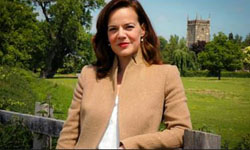
Series in which historian and author Helen Castor explores how the people of the Middle Ages handled the most fundamental moments of transition in life - birth, marriage and death.
- TV-Recordings
- English subtitles
- 180
Series in which historian and author Helen Castor explores how the people of the Middle Ages handled the most fundamental moments of transition in life - birth, marriage and death.
Most of the time we try not to think about death, but the people of the Middle Ages didn't have that luxury. Death was always close at hand, for young and old, rich and poor - even before the horrors of the Black Death, which killed millions in a few short months.
- TV-Recordings
- History
- English subtitles
- 60
Most of the time we try not to think about death, but the people of the Middle Ages didn't have that luxury. Death was always close at hand, for young and old, rich and poor - even before the horrors of the Black Death, which killed millions in a few short months.