
-
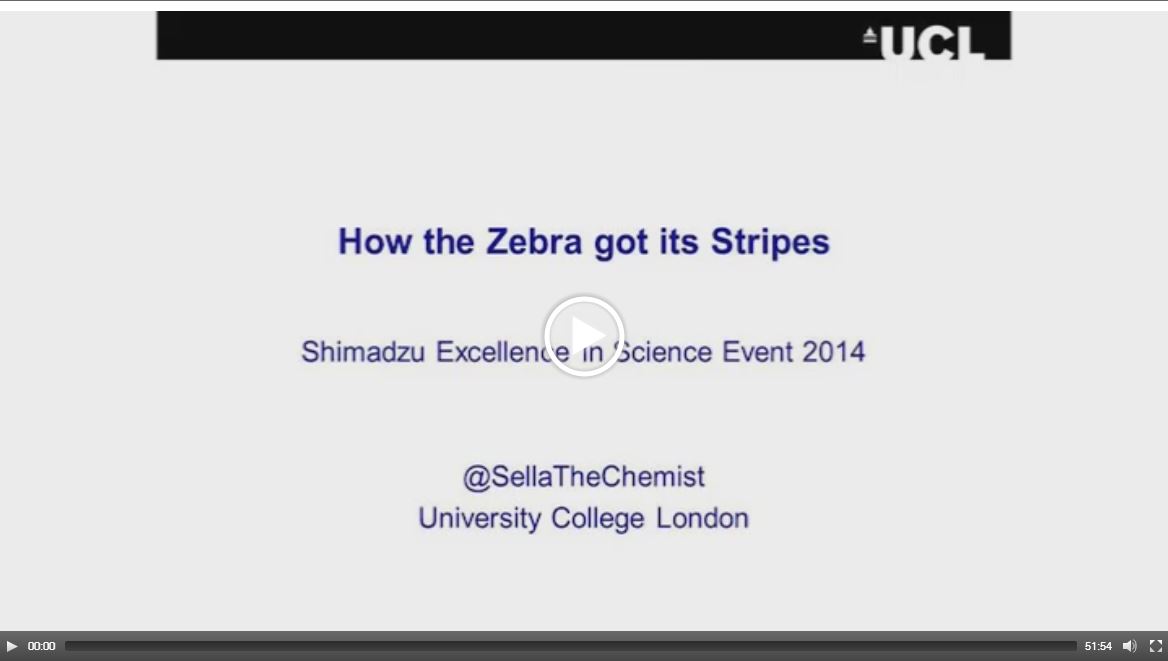
How the Zebra Got its Stripes
-
Prof. Andrea Sella , 2014
Pre-sessional Lecture 8th July 2014
Pre-sessional Lecture 8th July 2014
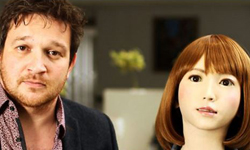
Professor Danielle George MBE, an electronics engineer from Manchester University and a robot supporter, and Dr Ben Garrod, an evolutionary biologist from Anglia Ruskin University and robo-sceptic, uncover whether the rise of the robots will enhance the progress of humanity or ultimately threaten the survival of the human race.
- TV-Recordings
- English subtitles
- 60
Professor Danielle George MBE, an electronics engineer from Manchester University and a robot supporter, and Dr Ben Garrod, an evolutionary biologist from Anglia Ruskin University and robo-sceptic, uncover whether the rise of the robots will enhance the progress of humanity or ultimately threaten the survival of the human race.
Professor Danielle George MBE, an electronics engineer from Manchester University and a robot supporter, and Dr Ben Garrod, an evolutionary biologist from Anglia Ruskin University and robo-sceptic, uncover whether the rise of the robots will enhance the progress of humanity or ultimately threaten the survival of the human race.
- TV-Recordings
- English subtitles
- 60
Professor Danielle George MBE, an electronics engineer from Manchester University and a robot supporter, and Dr Ben Garrod, an evolutionary biologist from Anglia Ruskin University and robo-sceptic, uncover whether the rise of the robots will enhance the progress of humanity or ultimately threaten the survival of the human race.
-
Origins of Us
-
BBC
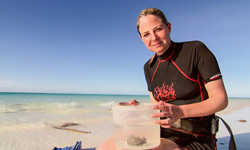
We have uncovered the secrets of the atom, travelled to the moon, and dominated planet Earth. But how did humans come to be so successful? This three-part series reveals the powerful anatomical changes that have given us - and our ancestors - the edge over all other life on Earth.
- TV-Recordings
- English subtitles
- 175
We have uncovered the secrets of the atom, travelled to the moon, and dominated planet Earth. But how did humans come to be so successful? This three-part series reveals the powerful anatomical changes that have given us - and our ancestors - the edge over all other life on Earth.
-
Origins of Us - Episode 2 - Guts
-
Matthew Dyas
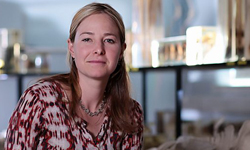
Series exploring how the human body charts our evolution. How our ancestors' hunt for food changed the shape of our face, the way we see and how we attract the opposite sex.
- TV-Recordings
- English subtitles
- 58
Series exploring how the human body charts our evolution. How our ancestors' hunt for food changed the shape of our face, the way we see and how we attract the opposite sex.
-
Origins of Us - Episode 3 - Brains
-
Paul Olding
Series exploring how the human body charts our evolution. How living until old age and learning from one another has shaped human brains, and why our species has survived.
- TV-Recordings
- English subtitles
- 58
Series exploring how the human body charts our evolution. How living until old age and learning from one another has shaped human brains, and why our species has survived.
-
Rise Of Animals. Part 1. From the Seas to the Skies
-
David Attenborough
David Attenborough embarks on an epic 500-million-year journey to unravel the incredible rise of the vertebrates. The evolution of animals with backbones is one of the greatest stories in natural history.
- TV-Recordings
- Natural World
- English subtitles
- 60
David Attenborough embarks on an epic 500-million-year journey to unravel the incredible rise of the vertebrates. The evolution of animals with backbones is one of the greatest stories in natural history.
-
Rise Of Animals. Part 2. Dawn Of The Mammals
-
David Attenborough
How mammals developed from tiny forest dwellers to the dominant life form on the planet.
- TV-Recordings
- Natural World
- English subtitles
- 60
How mammals developed from tiny forest dwellers to the dominant life form on the planet.

There is a battle playing out inside your body right now. It started billions of years ago and it is still being fought in every one of us every minute of every day. It is the story of a viral infection - the battle for the cell.
- TV-Recordings
- Biology
- Genetics
- TV-Recordings
- No subtitles
- 60
There is a battle playing out inside your body right now. It started billions of years ago and it is still being fought in every one of us every minute of every day. It is the story of a viral infection - the battle for the cell.
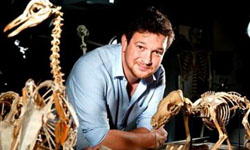
-
Secrets of Bones
-
BBC 4
Evolutionary biologist and master skeleton builder Ben Garrod presents a six-part series looking at how bones have enabled vertebrates to colonise and dominate practically every habitat on Earth.
- TV-Recordings
- English subtitles
- 180
Evolutionary biologist and master skeleton builder Ben Garrod presents a six-part series looking at how bones have enabled vertebrates to colonise and dominate practically every habitat on Earth.

Evolutionary biologist and master skeleton builder Ben Garrod begins a six-part journey to discover how bones have enabled vertebrates to colonise and dominate practically every habitat on Earth
- TV-Recordings
- Medical Sciences
- English subtitles
- 30
Evolutionary biologist and master skeleton builder Ben Garrod begins a six-part journey to discover how bones have enabled vertebrates to colonise and dominate practically every habitat on Earth
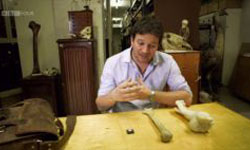
Evolutionary biologist and master skeleton builder Ben Garrod discovers how the skeleton has adapted for vertebrates to move on land in a remarkable number of ways.
- TV-Recordings
- Biology
- English subtitles
- 30
Evolutionary biologist and master skeleton builder Ben Garrod discovers how the skeleton has adapted for vertebrates to move on land in a remarkable number of ways.
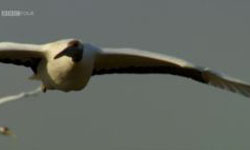
Ben Garrod finds out how the skeleton has allowed vertebrates to do the most remarkable thing of all - take to the air.
- TV-Recordings
- Biology
- English subtitles
- 30
Ben Garrod finds out how the skeleton has allowed vertebrates to do the most remarkable thing of all - take to the air.
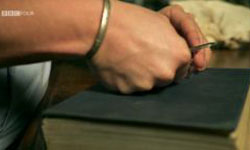
Ben Garrod delves into the surprising ways in which bone has evolved to help vertebrates sense the world around them. He reveals why predators like the wolf have eyes at the front of their skull whereas prey animals such as sheep usually have eye sockets on the side of their heads.
- TV-Recordings
- Biology
- English subtitles
- 30
Ben Garrod delves into the surprising ways in which bone has evolved to help vertebrates sense the world around them. He reveals why predators like the wolf have eyes at the front of their skull whereas prey animals such as sheep usually have eye sockets on the side of their heads.
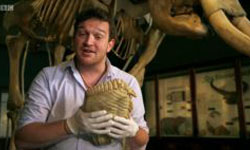
Ben Garrod uncovers the secrets of how vertebrates capture and devour their food using extreme jaws, bizarre teeth and specialized bony tools. He takes a cherry picker up a giant sperm whale's jaw, finds out which animal has teeth weighing five kilos each and which uses its skull as a suction pump.
- TV-Recordings
- Biology
- No subtitles
- 30
Ben Garrod uncovers the secrets of how vertebrates capture and devour their food using extreme jaws, bizarre teeth and specialized bony tools. He takes a cherry picker up a giant sperm whale's jaw, finds out which animal has teeth weighing five kilos each and which uses its skull as a suction pump.
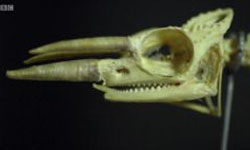
Ben Garrod seeks out the big part that bones can play in reproduction. Through sexual selection, the skeleton has adapted to aid courtship, competition and even copulation.
- TV-Recordings
- Biology
- No subtitles
- 30
Ben Garrod seeks out the big part that bones can play in reproduction. Through sexual selection, the skeleton has adapted to aid courtship, competition and even copulation.
How some species survived the ice age that began 2.8 million years ago.
- TV-Recordings
- Environmental Studies
- Other
- TV-Recordings
- No subtitles
- 60
How some species survived the ice age that began 2.8 million years ago.

In episode two, Fortey focuses on the 'KT boundary'. 65 million years ago, a 10 km diameter asteroid collided with the Earth and saw the end of the long reign of the dinosaurs.
- TV-Recordings
- Environmental Studies
- Other
- TV-Recordings
- No subtitles
- 60
In episode two, Fortey focuses on the 'KT boundary'. 65 million years ago, a 10 km diameter asteroid collided with the Earth and saw the end of the long reign of the dinosaurs.
It is estimated that 99 per cent of species have become extinct and there have been times when life's hold on Earth has been so precarious it seems it hangs on by a thread.
- TV-Recordings
- Environmental Studies
- Other
- TV-Recordings
- No subtitles
- 60
It is estimated that 99 per cent of species have become extinct and there have been times when life's hold on Earth has been so precarious it seems it hangs on by a thread.
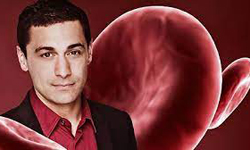
In a three-part series, Dr Adam Rutherford tells the extraordinary story of the scientific quest to discover the secrets of the cell and of life itself. Every living thing is made of cells, microscopic building blocks of almost unimaginable power and complexity. This episode explores how scientists delved ever deeper into the world of the cell, seeking to reveal the magic ingredient that can spark a bundle of chemicals into life.
- TV-Recordings
- Biology
- TV-Recordings
- No subtitles
- 60
In a three-part series, Dr Adam Rutherford tells the extraordinary story of the scientific quest to discover the secrets of the cell and of life itself. Every living thing is made of cells, microscopic building blocks of almost unimaginable power and complexity. This episode explores how scientists delved ever deeper into the world of the cell, seeking to reveal the magic ingredient that can spark a bundle of chemicals into life.
In a three-part series, Dr Adam Rutherford tells the extraordinary story of the scientific quest to discover the secrets of the cell and of life itself. Every living thing is made of cells, microscopic building blocks of almost unimaginable power and complexity. The final part reveals how our knowledge of cells has brought us to the brink of one of the most important moments in history.
- TV-Recordings
- Biology
- TV-Recordings
- No subtitles
- 60
In a three-part series, Dr Adam Rutherford tells the extraordinary story of the scientific quest to discover the secrets of the cell and of life itself. Every living thing is made of cells, microscopic building blocks of almost unimaginable power and complexity. The final part reveals how our knowledge of cells has brought us to the brink of one of the most important moments in history.
-
What Darwin Didn't Know
-
Armand Leroi
Documentary which tells the story of evolution theory since Darwin postulated it in 1859 in 'On the Origin of Species'.
- TV-Recordings
- Biology
- TV-Recordings
- No subtitles
- 88
Documentary which tells the story of evolution theory since Darwin postulated it in 1859 in 'On the Origin of Species'.