
-
In Our Time - Slavery and empire
-
Melvyn Bragg
Slavery and empire are two themes that run right through this country’s history. Britain’s imperial project dominated at least the last three centuries of our national life. Its advocates claim it was a civilising mission by which Britain spread enlightenment and improvement across the globe. Opponents have long seen it as a brutal business, with Britons cast as cruel oppressors out to exploit a conquered world. Is our imperial history so clear cut? What if Britons were themselves captives, either as prisoners of an imperial enterprise that sucked them in, generation after generation or, in some startling cases, as slaves to foreign peoples? Is slavery an inevitable part of empire: does it come with the territory? And how did Britain finally shake it off?
Slavery and empire are two themes that run right through this country’s history. Britain’s imperial project dominated at least the last three centuries of our national life. Its advocates claim it was a civilising mission by which Britain spread enlightenment and improvement across the globe. Opponents have long seen it as a brutal business, with Britons cast as cruel oppressors out to exploit a conquered world. Is our imperial history so clear cut? What if Britons were themselves captives, either as prisoners of an imperial enterprise that sucked them in, generation after generation or, in some startling cases, as slaves to foreign peoples? Is slavery an inevitable part of empire: does it come with the territory? And how did Britain finally shake it off?
-
In Our Time - The Aristocracy
-
Melvyn Bragg
The Greeks gave us the word aristocracy; it takes its root from ‘aristo’, meaning best and ‘kratos’, meaning rule or power. And for more than five hundred years Britain was ruled by a class that was defined, at the time, as the best. They founded their ascendancy on the twin pillars of land and heredity and in terms of privilege, preferment, power, style and wealth, they dominated British society. As the Earl of Chesterfield confidently informed the House of Lords in the mid-18th century, “We, my lords, may thank heaven that we have something better than our brains to depend upon.” What made the British Aristocracy the most successful power elite in the world? And what brought about its decline?
The Greeks gave us the word aristocracy; it takes its root from ‘aristo’, meaning best and ‘kratos’, meaning rule or power. And for more than five hundred years Britain was ruled by a class that was defined, at the time, as the best. They founded their ascendancy on the twin pillars of land and heredity and in terms of privilege, preferment, power, style and wealth, they dominated British society. As the Earl of Chesterfield confidently informed the House of Lords in the mid-18th century, “We, my lords, may thank heaven that we have something better than our brains to depend upon.” What made the British Aristocracy the most successful power elite in the world? And what brought about its decline?
-
In Our Time - The Individual
-
Melvyn Bragg
With Richard Wollheim, Professor of Philosophy, University of California in Berkeley; Jonathan Dollimore, Professor of English, York University.
With Richard Wollheim, Professor of Philosophy, University of California in Berkeley; Jonathan Dollimore, Professor of English, York University.
-
In Our Time - The Needham Question
-
Melvyn Bragg
Why did Modern Science develop in Europe when China seemed so much better placed to achieve it? This is called the Needham Question, after Joseph Needham, the 20th century British Sinologist who did more, perhaps, than anyone else to try and explain it. Why did China’s early technological brilliance not lead to the development of modern science and how did momentous inventions like gunpowder and printing enter Chinese society with barely a ripple and yet revolutionise the warring states of Europe?
Why did Modern Science develop in Europe when China seemed so much better placed to achieve it? This is called the Needham Question, after Joseph Needham, the 20th century British Sinologist who did more, perhaps, than anyone else to try and explain it. Why did China’s early technological brilliance not lead to the development of modern science and how did momentous inventions like gunpowder and printing enter Chinese society with barely a ripple and yet revolutionise the warring states of Europe?
-
In Our Time - The Philosophy of Love
-
Melvyn Bragg
Melvyn Bragg and guests discuss the philosophy of love. With Professor Roger Scruton, author of many books including Sexual Desire; Angie Hobbes, lecturer in philosophy at Warwick University; Thomas Docherty, Professor of English at the University of Kent.
Melvyn Bragg and guests discuss the philosophy of love. With Professor Roger Scruton, author of many books including Sexual Desire; Angie Hobbes, lecturer in philosophy at Warwick University; Thomas Docherty, Professor of English at the University of Kent.

-
The Reith Lectures 2005 - 01 Collaboration
-
Lord Broers
When I returned to this Engineering Department from the USA in 1984 my wife and I bought an historic and wonderful house some ten miles south of Cambridge. It was built around 1520, a date that could be substantiated to within a decade by the form of the oak beams that comprised its floors and ceilings. These had been shaped by iron blades that only lasted about ten years. Being someone of the present rather than the past I had not previously been much preoccupied with history but living in the splendid oak structure - like a fine sailing vessel that had gone aground - inspired me to wonder what had preoccupied the technologists and scientists of that age...
When I returned to this Engineering Department from the USA in 1984 my wife and I bought an historic and wonderful house some ten miles south of Cambridge. It was built around 1520, a date that could be substantiated to within a decade by the form of the oak beams that comprised its floors and ceilings. These had been shaped by iron blades that only lasted about ten years. Being someone of the present rather than the past I had not previously been much preoccupied with history but living in the splendid oak structure - like a fine sailing vessel that had gone aground - inspired me to wonder what had preoccupied the technologists and scientists of that age...
-
Children of 9/11
-
Channel 4
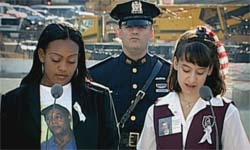
The children of 9/11 - from those who were in the womb to those on the brink of adulthood - reveal how children come to terms with tragedy and how families confront grief.
- TV-Recordings
- Anthropology
- No subtitles
- 72
The children of 9/11 - from those who were in the womb to those on the brink of adulthood - reveal how children come to terms with tragedy and how families confront grief.

Through compelling testimony from 7-10 year-old survivors, this film reveals how the deadly wave and the Fukushima nuclear accident have changed children's lives forever
- TV-Recordings
- Anthropology
- No subtitles
- 60
Through compelling testimony from 7-10 year-old survivors, this film reveals how the deadly wave and the Fukushima nuclear accident have changed children's lives forever
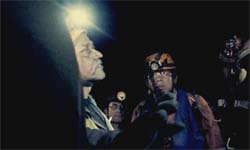
When the 33 Chilean miners emerged from underground before a worldwide audience of over a billion, they made a pact not to speak about what had happened underground. Now six of them remember the untold story of the first 17 days - when no-one outside knew if they were alive.
- TV-Recordings
- Anthropology
- TV-Recordings
- English subtitles
- 60
When the 33 Chilean miners emerged from underground before a worldwide audience of over a billion, they made a pact not to speak about what had happened underground. Now six of them remember the untold story of the first 17 days - when no-one outside knew if they were alive.
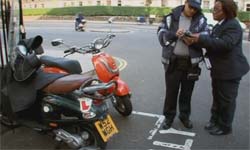
Cutting Edge follows new recruits to Westminster\'s parking enforcement operation as they join the army of traffic wardens patrolling London\'s streets
- TV-Recordings
- Other
- TV-Recordings
- No subtitles
- 47
Cutting Edge follows new recruits to Westminster\'s parking enforcement operation as they join the army of traffic wardens patrolling London\'s streets
-
Fry's Planet Word
-
BBC 2
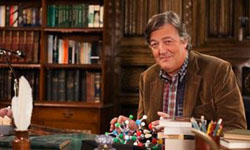
Stephen Fry explores language, coming to understand how we learn it, write it and sometimes lose it, and why it defines us.
- TV-Recordings
- No subtitles
- 300
Stephen Fry explores language, coming to understand how we learn it, write it and sometimes lose it, and why it defines us.
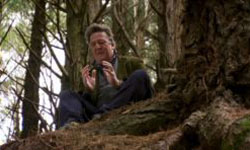
A five-part series in which Stephen Fry explores language, coming to understand how we learn it, write it and sometimes lose it, and why it defines us.
- TV-Recordings
- Humanities
- TV-Recordings
- No subtitles
- 60
A five-part series in which Stephen Fry explores language, coming to understand how we learn it, write it and sometimes lose it, and why it defines us.
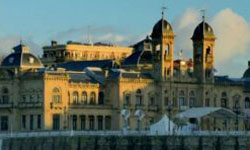
What is it that defines us? Stephen argues that above all, it is the way we speak. Be it a national language, a regional dialect or even class variation - we interpret and define ourselves through our language.
- TV-Recordings
- Humanities
- TV-Recordings
- No subtitles
- 60
What is it that defines us? Stephen argues that above all, it is the way we speak. Be it a national language, a regional dialect or even class variation - we interpret and define ourselves through our language.
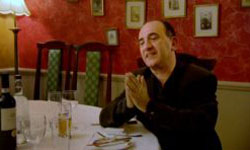
This programme looks at the ways language is used and abused. While not everyone approves of \'bad\' language, Stephen learns that swearing plays an important part in human communication the world over.
- TV-Recordings
- Humanities
- TV-Recordings
- No subtitles
- 60
This programme looks at the ways language is used and abused. While not everyone approves of \'bad\' language, Stephen learns that swearing plays an important part in human communication the world over.

Dr Alice Roberts asks one of the great questions about our species: are we still evolving? Alice follows a trail of clues from ancient human bones, to studies of remarkable people living in the most inhospitable parts of the planet, to the frontiers of genetic research to discover if we are still evolving - and where we might be heading.
- TV-Recordings
- Anthropology
- English subtitles
- 60
Dr Alice Roberts asks one of the great questions about our species: are we still evolving? Alice follows a trail of clues from ancient human bones, to studies of remarkable people living in the most inhospitable parts of the planet, to the frontiers of genetic research to discover if we are still evolving - and where we might be heading.
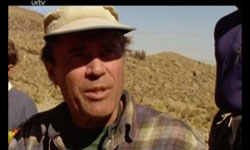
Horizon investigates evidence of human sacrifice practised by the Incas. Three mummified remains of humans have been found in the Andes and this programme follows anthropologist Johan Reinhard's search for more proof on the peak of Sara Sara in the Andes
- TV-Recordings
- Anthropology
- History
- TV-Recordings
- No subtitles
- 60
Horizon investigates evidence of human sacrifice practised by the Incas. Three mummified remains of humans have been found in the Andes and this programme follows anthropologist Johan Reinhard's search for more proof on the peak of Sara Sara in the Andes
We are bad at making decisions. According to science, our decisions are based on oversimplification, laziness and prejudice. And that's assuming that we haven't already been hijacked by our surroundings or led astray by our subconscious!
- TV-Recordings
- Humanities
- Maths
- Medical Sciences
- TV-Recordings
- No subtitles
- 50
We are bad at making decisions. According to science, our decisions are based on oversimplification, laziness and prejudice. And that's assuming that we haven't already been hijacked by our surroundings or led astray by our subconscious!

Every day you make thousands of decisions, big and small, and behind all them is a powerful battle in your mind, pitting intuition against logic.Horizon uncovers the truth about how you really make decisions.
- TV-Recordings
- General Science
- English subtitles
- 60
Every day you make thousands of decisions, big and small, and behind all them is a powerful battle in your mind, pitting intuition against logic.Horizon uncovers the truth about how you really make decisions.

Louis Theroux joins the Philadelphia Police Department patrolling the most dangerous part of one of the most violent cities in America.
- TV-Recordings
- Law
- Politics & Public Policy
- TV-Recordings
- No subtitles
- 45
Louis Theroux joins the Philadelphia Police Department patrolling the most dangerous part of one of the most violent cities in America.
-
Oceans
-
Paul Rose
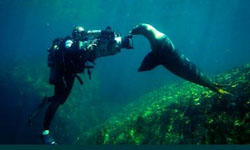
Four marine experts explore the planet's greatest wilderness - the oceans. They reveal the hidden stories of the deep through archaeology, geology, marine biology and anthropology.
- TV-Recordings
- No subtitles
- 420
Four marine experts explore the planet's greatest wilderness - the oceans. They reveal the hidden stories of the deep through archaeology, geology, marine biology and anthropology.

-
Royal Institution Christmas Lectures - 2018 : 01 - Where Do I Come From?
-
Professor Alice Roberts
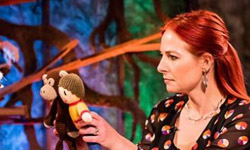
Professor Alice Roberts meets our ancient ancestral family, from armadillos to sharks, and discovers our true place in the tree of life. With 4D scanning, giant origami and a ukulele, they will explore evolution like never before.
- TV-Recordings
- English subtitles
- 60
Professor Alice Roberts meets our ancient ancestral family, from armadillos to sharks, and discovers our true place in the tree of life. With 4D scanning, giant origami and a ukulele, they will explore evolution like never before.
-
Royal Institution Christmas Lectures - 2018 : 02 - What Makes Me Human?
-
Professor Alice Roberts
Professor Alice Roberts explores the story of human evolution, revealing how a humble African ape became a successful global species.
- TV-Recordings
- English subtitles
- 60
Professor Alice Roberts explores the story of human evolution, revealing how a humble African ape became a successful global species.
-
Royal Institution Christmas Lectures - 2018 : 03 - What Makes Me, Me?
-
Professor Alice Roberts
Professor Alice Roberts explores what makes each of us totally unique and celebrates the incredible diversity we see in humans across the globe.
- TV-Recordings
- English subtitles
- 60
Professor Alice Roberts explores what makes each of us totally unique and celebrates the incredible diversity we see in humans across the globe.

-
Royal Institution Christmas Lectures - 2018
-
Professor Alice Roberts
Join biological anthropologist Professor Alice Roberts, and genetics expert Aoife McLysaght, as they bring our evolutionary story to life and asks challenging questions about the future.
- TV-Recordings
- English subtitles
- 180
Join biological anthropologist Professor Alice Roberts, and genetics expert Aoife McLysaght, as they bring our evolutionary story to life and asks challenging questions about the future.