

-
Spitfire Women
-
BBC 4
During World War II, a remarkable band of female pilots fought against all odds for the right to aid the war effort. Without these Spitfire Women, the war may never have been won.
- TV-Recordings
- History
- TV-Recordings
- No subtitles
- 60
During World War II, a remarkable band of female pilots fought against all odds for the right to aid the war effort. Without these Spitfire Women, the war may never have been won.

-
The Nazis - A Warning From History
-
BBC
Documentary series examining how a cultured nation at the heart of Europe allowed Hitler to come to power
- TV-Recordings
- No subtitles
- No
Documentary series examining how a cultured nation at the heart of Europe allowed Hitler to come to power
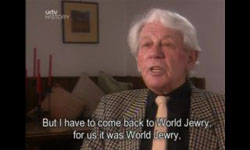
The programme considers how it was possible for a man such as Adolf Hitler to come to power in a supposedly cultured country such as post First World War Germany. It gives a number of long term and short term factors to explain the Nazi phenomenon
- TV-Recordings
- History
- Politics & Public Policy
- TV-Recordings
- No subtitles
- 120
The programme considers how it was possible for a man such as Adolf Hitler to come to power in a supposedly cultured country such as post First World War Germany. It gives a number of long term and short term factors to explain the Nazi phenomenon
The theme of the programme focuses on the paradoxical nature of Germany under Nazi rule - a society obsessed by order and yet characterised by administrative inefficiency. It opens with daunting images of Nazi crowds and the comment that the
- TV-Recordings
- History
- Politics & Public Policy
- TV-Recordings
- No subtitles
- 120
The theme of the programme focuses on the paradoxical nature of Germany under Nazi rule - a society obsessed by order and yet characterised by administrative inefficiency. It opens with daunting images of Nazi crowds and the comment that the
The programme starts, with Hitler in his retreat in southern Bavaria, watching feature films about the British Empire - supposedly, these offered proof of the superiority of the Aryan Race! In 1941 he said 'Let's learn from the English - what India was to the English, let Russian territories be to us'. The programme then asks the question - How did Hitler end up fighting the wrong war? - a war against both the English and the Russians.
- TV-Recordings
- History
- Politics & Public Policy
- TV-Recordings
- No subtitles
- 60
The programme starts, with Hitler in his retreat in southern Bavaria, watching feature films about the British Empire - supposedly, these offered proof of the superiority of the Aryan Race! In 1941 he said 'Let's learn from the English - what India was to the English, let Russian territories be to us'. The programme then asks the question - How did Hitler end up fighting the wrong war? - a war against both the English and the Russians.
The programme starts with a view of a railway line, followed by the view of a field. Between July 1942 - August 1943 this area became a 'killing factory'. This is TREBLINKA, one of six extermination camps set up in Poland by the Germans to tackle the Jewish Question'
- TV-Recordings
- History
- Politics & Public Policy
- TV-Recordings
- No subtitles
- 60
The programme starts with a view of a railway line, followed by the view of a field. Between July 1942 - August 1943 this area became a 'killing factory'. This is TREBLINKA, one of six extermination camps set up in Poland by the Germans to tackle the Jewish Question'
The programme starts with the observation that because Italy was 'the birthplace of fascism', an alliance between Rome and Berlin in the 1930's therefore seemed natural and not unexpected.
- TV-Recordings
- History
- Politics & Public Policy
- TV-Recordings
- No subtitles
- 60
The programme starts with the observation that because Italy was 'the birthplace of fascism', an alliance between Rome and Berlin in the 1930's therefore seemed natural and not unexpected.
-
The World at War
-
Jeremy Isaacs
The World at War (1973–74) is a 26-episode British television documentary series chronicling the events of the Second World War.
- TV-Recordings
- No subtitles
- No
The World at War (1973–74) is a 26-episode British television documentary series chronicling the events of the Second World War.
-
The World at War - Japan (1941–1945)
-
Jeremy Isaacs
Japan's society and culture during wartime, and how life is transformed as the country gradually becomes aware of increasinly catastrophic setbacks including the Doolittle raid, defeat at Midway, the death of Isoroku Yamamoto, the battle of Saipan and the relentless bombing of Japanese cities.
- TV-Recordings
- History
- TV-Recordings
- No subtitles
- 52
Japan's society and culture during wartime, and how life is transformed as the country gradually becomes aware of increasinly catastrophic setbacks including the Doolittle raid, defeat at Midway, the death of Isoroku Yamamoto, the battle of Saipan and the relentless bombing of Japanese cities.
-
The World at War - On Our Way: America Enters the War
-
Jeremy Isaacs
The conflicts in Europe and the Pacific are two separate wars. Many Americans are content to forget about Hitler and Europe and concentrate their war efforts on the Japanese. President Roosevelt is committed to the fight against Hitler, but Congress is not. Inexplicably, Hitler declares war on America, thus relieving Roosevelt of a difficult decision and, ultimately, altering the course of the war. Seventh in the series
- TV-Recordings
- History
- TV-Recordings
- No subtitles
- 9
The conflicts in Europe and the Pacific are two separate wars. Many Americans are content to forget about Hitler and Europe and concentrate their war efforts on the Japanese. President Roosevelt is committed to the fight against Hitler, but Congress is not. Inexplicably, Hitler declares war on America, thus relieving Roosevelt of a difficult decision and, ultimately, altering the course of the war. Seventh in the series
-
The World at War - Pacific (February 1942 - July 1945)
-
Jeremy Isaacs
The successive and increasingly bloody land battles on tiny islands in the expansive Pacific, aimed towards the Japanese heartland. Following the bombing of Darwin, the Japanese are progressively turned back at Kokoda, Tarawa, Peleilu, the Philippines, Iwo Jima and finally Okinawa.
- TV-Recordings
- History
- TV-Recordings
- No subtitles
- 52
The successive and increasingly bloody land battles on tiny islands in the expansive Pacific, aimed towards the Japanese heartland. Following the bombing of Darwin, the Japanese are progressively turned back at Kokoda, Tarawa, Peleilu, the Philippines, Iwo Jima and finally Okinawa.
-
The World at War - Reckoning (April 1945)
-
Jeremy Isaacs
The situation in post-war Europe including the allied occupation of Germany, demobilisation, the Nurenburg trials and the genesis of the Cold War. The episode concludes with summations about the ultimate costs, advantages and consequences of the war. Interviewees include Charles Bohlen, Stephen Ambrose, Lord Avon, Lord Mountbatten and Noble Frankland.
- TV-Recordings
- History
- TV-Recordings
- No subtitles
- 52
The situation in post-war Europe including the allied occupation of Germany, demobilisation, the Nurenburg trials and the genesis of the Cold War. The episode concludes with summations about the ultimate costs, advantages and consequences of the war. Interviewees include Charles Bohlen, Stephen Ambrose, Lord Avon, Lord Mountbatten and Noble Frankland.
-
The World at War - Remember
-
Jeremy Isaacs
This programme remembers the millions of men and women who died during the Second World War. The war was the most significant experience of their lives. They were young and far from home, living dangerously and fighting a good fight.
- TV-Recordings
- History
- TV-Recordings
- No subtitles
- 52
This programme remembers the millions of men and women who died during the Second World War. The war was the most significant experience of their lives. They were young and far from home, living dangerously and fighting a good fight.

-
The World at War - Stalingrad (June 1942–February 1943)
-
Jeremy Isaacs
Hitler's early successes in Russia made him reckless and he resolves to capture Stalingrad. The battle lasts six months with the Russians emerging as victors. The Wehrmacht never recovers.
- TV-Recordings
- History
- TV-Recordings
- No subtitles
- 52
Hitler's early successes in Russia made him reckless and he resolves to capture Stalingrad. The battle lasts six months with the Russians emerging as victors. The Wehrmacht never recovers.
-
The World at War - The Bomb (February–September 1945)
-
Jeremy Isaacs
Following the events from the death of US President Roosevelt through to the dropping of the two bombs on Hiroshima and Nagasaki that prompted Japan's surrender.
- TV-Recordings
- History
- TV-Recordings
- No subtitles
- 52
Following the events from the death of US President Roosevelt through to the dropping of the two bombs on Hiroshima and Nagasaki that prompted Japan's surrender.
-
The World at War - The Desert: North Africa (1940–1943)
-
Jeremy Isaacs
The the desert war, starting with Italy's unsuccessful invasion of Egypt and the successive attacks and counter-attacks between Germany and Commonwealth forces, and the Afrika Korps's eventual defeat at El Alamein. Interviewees include General Richard O'Connor, Major General Francis de Guingand and Lawrence Durrell.
- TV-Recordings
- History
- TV-Recordings
- No subtitles
- 52
The the desert war, starting with Italy's unsuccessful invasion of Egypt and the successive attacks and counter-attacks between Germany and Commonwealth forces, and the Afrika Korps's eventual defeat at El Alamein. Interviewees include General Richard O'Connor, Major General Francis de Guingand and Lawrence Durrell.

-
The World at War - Tough Old Gut
-
Jeremy Isaacs
This thirteenth episode documents the two-year fight for Italy, initially thought of as a soft spot by Churchill, who later realised his error in complacency
- TV-Recordings
- History
- TV-Recordings
- No subtitles
- 10
This thirteenth episode documents the two-year fight for Italy, initially thought of as a soft spot by Churchill, who later realised his error in complacency

Marking the 70th anniversary of the Nazi invasion of the Soviet Union in 1941, historian Professor David Reynolds re-assesses Stalin's role in the life and death struggle between Germany and Russia in World War Two.
- TV-Recordings
- History
- Politics & Public Policy
- TV-Recordings
- English subtitles
- 90
Marking the 70th anniversary of the Nazi invasion of the Soviet Union in 1941, historian Professor David Reynolds re-assesses Stalin's role in the life and death struggle between Germany and Russia in World War Two.