
-
Holocaust: Night Will Fall
-
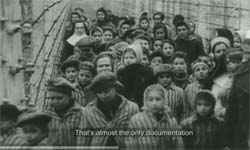
Andre Singer
The extraordinary story of the Allied forces who filmed the terrible scenes in the Nazi concentration camps, and Sidney Bernstein's attempt to produce a landmark documentary record of what they found
- TV-Recordings
- English subtitles
- 75
The extraordinary story of the Allied forces who filmed the terrible scenes in the Nazi concentration camps, and Sidney Bernstein's attempt to produce a landmark documentary record of what they found
-
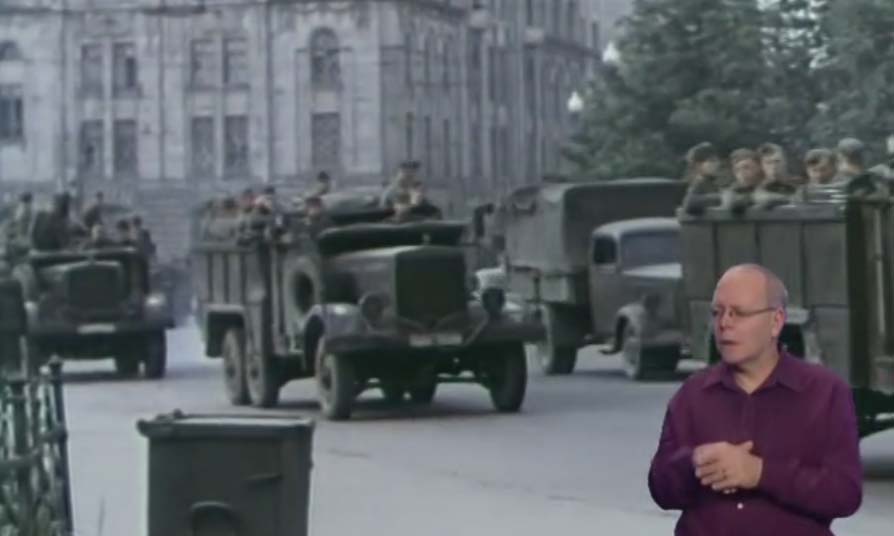
Inside the Nazi State - A Vision for Germany
-
Lawrence Rees
In 1932, the Nazi party obtained more votes than any other, with forty percent of all Germans choosing to vote for Hitler as their leader. Germany was crippled by losing the First World War and as Lawrence Rees' interviews reveal, economic chaos led many to seek a strong and extreme solution to their problems
- TV-Recordings
- History
- TV-Recordings
- No subtitles
- 10
In 1932, the Nazi party obtained more votes than any other, with forty percent of all Germans choosing to vote for Hitler as their leader. Germany was crippled by losing the First World War and as Lawrence Rees' interviews reveal, economic chaos led many to seek a strong and extreme solution to their problems

-
The Nazis - A Warning From History
-
BBC
Documentary series examining how a cultured nation at the heart of Europe allowed Hitler to come to power
- TV-Recordings
- No subtitles
- No
Documentary series examining how a cultured nation at the heart of Europe allowed Hitler to come to power
The programme considers how it was possible for a man such as Adolf Hitler to come to power in a supposedly cultured country such as post First World War Germany. It gives a number of long term and short term factors to explain the Nazi phenomenon
- TV-Recordings
- History
- Politics & Public Policy
- TV-Recordings
- No subtitles
- 120
The programme considers how it was possible for a man such as Adolf Hitler to come to power in a supposedly cultured country such as post First World War Germany. It gives a number of long term and short term factors to explain the Nazi phenomenon
The theme of the programme focuses on the paradoxical nature of Germany under Nazi rule - a society obsessed by order and yet characterised by administrative inefficiency. It opens with daunting images of Nazi crowds and the comment that the
- TV-Recordings
- History
- Politics & Public Policy
- TV-Recordings
- No subtitles
- 120
The theme of the programme focuses on the paradoxical nature of Germany under Nazi rule - a society obsessed by order and yet characterised by administrative inefficiency. It opens with daunting images of Nazi crowds and the comment that the
The programme starts, with Hitler in his retreat in southern Bavaria, watching feature films about the British Empire - supposedly, these offered proof of the superiority of the Aryan Race! In 1941 he said 'Let's learn from the English - what India was to the English, let Russian territories be to us'. The programme then asks the question - How did Hitler end up fighting the wrong war? - a war against both the English and the Russians.
- TV-Recordings
- History
- Politics & Public Policy
- TV-Recordings
- No subtitles
- 60
The programme starts, with Hitler in his retreat in southern Bavaria, watching feature films about the British Empire - supposedly, these offered proof of the superiority of the Aryan Race! In 1941 he said 'Let's learn from the English - what India was to the English, let Russian territories be to us'. The programme then asks the question - How did Hitler end up fighting the wrong war? - a war against both the English and the Russians.
The programme starts with a view of a railway line, followed by the view of a field. Between July 1942 - August 1943 this area became a 'killing factory'. This is TREBLINKA, one of six extermination camps set up in Poland by the Germans to tackle the Jewish Question'
- TV-Recordings
- History
- Politics & Public Policy
- TV-Recordings
- No subtitles
- 60
The programme starts with a view of a railway line, followed by the view of a field. Between July 1942 - August 1943 this area became a 'killing factory'. This is TREBLINKA, one of six extermination camps set up in Poland by the Germans to tackle the Jewish Question'
The programme starts with the observation that because Italy was 'the birthplace of fascism', an alliance between Rome and Berlin in the 1930's therefore seemed natural and not unexpected.
- TV-Recordings
- History
- Politics & Public Policy
- TV-Recordings
- No subtitles
- 60
The programme starts with the observation that because Italy was 'the birthplace of fascism', an alliance between Rome and Berlin in the 1930's therefore seemed natural and not unexpected.