

There is a battle playing out inside your body right now. It started billions of years ago and it is still being fought in every one of us every minute of every day. It is the story of a viral infection - the battle for the cell.
- TV-Recordings
- Biology
- Genetics
- TV-Recordings
- No subtitles
- 60
There is a battle playing out inside your body right now. It started billions of years ago and it is still being fought in every one of us every minute of every day. It is the story of a viral infection - the battle for the cell.
-
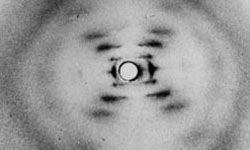
The Beauty of Diagrams - Episode 05: DNA
-
Marcus du Sautoy
Series in which mathematician Marcus du Sautoy explores the stories behind some of the world's most familiar and influential scientific diagrams.
- TV-Recordings
- Biology
- Medical Sciences
- TV-Recordings
- English subtitles
- 30
Series in which mathematician Marcus du Sautoy explores the stories behind some of the world's most familiar and influential scientific diagrams.
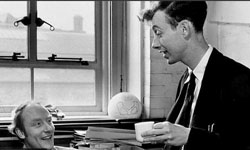
The film is an unvarnished account of the scientists who dared to discover the secret of life - told through fascinating and revealing archive - in their own words.
- TV-Recordings
- Biology
- English subtitles
- 60
The film is an unvarnished account of the scientists who dared to discover the secret of life - told through fascinating and revealing archive - in their own words.
-
The First Olympians
-
UKTV
Can the remains of a Greek athlete tell us about the world of ancient sports? "The First Olympians" uses forensics, special effects and reconstructions to bring us back in time to the sanctuary of Zeus at Olympia. Find out everything about the sports and lifestyles of athletes in Ancient Greece.
- TV-Recordings
- Classical Civilisation
- Sport
- TV-Recordings
- No subtitles
- 58
Can the remains of a Greek athlete tell us about the world of ancient sports? "The First Olympians" uses forensics, special effects and reconstructions to bring us back in time to the sanctuary of Zeus at Olympia. Find out everything about the sports and lifestyles of athletes in Ancient Greece.
-
The Incredible Human Journey - Episode 1 : Out of Africa
-
Dr Alice Roberts
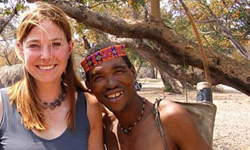
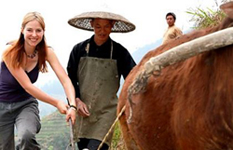
Alice travels to Africa in search of the birthplace of the first people. They were so few in number and so vulnerable that today they would probably be considered an endangered species. So what allowed them to survive at all?
- TV-Recordings
- English subtitles
- 60
Alice travels to Africa in search of the birthplace of the first people. They were so few in number and so vulnerable that today they would probably be considered an endangered species. So what allowed them to survive at all?
-
The Incredible Human Journey - Episode 2 : Asia
-
Dr Alice Roberts
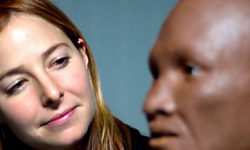
In this programme, the journey continues into Asia, the world's greatest land mass, in a quest to discover how early hunter-gatherers managed to survive in one of the most inhospitable places on earth.
- TV-Recordings
- English subtitles
- 60
In this programme, the journey continues into Asia, the world's greatest land mass, in a quest to discover how early hunter-gatherers managed to survive in one of the most inhospitable places on earth.
-
The Incredible Human Journey - Episode 3 : Europe
-
Dr Alice Roberts
When our species first arrived in Europe, the peak of the Ice Age was approaching and the continent was already crawling with a rival.
- TV-Recordings
- English subtitles
- 60
When our species first arrived in Europe, the peak of the Ice Age was approaching and the continent was already crawling with a rival.

-
The Incredible Human Journey - Episode 4 : Australia
-
Dr Alice Roberts
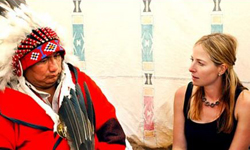
Alice looks at our ancestors' seemingly impossible journey to Australia. Miraculously preserved footprints and very old human fossils buried in the outback suggest a mystery: that humans reached Australia almost before anywhere else.
- TV-Recordings
- English subtitles
- 60
Alice looks at our ancestors' seemingly impossible journey to Australia. Miraculously preserved footprints and very old human fossils buried in the outback suggest a mystery: that humans reached Australia almost before anywhere else.
-
The Incredible Human Journey - Episode 5 : The Americas
-
Dr Alice Roberts
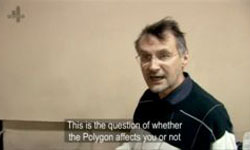
For Stone Age people, reaching North and South America seems impossible - on each side vast oceans, and to the north an impenetrable ice sheet that covered the whole of Canada. So how did the first Americans get there?
- TV-Recordings
- English subtitles
- 60
For Stone Age people, reaching North and South America seems impossible - on each side vast oceans, and to the north an impenetrable ice sheet that covered the whole of Canada. So how did the first Americans get there?
-
True Stories - After the Apocalypse
-
Channel 4
During the Soviet era, the people of Semipalatinsk in Kazakhstan were used as human guinea pigs in the testing of nuclear weapons. Today the residents believe they are living with the consequences: one in 20 children is born with defects.
- TV-Recordings
- Environmental Studies
- Politics & Public Policy
- TV-Recordings
- English subtitles
- 102
During the Soviet era, the people of Semipalatinsk in Kazakhstan were used as human guinea pigs in the testing of nuclear weapons. Today the residents believe they are living with the consequences: one in 20 children is born with defects.

Documentary. What killed King Tutankhamun? An epic detective story that uncovers the extraordinary truth of the boy behind the golden mask.
- TV-Recordings
- Archaeology
- Classical Civilisation
- English subtitles
- 60
Documentary. What killed King Tutankhamun? An epic detective story that uncovers the extraordinary truth of the boy behind the golden mask.
-
Your Inner Fish: An Evolution Story
-
BBC
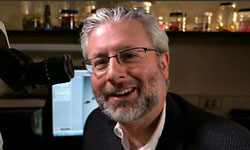
Anatomist Neil Shubin reveals how our bodies are the legacy of ancient fish, reptiles and primates.
- TV-Recordings
- English subtitles
- No
Anatomist Neil Shubin reveals how our bodies are the legacy of ancient fish, reptiles and primates.
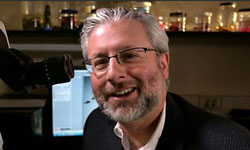
Anatomist Neil Shubin reveals how our bodies are the legacy of ancient fish, reptiles and primates.
- TV-Recordings
- Biology
- English subtitles
- 60
Anatomist Neil Shubin reveals how our bodies are the legacy of ancient fish, reptiles and primates.

It took more than 350 million years for the human body to take shape. Anatomist Neil Shubin reveals how our bodies are the legacy of ancient fish, reptiles and primates - the ancestors you never knew were in your family tree.
- TV-Recordings
- Biology
- English subtitles
- 60
It took more than 350 million years for the human body to take shape. Anatomist Neil Shubin reveals how our bodies are the legacy of ancient fish, reptiles and primates - the ancestors you never knew were in your family tree.
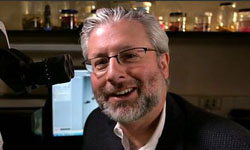
In the final episode, Neil tracks our hands, feet, colour vision, spine and upright gait to our primate and hominid progenitors, who also passed on perhaps the most important legacy of all - a path to the human brain.
- TV-Recordings
- Biology
- English subtitles
- 60
In the final episode, Neil tracks our hands, feet, colour vision, spine and upright gait to our primate and hominid progenitors, who also passed on perhaps the most important legacy of all - a path to the human brain.