

-
The Ascent of Man - Episode 11 - Knowledge or Certainty
-
Adrian Malone
Dr Jacob Bronowski considers how the great achievement of physics in the 20th century has been to show that absolute certainty, in science or outside of it, is beyond our grasp.
- TV-Recordings
- English subtitles
- 49
Dr Jacob Bronowski considers how the great achievement of physics in the 20th century has been to show that absolute certainty, in science or outside of it, is beyond our grasp.
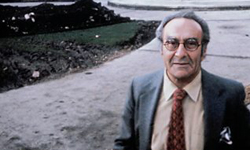
Dr Jacob Bronowski follows the history of genetics, from the lonely experiments of Gregor Mendel to the discovery of the structure of DNA. Should we see human sexuality as a gift?
- TV-Recordings
- English subtitles
- 49
Dr Jacob Bronowski follows the history of genetics, from the lonely experiments of Gregor Mendel to the discovery of the structure of DNA. Should we see human sexuality as a gift?
-
The Ascent of Man - Episode 13 - The Long Children
-
Adrian Malone
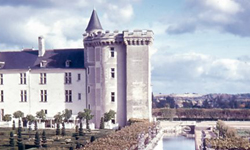
From his home, Dr Jacob Bronowski takes stock of man's complex and often precarious ascent, drawing on experiences from his own lifetime.
- TV-Recordings
- English subtitles
- 49
From his home, Dr Jacob Bronowski takes stock of man's complex and often precarious ascent, drawing on experiences from his own lifetime.

Jacob Bronowski looks at how man moved from nomadic pasturage to settled agriculture, with the domestication of the horse and the cultivation of wheat.
- TV-Recordings
- English subtitles
- 49
Jacob Bronowski looks at how man moved from nomadic pasturage to settled agriculture, with the domestication of the horse and the cultivation of wheat.
-
The Ascent of Man - Episode 3 - The Grain in the Stone
-
Adrian Malone
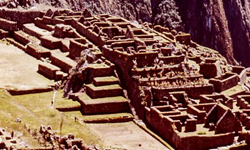
Jacob Bronowski discovers the origins of science in the interaction of hand and brain, by which man uncovers the laws of nature through building, architecture and sculpture
- TV-Recordings
- English subtitles
- 49
Jacob Bronowski discovers the origins of science in the interaction of hand and brain, by which man uncovers the laws of nature through building, architecture and sculpture
-
The Ascent of Man - Episode 4 - The Hidden Structure
-
Adrian Malone
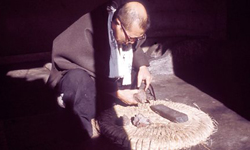
Jacob Bronowski explores the roots of chemistry, from the techniques of ancient metallurgy in China and Japan to the mystical searchings of the alchemists.
- TV-Recordings
- English subtitles
- 49
Jacob Bronowski explores the roots of chemistry, from the techniques of ancient metallurgy in China and Japan to the mystical searchings of the alchemists.
-
The Ascent of Man - Episode 5 - Music of the Spheres
-
Adrian Malone
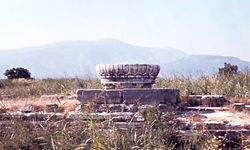
Dr Bronowski gives his own novel proof of Pythagoras' famous theorem and traces the spread of Greek ideas through the Islamic empire to Moorish Spain and Renaissance Europe.
- TV-Recordings
- English subtitles
- 49
Dr Bronowski gives his own novel proof of Pythagoras' famous theorem and traces the spread of Greek ideas through the Islamic empire to Moorish Spain and Renaissance Europe.
-
The Ascent of Man - Episode 6 - The Starry Messenger
-
Adrian Malone
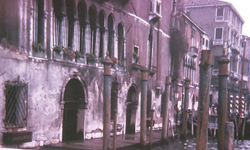
Man has always wondered about the movement of the stars, sun and planets. Dr Jacob Bronowski looks at the work of Copernicus and the life, work and trial of Galileo.
- TV-Recordings
- English subtitles
- 49
Man has always wondered about the movement of the stars, sun and planets. Dr Jacob Bronowski looks at the work of Copernicus and the life, work and trial of Galileo.

-
The Ascent of Man - Episode 7 - The Majestic Clockwork
-
Adrian Malone
If the world could be understood by just two men, they may be Isaac Newton and Albert Einstein. Dr Jacob Bronowski explores how their theories are connected by light.
- TV-Recordings
- English subtitles
- 49
If the world could be understood by just two men, they may be Isaac Newton and Albert Einstein. Dr Jacob Bronowski explores how their theories are connected by light.
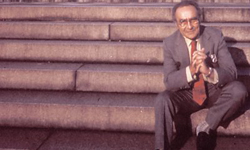
As political revolutions shook France and America, another quieter, yet more profound restructuring was taking place in Britain - the Industrial Revolution.
- TV-Recordings
- English subtitles
- 49
As political revolutions shook France and America, another quieter, yet more profound restructuring was taking place in Britain - the Industrial Revolution.
-
The Ascent of Man - Episode 9 - The Ladder of Creation
-
Adrian Malone
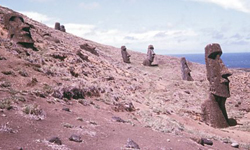
How did life begin on earth? Dr Jacob Bronowski recounts the adventures of Alfred Russell Wallace, and how they triggered off the ideas of Charles Darwin.
- TV-Recordings
- English subtitles
- 49
How did life begin on earth? Dr Jacob Bronowski recounts the adventures of Alfred Russell Wallace, and how they triggered off the ideas of Charles Darwin.
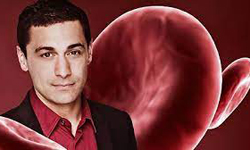
In a three-part series, Dr Adam Rutherford tells the extraordinary story of the scientific quest to discover the secrets of the cell and of life itself. Every living thing is made of cells, microscopic building blocks of almost unimaginable power and complexity. This episode explores how scientists delved ever deeper into the world of the cell, seeking to reveal the magic ingredient that can spark a bundle of chemicals into life.
- TV-Recordings
- Biology
- TV-Recordings
- No subtitles
- 60
In a three-part series, Dr Adam Rutherford tells the extraordinary story of the scientific quest to discover the secrets of the cell and of life itself. Every living thing is made of cells, microscopic building blocks of almost unimaginable power and complexity. This episode explores how scientists delved ever deeper into the world of the cell, seeking to reveal the magic ingredient that can spark a bundle of chemicals into life.
In a three-part series, Dr Adam Rutherford tells the extraordinary story of the scientific quest to discover the secrets of the cell and of life itself. Every living thing is made of cells, microscopic building blocks of almost unimaginable power and complexity. The final part reveals how our knowledge of cells has brought us to the brink of one of the most important moments in history.
- TV-Recordings
- Biology
- TV-Recordings
- No subtitles
- 60
In a three-part series, Dr Adam Rutherford tells the extraordinary story of the scientific quest to discover the secrets of the cell and of life itself. Every living thing is made of cells, microscopic building blocks of almost unimaginable power and complexity. The final part reveals how our knowledge of cells has brought us to the brink of one of the most important moments in history.
-
The Secret Life of Chaos
-
Nic Stacey
Chaos theory has a bad name, conjuring up images of unpredictable weather, economic crashes and science gone wrong. But there is a fascinating and hidden side to Chaos, one that scientists are only now beginning to understand.
- TV-Recordings
- Chemistry
- Physics
- TV-Recordings
- English subtitles
- 60
Chaos theory has a bad name, conjuring up images of unpredictable weather, economic crashes and science gone wrong. But there is a fascinating and hidden side to Chaos, one that scientists are only now beginning to understand.

Michael Mosley takes an informative and ambitious journey exploring how the evolution of scientific understanding is intimately interwoven with society's historical path.
- TV-Recordings
- History
- Physics
- TV-Recordings
- English subtitles
- 60
Michael Mosley takes an informative and ambitious journey exploring how the evolution of scientific understanding is intimately interwoven with society's historical path.
-
What Darwin Didn't Know
-
Armand Leroi
Documentary which tells the story of evolution theory since Darwin postulated it in 1859 in 'On the Origin of Species'.
- TV-Recordings
- Biology
- TV-Recordings
- No subtitles
- 88
Documentary which tells the story of evolution theory since Darwin postulated it in 1859 in 'On the Origin of Species'.
-
Wonders of Life
-
BBC
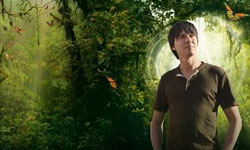
Professor Brian Cox explores the globe to reveal how a few fundamental laws of science gave birth to the most complex and unique feature of the universe - life.
- TV-Recordings
- No subtitles
- No
Professor Brian Cox explores the globe to reveal how a few fundamental laws of science gave birth to the most complex and unique feature of the universe - life.
-
Wonders of Life - 1: What Is Life? HD
-
Brian Cox
In this episode Brian Cox visits South East Asia's 'Ring of Fire'. In the world's most volcanic region he explores the thin line that separates the living from the dead and poses that most enduring of questions: what is life?
- TV-Recordings
- Physics
- TV-Recordings
- No subtitles
- 60
In this episode Brian Cox visits South East Asia's 'Ring of Fire'. In the world's most volcanic region he explores the thin line that separates the living from the dead and poses that most enduring of questions: what is life?

-
Wonders of Life - 2 : Expanding Universe
-
Brian Cox
Amidst the rich natural history of the United States, Professor Brian Cox encounters the astonishing creatures that reveal how the senses evolved.
- TV-Recordings
- General Science
- TV-Recordings
- No subtitles
- 60
Amidst the rich natural history of the United States, Professor Brian Cox encounters the astonishing creatures that reveal how the senses evolved.
-
Your Inner Fish: An Evolution Story
-
BBC
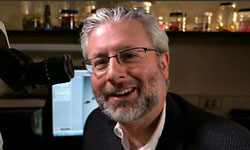
Anatomist Neil Shubin reveals how our bodies are the legacy of ancient fish, reptiles and primates.
- TV-Recordings
- English subtitles
- No
Anatomist Neil Shubin reveals how our bodies are the legacy of ancient fish, reptiles and primates.
Anatomist Neil Shubin reveals how our bodies are the legacy of ancient fish, reptiles and primates.
- TV-Recordings
- Biology
- English subtitles
- 60
Anatomist Neil Shubin reveals how our bodies are the legacy of ancient fish, reptiles and primates.

It took more than 350 million years for the human body to take shape. Anatomist Neil Shubin reveals how our bodies are the legacy of ancient fish, reptiles and primates - the ancestors you never knew were in your family tree.
- TV-Recordings
- Biology
- English subtitles
- 60
It took more than 350 million years for the human body to take shape. Anatomist Neil Shubin reveals how our bodies are the legacy of ancient fish, reptiles and primates - the ancestors you never knew were in your family tree.
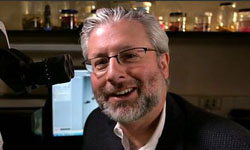
In the final episode, Neil tracks our hands, feet, colour vision, spine and upright gait to our primate and hominid progenitors, who also passed on perhaps the most important legacy of all - a path to the human brain.
- TV-Recordings
- Biology
- English subtitles
- 60
In the final episode, Neil tracks our hands, feet, colour vision, spine and upright gait to our primate and hominid progenitors, who also passed on perhaps the most important legacy of all - a path to the human brain.