
-
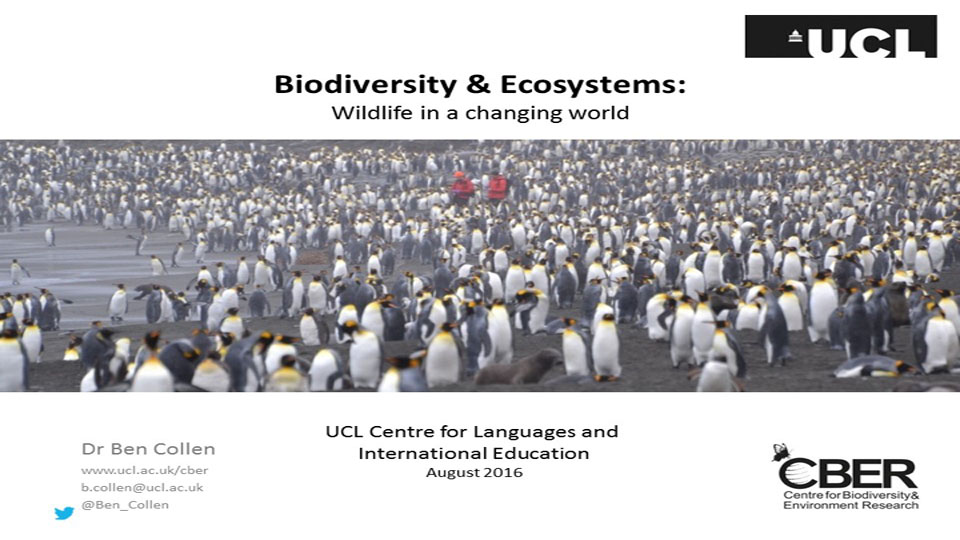
Biodiversity and Ecosystems: Wildlife in a Changing World
-
Dr Ben Collen , 2016
Pre-sessional lecture August 2016
- Lectures
- No subtitles
- 43
Pre-sessional lecture August 2016
-
Introduction to Remote Sensing of Environmental Change (with transcript)
-
Dr Mathias Disney , 2007
Diploma November 2007
- Lectures
- General Science
- Geography
- Lectures
- No subtitles
- 60
Diploma November 2007
-
The Honey Bee
-
Karen Keenan , 2019
Science and Society Lecture 15th October 2019
- Lectures
- No subtitles
- 43
Science and Society Lecture 15th October 2019
-
The Honey Bee and Possible Causes of Decline
-
Dr Karen Keenan , 2014
Diploma 2014
- Lectures
- No subtitles
- 47
Diploma 2014

-
Blue Planet 2
-
Wildlife documentary series, presented and narrated by David Attenborough, exploring the planet's oceans.
- TV-Recordings
- English subtitles
- 420
Wildlife documentary series, presented and narrated by David Attenborough, exploring the planet's oceans.
-
Blue Planet 2 - 01: One Ocean
-
David Attenborough
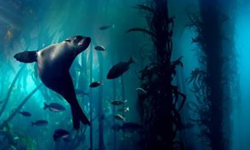
In recent years, our knowledge of life beneath the waves has been transformed. Using cutting-edge technology, One Ocean takes us on a journey from the intense heat of the tropics to our planet's frozen poles to reveal new worlds and extraordinary never-before-seen animal behaviours.
- TV-Recordings
- English subtitles
- 60
In recent years, our knowledge of life beneath the waves has been transformed. Using cutting-edge technology, One Ocean takes us on a journey from the intense heat of the tropics to our planet's frozen poles to reveal new worlds and extraordinary never-before-seen animal behaviours.

-
Blue Planet 2 - 01: One Ocean HD Version
-
David Attenborough
In recent years, our knowledge of life beneath the waves has been transformed. Using cutting-edge technology, One Ocean takes us on a journey from the intense heat of the tropics to our planet's frozen poles to reveal new worlds and extraordinary never-before-seen animal behaviours.
- TV-Recordings
- English subtitles
- 60
In recent years, our knowledge of life beneath the waves has been transformed. Using cutting-edge technology, One Ocean takes us on a journey from the intense heat of the tropics to our planet's frozen poles to reveal new worlds and extraordinary never-before-seen animal behaviours.
-
Blue Planet 2 - 02: The Deep
-
David Attenborough
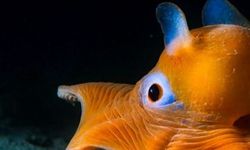
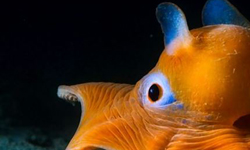
The deep is perhaps the most hostile environment on earth, at least to us - a world of crushing pressure, brutal cold and utter darkness. We have barely begun to explore it, and yet it is the largest living space on the planet. Scientists already think that there is more life in the deep than anywhere else on earth.
- TV-Recordings
- English subtitles
- 60
The deep is perhaps the most hostile environment on earth, at least to us - a world of crushing pressure, brutal cold and utter darkness. We have barely begun to explore it, and yet it is the largest living space on the planet. Scientists already think that there is more life in the deep than anywhere else on earth.
-
Blue Planet 2 - 02: The Deep HD Version
-
David Attenborough
The deep is perhaps the most hostile environment on earth, at least to us - a world of crushing pressure, brutal cold and utter darkness. We have barely begun to explore it, and yet it is the largest living space on the planet. Scientists already think that there is more life in the deep than anywhere else on earth.
- TV-Recordings
- English subtitles
- 60
The deep is perhaps the most hostile environment on earth, at least to us - a world of crushing pressure, brutal cold and utter darkness. We have barely begun to explore it, and yet it is the largest living space on the planet. Scientists already think that there is more life in the deep than anywhere else on earth.

-
Blue Planet 2 - 03: Coral Reefs
-
David Attenborough
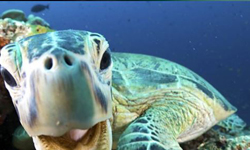
Corals build themselves homes of limestone in the warm, clear, shallow seas of the tropics. Their reefs occupy less than one tenth of one per cent of the ocean floor, yet they are home to a quarter of all known marine species.
- TV-Recordings
- English subtitles
- 60
Corals build themselves homes of limestone in the warm, clear, shallow seas of the tropics. Their reefs occupy less than one tenth of one per cent of the ocean floor, yet they are home to a quarter of all known marine species.
-
Blue Planet 2 - 03: Coral Reefs HD Version
-
David Attenborough
Corals build themselves homes of limestone in the warm, clear, shallow seas of the tropics. Their reefs occupy less than one tenth of one per cent of the ocean floor, yet they are home to a quarter of all known marine species.
- TV-Recordings
- English subtitles
- 60
Corals build themselves homes of limestone in the warm, clear, shallow seas of the tropics. Their reefs occupy less than one tenth of one per cent of the ocean floor, yet they are home to a quarter of all known marine species.

-
Blue Planet 2 - 04: Big Blue
-
David Attenborough
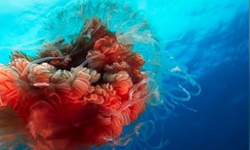
The big blue is the world's greatest wilderness, far from shore and many kilometres deep. It's a vast marine desert where there is little to eat and nowhere to hide.
- TV-Recordings
- English subtitles
- 60
The big blue is the world's greatest wilderness, far from shore and many kilometres deep. It's a vast marine desert where there is little to eat and nowhere to hide.
-
Blue Planet 2 - 04: Big Blue HD Version
-
David Attenborough
The big blue is the world's greatest wilderness, far from shore and many kilometres deep. It's a vast marine desert where there is little to eat and nowhere to hide.
- TV-Recordings
- English subtitles
- 60
The big blue is the world's greatest wilderness, far from shore and many kilometres deep. It's a vast marine desert where there is little to eat and nowhere to hide.
-
Blue Planet 2 - 05: Green Seas
-
David Attenborough
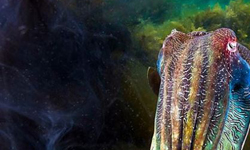
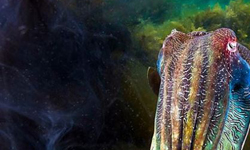
It's our green seas, not the blue, that bring life to our oceans. Here sunlight powers the growth of enchanted forests of kelp, mangroves and prairies of sea grass.
- TV-Recordings
- English subtitles
- 60
It's our green seas, not the blue, that bring life to our oceans. Here sunlight powers the growth of enchanted forests of kelp, mangroves and prairies of sea grass.
-
Blue Planet 2 - 05: Green Seas HD Version
-
David Attenborough
It's our green seas, not the blue, that bring life to our oceans. Here sunlight powers the growth of enchanted forests of kelp, mangroves and prairies of sea grass.
- TV-Recordings
- English subtitles
- 60
It's our green seas, not the blue, that bring life to our oceans. Here sunlight powers the growth of enchanted forests of kelp, mangroves and prairies of sea grass.

-
Blue Planet 2 - 06: Coasts
-
David Attenborough
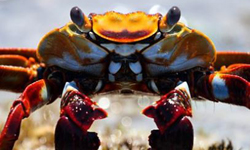
On the coast, two worlds collide. Coasts are the most dynamic and challenging habitats in the ocean - that brings great rewards but also great danger. The extraordinary animals that live here must find ingenious ways to cope with two very different worlds.
- TV-Recordings
- English subtitles
- 60
On the coast, two worlds collide. Coasts are the most dynamic and challenging habitats in the ocean - that brings great rewards but also great danger. The extraordinary animals that live here must find ingenious ways to cope with two very different worlds.
-
Blue Planet 2 - 06: Coasts HD Version
-
David Attenborough
On the coast, two worlds collide. Coasts are the most dynamic and challenging habitats in the ocean - that brings great rewards but also great danger. The extraordinary animals that live here must find ingenious ways to cope with two very different worlds.
- TV-Recordings
- English subtitles
- 60
On the coast, two worlds collide. Coasts are the most dynamic and challenging habitats in the ocean - that brings great rewards but also great danger. The extraordinary animals that live here must find ingenious ways to cope with two very different worlds.

-
Blue Planet 2 - 07: Our Blue Planet
-
David Attenborough
While making Blue Planet II, we have explored parts of the ocean that nobody has been to before, encountered extraordinary animals and discovered new insights into how life thrives beneath the waves.
- TV-Recordings
- English subtitles
- 60
While making Blue Planet II, we have explored parts of the ocean that nobody has been to before, encountered extraordinary animals and discovered new insights into how life thrives beneath the waves.

-
Blue Planet 2 - 07: Our Blue Planet HD Version
-
David Attenborough
While making Blue Planet II, we have explored parts of the ocean that nobody has been to before, encountered extraordinary animals and discovered new insights into how life thrives beneath the waves.
- TV-Recordings
- English subtitles
- 60
While making Blue Planet II, we have explored parts of the ocean that nobody has been to before, encountered extraordinary animals and discovered new insights into how life thrives beneath the waves.
-
Blue Planet 2 - 08 : Oceans of Wonder
-
David Attenborough
This extended special of the nature documentary series journeys from the equator to the unexplored depths, meeting the best-loved characters from the series.
- TV-Recordings
- English subtitles
- 90
This extended special of the nature documentary series journeys from the equator to the unexplored depths, meeting the best-loved characters from the series.
-
Blue Planet 2 - 08 : Oceans of Wonder HD Version
-
David Attenborough
This extended special of the nature documentary series journeys from the equator to the unexplored depths, meeting the best-loved characters from the series.
- TV-Recordings
- English subtitles
- 90
This extended special of the nature documentary series journeys from the equator to the unexplored depths, meeting the best-loved characters from the series.