

-
The Reith Lectures 2009 - 4 - A New Politics of the Common Good
-
Prof. Michael Sandel
Professor Sandel makes the case for a moral and civic renewal in democratic politics.
Professor Sandel makes the case for a moral and civic renewal in democratic politics.

Scientific Horizons: Martin Rees, President of the Royal Society, Master of Trinity College and Astronomer Royal, delivers four lectures exploring the challenges facing science in the 21st century.In the first lecture he asks who we should trust to explain the risks we face.
Scientific Horizons: Martin Rees, President of the Royal Society, Master of Trinity College and Astronomer Royal, delivers four lectures exploring the challenges facing science in the 21st century.In the first lecture he asks who we should trust to explain the risks we face.

Does science have the answers to help us save our planet?
Does science have the answers to help us save our planet?

Professor Martin Rees explains where the limits of our scientific knowledge lie.
Professor Martin Rees explains where the limits of our scientific knowledge lie.

-
The Reith Lectures 2010 - 4 - The Runaway World
-
Martin Rees
Prof Rees calls for the UK to stay at the forefront of scientific research and discovery.
Prof Rees calls for the UK to stay at the forefront of scientific research and discovery.

-
The Reith Lectures 2011 - 1 - Liberty
-
Ang San Suu Kyi
Burmese pro-democracy leader Aung San Suu Kyi and former Director-General of MI5 Baroness Manningham-Buller deliver the 2011 BBC Reith Lectures. Aung San Suu Kyi explores what freedom means in the first of the 2011 Reith Lectures.
Burmese pro-democracy leader Aung San Suu Kyi and former Director-General of MI5 Baroness Manningham-Buller deliver the 2011 BBC Reith Lectures. Aung San Suu Kyi explores what freedom means in the first of the 2011 Reith Lectures.

-
The Reith Lectures 2011 - 2- Dissent
-
Ang San Suu Kyi
The pro-democracy leader, Aung San Suu Kyi, examines what drives people to dissent in the second of the 2011 Reith Lecture series. 'Securing Freedom'.
The pro-democracy leader, Aung San Suu Kyi, examines what drives people to dissent in the second of the 2011 Reith Lecture series. 'Securing Freedom'.

-
The Reith Lectures 2011 - 3 - Terror
-
Eliza Manningham-Buller
The former Director-General of the Security Service (MI5), Eliza Manningham-Buller gives the first of her BBC Reith Lectures 2011 called " Terror."
The former Director-General of the Security Service (MI5), Eliza Manningham-Buller gives the first of her BBC Reith Lectures 2011 called " Terror."

The former Director-General of the Security Service (MI5), Eliza Manningham-Buller gives the second of her BBC Reith Lectures 2011. In this lecture called " Security" she argues that the security and intelligence services in a democracy have a good record of protecting and preserving freedom.
The former Director-General of the Security Service (MI5), Eliza Manningham-Buller gives the second of her BBC Reith Lectures 2011. In this lecture called " Security" she argues that the security and intelligence services in a democracy have a good record of protecting and preserving freedom.

In this third and final Reith lecture the former Director General of the security service (MI5), Eliza Manningham-Buller, discusses policy priorities since 9.11. She reflects on the Arab Spring, and argues that the West's support of authoritarian regimes did, to some extent, fuel the growth of Al-Qaeda. The lecture also considers when we should talk to "terrorists".
In this third and final Reith lecture the former Director General of the security service (MI5), Eliza Manningham-Buller, discusses policy priorities since 9.11. She reflects on the Arab Spring, and argues that the West's support of authoritarian regimes did, to some extent, fuel the growth of Al-Qaeda. The lecture also considers when we should talk to "terrorists".

-
The Reith Lectures 2014 - Part 1: Why do Doctor's Fail
-
Dr Atul Gawande
Surgeon and writer Atul Gawande explores the nature of fallibility and suggests that preventing avoidable mistakes is a key challenge for the future of medicine.
Surgeon and writer Atul Gawande explores the nature of fallibility and suggests that preventing avoidable mistakes is a key challenge for the future of medicine.

Surgeon and writer Atul Gawande calls for a new approach to the two great unfixable problems in life and healthcare - ageing and death.
Surgeon and writer Atul Gawande calls for a new approach to the two great unfixable problems in life and healthcare - ageing and death.

The surgeon and writer Atul Gawande calls for a new focus on medical systems to ensure doctors work more effectively, alongside far greater transparency about their performance.
The surgeon and writer Atul Gawande calls for a new focus on medical systems to ensure doctors work more effectively, alongside far greater transparency about their performance.

-
Justice
-
Professor Michael Sandel
Professor Michael Sandel presents a series of lectures from his Harvard undergraduate course in Political Philosophy
- TV-Recordings
- No subtitles
- 390
Professor Michael Sandel presents a series of lectures from his Harvard undergraduate course in Political Philosophy

-
Justice - Freedom vs Fit
-
BBC 4
The seventh of Harvard professor Michael Sandel's famous lectures on the philosophy of justice looks at the issue of individual rights and the freedom to choose. If our place in society is determined by where we best fit, doesn't that eliminate personal choice? What if I am best suited to do one kind of work, but I want to do another?
- TV-Recordings
- Law
- TV-Recordings
- English subtitles
- 30
The seventh of Harvard professor Michael Sandel's famous lectures on the philosophy of justice looks at the issue of individual rights and the freedom to choose. If our place in society is determined by where we best fit, doesn't that eliminate personal choice? What if I am best suited to do one kind of work, but I want to do another?

In the second in a series of lectures drawn from Harvard professor Michael Sandel's famous undergraduate course on justice, he introduces the British utilitarian philosopher Jeremy Bentham, with reference to an infamous 19th century legal case from Victorian England - the shipwreck of the Mignonette.
- TV-Recordings
- Law
- TV-Recordings
- English subtitles
- 60
In the second in a series of lectures drawn from Harvard professor Michael Sandel's famous undergraduate course on justice, he introduces the British utilitarian philosopher Jeremy Bentham, with reference to an infamous 19th century legal case from Victorian England - the shipwreck of the Mignonette.
The sixth of Michael Sandel's famous lectures on the philosophy of justice looks at the Greek philosopher Aristotle and the rules of golf.
- TV-Recordings
- Law
- TV-Recordings
- English subtitles
- 30
The sixth of Michael Sandel's famous lectures on the philosophy of justice looks at the Greek philosopher Aristotle and the rules of golf.
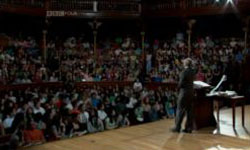
Professor Michael Sandel presents the first in a series of lectures from his Harvard undergraduate course in Political Philosophy. He explores the morality of murder and asks whether there can ever be a case for killing.
- TV-Recordings
- Law
- TV-Recordings
- English subtitles
- 60
Professor Michael Sandel presents the first in a series of lectures from his Harvard undergraduate course in Political Philosophy. He explores the morality of murder and asks whether there can ever be a case for killing.

-
Royal Institution Christmas Lectures - 2018 : 01 - Where Do I Come From?
-
Professor Alice Roberts
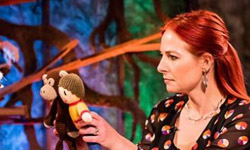
Professor Alice Roberts meets our ancient ancestral family, from armadillos to sharks, and discovers our true place in the tree of life. With 4D scanning, giant origami and a ukulele, they will explore evolution like never before.
- TV-Recordings
- English subtitles
- 60
Professor Alice Roberts meets our ancient ancestral family, from armadillos to sharks, and discovers our true place in the tree of life. With 4D scanning, giant origami and a ukulele, they will explore evolution like never before.
-
Royal Institution Christmas Lectures - 2018 : 02 - What Makes Me Human?
-
Professor Alice Roberts
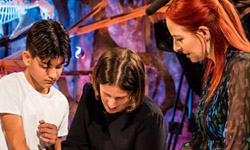
Professor Alice Roberts explores the story of human evolution, revealing how a humble African ape became a successful global species.
- TV-Recordings
- English subtitles
- 60
Professor Alice Roberts explores the story of human evolution, revealing how a humble African ape became a successful global species.
-
Royal Institution Christmas Lectures - 2018 : 03 - What Makes Me, Me?
-
Professor Alice Roberts
Professor Alice Roberts explores what makes each of us totally unique and celebrates the incredible diversity we see in humans across the globe.
- TV-Recordings
- English subtitles
- 60
Professor Alice Roberts explores what makes each of us totally unique and celebrates the incredible diversity we see in humans across the globe.
-
Royal Institution Christmas Lectures - 2016
-
Professor Saiful Islam
Series of lectures on a single topic, presenting scientific subjects to a general audience in an informative and entertaining manner
- TV-Recordings
- English subtitles
- 180
Series of lectures on a single topic, presenting scientific subjects to a general audience in an informative and entertaining manner

-
Royal Institution Christmas Lectures - 2016 : 01 Let There Be Light !
-
Professor Saiful Islam
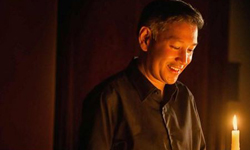
In his first lecture, Saiful investigates how to generate energy without destroying the planet in the process. Saiful begins his lecture by being plunged into darkness.
- TV-Recordings
- English subtitles
- 60
In his first lecture, Saiful investigates how to generate energy without destroying the planet in the process. Saiful begins his lecture by being plunged into darkness.
-
Royal Institution Christmas Lectures - 2016 : 02 People Power
-
Professor Saiful Islam
In his second lecture, chemist Saiful Islam continues his exploration of one of the most important questions facing humankind.
- TV-Recordings
- English subtitles
- 60
In his second lecture, chemist Saiful Islam continues his exploration of one of the most important questions facing humankind.
-
Royal Institution Christmas Lectures - 2016 : 03 Fully Charged
-
Professor Saiful Islam
In this year's final Royal Institution Christmas Lecture, chemist Saiful Islam explores one of the most important issues facing the modern world.
- TV-Recordings
- English subtitles
- 60
In this year's final Royal Institution Christmas Lecture, chemist Saiful Islam explores one of the most important issues facing the modern world.

-
Royal Institution Christmas Lectures - 2018
-
Professor Alice Roberts
Join biological anthropologist Professor Alice Roberts, and genetics expert Aoife McLysaght, as they bring our evolutionary story to life and asks challenging questions about the future.
- TV-Recordings
- English subtitles
- 180
Join biological anthropologist Professor Alice Roberts, and genetics expert Aoife McLysaght, as they bring our evolutionary story to life and asks challenging questions about the future.

-
Royal Institution Christmas Lectures 2010
-
BBC
Series of lectures on a single topic, presenting scientific subjects to a general audience in an informative and entertaining manner
- TV-Recordings
- English subtitles
- 180
Series of lectures on a single topic, presenting scientific subjects to a general audience in an informative and entertaining manner
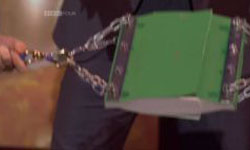
How can a hamster survive falling from the top of a skyscraper, ants carry over 100 times their own body weight and geckos climb across the ceiling?
- TV-Recordings
- Biology
- TV-Recordings
- English subtitles
- 60
How can a hamster survive falling from the top of a skyscraper, ants carry over 100 times their own body weight and geckos climb across the ceiling?

Dr Mark Miodownik zooms into the microscopic world beneath our fingertips. In this unfamiliar landscape, strange forces dominate the world and common sense goes out of the window.
- TV-Recordings
- Biology
- TV-Recordings
- English subtitles
- 60
Dr Mark Miodownik zooms into the microscopic world beneath our fingertips. In this unfamiliar landscape, strange forces dominate the world and common sense goes out of the window.
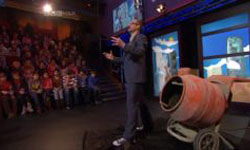
Why is the tallest building on earth less than half a mile high? Why don't we have mountains as tall as those on Mars?
- TV-Recordings
- Built Environment & Architecture
- Geography
- TV-Recordings
- English subtitles
- 60
Why is the tallest building on earth less than half a mile high? Why don't we have mountains as tall as those on Mars?